
Cubs Snag Top Starter, Ink Trevor Rogers to Long-Term Deal
The Chicago Cubs signed Trevor Rogers to a five-year deal. Here's why he could anchor their rotation for years to come.
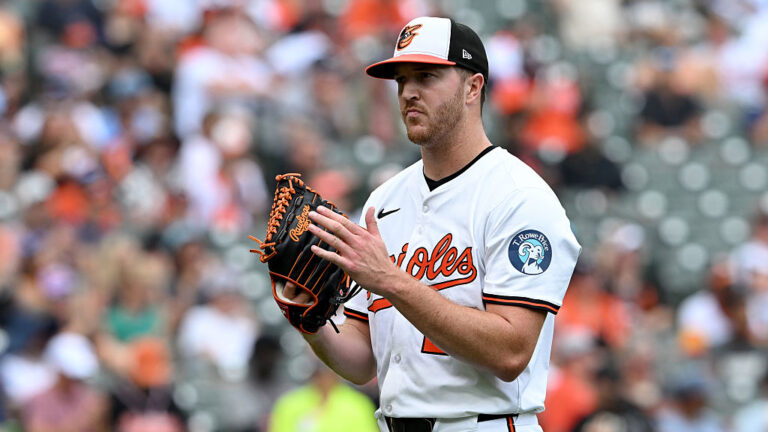
After entering the offseason with several question marks surrounding their starting rotation, the Chicago Cubs have landed one of the top remaining starters on the free-agent market in left-hander Trevor Rogers. With several Cubs starters now on the open market, Rogers not only addresses their biggest need but does so in an impactful way.
With Tarik Skubal landing with the Mets, Rogers quickly became one of, if not the, most coveted arms remaining on the market. The Cubs are making a sizeable investment in the 29-year-old southpaw, signing him to a five-year, $120 million contract.
He has established himself as a top starter over the past two years, posting a combined 3.16 ERA across those seasons. His results over the final months of 2026 were elite, as he posted a 2.90 ERA over his last 20 starts.
Given his recent production and the strides he’s made on the mound, there’s reason to believe Rogers could give the Cubs frontline production for years to come. Chicago may finally have its ace.
The Rogers Resurgence
The career of Trevor Rogers began in Miami with the Marlins. He made seven starts in 2020 but didn’t get his first full season of action until his rookie 2021 season. Over 133 innings, he posted a 2.64 ERA with elite peripherals, earning him second place in the National League Rookie of the Year voting.
After his masterful rookie year, the struggles and health issues hit. Over the following three seasons, he averaged just 83 innings per year and posted a 5.09 ERA. Then, at the trade deadline in 2024, he was dealt to Baltimore, and the tides began to turn.
In his first full season as an Oriole, he got a late start due to a knee issue but burst onto the scene in May and never looked back. His 1.81 ERA during the 2025 season was the second-best in MLB among pitchers with at least 100 innings pitched.
The first real bumps in the road came shortly after this, at the beginning of the 2026 season. Rogers really struggled over the first two months, posting a 6.84 ERA over his first eight starts. However, he once again found his groove and dominated.
From June 4 to the end of the season, only Tarik Skubal and Drew Rasmussen had more pitching fWAR than Rogers. He racked up strikeouts, limited walks, and kept the ball in the yard. That’s just about all you can ask for in a pitcher, and his underlying data fully supports the results.
What Makes Him Effective?
The bulk of Trevor Rogers’ elite results stem from his unique four-seam fastball and elite command. The rest of his arsenal is still solid, but it mostly benefits from the effects of the four-seamer. So, what’s really so special about the fastball?
Rogers throws from a low arm angle of 22 degrees, with a typical four-seamer from that slot failing to generate much carry. However, he still manages 15.3 inches of induced vertical break and 10.7 inches of horizontal break to go with it. Additionally, he generates 70th-percentile extension on the pitch, allowing it to play up despite his average velocity.
He is able to use the four-seamer at a 47% clip and find success with it because of its unique characteristics. Opposing hitters batted just .227 against it in 2026, and it generated a +11 pitching run value.
With his command and solid fastball, his secondary pitches play up, though his breaking balls outperformed his changeup this year. None of them stand out in terms of velocity or movement, but his ability to locate his pitches paid off.
His arsenal and command led to an elite 5.6% walk rate and strong contact suppression. In 2026, he ranked above the 60th percentile in average exit velocity, hard-hit rate, and barrel rate. He was also league average in strikeout rate, with that mark trending upward as the season went on.
His game as a whole is extremely well-rounded, and the profile heading to Chicago matches up with the contract he earned.
Contract Details and Future Outlook
The reported terms of this deal are $120 million over five years, with some reports indicating small deferrals. With Rogers having declined the qualifying offer from Baltimore, the Cubs will also forfeit their second- and fifth-highest selections in the 2027 MLB Draft, along with $1 million in international signing bonus pool money.
It is the third-largest contract for a pitcher in Cubs history and could end up aging very well.
First, looking at how this contract will age, Rogers’ profile is certainly promising. As a command-first pitcher, he may be better equipped to handle regression in his overall stuff as he ages. Additionally, he’s just 29 years old, meaning the Cubs are securing what should be several more years of his prime.
As it currently stands, Rogers will likely slot into the very top of the Cubs’ rotation. Here’s an updated look at the projected rotation from FanGraphs RosterResource:
| Rotation Spot | Player Name | Pitcher handedness |
| SP1 | Trevor Rogers | L |
| SP2 | Justin Steele | L |
| SP3 | Edward Cabrera | R |
| SP4 | Braxton Garrett | L |
| SP5 | Javier Assad | R |
Clearly, there is still work to be done, but with Rogers now slotted in at the top, things are looking much better. There are still several impact arms on the market, as well as some potential reunion candidates for the Cubs to explore this winter.
All in all, I’m a huge fan of this deal for the Cubs. In Rogers, they’re getting a 29-year-old arm with frontline potential, elite command, and underlying data that supports his recent production. At $24 million per year, there’s plenty of room for Rogers to outperform the value of his contract, and the Cubs may have found someone to anchor their rotation for the foreseeable future.
Become a Member of Just Baseball
Subscribe and upgrade to go ad-free!
* Save 25% by subscribing annually.

Written by
Carson Wolf is a writer at Just Baseball covering the Chicago Cubs and MLB, he is the creator of The Wrigley Wire on X. He is…