
What Sonny Gray’s Return Means for the Minnesota Twins
Sonny Gray brings stability and familiarity to the Twins' rotation, giving the organization something it desperately needed as it looks to get back to its winning ways.
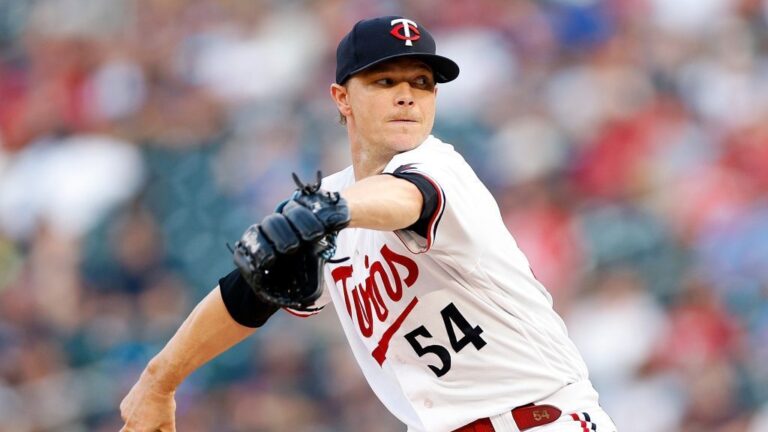
Sonny Gray is back in the Twin Cities after signing a two-year, $55 million contract on November 18. Gray’s return was not necessarily a move that many baseball pundits or even Minnesota Twins fans saw coming. However, in a somewhat surprising turn of events, the signing makes plenty of sense for both sides.
Gray gets the opportunity to return to a place where he experienced some of the best years of his career, while Minnesota adds a reliable frontline starter who can help push the team closer to contention.
What initially seemed like an unexpected reunion could end up being one of the most impactful moves across baseball heading into the 2027 season.
One of Baseball’s Most Underrated Stars
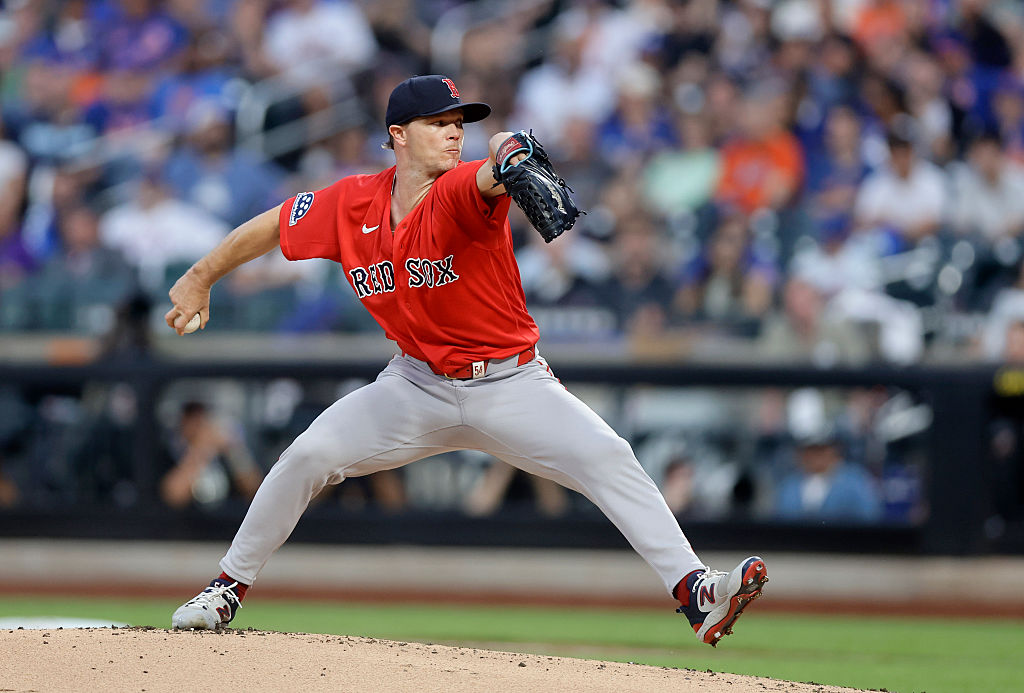
After 14 years of professional baseball and a career 3.51 ERA, you would think Sonny Gray would receive more respect and recognition as one of the best pitchers of his generation, right?
One reason Gray has perhaps flown under the radar compared to other elite pitchers is the number of uniforms he has worn throughout his career. After coming out of the collegiate powerhouse Vanderbilt, Gray was selected 18th overall by the Oakland Athletics.
He quickly established himself as one of the most promising right-handed pitchers in baseball, eventually becoming the ace of an Oakland team with legitimate postseason aspirations. Gray was a focal point of those talented Athletics teams featuring Josh Donaldson and Yoenis Céspedes that came up just short of reaching their postseason goals.
As free agency approached, Gray was moved to the New York Yankees, following Oakland’s familiar tendency to trade players before losing control of their contracts. Unfortunately, his time in the Bronx did not go as planned. Gray struggled on the mound and faced heavy criticism from the New York faithful, with many questioning whether he could handle the pressure and expectations that come with pitching in one of baseball’s biggest markets.
His tenure was short-lived, but the damage to his reputation was significant. The Yankees eventually shipped him to Cincinnati for pennies on the dollar compared to what they had given up to acquire him just a year earlier.
Since leaving New York, however, Gray has done nothing but prove his doubters wrong. After finding success in Cincinnati and eventually making a stop in Minnesota, Gray continued to establish himself as one of the most dependable starting pitchers in baseball.
His time in Minneapolis from 2022-2023 was arguably the best stretch of his career. Across those two seasons, he posted a 2.90 ERA over more than 300 innings while finishing as the runner-up for the American League Cy Young Award in 2023. In Minnesota, Gray rediscovered his best form and reminded the baseball world just how good he could be.
Following his 2023 campaign, Gray signed with the St. Louis Cardinals in free agency, where he quietly provided quality innings for a lackluster ballclub that continued to fall short of its ultimate goal of contention. That failure was certainly not due to Gray, who remained a dependable presence in the rotation. Heading into the following season, Gray was dealt from St. Louis to the Boston Red Sox as Boston looked to shore up its young rotation with an established veteran presence.
It was with the Yankees’ sworn rival in Boston that Gray experienced another renaissance in his career, posting a 2.72 ERA, the best qualified full-season mark of his career. He further solidified himself as one of baseball’s ageless wonders, continuing to evolve and strengthen his repertoire despite being well into his 30s. Rather than losing effectiveness over time, Gray seemed to be one of the few players in baseball who age like a fine wine, only getting better with experience.
His remarkable 2026 campaign made him one of the most sought-after free agents entering the offseason, despite being 37 years old. Many believed the Red Sox would make bringing Gray back one of their top priorities. Others thought the Atlanta Braves would target the right-hander to provide some much-needed stability to a rotation that has frequently battled injuries outside of Chris Sale. However, Gray and the Twins ended up being a match made in heaven that seemingly nobody was talking about.
The Fit for Minnesota
The Minnesota Twins finished their 2026 season with a 77-85 record, failing to reach .500 for the second consecutive season and settling for a third-place finish in a relatively weak AL Central. So why does signing a 37-year-old pitcher to a $55 million contract make sense for the Twins and their decision-makers?
It makes sense because both the Twins and Sonny Gray believe they can win in 2027.
At the 2025 trade deadline, an offseason signing like this just a season and a half later would have been unthinkable to most Twins fans. Minnesota entered the deadline below .500 and appeared to be falling out of contention. That July, the organization made the tough decision to sell, dealing away several core big-league pieces, including Jhoan Duran, Griffin Jax, Louis Varland, and Carlos Correa.
What followed was an underwhelming second half of the season, largely fueled by those departures and a constant wave of rumors surrounding some of the team’s remaining core players. Names like Joe Ryan, Byron Buxton, and Pablo López continued to surface in trade discussions, with many fans beginning to wonder whether their departures from Minnesota were simply a matter of when rather than if.
However, despite all the uncertainty, the Twins ultimately decided against trading away any of those remaining cornerstone players. Then, when the 2026 trade deadline arrived and Minnesota once again found itself below .500, the front office made a complete reversal from the previous year’s approach. Rather than selling off more pieces, the Twins decided to buy, bringing in established bullpen arms like Jeff Hoffman and A.J. Minter in an effort to strengthen the roster for the stretch run.
The change in approach was certainly noticeable. After spending much of the previous year tearing down portions of the roster, Minnesota was now making moves to reinforce it. That decision, combined with the arrival of several highly regarded prospects like Walker Jenkins and Emmanuel Rodriguez, with even more reinforcements on the way, has begun to turn heads around the league. For the first time in a while, Twins fans have reason to dream about what 2027 and beyond could look like.
The problem with those dreams, and where they could quickly turn into nightmares for Twins fans, is the pitching staff. Minnesota’s rotation is evidently the biggest question mark surrounding the big-league club after finishing with the sixth-worst team ERA in baseball at 4.56 last season.
Adding insult to injury, the Twins also struggled to limit home runs and walks, exposing some of the concerns surrounding a rotation filled with young, exciting arms that can be volatile and susceptible to giving up the long ball. Pitchers like Connor Prielipp, Taj Bradley, and Zebby Matthews possess plenty of potential, but their youth and inconsistency make relying on them to anchor a contending rotation a considerable gamble.
Simply put, if the Twins want to win now, they need a remedy for these rotation woes. Preferably, that remedy comes in the form of an established veteran who can provide stability at the front of the rotation alongside Joe Ryan while helping guide the younger arms through the grind of a full major-league season.
Enter Sonny Gray.
Gray is the epitome of a professional pitcher. Throughout his career, he has experienced the highs and lows of the game and learned how to respond when things don’t go his way. More importantly, he has continued to evolve as a pitcher, finding ways to sustain success even as he has gotten older.
Over the last several seasons, Gray has developed into a ground-ball specialist and one of the more effective pitchers in baseball at limiting walks and home runs. For a Minnesota rotation that desperately needs consistency, his skill set could be exactly what the organization has been searching for.
What’s Next?
One of the more exciting aspects of the Gray signing for Twins fans is that, by all accounts, the organization does not appear to be done improving its roster. Following the conclusion of the 2026 season, Twins Chairman and CEO Tom Pohlad acknowledged that a payroll near $100 million was “not sufficient to be consistently competitive,” while pledging to “meaningfully invest” in the team throughout the offseason.
The first of those investments appears to be a perfect fit in Sonny Gray. However, when Gray signed on to return to his former team, he also acknowledged that Minnesota’s plans for the offseason extended beyond his own arrival. Gray was quoted as saying that “there are still other things they’re looking to do and looking to add.” Perhaps even more notably, he made his confidence in the organization’s direction abundantly clear, stating, “There’s no way I would have come back to Minnesota if I didn’t think we could win.”
For a fanbase that has spent much of the last year questioning the organization’s commitment to winning, those comments are certainly encouraging. Gray isn’t simply returning to a familiar clubhouse or a city where he previously found success. He’s returning because he believes the Twins have the pieces, and the willingness to add more, to compete in 2027.
Another notable aspect of Gray’s contract that Twins fans should take note of is the sense of urgency it creates. The deal for the 37-year-old right-hander is only two years, meaning Minnesota has a relatively short window to capitalize on this investment. If the organization does not continue pursuing immediate improvements to the roster, it risks wasting an opportunity to get the most out of Gray’s remaining productive years.
A signing like this cannot exist in a vacuum. If the Twins are serious about competing in 2027, Gray’s arrival needs to be part of a larger commitment to building a team capable of making a legitimate postseason push.
Final Thoughts
The return of Sonny Gray represents much more than a reunion between a pitcher and an organization where he previously found success. It represents a potential turning point for a Minnesota franchise that has spent the better part of the last half-decade trying to determine the best path forward. More importantly, it represents a renewed desire and commitment to winning, from ownership all the way down.
There are still questions that need answering, and Gray alone is not going to turn a 77-win team into a World Series contender. However, his arrival gives this organization something it desperately needed: stability, experience, and a reason to believe again. For a fanbase that has endured plenty of uncertainty, there’s now a reason to hang its hat on one of the best starting pitchers of the last decade and a half calling Minnesota home for the next two years.
Become a Member of Just Baseball
Subscribe and upgrade to go ad-free!
* Save 25% by subscribing annually.

Written by