
Who Will Get the Qualifying Offer This Offseason?
Only a few players are locks for a qualifying offer this year, but there will be plenty of borderline calls.
After the World Series ends, teams have a five-day window to extend qualifying offers (QO) to impending free agents. The contract is for one year, and the salary is based on the average of the 125 highest salaries in the sport. This year, MLB has announced the value at $23.15 million.
To be eligible to receive the QO, a player must have spent the entire last season with a single team, making someone like Tarik Skubal ineligible. Additionally, players can only receive the offer once in their career.
When a player is offered the QO, they have a few weeks to take it or gamble on the open market. If they decline, the team that offered the deal is given draft compensation if the player signs elsewhere.
The four players who accepted the deal last offseason were Shota Imanaga (Cubs), Gleyber Torres (Tigers), Trent Grisham (Yankees), and Brandon Woodruff (Brewers).
Some players who rejected the QO last year include Framber Valdez (Astros), Kyle Tucker (Cubs), Ranger Suárez (Phillies), and Bo Bichette (Blue Jays). Each of them signed elsewhere, netting compensation for their former clubs.
At a glance, it seems simple: a one-year staple contract to bridge a player to their next big paycheck. However, a lot goes into the decision, like timing, organizational stature, market value, and plenty of other factors.
Let’s break this list into three categories: players who should definitely get a QO, a few names who could/should get the offer, and three guys to steer clear of.
All contract projections via Spotrac.
Players Locked In for a Qualifying Offer
Randy Arozarena (Mariners)
Arozarena, 31, just put together an All-Star campaign in Seattle before heading to free agency.
For the M’s, the big-game outfielder posted 5.7 bWAR, an .865 OPS, and launched 26 home runs. He’s a very poor defender, but has regularly made up for it on offense. Few bats in baseball have been as consistent since 2021, as he ranks tied-25th in the league for adjusted OPS+, just behind Kyle Schwarber and Yandy Díaz.
Still, his prior two seasons were only slightly above average, and he’s not moving the space needle in Seattle. This past season wasn’t kind to the team with the trident, as they finished 76-86 – good for third in a diminished AL West.
The Mariners should be active in the Arozarena market, but they don’t need to be swept up in a bidding war. He’s projected to land over $127 million across five years (roughly $25.4 million AAV), which would be one of the heftier contracts on Seattle’s current roster.
With so much young talent, who’ll likely be nearing extension territory soon, the M’s have to be extremely tentative about who they invest in. That’s why a QO is perfect.
If Arozarena accepts, the Mariners retain one of their best bats in the short term, without allocating significant long-term resources. If he rejects the offer and signs elsewhere, which he almost certainly will, the Mariners’ farm would reap draft rewards.
Arozarena is the classic QO candidate, and the Mariners are in a win/win scenario.
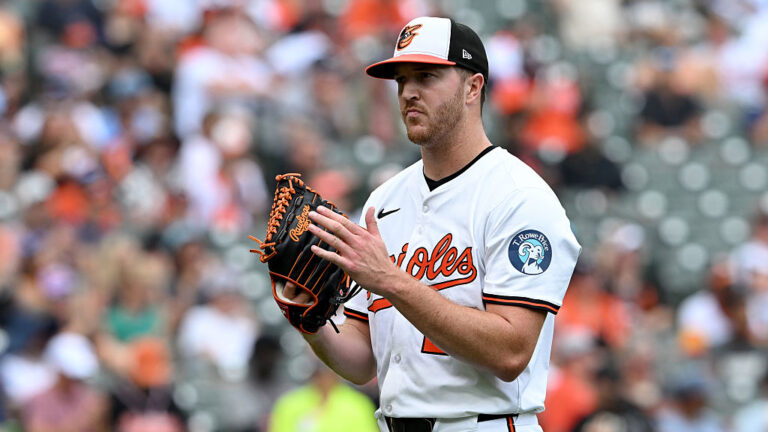
Trevor Rogers (Orioles)
Rogers, 28, came back to the O’s in 2026 after an otherworldly 2025 season. Even though he regressed, the southpaw still accrued 2.2 bWAR and won 10 games for a disappointing Orioles team.
His market will be active, and the Orioles should steer clear. He’s volatile, like any pitcher, and he’s coming off more than a rollercoaster season. Furthermore, the lack of depth in this year’s FA class could push his asking price beyond what’s reasonable.
In the first half, Rogers was a 4.48 ERA arm and struck out 6.9 batters per nine. In the second half, his ERA dropped to 3.52, and strikeouts jumped to 10 batters per nine. In a tale of two seasons, you defer to the QO.
Baltimore’s once-prolific farm system has stalled. Talent is riddled throughout the Orioles roster, but execution is rare.
Because of the organization’s purgatorial state, committing to an arm like Rogers long-term feels impossible. He’s a middle-of-the-rotation guy with frontline potential. If the Orioles have anything, it’s potential. They don’t need another mystery box.
Nevertheless, in the unlikely scenario in which Rogers accepts the QO and ties together the 2027 B’more rotation, it wouldn’t be a world-ending decision. While the Orioles wait on the Adley Rutschman trade return to mature, they need a holdover.
If Rogers is willing to hold down the fort for another year, without demanding his projected six-year, $158 million deal, then so be it. If not, the Orioles at least get something. The beauty of the QO strikes again.
Seiya Suzuki (Cubs)
Suzuki, 32, spearheaded a mighty Chicago offense last season. Since coming stateside, the powerful right-handed bat has been a pillar of Cubs consistency.
He slashed .270/.368/.473 and his career OPS landed at .823 following another successful year. Suzuki also improved his defense drastically, resulting in 5.1 bWAR this past season.
Now, as free agency approaches, the Cubs seem hesitant to re-sign their star outfielder. According to Patrick Mooney of The Athletic, the Cubs are “unlikely” to entertain a bidding war for Suzuki.
With his departure looming, and a sure market for his blistering bat, the Cubbies would be crazy not to extend a QO.
The likelihood that Suzuki accepts is minimal. Still, with the Collective Bargaining Agreement playing a major part in offseason operations, the worst that could happen is Chicago ends up with an extra draft pick.
Suzuki is projected to earn right around four years, $110 million. Chicago has the funds to retain their homer-happy outfielder, but plenty of other holes to address. It’s somewhat sour that the end-all-be-all contract offer will likely be a QO safety net.
If this is goodbye, Suzuki’s Chi-Town tenure was masterful at a baseline, and hopefully the Cubs will at least get a draft pick.
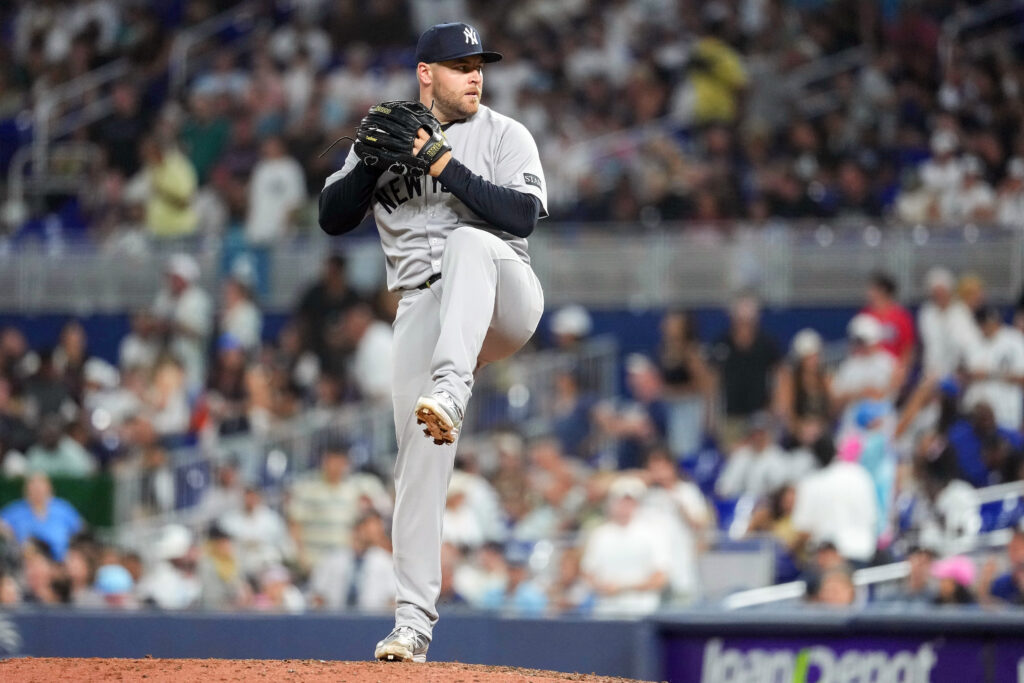
David Bednar (Yankees)
David Bednar (nicknamed “Bus”) pitched in pinstripes this past season and anchored one of baseball’s best bullpens.
In his age-32 campaign, the righty twirled 69.1 innings and locked down 35 saves. He was integral to the Yankees’ run to a postseason berth.
According to Jon Heyman of The New York Post, the Yanks are “leaning towards” a Bednar QO, so this one is a bit of a layup.
As the best proven closer on the market, Bednar will likely get hefty offers from elsewhere. That’s why New York is jumping at a QO.
The Yankees trust in pitching coach Matt Blake. So much so, he just signed a three-year extension. Losing Bednar would be a blow. Thankfully, few teams could absorb it as gracefully as New York.
With Blake’s pitching philosophy, the payroll in the Bronx, and tactical market precision, the Yanks are in a good spot – Bednar or not.
This QO factors in as a fallback offer. Bednar will likely decline, and if he signs elsewhere, the Yankees land draft compensation.
Bednar is projected to land a three-year, $47 million deal. As the top relief arm on the market, he’s got a good chance to exceed expectations.
Players Who Could/Should Get the QO

Adrian Morejon (Padres)
The Padres were built on arm talent. Specifically, the bullpen is overflowing with Stuff+ and elite archetypes.
Adrian Morejon is an incredible player, and he helped sculpt the Padres’ bullpen into the force it became.
The southpaw reliever dialed in after a shaky first half and finished 2026 with a 2.83 ERA in an impressive 86 innings. He stays on the field and performs year in and year out.
Morejon should get a lot of money. He’s only projected to land a three-year, $35.8 million deal, but if someone decides to give him closer money, that could change quickly.
For reference, Tanner Scott inked a four-year, $72 million contract ahead of the 2025 season in LA. Granted, he had more experience as a closer, but Morejon might be the better arm.
Furthermore, there’s some speculation that Morejon has the toolkit to be the next reliever-turned-starter. If that’s the case, and he joins the likes of Michael King, Clay Holmes, and others, he’ll be worth even more.
It would be ludicrous for the Padres to leave Morejon out to dry with no QO.
San Diego has the 30th-ranked farm system in Major League Baseball (via FanGraphs). Morejon is unlikely to sign the QO, but the Friars would at least recoup some value in next year’s draft.
Jake Bauers (Brewers)
After a stagnant start to his MLB career, Jake Bauers joined the Milwaukee Brewers in 2024. The big lefty struggled for consecutive seasons before making serious swing adjustments heading into 2026.
With a new refined approach at the dish, Bauers feasted. He finished 2026 with a gaudy .874 OPS, while launching 26 home runs for a Brewers club that rarely went deep.
Historically, the Brewers stay away from big contracts. Bauers will likely get offers for a multi-year deal. That gives Milwaukee a sneaky edge with the QO.
The $23.15 million contract they’d have to offer isn’t normal Brewer-code, but Bauers isn’t normal either.
If the regular season wasn’t enough, the Bauers breakout continued into October. First, the lefty worked a walk in a 12-pitch PA, which set up a 2-RBI single from Christian Yelich in a pivotal moment against the mighty Dodgers.
He continued his playoff prominence with an 11-pitch go-ahead home run off two-time Cy Young winner Blake Snell. In front of a crowd of Dodger die-hards, Bauers went lefty-on-lefty against one of the game’s greats.
His heroics brought the Brew Crew to the 2026 World Series, where they earned the first ring in franchise history. Bauers was an integral part of the team and deserves the uncomfortable price tag on a short-term deal.
On the open market, Bauers is projected to land a four-year, $58 million deal. His AAV would be higher on the QO, but Milwaukee wouldn’t have to worry about extra years.
If he says no and signs elsewhere, few teams in baseball are better at repurposing the draft resources the Brewers would receive.
Michael Soroka (D-backs)
The D-backs just concluded one of the more confusing seasons in modern franchise history.
They were good, but not good enough. They had talent, but sometimes it didn’t even show up. Given Zac Gallen’s worrisome performance and the rest of the rotation’s inconsistency, Arizona needs to throw Michael Soroka a bone.
Soroka, 29, wrapped up 2026 with a 3.41 ERA, 114 strikeouts, and 2.2 bWAR.
The right-hander was once a hot commodity on the trade market because of his impressive underlying data. Interestingly, Soroka’s 2026 was much more successful than metrics expected.
His xERA of 4.12 ranked in the 47th percentile. Still, he managed a +17 pitching run value (per Baseball Savant) and had one of MLB’s best fastball/breaking-ball combos.
The D-backs are in limbo, and a one-year flier on Soroka would do wonders for the Snakes’ middling rotation.
This move, albeit aggressive, feels like a QO match.
Soroka may not accept, but the desert’s prospect capital is dry. If Arizona extends the deal, they either land a solid arm for 2027 or another pick.
He’s projected to earn a four-year, $80 million deal. With that, the D-backs should extend a QO, kick their feet up, and play the waiting game.
If he declines, it shouldn’t cause much stress. This serves as a safety net for a rotation in question.
The open market is deep enough to replace a Soroka, but unless the D-backs plan to cut big checks, they shouldn’t go in without a plan B. Soroka’s QO is the backup plan.
Brandon Lowe (Pirates)
The Pirates, like their NL Central brethren Brewers, need to get uncomfortable.
Superstar ace Paul Skenes was uncomfortable this season. He went from atop baseball’s current Mount Rushmore to a bona fide Lance Lynn. Now that his stardom hangs in the balance, Pittsburgh doesn’t need question marks in the lineup.
Brandon Lowe, 32, is as sure as you can get.
In a career spanning over 3,600 PA, Lowe has an .810 OPS and a 123 OPS+ as a primary second baseman. This past season, he rocked pitchers for an .824 OPS, 35 cannonballs, and a career-high 5.4 bWAR.
The Pirates’ window started to glimmer early in the year. The blueprint is there to raise the jolley roger on the rest of the central, but without Lowe, the vessel has holes.
There’s a good chance Lowe could decline the one-year deal and then re-sign as a free agent. Regardless, Pittsburgh finally found some lineup legitimacy, and they should try to retain Lowe at any reasonable price.
Extending the QO is a great jumping-off point for a coveted free agent, and if the Buccos are lucky, he might say yes. If not, and he opts for his projected four-year, $91 million deal, then the ninth-most valuable farm system in baseball (via FanGraphs) gets that much better.
Who Shouldn’t Get a QO?
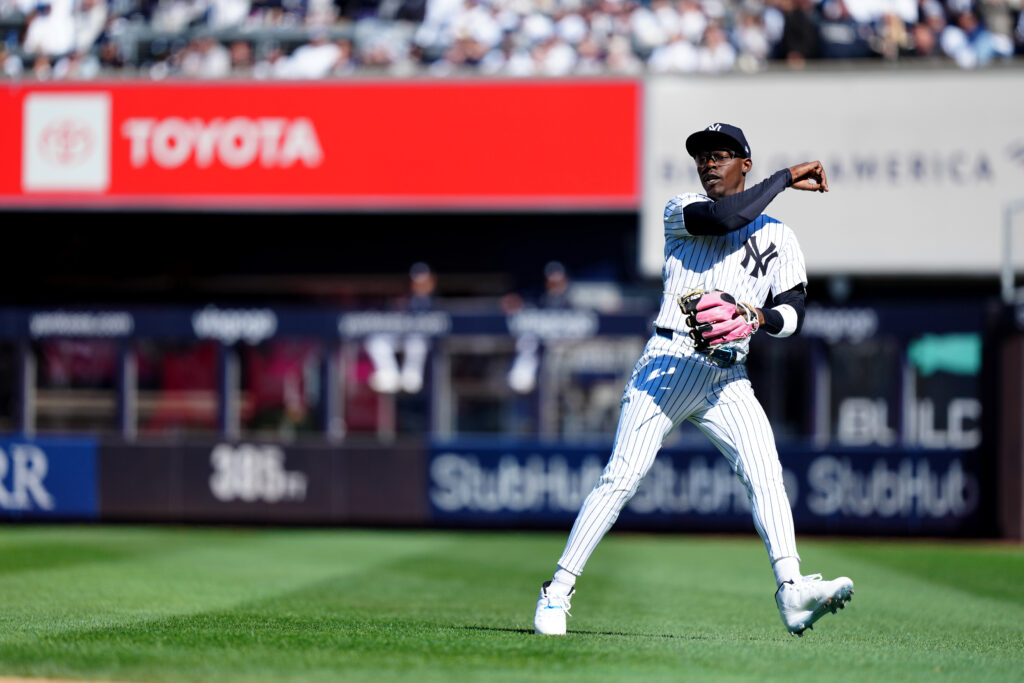
Jazz Chisholm Jr. (Yankees)
Before the 2026 season, the New York Yankees ran into QO trouble when Trent Grisham accepted their one-year offer.
The buzz around the contract suggested the Yankees didn’t expect Grisham to resign, and it totally caught them off guard. New York can’t afford to do the same with Jazz Chisholm Jr.
The polarizing infielder’s personal goal was to “go 50/50” in 2026. He finished the year with an impressive 41 stolen bases. Unfortunately, he only hit 19 home runs. Chisholm’s performance at the dish was three percent below average overall. And although defense and baserunning somewhat upheld his overall value, he was nowhere near a $23.15 million AAV player.
Now, the Yankees will have to decide whether to offer him a QO. In this instance, defer to the definition of insanity.
GM Brian Cashman has access to all the funds he could ever need. Chisholm shouldn’t be a massive loss for such a rich organization.
Drama, unrealized expectations, and numerous media clashes characterized his New York tenure. The Yankees were swept out of the 2026 playoffs by the division-rival Rays, which is exactly why those issues should be addressed.
When you’re winning, the formula is a fact. When you’re losing, it’s up for debate. The Chisholm experiment was intriguing, but it needs to end. The Yanks don’t need to risk another QO jumpscare.
Become a Member of Just Baseball
Subscribe and upgrade to go ad-free!
* Save 25% by subscribing annually.

Written by
AJ Stone is a sportswriter and journalist currently attending the University of Missouri School of Journalism. His work has appeared on Redbird Rants, Heavy.com, Arcadia News,…