
Which Impending Free Agent Arms Have the Most To Gain in October?
October baseball is when legends are born and millions can be made. Each of these soon-to-be free agent pitchers can significantly increase his earning power with a strong performance in the playoffs.
October baseball: where contenders immortalize themselves as champions, where great players cement themselves as icons of their franchises, and where impending free agents have the ultimate stage to elevate their value and turn a few weeks of October magic into millions of dollars on their next contract.
Playoff baseball has long been a land of opportunity for big league players. The peaks and valleys of the regular season stat line have finally faded into the rearview mirror, and suddenly, the canvas is blank once again. Every pitch carries more weight, every swing means more, and every performance has the opportunity to reshape how a player is remembered and valued.
In the past decade, Major League Baseball fans have had the privilege of watching postseason heroics from numerous players on the cusp of entering the open market, turning October into the ultimate audition for their next contract.
From Nathan Eovaldi’s courageous extra-inning performance in Game 3 of the 2018 World Series, to Walker Buehler’s six shutout innings in the 2024 World Series, and who could forget Jorge Soler’s mammoth home run in the 2021 World Series that may never have landed?
Each of those performances resulted in the players being lionized in a franchise’s history books, but also undoubtedly led to an increase in their value as they entered free agency shortly after season’s end.
As the 2026 baseball season approaches its postseason, it is worth taking note of some big league players who we believe will have an excellent opportunity similar to the likes of Eovaldi, Buehler, and Soler: a chance to maximize their earnings this offseason while potentially becoming a hero for their current ballclub.
For some, the upcoming postseason could represent more than a chance to compete for a championship — it could be their final games in the place they have called home, giving them one last opportunity to leave a lasting mark before entering free agency.
This article is one in a two-part series. You can read about impending free agent hitters here. All statistics as of September 8.
Clay Holmes

Following three strong seasons as a high-leverage reliever for the Yankees from 2022 through 2024, sinkerballer Clay Holmes entered free agency with no shortage of intrigue.
Holmes not only presented as an attractive option for contenders looking to bolster their bullpens during the 2024 free agent cycle, but he also made it known that he wanted to transition into a starting role. The hope was that the success he had enjoyed in shorter relief stints could be extrapolated into effectiveness over multiple trips through a lineup.
That winter, the crosstown-rival New York Mets were the team willing to take the gamble, signing the 32-year-old right-hander to a three-year, $38 million contract that included a $12 million player option for the final season.
As we near the end of the second year of that deal, it is clear not only were the Mets wise in their gamble to believe in Holmes as a starter, but the right-hander’s success has been so great that it seems inevitable that he will be opting out of the third year of his contract so he can re-enter the open market and capitalize on his success.
During his first season and a half as a starter with New York, Holmes posted a 3.26 ERA across nearly 220 innings, proving that his success as a reliever could indeed translate to a starting role.
At the trade deadline this summer, the Mets dealt Holmes to the Chicago Cubs in a package for highly regarded infield prospect Jefferson Rojas. Since joining the World Series-contending Cubs, Holmes has continued to pitch to a low-3.00s ERA and has impressed across his six starts, positioning himself for a role in Chicago’s postseason rotation.
For the better part of the last several seasons, the name Clay Holmes has carried equal parts intrigue and uncertainty. When he arrived in the Bronx, questions surrounded his ability to handle high-leverage situations under the bright lights of baseball’s biggest market. He answered those questions quickly, establishing himself as a reliable and dominant piece of the Yankees’ bullpen.
When he signed with the Mets, the questions shifted: Could a pitcher who had thrived in short bursts remain effective and healthy over the course of a full season as a starter? Nearly two years later, Holmes has largely put those concerns to rest, delivering back-to-back effective campaigns and establishing himself as a legitimate starting pitcher.
Now, as Holmes prepares to enter free agency for the second time in three seasons, one question remains largely unanswered: Can he do it on baseball’s grandest stage?
The Chicago Cubs are sitting in a National League Wild Card position and appear poised for a postseason berth. If Holmes is able to perform in the playoffs, he will only further strengthen his value entering the offseason, undoubtedly making him one of the most sought-after options in free agency.
Kevin Gausman

Another Cub finds himself on this list, making it increasingly difficult to ignore just how aggressively general manager Jed Hoyer and Chicago have built what they believe is a championship-caliber roster. Veteran right-hander Kevin Gausman should be a familiar name to baseball fans, having carved out a long and illustrious career across six organizations and 14 seasons.
Gausman was the fourth overall pick in the 2012 MLB Draft out of LSU, selected by the Baltimore Orioles with the hope that he could eventually become the ace of a rotation in desperate need of one. He quickly justified those expectations in the minors, spending less than a full season in Baltimore’s farm system before making his major league debut in 2013.
His path to becoming a frontline starter, however, was far from linear. Gausman spent the next six seasons developing in Baltimore before stints with the Braves and Reds, experiencing his share of ups and downs while searching for the consistency that had eluded him early in his career.
Then, in 2020, everything finally clicked.
After signing with the San Francisco Giants, Gausman began to realize the potential that had made him a top-five pick nearly a decade earlier. Across two seasons in San Francisco, he posted a 3.00 ERA over 251⅔ innings and established himself as a legitimate frontline starter. After years of development and uncertainty, Gausman had finally become the ace-caliber arm Baltimore had envisioned.
He entered free agency during the 2021-22 offseason as one of the premier starting pitchers on the market, drawing interest from contenders looking to fortify the top of their rotations. The Toronto Blue Jays ultimately won the bidding, signing Gausman to a five-year, $110 million contract.
The signing quickly proved to be a wise investment. Over the first four seasons of the deal, Gausman made every start from 2022 through 2025 and posted a 3.48 ERA, establishing himself as one of the more reliable arms in baseball. He also played a major role in Toronto’s World Series run last fall, delivering a strong postseason across five starts as the Blue Jays came within a game of a championship before falling to the Dodgers.
Entering 2026, both Gausman and the Blue Jays had aspirations of returning to the Fall Classic. For Toronto, it was another opportunity to chase the championship that had narrowly slipped away. For Gausman, it was a chance to prove that, even at 35 years old, he still had enough left to command a significant contract on the open market.
Instead, the season quickly became a frustrating one for both sides, as the Blue Jays struggled to build momentum and Gausman endured an uneven campaign of his own. By the trade deadline, Toronto determined that a postseason return was unlikely and dealt the veteran right-hander to the North Side of Chicago, giving Gausman a fresh opportunity with the Cubs.
Now, at 35 years old and playing for a contender once again, Gausman finds himself in a fascinating position. His résumé is already impressive, his postseason experience is extensive, and his track record of durability speaks for itself. But free agency is approaching, and Father Time remains the one opponent he cannot outpitch.
October could provide Gausman with one final opportunity to prove that he can still anchor a championship-caliber rotation—and, perhaps more importantly, one final stage on which to convince potential suitors that another significant payday is still warranted.
Freddy Peralta
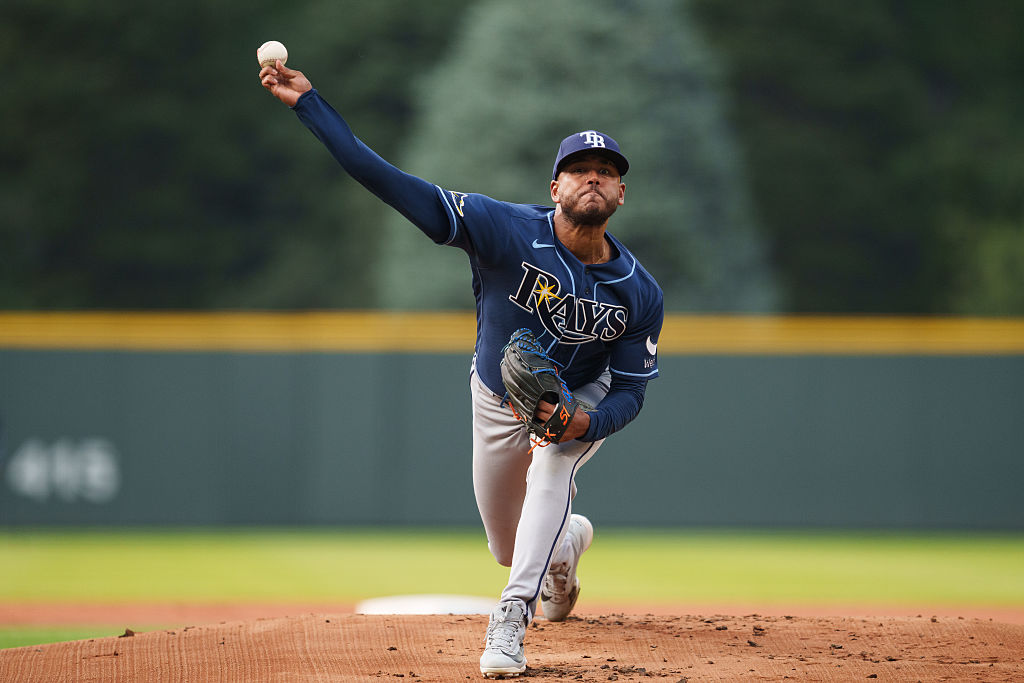
Entering 2026, Freddy Peralta was heading into the final year of the five-year, $15.5 million pre-arbitration extension he signed with the Brewers in 2020. After nine professional seasons and years of dominance at the major league level, this free agent cycle represented Peralta’s first true opportunity to cash in on his success.
Peralta reached the majors with Milwaukee at just 22 years old in 2018, initially serving as a swingman and occasional sixth starter. Over his first three seasons, he moved between the rotation and bullpen, gaining valuable experience in a variety of roles, including high-leverage situations and the postseason.
Even then, Peralta was known for his electric arsenal, particularly a fastball that generated exceptional swing-and-miss. The pitch earned him the nickname “Fastball Freddy.” As he developed the rest of his repertoire, Peralta eventually earned a full-time starting role in 2021 and broke out, throwing nearly 150 innings with a 2.81 ERA.
From there, Peralta established himself as one of Milwaukee’s most reliable starters, producing four consecutive strong seasons and eventually taking over as the ace of the Brewers’ rotation.
Following Milwaukee’s 2025 season-ending loss to the Dodgers, speculation quickly grew that the Brewers could trade Peralta rather than risk losing him for next to nothing as he entered the final year of his contract. On January 21, those rumors became reality when Milwaukee sent Peralta to the New York Mets in exchange for a package headlined by elite prospects Jett Williams and Brandon Sproat.
The Mets entered 2026 with high expectations for their new rental ace, handing Peralta the ball on Opening Day. Unfortunately, his debut foreshadowed what would become a difficult tenure in Queens. Peralta allowed four earned runs over five innings against the Pirates and never truly found his footing, carrying an ERA near 5.00 by the trade deadline.
With Peralta struggling, the Mets underperforming and his contract set to expire after the season, New York dealt Fastball Freddy to the Tampa Bay Rays at the deadline for a package of minor leaguers outside of Tampa Bay’s top 10 prospects.
In just half a season, Peralta’s trade value had fallen dramatically—from headlining a package that included two top-100 talents to being exchanged for a group of younger prospects still facing significant developmental hurdles. That raises the question Peralta himself is undoubtedly asking: How much will these struggles affect his value on the free agent market?
Since arriving in Tampa, Peralta has shown modest improvement, with several of his underlying numbers trending in the right direction. Still, he has yet to recapture the dominance that made him one of baseball’s premier starters in Milwaukee.
With the Rays atop the American League East and the postseason approaching, Peralta is expected to have an opportunity to pitch on baseball’s biggest stage. For teams evaluating the free agent market, his October performance could be crucial. The question is simple: Is the old Freddy Peralta still hiding somewhere in that right arm?
Bryan Abreu
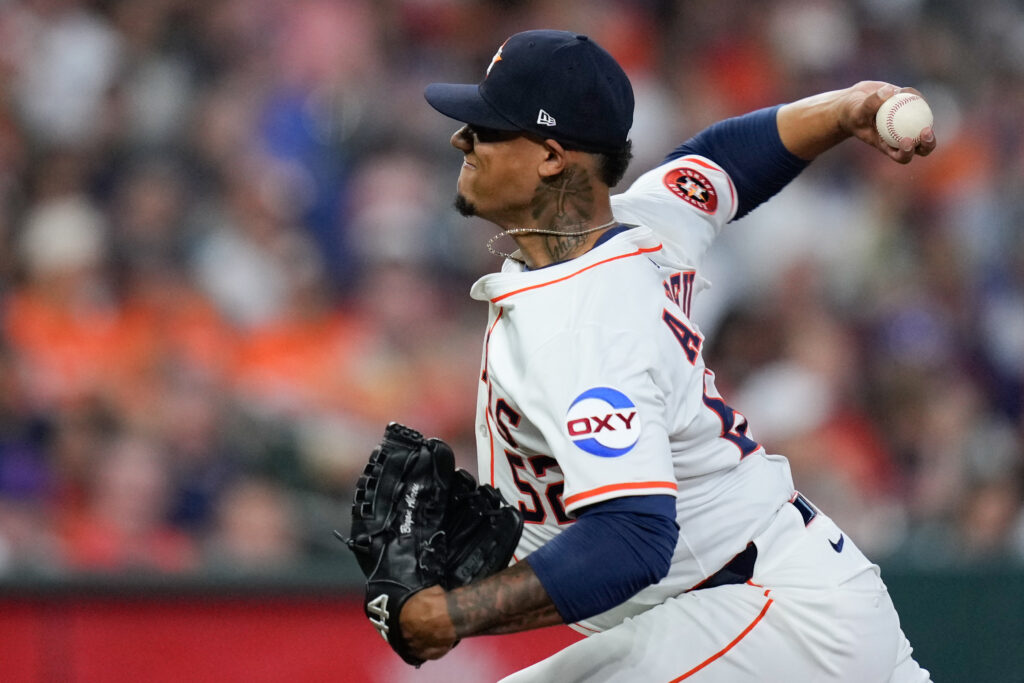
For nearly half a decade, Bryan Abreu has quietly established himself as one of the most dominant relievers in Major League Baseball. What began as a promising young arm in the Astros’ bullpen has developed into a high-leverage weapon capable of overpowering hitters with elite velocity and a nasty breaking ball.
Abreu made his major league debut with Houston in 2019 and saw limited action during the shortened 2020 season. When he finally received a full season of work in 2021, it became clear that the right-hander possessed truly electrifying stuff. The challenge was harnessing it. Abreu’s command was volatile early in his career, leaving both Astros fans and the organization wondering what he could become if everything came together.
They did not have to wait long for that question to be answered. By 2022, Abreu had developed into one of the best relievers in baseball, attacking the strike zone more consistently while maintaining the arsenal that had made him so intriguing from the start.
The right-hander emerged as one of the primary setup men for longtime Astros closer Ryan Pressly and, that October, pitched on baseball’s biggest stage as Houston defeated the Phillies to win its second World Series in five seasons.
Abreu’s stock only continued to rise in 2023, when he somehow improved upon his breakout campaign while cementing himself as Houston’s primary eighth-inning option. With Pressly approaching the latter stages of his career, it appeared Abreu could eventually be next in line for the ninth inning.
That succession plan was put on hold when Houston signed All-Star closer Josh Hader to a massive contract after his departure from the Padres. Hader immediately assumed the ninth-inning role, leaving Abreu as the Astros’ eighth-inning weapon. But it quickly became apparent that Houston’s bullpen was an exception to the rule: Abreu was already good enough to be the top reliever in many other bullpens around baseball.
Over the following seasons, Abreu and Hader formed one of the league’s most formidable late-inning duos, giving the Astros a 1-2 punch that few teams could match.
The lone blemish on Abreu’s resume came during the first half of his 2026 walk year, when he posted a 5.81 ERA and raised questions about whether the 29-year-old had finally taken a step backward. Those concerns, however, have quickly faded. As September approaches, Abreu has posted a near-1.00 ERA in the second half, dramatically improving his season-long numbers and restoring much of the dominance that has defined his career.
Now, with the Astros battling their in-state rival Texas Rangers for the American League West crown, Abreu enters a crucial stretch of the season. The next few weeks—and potentially October—could play a significant role in how teams evaluate him this offseason.
Will suitors view Abreu as an elite setup man who could eventually take over a contender’s ninth inning, or as an eighth-inning specialist beginning to decline? How he performs down the stretch should go a long way toward providing that answer.
Tyler Mahle
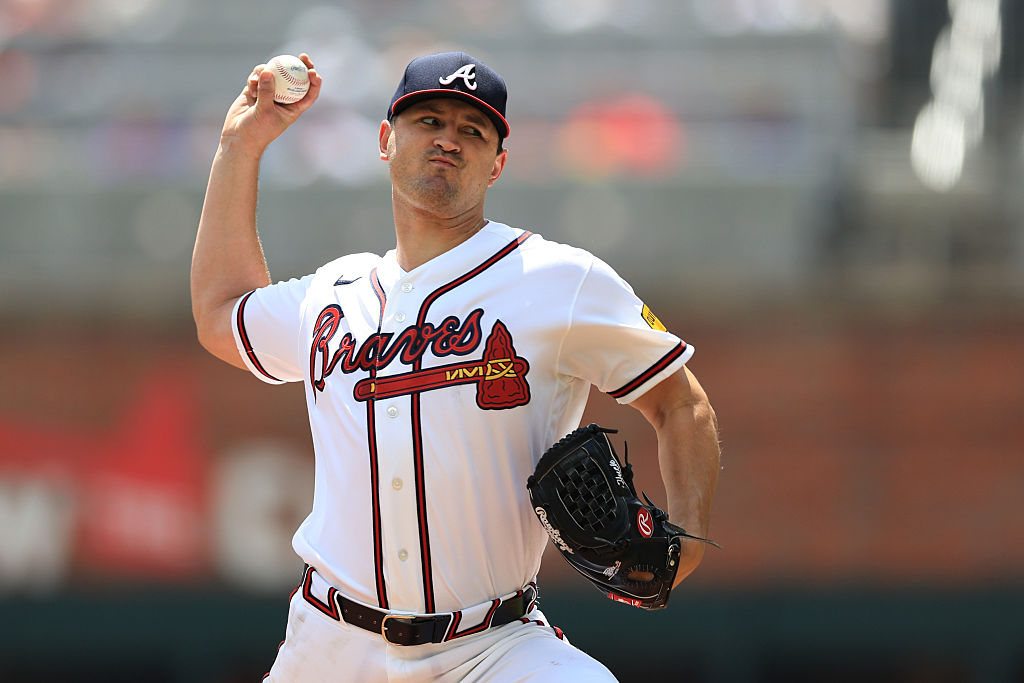
Entering 2026, Tyler Mahle found himself at a critical point in his long career. Once viewed as a promising young starter with the Cincinnati Reds, Mahle suffered injuries and setbacks over the last half-decade, leaving his stock at an all-time low.
At 31 years old, after signing a one-year prove-it deal with San Francisco in the offseason, it was apparent that if Mahle was going to extend his stay in The Show much longer, he had to display the talent that made him so promising early in his career.
Mahle spent the first several years of his career as a back-end starter for the Reds, consistently showing flashes of upside but struggling to string together extended stretches of high-level production. That changed in 2021, when the right-hander truly captured the attention of the baseball world.
Mahle posted a 3.75 ERA across 180 innings, proving he could not only handle a heavy workload but also sustain the level of production expected from a top-of-the-rotation starter.
As the 2022 season approached, it became clear that the rebuilding Reds did not view Mahle as part of their long-term plans. At the trade deadline, Cincinnati dealt him to Minnesota for a prospect package that included Spencer Steer and Christian Encarnacion-Strand.
Unfortunately for the Twins, Mahle’s tenure in Minnesota was derailed by injuries. He made just nine starts over the next year and a half and, from the 2022 trade deadline through 2025, managed fewer than 150 innings across four seasons with Minnesota and Texas. A pitcher who had once demonstrated the ability to handle a full workload had suddenly become defined by his inability to stay on the mound.
That uncertainty led to the aforementioned one-year prove-it deal with San Francisco in 2026. In the pitcher-friendly confines of Oracle Park, Mahle finally managed to stay healthy and take the ball consistently. The results, however, were far from ideal. His ERA ballooned above 5.00 in the first half, and with the Giants struggling and Mahle headed for free agency, San Francisco ultimately dealt him to the Atlanta Braves at the trade deadline for a modest prospect return.
Since arriving in Atlanta, however, Mahle has seemingly rediscovered something that had been missing for years. Through 36 innings with the Braves, he has posted a remarkable 1.24 ERA, transforming from a struggling rental into a reliable weapon for the National League East leaders every fifth day.
With October approaching, Mahle has put himself in position to earn a spot in Atlanta’s postseason rotation. More importantly, his second-half resurgence has given him an opportunity to prove that this version of Tyler Mahle is sustainable.
If Mahle is able to play postseason hero in Atlanta, he could see his payday this offseason take a complete 180-degree turn from what it was projected to be at the All-Star break.
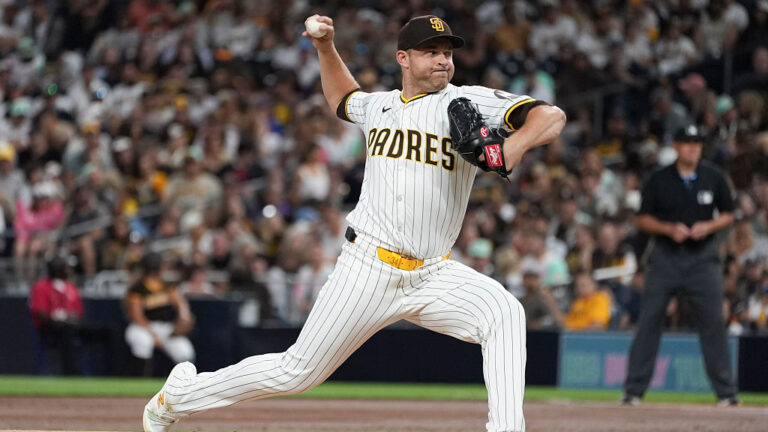
Michael King

Michael King is, without a doubt, the most complex name our editorial team at Just Baseball selected for this list. The complexity, however, has little to do with King’s performance on the field. Instead, it stems from the unusually complicated contractual situation surrounding the San Diego Padres right-hander.
King rose to the big leagues by way of the Bronx. He debuted for the Yankees with a short stint in 2019 and then put together an incredibly respectable resume as a Swiss Army knife out of the Yanks’ bullpen over the next four seasons. King was utilized as a fireman in New York, as he was put into high-leverage situations at any stage of the game and was entrusted to go and dominate for short and long spurts.
Following another stellar 2023 season in the Bronx, the Yankees shipped the sinkerballer out west to the Golden Coast of San Diego, as King was one of the centerpieces in the massive package sent to the Padres for the services of Juan Soto.
Before the plane even touched down in San Diego, the Padres had plans to use King as a full-time starting pitcher, a role in which he had succeeded for New York down the stretch the year before. The Padres trusted that the effectiveness of King’s dynamic sinker/sweeper combination would be effective through several turns through the order, as it was such a unique cross-body delivery.
It did not take long for the Padres to be proven right in their gamble on King, as he shined in his first full year as a starter in 2024, dominating to a 2.95 ERA over a career-high 173.2 innings pitched.
Along with that regular season dominance came a very strong showing in October for King. He threw a memorable 12-strikeout game in the Wild Card round that featured a swinging strikeout of Travis d’Arnaud that will be making the rounds on highlight reels long after he has hung up his cleats.
Entering 2025, King was poised for a huge payday at season’s end, as he had proven to have the durability and pitch mix to sustain success as a starter over a full season. He just had to do it for one more season prior to entering the market.
Sadly, for King, plans for a big payday were thwarted by the injury bug, as he only threw 73.1 innings on the year. He was barely able to make it back in time for the Padres’ short-lived 2025 postseason run.
Therefore, when he finally entered the market, there were significant questions about the 30-year-old’s injury status and whether he could replicate his breakout 2024 season. Those uncertainties ultimately led him back to San Diego on a uniquely structured contract.
On the surface, the deal is relatively straightforward: King and the Padres agreed to a three-year, $75 million contract that could keep the right-hander in San Diego through 2028, with an average annual value of $25 million. The structure of the deal, however, is anything but simple.
King’s 2026 salary is just $12 million, while the second and third years are player options. After the 2026 season, King can either opt into a $28 million salary for 2027 or take a $5 million buyout and return to the open market for another opportunity to cash in. If he chooses the 2027 option, he will then have another decision to make: whether to opt into the 2028 season at $30 million, with no buyout attached to the option.
King’s decision on whether to exercise his options was always going to hinge on his performance in 2026. If he could prove he was healthy and recapture his dominant 2024 form, returning to the free-agent market would make sense. If not, he would at least have the security of remaining in San Diego on a significant one-year salary.
As mid-September approaches, however, it is becoming increasingly difficult to envision King staying under contract for 2027. The right-hander has seemingly returned to his 2024 form while showing no lingering signs of the health concerns that once surrounded him. He currently owns a 3.00 ERA and is on pace to surpass his 2024 innings total.
Just as importantly, King is doing it for a Padres team with everything to play for. San Diego is battling the Arizona Diamondbacks for the National League’s final Wild Card spot, meaning every start carries significant weight. With the postseason approaching, King has both the opportunity to help push the Padres into October and strengthen his case for another lucrative trip to the free agent market.
This stretch run will undoubtedly play a massive role in developing King’s market this offseason, as major league front offices will certainly keep a watchful eye on the right-hander.
Become a Member of Just Baseball
Subscribe and upgrade to go ad-free!
* Save 25% by subscribing annually.

Written by