
Where Has All of Kyle Tucker’s Stardom Gone?
"King Tuck" has long been considered among the best active players in baseball. Unfortunately, heavy is the head that wears the crown in 2026.
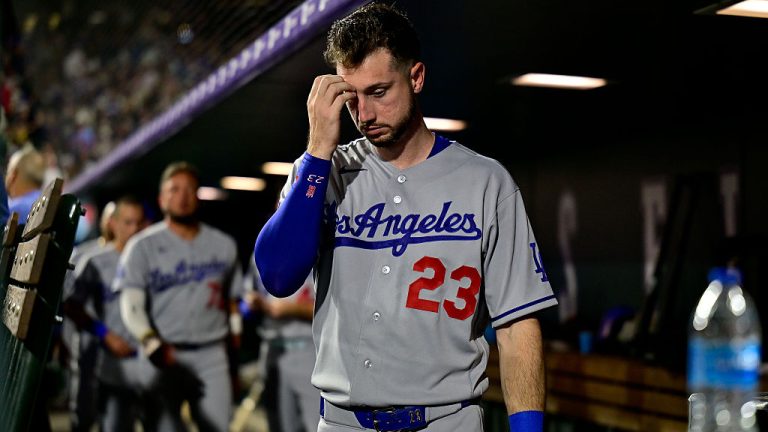
“I mean, I feel like I’ve tried just about everything.”
Los Angeles Dodgers outfielder Kyle Tucker addressed the media following yet another disappointing showing in mid-August. He continued, “Every time I feel like I’m turning a corner, I get hit with a roadblock. But you can’t stop.”
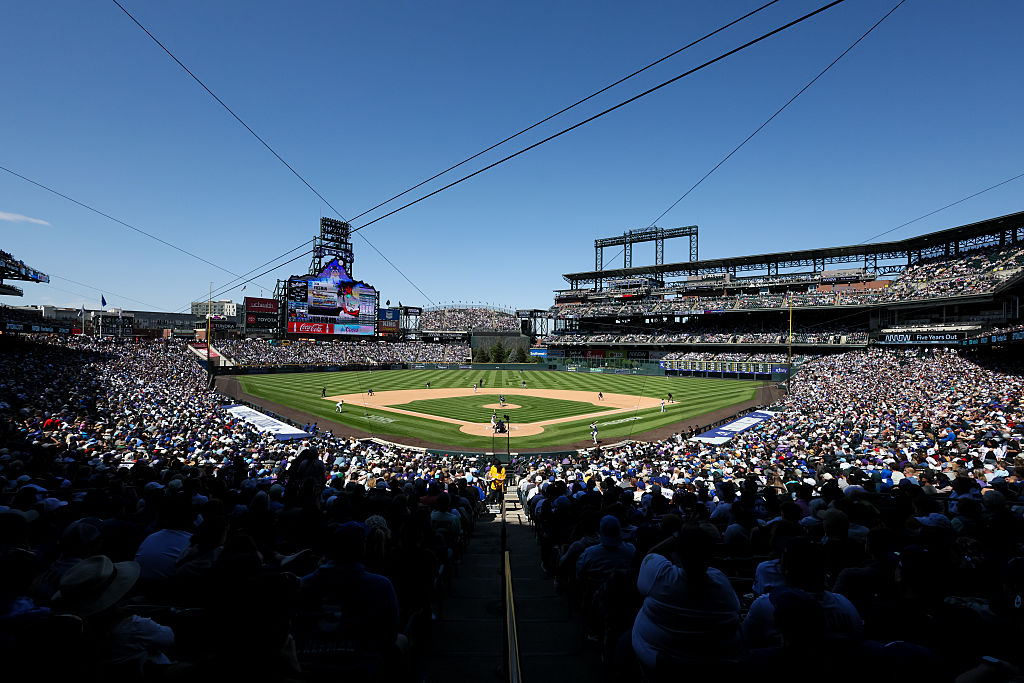
His comments followed a critical point in what has been a season to forget thus far. During a road game against the Colorado Rockies on August 17, Tucker trotted out to his station in right field to begin the bottom half of the seventh inning. Holding a 10-1 lead at the time, the Dodgers’ spirits were high… for the most part.
Tucker, however, could not join in this satisfaction. So far on the day, Tucker had gone 0-for-4, marking 24 straight at-bats without a hit. This includes a brutal homestand in which Tucker went 0-for-19 overall. Notably, he would go on to record yet another hitless at-bat later in this game, bringing his hitless streak to 25 at-bats.
However, what came next far outweighed this prolonged slump.
All stats updated prior to games on Thursday, September 3
Rock Bottom
In a 1-0 count, reliever Alex Vesia fired off a high fastball. Rockies second baseman Connor Norby got under the pitch, sending a routine pop-up towards Tucker in right field. Tucker jogged forwards to secure the catch, but misread the ball’s trajectory.
He crouched down with the ball, attempting to catch the ball as it approached the ground to his left. Ultimately, he failed, and the ball bounced off of his glove. A frustrated Tucker slammed his hands onto the ground before picking up the ball and throwing it to the infield.
During the top of the ninth inning, Tucker was spotted on the broadcast sitting alone in the Dodgers’ dugout. He looked onwards as his teammates took their final at-bats of the game in a state of somber reflection, wiping a tear from his eye.
This game directly followed the final game of Tucker’s hitless homestand the day before. Facing the Milwaukee Brewers with the Dodgers trailing 4-1 in the ninth inning, Jackson Chourio had hit a fly ball to the warning track in right field.
As Tucker ranged backwards to make the catch, he misplayed the ball, crashing into the outfield fence before throwing the ball to the infield. The missed catch allowed runners to advance to second and third base. These runners eventually scored, culminating in the Brewers’ 6-2 win over the Dodgers.
Dodgers fans loudly booed Tucker in response. At this point, it was not just about the catch. Through August 16, Tucker was hitting .232/.330/.370. His performance had produced just 0.3 fWAR on the season, ranking 133rd out of 143 qualified players.
The numbers themselves are rough. Factor in that Tucker had just signed a record-breaking contract the prior winter, and the boos are understandable.
How Did Kyle Tucker Get Here?
From 2021 through 2025, Tucker accrued a total of 23.4 fWAR. He did so over roughly 132 games per season on average, good for an average of 4.68 fWAR per year.
Tucker also averaged a .272/.366/.502 line with 26 home runs and nearly 23 stolen bases per year over this span. Aside from a significant slowdown at the end of 2025, he also had a solid contract year with the Chicago Cubs. Tucker racked up 4.5 fWAR while hitting .266/.377/.464, collecting 22 homers and 25 stolen bags to boot.
All of this was enough to make Tucker the most coveted free agent on the market in the 2025 offseason. Once Tucker joined the evil empire in Los Angeles on an unconscionable four-year, $240 million contract, all eyes were on the Dodgers to see how he would reinforce their inevitability.
Unfortunately for Dodgers fans, their success has come more in spite of Tucker’s signing than because of it.
Through 129 games, Tucker is hitting .227/.325/.355. He is currently averaging a 92 wRC+, his lowest mark since his 2018 rookie call-up, with a collective 0.0 fWAR on the year. His burnout has been painfully apparent when hitting at home, as Tucker has hit .186/.286/.264 at Dodger Stadium this year.
For reference, Tucker’s 59 wRC+ when hitting at home this year is third-lowest among all MLB hitters with 200 or more plate appearances this season. His .551 OPS at home is second-lowest within this sample.
Tucker had been one of the best all-around players in MLB for the past five years. Yet, he has shown very little of his potential in 2026. With October around the corner, time has just about run out for Tucker to salvage his season.
An Unyielding Impasse
What is both fascinating and utterly perplexing about Tucker’s regression is how little is known about what may be causing it.
This is particularly true with regards to the chasm between Tucker’s home and road performances. Despite poor overall numbers and an outright miserable performance at home, Tucker is hitting .264/.359/.439 on the road. His 121 wRC+ on the road vastly outweighs his 59 wRC+ at home.
While luck may have been a potential explanation in the early goings of 2026, the sample size has simply become too large to deny. Asked about this discrepancy, Dodgers hitting coach Robert Van Scoyoc lamented, “It’s one of those things that—it’s baseball. There’s not really a clear explanation of it.”
Tucker is 29 years old this season. Theoretically, you would expect that Tucker is in the middle of the prime years of his career. Yet, his performance has been cataclysmic compared to years past.
Even 2024, a year in which he played in only 78 games due to a nagging shin injury, Tucker put up 4.2 fWAR while hitting 23 home runs and batting .289/.408/.585. Among players with 300 or more plate appearances in 2024, Tucker’s 179 wRC+ graded out as the fourth best mark in MLB.
His struggles are not only frustrating, but also novel. Aside from a rough 28 game stint during his initial call-up in 2018, Tucker has produced offensively at an above average rate nearly every year of his career. The only season where he had performed below average was in 2015, the first year of his professional career.
For Tucker to regress so precipitously is astonishing in its own right. But, for the Dodgers, the lack of answers for how he might right the ship has become more than a little concerning.
So, What Went Wrong?
To my knowledge (and, evidently, the Dodgers’ coaching staff), there is no concrete data pointing to an easy fix.
Tucker has seen regression around the board, from offense to baserunning—and especially his defense. He has rarely been considered a defensive savant in right field throughout his career, but Tucker’s 6th percentile fielding run value this year places him among the worst outfield defenders in baseball.
In fairness, Tucker has gotten somewhat unlucky. He has underperformed both his expected batting average (.253) and expected slugging percentage (.376). Still, neither figure is on par with his career numbers.
Tucker’s bat speed is down by 0.6 MPH this year at 71.3 MPH, bringing him from above average (72.0 MPH) to a hair below MLB average (71.5 MPH). He has also dropped his fast swing rate (75 MPH) to 19.2%, while the MLB average is 24.2%.
Additionally, Tucker has swung far more often this season, bumping his overall swing rate from 45.2% to 48.9%. He has also increased his chase rate from 17.6% to 24.7%, and bumped his first pitch swing percentage from 36.3% to 41.9%. Based on these numbers, among other signs in his plate discipline profile, the issue may be more mental than mechanical.
Can Tucker Turn it Around?
Tucker has been a remarkably consistent player throughout his career. For example, he produced exactly 4.9 fWAR three years in a row from 2021 through 2023. However, his transition to the Dodgers marked a major shift in just about every factor of his life.
No longer is he the homegrown superstar in Houston, or the exciting trade acquisition on an up-and-coming Cubs squad. Instead, Tucker stepped into the blinding spotlight of Dodger Stadium on one of the most lucrative contracts in MLB history. The pressure to live up to his deal, as well as the pressure to help push the Dodgers to a coveted three-peat, must be immense.
This pressure helps put Tucker’s defensive missteps in mid-August into perspective. While his defensive capabilities might have been helped by better positioning, running a better route, or getting to the ball faster, ultimately one thing stood in his way: himself.
Tucker appears to be lost in his own numbers. Earlier in July, it was reported that he was obsessively working to find his swing again in the batting cages after games.
It would then make sense as to why Tucker’s chase rate and swing rate have jumped up. While these figures are not different by a wide margin, they point to Tucker selling out for hits to a certain degree. For a player who knows they have not yet lived up to their paychecks, it would make sense for him to be pressing.
Whether it is another routine fly ball to right field, or a bases loaded opportunity at the plate, Tucker will need to overcome his own angst to put his struggles behind him. At the end of the day, a shift in his approach and mentality will arguably be more impactful in finding his way back to stardom.
Become a Member of Just Baseball
Subscribe and upgrade to go ad-free!
* Save 25% by subscribing annually.

Written by
Ryan Murphy is a contributing writer for Just Baseball and graduate of James Madison University. The former Southern California native is an avid fan of the…