
These 3 Superstars Have Shockingly Fallen Off a Cliff in 2026
These three superstars entered the year with high expectations, but each has struggled and failed to live up to his reputation.
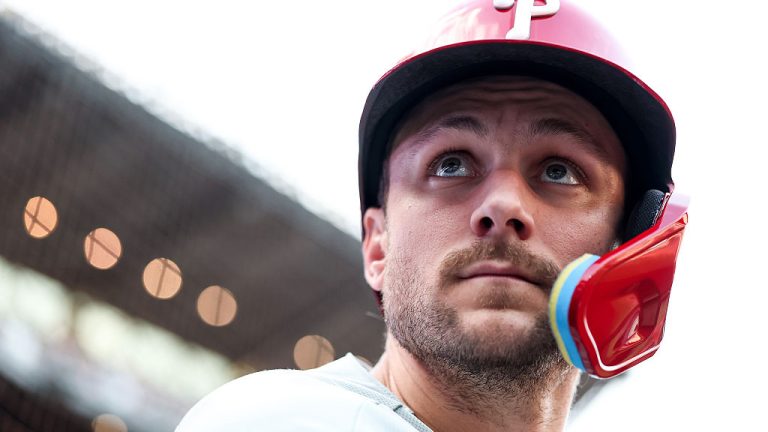
Vladimir Guerrero Jr., Kyle Tucker, and Trea Turner all have something in common. The three are former Silver Slugger winners with top-five MVP finishes, and all are struggling mightily in 2026. Each is on one of the highest-paying contracts in MLB, but they have combined for just 1.7 fWAR this season.
All of them have struggled at the plate and haven’t lived up to their standards whatsoever. Each has his own more specific struggle as well. For Guerrero, his power has disappeared. Tucker has struggled mightily both at the plate and in the field. Turner has been one of the worst defensive shortstops in MLB.
They were all expected to be top contributors on teams in the World Series chase, but instead, they have fallen short. At this point in the season, it’s unlikely a major turnaround will come from any of the three. Perhaps one will turn it around when the postseason arrives, but the odds aren’t in their favor.
All stats were updated before play on September 3.
Vladimir Guerrero Jr.
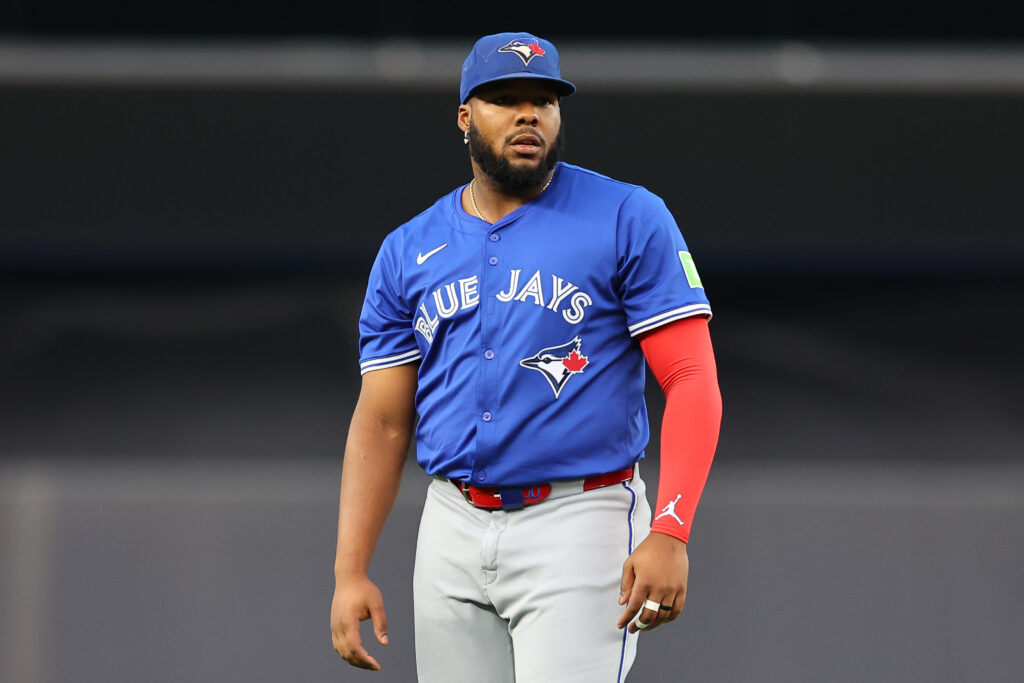
After a memorable World Series Run, expectations were higher than ever for the Toronto Blue Jays and Vladimir Guerrero Jr. entering the 2026 season. Both parties have struggled this year, with Guerrero playing a large role in why Toronto is currently out of the Wild Card picture.
The big thing that stands out about Guerrero in 2026 is that he’s yet to hit a home run at home this season. He has just nine home games left to hit one. The last time he hit a home run at the Rogers Centre was August 17, 2025, over a year ago. His power has vanished as well, with his total for the season only sitting at eight.
His ISO has dropped tremendously. At .098, he ranks 10th worst in MLB, a .077 drop-off from last season. He’s fallen to a below-league-average hitter, holding a 96 wRC+. Guerrero’s hard-hit and walk rate have dropped considerably as well.
The stats that have increased are the ones you don’t want to see increase. His out-of-zone swing rate is up to 30.3%, an 8.9-point increase, which is the eighth-worst in MLB.
Guerrero is currently in the first year of his 14-year, $500 million contract with the Blue Jays, and this season is something neither side wanted to see. The good thing is his impressive track record so far. Add the fact that he’s just 27 years old, and Toronto is likely not too worried yet.
Trea Turner
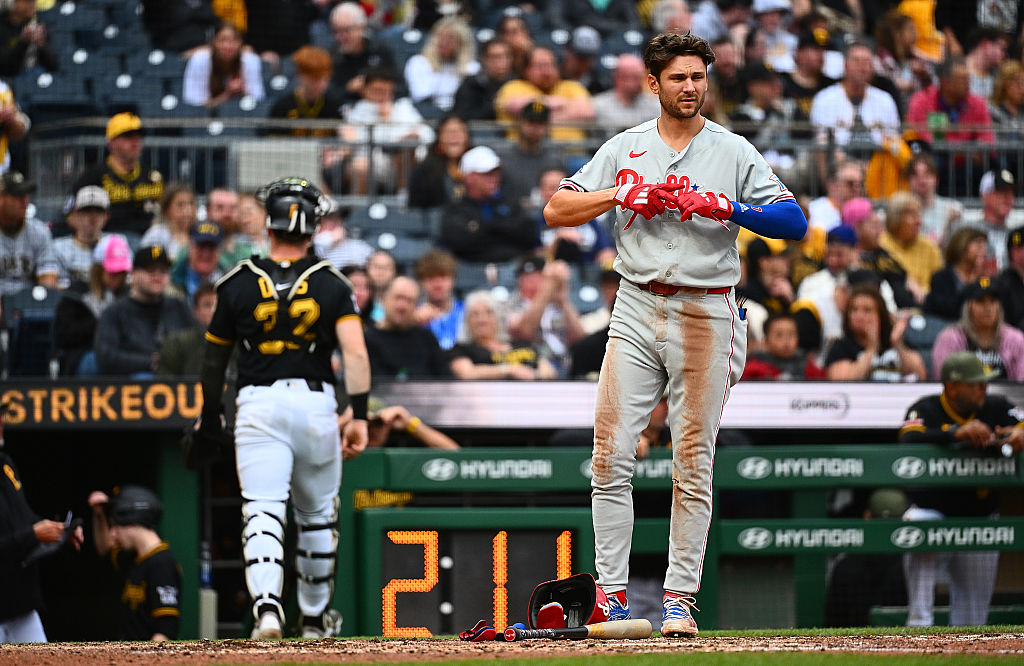
Coming off a fifth-place MVP finish, Trea Turner was poised to continue as one of MLB’s premier shortstops. 2026 has seen his season plagued with numerous career lows.
Usually a decent defender, Turner has been the worst defensive shortstop in MLB this season. He leads shortstops with 20 errors and has the worst fielding percentage at .959. His OAA of -8 is one of the worst marks among shortstops, while his -14 DRS is the very worst.
Things don’t get better offensively for Turner. His .239 batting average is a career low, and his FanGraphs offensive value (Off) of -12.1 is his worst by far. It’s the first time he has been a below-average offensive player since his brief debut in 2015.
A large jump in his strikeout rate has happened as well, with that number jumping to 21.8%. His wRC+ is under 100 for the first time since 2015 as well, currently at 80, which is tied for second-worst among qualified shortstops.
Turner still provides value with his legs, however, a defining factor of his career. At 33 years old, he ranks in the 98th percentile for sprint speed and has a baserunning value of +3, per Baseball Savant. When he’s able to get on base, he’s still able to steal, logging 18 stolen bases this season.
Turner is currently in the fourth year of an 11-year, $300 million contract, and the Phillies will be paying him about $27 million each year until he’s 40. If this decline is an indicator of anything, he won’t be bringing them much more value on that deal.
Kyle Tucker
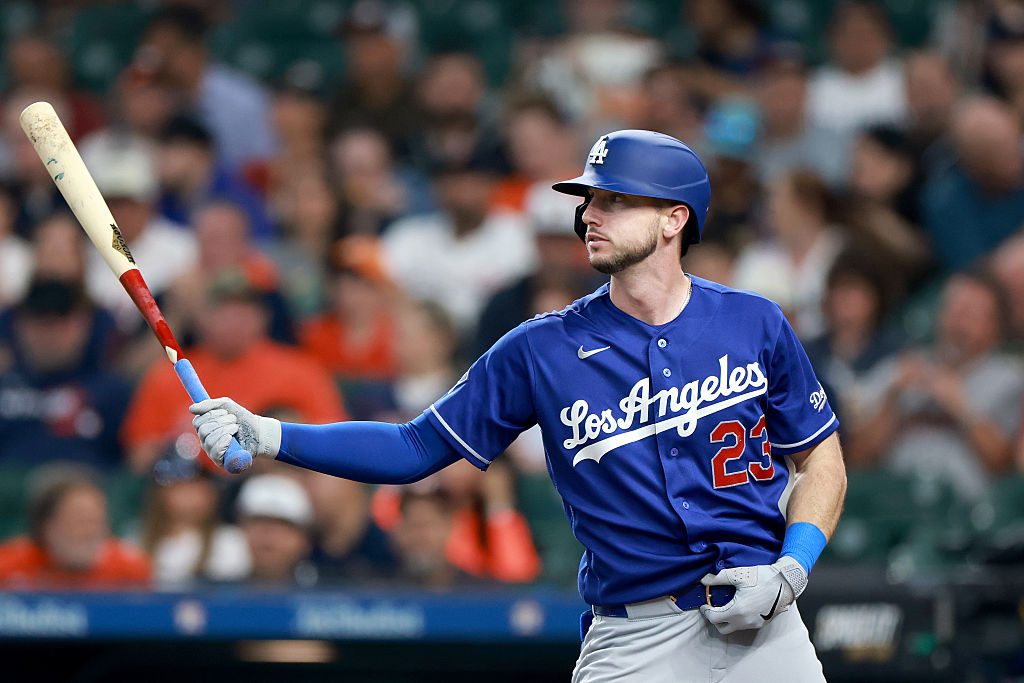
The biggest name of the 2025-26 free agent class is also arguably one of the worst signings. When he inked a four-year, $240 million contract with the Los Angeles Dodgers, it at first looked as if Kyle Tucker would provide another elite bat in their hunt for a three-peat. Now it looks like he could potentially hinder those plans.
On the field, nothing has gone right for Tucker. His slash line of .227/.325/.354 and fWAR of 0.1 are all career lows. He’s walking less than usual at 12.5% and striking out more at 17.7%. Tucker is struggling with hitting higher-velocity pitches, batting just .212 on pitches 95+ mph, and on offspeed pitches, hitting just .196.
His wRC+ of 92 is a career low as well, with his next closest in a full season at 130. August was his worst month yet, slashing .195/292/.305 with just one home run and a wRC+ of 69. Each of these little things adds up, resulting in a tremendously bad year for the four-time All-Star.
His serviceable defense has also declined to an unplayable level. His -8 FRV ranks third-worst among outfielders, and his OAA of -9 is tied for last. There have even been a few times this year when Tucker has dropped a routine fly ball.
On top of all that, his baserunning has taken a hit as well. Tucker used to regularly rank in the upper echelon of the league in baserunning value. This year, he has provided a 0 baserunning run value, despite the fact that he is 10-for-10 in stolen base attempts.
Looking at his home and away splits, however, can lead you to believe that a new home ballpark is playing into these struggles.
| Split | AVG | HR | SLG | OPS |
|---|---|---|---|---|
| Home | .188 | 2 | .263 | .551 |
| away | .264 | 9 | .439 | .799 |
This trend stays consistent if you look back to last season when he was on the Chicago Cubs. Tucker’s numbers were significantly better on the road than at home.
During his time in Houston, his numbers were usually slightly better on the road, but a couple of seasons saw his numbers at home take a big leap above his away splits. But in these past two seasons with two different teams, his home numbers have taken a much bigger hit than usual.
Perhaps the pressure of living up to his $60 million a year price tag, along with playing in one of the biggest markets, is getting to his head. Tucker has an opt-out after the 2027 season, which he’s unlikely to use unless he has a major bounce-back. The Dodgers will likely be paying for his, so far, below-average services for the next three years, under the second-highest AAV contract in MLB.
Become a Member of Just Baseball
Subscribe and upgrade to go ad-free!
* Save 25% by subscribing annually.

Written by