
The Brewers’ 2026 Trade Deadline: Did They Do Enough?
The Milwaukee Brewers made their moves, but did they do enough to make a deeper postseason run in 2026?
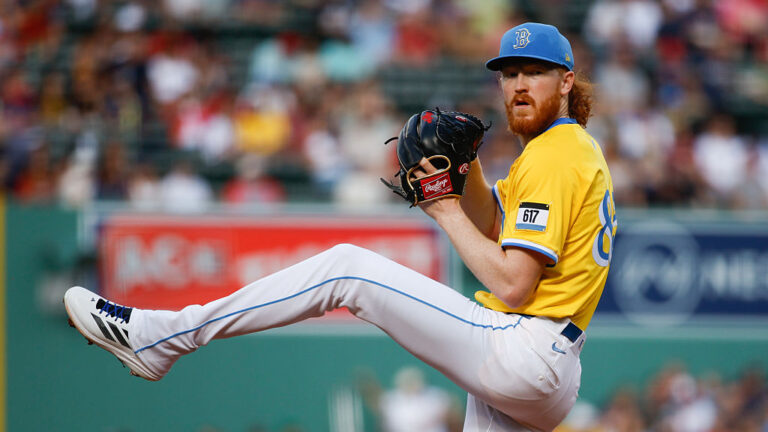
Expectations for the Milwaukee Brewers heading into the 2026 MLB trade deadline were sky-high. They owned one of the best records in the National League, they had the best farm system the game had seen in years, and they were positioned to make the kind of splash the fanbase hasn’t seen in decades in hopes of making a deeper postseason run than they did in 2025.
The deadline has officially come and gone, and the conversation surrounding the Brewers’ transactions closely resembles that of previous seasons.
The elephant in the room is that the Brewers are Skubal-less, but perhaps that’s through no fault of Milwaukee’s front office. By all accounts, Matt Arnold and company did their best to put together a premier prospect package, but at the end of the day, the Tigers chose the Dodgers’ offer. While it stings, the Brewers do deserve some credit for making a legitimate run at the back-to-back AL Cy Young Award winner.
The moves the front office did make, however, leave some to be desired. On paper, they addressed their needs. They landed a high-upside starting pitcher, added bullpen depth, and didn’t have to part with a top-five prospect in the system to do so. In that regard, nobody can fault Milwaukee for how they attacked the deadline.
It is fair to question how significant those moves are in the grand scheme of this team competing for a championship, though. We’ll dive into each of the Brewers’ notable transactions momentarily, but the same sentiment surrounds this team as it has in previous deadlines: the roster is improved, but by how much?
The Brewers are still a postseason contender, clearly, but none of the trades they pulled off felt like true needle-movers in the pursuit of the franchise’s first World Series title and in taking down the juggernaut that is the Los Angeles Dodgers in the National League.
Here are the fresh faces coming to the organization, along with the players the Brewers parted with at this year’s MLB trade deadline.
Trade One: Brewers Add Catching Depth
Brewers Acquire C Bo Naylor and RHP Codi Heuer From Guardians for OF Blake Perkins and RHP Craig Yoho
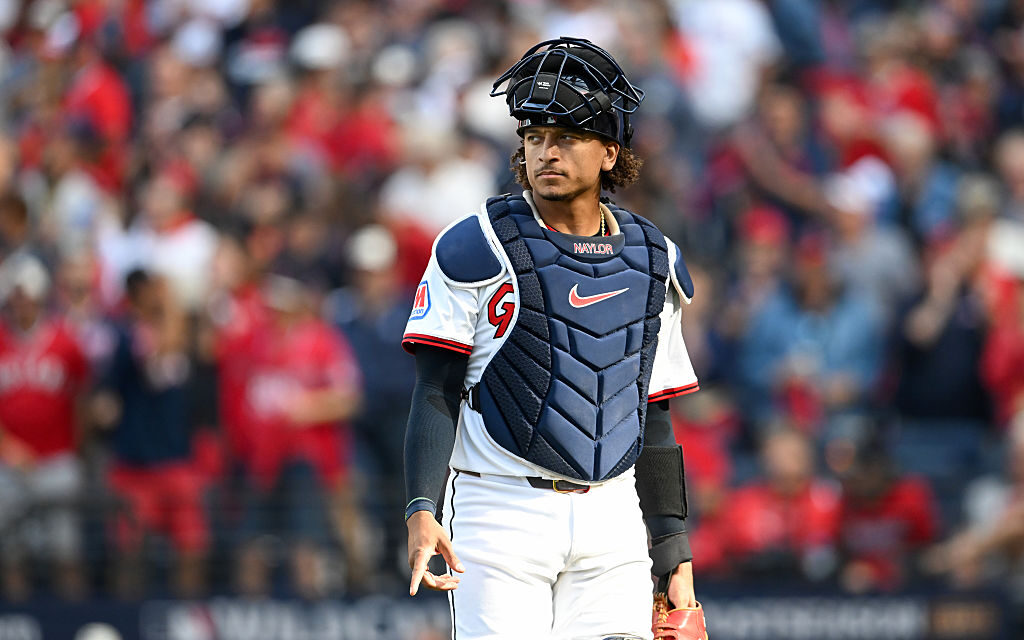
The Brewers got their trade deadline festivities kicked off on Saturday morning, when they traded outfielder Blake Perkins and reliever Craig Yoho to the Cleveland Guardians in exchange for catcher Bo Naylor and reliever Codi Heuer.
Heuer was later flipped by Milwaukee at the buzzer on Monday to the Baltimore Orioles for cash, so this deal ultimately became a two-for-one swap with Cleveland. That alone knocks this deal down a peg.
Starting with who the Brewers parted ways with, Perkins’ time in the organization was coming to a close, and Yoho struggled to earn the trust of skipper Pat Murphy in leverage situations.
Perkins, who spent all four of his MLB seasons with the Brewers, was batting .157 with a 41 OPS+ in 55 games this season. While he remained an elite defender, it reached a point where Milwaukee could no longer justify him occupying a spot on the 40-man roster, especially with Brandon Lockridge returning.
As for Yoho, the talent and blueprint to become a valuable relief option are there, but he struggled with consistency at times. After a rough outing earlier this summer, Murphy made postgame comments that almost put the writing on the wall. Yoho was promptly sent back to Triple-A the following day.
The stuff is there, headlined by a wicked changeup that has held opponents to a .095 batting average this season, but his repertoire is still a bit one-dimensional. His four-seam fastball is nothing special and the command remains inconsistent, and developing a reliable third offering would go a long way in his development. Yoho feels like a strong fit for Cleveland, which, like Milwaukee, has been a bullpen factory over the years.
Now for what the Brewers got back. Naylor was a top prospect coming through Cleveland’s system in the early 2020s, but he has simply struggled to become an above-average regular over the course of his MLB career. For as promising as his bat looked while rising through the minors, that production has not translated to the big-league level.
Across 346 MLB games, Naylor is slashing .199/.279/.372 with a .651 OPS and an 82 wRC+. He was batting just .143 with a .438 OPS and a 21 wRC+ in 28 games this season before being optioned back to the minors.
Naylor’s defensive numbers steadily improved with each successive big-league season. Though his performance behind the plate has taken a step back in 2026, the Brewers have historically been an organization that maximizes defensive ability.
Following the trade, the Brewers now have four catchers on their 40-man roster (William Contreras, Gary Sánchez, Jeferson Quero, and Naylor). Naylor is still in his pre-arbitration years and won’t be arbitration eligible until next season. Milwaukee likely views him as a buy-low candidate who can provide minor league catching depth while the organization works to unlock more of his offensive potential.
In the end, this wasn’t a trade that did much for either side other than add depth.
Trade Two: Milwaukee Gets Its Big-Name Starter and Lefty Reliever
Brewers Acquire RHP Dustin May and LHP JoJo Romero From Cardinals for OF Alexander Frias and OF Josiah Ragsdale
Now for the headliner of the deadline. The Brewers entered the deadline needing a high-end starter and a left-handed reliever, and they addressed both of those needs in this one trade. It came at the expense of a hefty prospect package, though.
Dustin May is a data darling whose peripherals far exceed his actual production. A 3.91 xERA, 3.14 FIP, and 3.94 SIERA are all more encouraging than his 4.38 ERA. It’s his highest K/9 (8.75) and lowest BB/9 (2.89) since 2021, and while he’s not that level of pitcher anymore at this stage of his career, he’s flashed that upside at times this season, most notably in his one-hit, complete-game shutout against the Padres on June 15.
Kyle Harrison is set to return to action this week, and Logan Henderson has ascended into a legitimate No. 2 starter in the rotation. But the Brewers still needed a high-upside arm capable of taking the ball in Game 2 or Game 3 of a postseason series if needed. May, while inconsistent at times, can be that arm.
The downside is that he’s a rental, which was a common theme among the big leaguers the Brewers acquired at this deadline. Outside of the Skubal sweepstakes, May was in the next tier of rental arms available.
The second arm coming back in the deal is JoJo Romero, who is currently sidelined with appendicitis but is expected to return by the end of August. Romero is a left-handed groundball specialist who pounds the zone with a sinker-sweeper combination, something the Brewers highly value.
With Aaron Ashby serving as the Brewers’ lone high-leverage lefty specialist, Romero will help shoulder some of that workload down the stretch. Like May, Romero is also set to hit free agency at season’s end. But for the rest of the season, he should have an important role in the middle of Milwaukee’s bullpen.
The additions make the team better, but by how much? That’s the real question. If the Brewers help May unlock a new level, this could end up being one of the sneakiest moves of the deadline. Nobody would be surprised if Milwaukee’s pitching lab works its magic again.
A Hefty Prospect Package
Heading back to St. Louis are 18-year-old outfield prospect Alexander Frias and 22-year-old outfield prospect Josiah Ragsdale. These are two of the biggest breakout prospects in Milwaukee’s system this year, and, frankly, it was somewhat surprising to see them moved in this deal.
After posting a 151 wRC+ in 60 games at High-A this season, Ragsdale has been one of the hottest hitters in all of Double-A since receiving a promotion. In 26 games, Ragsdale has hit 12 homers with a 183 wRC+ and a 1.126 OPS. It does feel somewhat lightning-in-a-bottle-esque with Ragsdale, who is in the midst of an unprecedented power surge while striking out nearly 30% of the time in Double-A.
Still, the 2025 seventh-round pick is flashing both his speed and power tools this season.
The prized prospect in the deal is Frias, an international signee from the Dominican Republic in 2025. Frias is one of the premier breakout prospects in the lower minor leagues this season, slashing .441/.518/.678 with a 1.196 OPS in the Complex. He received a promotion to Single-A as an 18-year-old.
His approach is a work in progress, but the pure strength he displays at his age is remarkable. While he’s still far away from the majors, likely a key reason why the Brewers were comfortable moving him at this deadline, he’s expected to climb prospect rankings by season’s end.
This was a tremendous get for the Cardinals, who likely made the Brewers pay an in-division tax to acquire one of the more sought-after rentals at this trade deadline in May.
Trade Three: Adding a High-Upside Bullpen Arm From Colorado
Brewers Acquire RHP Antonio Senzatela From Rockies for LHP Mark Manfredi and SS Juan Martinez
The final addition Milwaukee made at the deadline was acquiring bullpen arm Antonio Senzatela from the Rockies. Senzatela, a groundball savant who has spent the first 10 years of his MLB career in Colorado, does a lot of things the Brewers seek out, including throwing over 81% fastballs.
His sinker might not jump off the page with its surface-level stats, but it’s a pitch that has produced a -9 degree average launch angle this season and is one that the Brewers’ coaching staff cannot wait to work with. That, paired with a four-seam fastball, cutter, and a pair of quality breaking pitches, gives him a kitchen-sink arsenal the Brewers will love to tap into.
Senzatela worked as a swingman early in his career, transitioned into a full-time starter with the Rockies, and only recently converted into a full-time reliever. For a pitcher who has spent his entire career pitching at Coors Field, it’s intriguing to see what he could become with the Brewers and the spectacular defense behind him.
His value was apparent from the get-go on Tuesday night, when he made his Brewers debut. Entering the game in the seventh inning with a 4-2 lead, Senzatela got the leadoff man to ground out to shortstop, walked the second batter of the inning, then promptly generated an inning-ending double play to escape the inning. Brewers fans will likely see a lot of that down the stretch this season.
While not a true rental, Senzatela does have a club option for $14 million (with no buyout) for 2027. There’s a decent chance the Brewers decline that option and he reaches free agency.
Mark Manfredi is a left-handed reliever with a 3.35 ERA across Double-A and Triple-A this season and some impressive underlying metrics, including a 13.40 K/9 and a 2.92 FIP. However, as a 26-year-old in Triple-A, his upside is somewhat limited. While he wasn’t included on any Brewers Top Prospects lists, he adds some nice minor league relief depth for Colorado.
Juan Martinez is a 19-year-old shortstop in the lower minors who is more of a lottery ticket in this package, but he has flashed some intriguing upside as a teenager. After spending his first two professional seasons in the DSL from 2024-2025, Martinez had a strong showing in the Complex this year, batting above .350 with an OPS north of 1.000 and a 160 wRC+ across 40 games.
He received a promotion to Single-A Wilson, where he has slowed down a bit, though it’s only been an 18-game sample. Still, he’s walking more than he strikes out this season, is a speedster on the bases, and has added seven home runs after launching just two total in 2024 and 2025 combined.
All in all, the Brewers add another relief option to an already strong bullpen, while Colorado receives a pair of intriguing minor league pieces in return.
Final Verdict: B-
Once the trade deadline passed, fans weren’t thrilled with how Matt Arnold and company maneuvered the deadline. Expectations were that the Brewers would go big-game hunting — which they did — but once Tarik Skubal was traded to the Dodgers and Mason Miller became unavailable, it almost felt destined to be a disappointing deadline for Milwaukee.
But when you boil it down to what they actually added, it’s hard to poke many holes in the return. They added two bullpen arms who will likely slot in as the fourth and fifth-best options in a bullpen that ranks among the top five in both ERA and FIP. They also brought in a rental arm in Dustin May, who is highly regarded in Milwaukee’s clubhouse and has shown the ability to be a dominant pitcher at times this season.
Milwaukee also took a flier on a buy-low opportunity with Bo Naylor, who at the very least adds catching depth to the organization and serves as a fallback option behind Jeferson Quero and Gary Sánchez.
One major reason why the letter grade is as low as it is stems from the package they parted with to acquire May and Romero. I understand that teams have to give in order to get, especially contenders, but I thought it was a rich package considering Alexander Frias and Josiah Ragsdale are two of the hottest prospects in the Brewers’ system.
I’m not surprised to see the Brewers move Ragsdale in a package, and I’m not overly surprised about Frias, either. However, when two prospects immediately become top-10 prospects — or, in Frias’ case, a top-five prospect — in the Cardinals’ system, it felt like Milwaukee could have gotten more for that package.
Perhaps that comes in the form of a better starter and a better reliever, such as Clay Holmes and/or Luke Weaver from the Mets, or perhaps it means acquiring at least one player who isn’t a rental. Frias will likely continue climbing prospect rankings, while May and Romero will, in all likelihood, be wearing new jerseys next season.
I don’t mind the moves, and I commend the front office for addressing the roster’s needs. But the Brewers own the best record in MLB, became the first team to reach 70 wins, and have the best farm system in the sport. They were positioned to become the team to beat in baseball and bolster their roster in a way fans haven’t seen in years. Instead, the moves they made don’t move the needle as much as many hoped.
At the end of the day, the Brewers are in this position because they didn’t have any significant, glaring needs, so it’s difficult to nitpick too much. But for a team that snuck by the Cubs in the NLDS last season only to get swept in non-competitive fashion by the Dodgers in the NLCS, it would have been nice to see this team do more.
Especially with the Pirates completely overhauling their bullpen and the Cubs emerging as one of the biggest winners at the deadline by adding reinforcements to their rotation, Milwaukee missed an opportunity to separate itself from the rest of the National League.
Become a Member of Just Baseball
Subscribe and upgrade to go ad-free!
* Save 25% by subscribing annually.

Written by
Joey Peterson is a graduate of the University of Wisconsin-Madison and an editor for Just Baseball. Joey covers the Milwaukee Brewers, along with general MLB topics…