
The Garrett Crochet Trade Was a Win for Both Parties
The trade that sent southpaw Garrett Crochet from Chicago to Boston is shaping up to be one of the biggest win-win deals in recent memory.
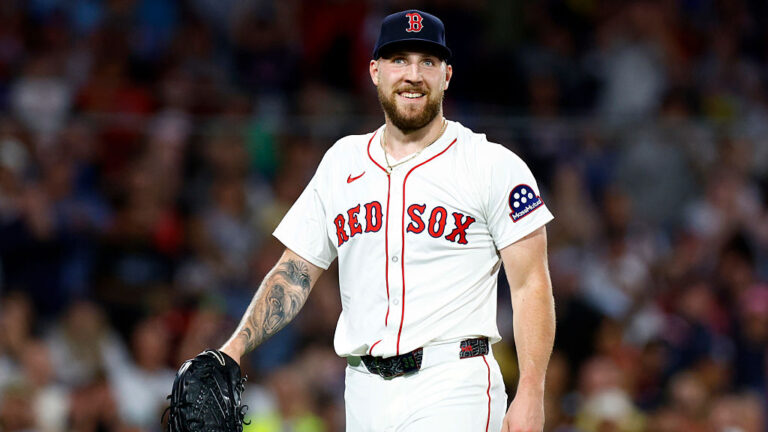
The Boston Red Sox and Chicago White Sox have a recurring trend of trading left-handed aces. After some mixed results in the White Sox’s return for Chris Sale, several of the players received for Garrett Crochet have already become major-league mainstays.
At the time, the headlines focused on the fact that the Red Sox gave up none of their “Big Three” prospects, those being Roman Anthony, Kristian Campbell, and Marcelo Mayer. Instead, catcher Kyle Teel, ranked No. 55 at the time by Just Baseball, headlined the deal. He was joined by then-No. 79 overall prospect Braden Montgomery, as well as Chase Meidroth and Wikelman Gonzalez.
The value of these prospects varied at the time, but the general consensus was that there were two slam-dunk major leaguers.
One was Teel, a can’t-miss catching prospect who ranked as high as No. 25 on Top 100 lists across the industry. The other was Meidroth, who, despite not being ranked at the top of many prospect lists, possessed a strong hit tool and impressive plate discipline that made him a high-floor, low-ceiling guy who could stick in a major-league infield. Montgomery and Gonzalez had lower floors, primarily due to injury concerns.
Despite guys like Montgomery appearing like long-term projects, after a year and a half, all four players are already contributing in the South Side. Let’s dive into one of the biggest win-win trades in recent memory.
Stats were taken prior to play on June 26.
Garrett Crochet Trade Details
On December 13, 2024, the long-rumored trade finally broke through. The Red Sox had been linked to Crochet early in the offseason, but were clutching onto their top three prospects desperately. With a Jeff Passan tweet heard around the world, the deal was done. The details were:
- Red Sox receive: Garrett Crochet
- White Sox Receive: No. 55 Kyle Teel, No. 79 Braden Montgomery, Chase Meidroth, Wikelman Gonzalez
Analyzing the Numbers
It’s challenging to put numbers on the return. Nonetheless, it’s hard to deny the win-win nature of the trade for both teams. At the time of the trade, Crochet was a bona fide major leaguer, and the four players sent to Chicago had yet to make their major-league debuts. In 2025, Crochet finished second in AL Cy Young voting.
With each arriving at different points over the past season and a half, none of the players the White Sox received have come close to reaching their full potential.
Additionally, at the time of the deal, Crochet only had two years of arbitration remaining on his contract. The Red Sox have since signed him to a six-year extension, including his final season of arbitration.
Excluding this extension, the Red Sox would only have two years of value out of Crochet. The White Sox will presumably get six years of service time value out of each piece of the return. As of publication, the value of each team’s trade return, in bWAR, is as follows:
- Garrett Crochet WAR since trade: 5.4
- White Sox return WAR since trade: 4.8
Crochet’s Dominance with Red Sox
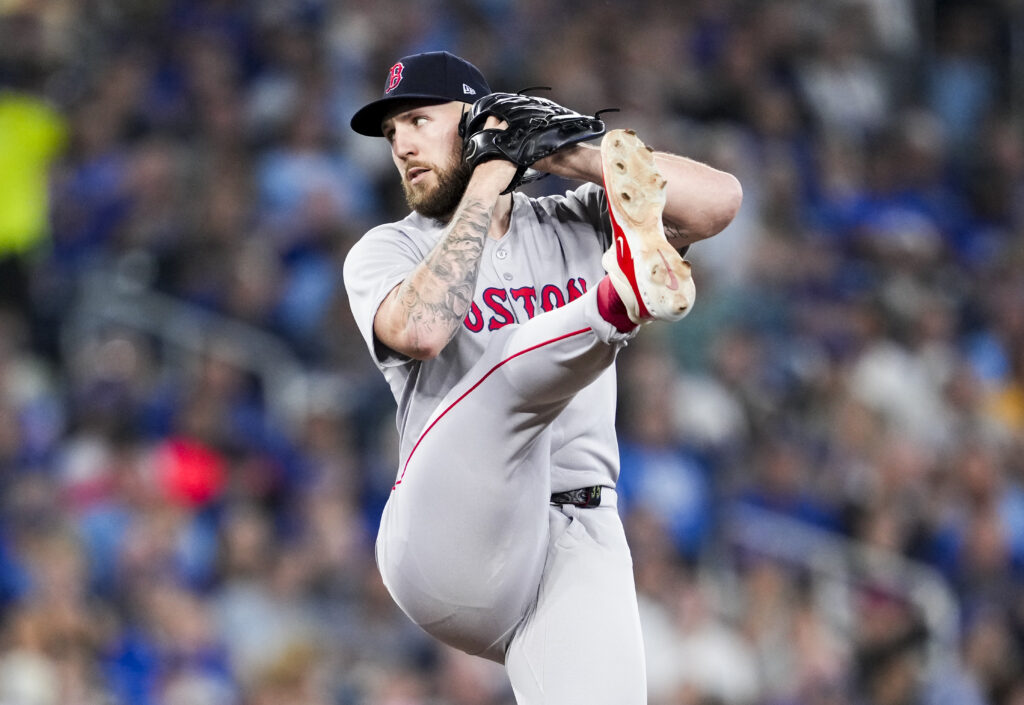
Crochet is still sitting on the 60-day IL with a lat strain, and he has not yet resumed throwing. After a tough start to the season, he could certainly boost his stock as the White Sox youngsters continue to rack up value. Regardless, Crochet will have five more seasons in Boston to rack up his value as the team’s ace.
While Crochet’s 6.0 WAR pace in 2025 is likely not a consistent, year-over-year expectation, it’s likely that five healthy seasons from Crochet can produce a number in the neighborhood of 20-30 WAR. That health will be a key factor, however, for a player like Crochet, who has had several injury issues throughout his young career.
White Sox young success, piece by piece
If you asked me at the start of the season what the White Sox record would be through the first 79 games, I think you’d be lucky to hear me say 30 wins.
In reality, my answer would likely have been around 25 wins. To see the White Sox maintain a record above .500, while sitting atop the AL Central standings nearly halfway through the season, is nothing short of remarkable.
While the coaching staff and young manager Will Venable deserve a lot of credit, much of this record can be attributed to the performance of the team’s emerging youngsters.
Sure, Kyle Teel just returned from the injured list, but Meidroth and Montgomery are in the starting nine day in and day out.
For the White Sox, it’s likely that, from a strict WAR standpoint, these players will exceed Crochet’s value. Crochet has already produced a dominant season in Boston, in many ways making the trade worth it for Boston. But over the rookie contract lifespans for each player in the return, the White Sox could amass up to 50 WAR if health allows.
Kyle Teel
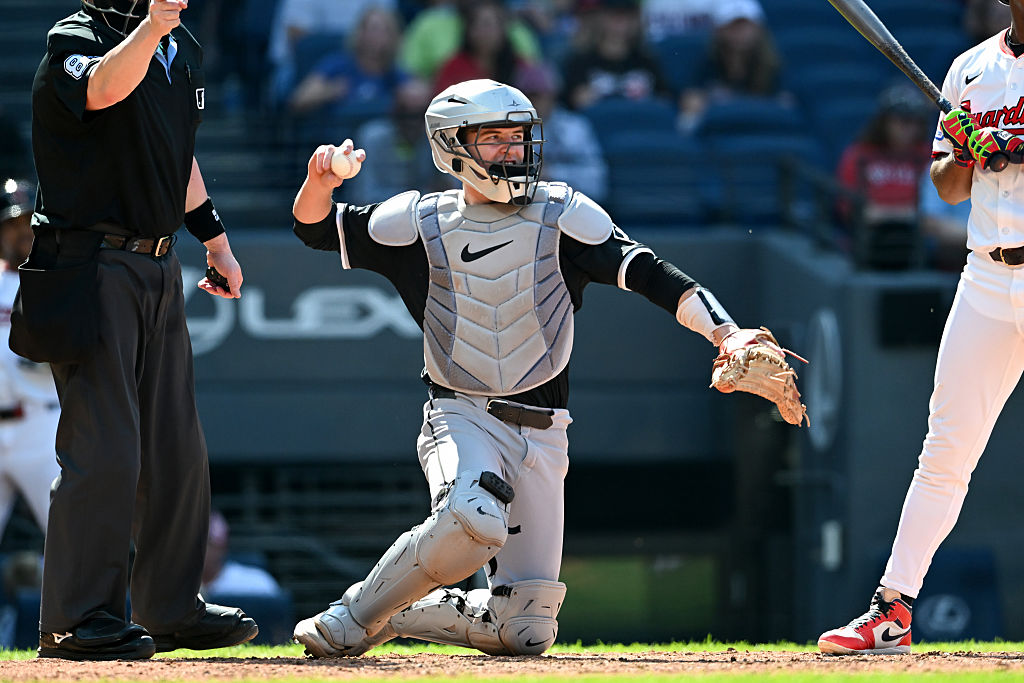
If Teel stays behind the dish, he has All-Star potential. With 1.9 WAR in 2025 over 78 games, a healthy ceiling for Teel could produce up to 15-20 WAR.
After a pair of leg injuries, Teel finally returned to the White Sox on June 22, going 0-4 with three strikeouts. One bad game will not define Teel’s season, however, as he still has more than half the season to work his way back to the 121 OPS+ he had in 2025.
The major area of improvement for Teel going forward is his defense. He was roughly an average framer in 2025, but this was also before ABS challenges. More importantly, Teel was one of the worst blockers in the league, with his -7 blocks above average that put him in the fifth percentile.
He also fell in the 24th percentile in catching runners stealing, despite having a better pop time than those numbers would let on.
Braden Montgomery
Mongomery is a bit challenging to project, but he also looks to have an All-Star ceiling early on.
Entering what turned out to be his final year of college baseball, Montgomery was projected in the top five of some draft boards. After an injury, he slipped to the Red Sox at No. 12 and made it to the big leagues less than two years after being drafted.
Montgomery profiles as an average defensive right fielder with his best tools coming from the offensive end. He made a massive mark in his MLB debut with a walk-off home run against the Atlanta Braves. While Montgomery hasn’t had a home run in the 12 games since, he still possesses the tools necessary to hit 25-30 home runs in a season.
There is certainly a world where he becomes a mainstay for a young White Sox team chasing its first playoff berth since 2021.
Chase Meidroth
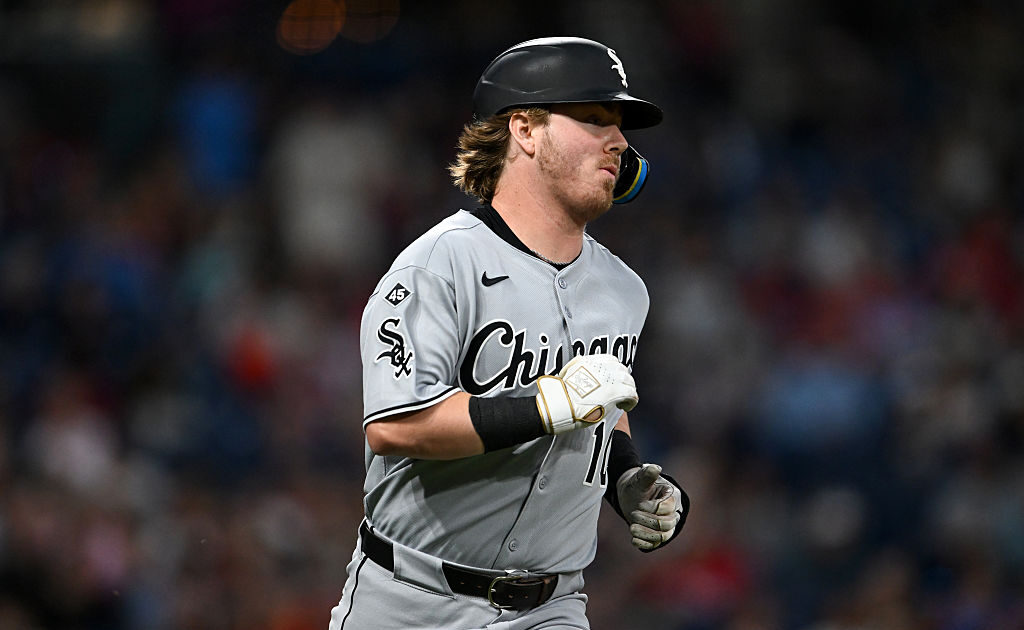
Meidroth projects as a steady two-win player, making his value over six seasons north of 10 WAR, should he stick as the starting second baseman in Chicago.
With nearly a dead-average offensive output of a 99 OPS+ so far in 2026, Meidroth is the definition of an average middle infielder. His skills defensively become well-above average when he sticks at second base, with his weaker arm becoming less of a worry thanks to his elite range.
There are some concerns about his hitting numbers holding up, with a sea of blue covering the batting numbers on his Statcast page. Meidroth’s expected numbers leave something to be desired, but if this pace holds, he will continue to be average at a weak position for years to come.
Wikelman Gonzalez
Gonzalez has spent 2026 in Triple-A Charlotte, after missing some time and rehabbing in rookie ball. He’s looked solid so far in Triple-A and produced decent results in 20.1 innings with the major-league club in 2025.
The surface for Gonzalez, however, looked a lot better than some of the underlying numbers. Upon first glance, Gonzalez had a 2.66 ERA and 1.230 WHIP. But he also walked 5.3 batters per nine innings and saw opponents hit the ball at 91.3 mph off him on average.
That being said, the fastball is still solid, sitting around 95 mph, and when combined with 84th-percentile extension, it could still be a pitch that allows him to be a high-leverage reliever in the future.
Become a Member of Just Baseball
Subscribe and upgrade to go ad-free!
* Save 25% by subscribing annually.

Written by
Gabe Shumway is a prospect writer for Just Baseball. He is a student at Northwestern University studying Journalism and Environmental Policy, and can be seen or…