
Breaking Down the White Sox’s Options With the No. 1 Pick
Roch Cholowsky is still the best fit, but the White Sox have options when it comes to the first overall pick this summer.
The Chicago White Sox have options at No. 1. That much has become clear as the top of the 2026 MLB Draft has tightened.
In Just Baseball’s latest mock draft, we kept UCLA shortstop Roch Cholowsky in the top spot for Chicago.
Cholowsky remains the safest projection, but this no longer feels like a coronation. Vahn Lackey’s season at Georgia Tech has forced a harder conversation, while Grady Emerson would give Chicago the top high school bat in the class. Jacob Lombard offers the more explosive prep alternative if the White Sox want to chase upside, and Jackson Flora keeps the pitching conversation alive.
That creates a more interesting decision than simply taking the player who has been tied to Chicago the longest. The White Sox have to weigh Cholowsky’s safer path against Lackey’s trajectory and catcher value. They also have to decide whether Emerson’s bat or Lombard’s louder tool set is tempting enough to pull them away from the college group.
The second tier is part of the discussion, too. Lombard, Flora and Eric Booth Jr. are generally viewed behind the top three, with Lombard the one most often tied to Chicago. Tyler Bell could also affect how the first few picks unfold if Tampa Bay or another club pushes him into the top five. Still, for the White Sox, the realistic conversation starts with Cholowsky, Lackey and Emerson.
Right now, Cholowsky still fits best. The debate is just more legitimate than it was a month ago.
The Three Main Candidates
Roch Cholowsky, SS, UCLA
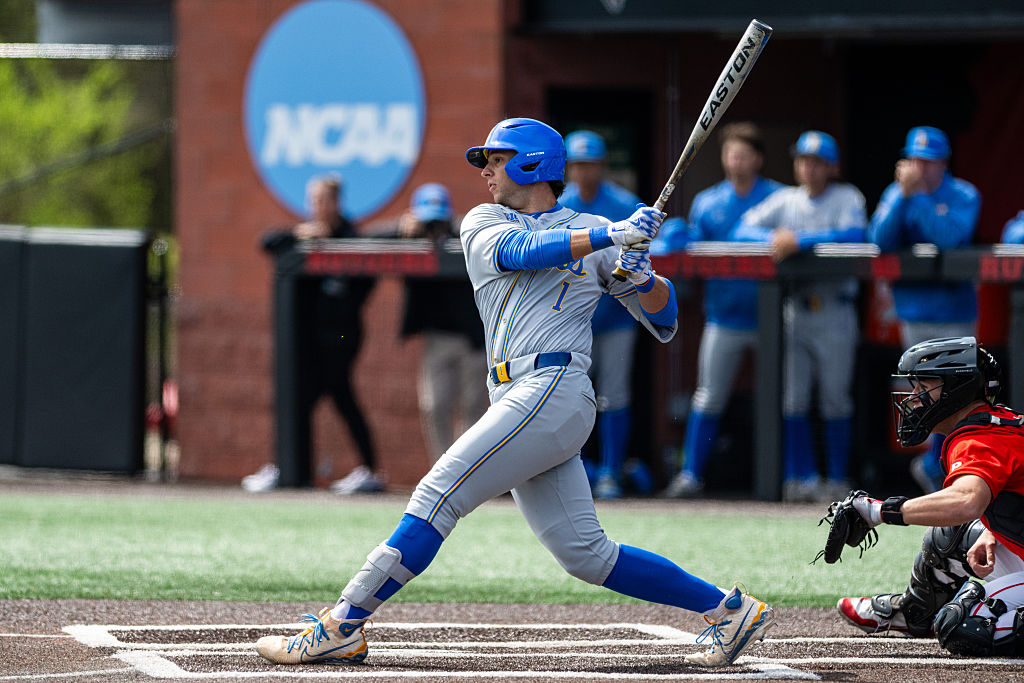
Cholowsky remains the safest fit for the White Sox at No. 1.
That has been the case for most of the spring, even as Lackey and Emerson have made the top of the board more interesting. Just Baseball and Baseball America both projected Cholowsky to Chicago in recent mocks, and the logic has not changed much. He is a college shortstop with a long track record of performance and enough offensive production to stay at the top of the class.
The White Sox connection also goes back further than this draft cycle. Chicago was one of the teams that put a notable offer on the table for Cholowsky out of high school before he went to UCLA. That does not make the pick automatic, but it helps explain why this pairing has had staying power.
Cholowsky added muscle and finished his UCLA career hitting .329/.448/.624 with 52 home runs, 41 doubles and a 1.080 OPS. Baseball America also noted that his 11.7% strikeout rate was the best mark among college hitters with at least 45 home runs over the last three seasons.
Lackey has gotten plenty of attention for his offensive jump, and he should. But Cholowsky did not exactly fall off. He hit 21 home runs this spring, one more than Lackey, while still controlling the zone at a high level. It may not have been the runaway season some expected, but he remained firmly in the conversation as one of the best players in the draft.
He is not a bat-first college player being pushed up the board without a defensive home. Cholowsky has a chance to be a Gold Glove-caliber shortstop, giving him value on both sides of the ball, and that gives Chicago another way to feel comfortable with the pick, even if the offensive ceiling is closer to good than elite. Just Baseball also kept Cholowsky as the No. 1 college prospect in its updated 2026 MLB Draft rankings.
Cholowsky’s 2026 season simply did not create the kind of separation some expected from a player who entered the spring as the favorite to go first overall. The expectation was higher after a remarkable 2025 season.
The Lackey comparison is where the conversation becomes more nuanced. In Joe Doyle’s Over-Slot breakdown, Cholowsky got the nod for his leadership, track record, durability and overall floor. The argument is easy to understand because Cholowsky offers the safer defensive profile and a longer history of high-level performance while also providing what may be the clearest path to professional value.
The concern is whether the bat is still climbing. In Doyle’s side-by-side comparison, Cholowsky’s hard-hit rate dropped from 60% in 2025 to 49% in 2026, while Lackey sat at 60% this spring. The broader contact and exit velocity data between the two were close, but that hard-contact gap gives the Lackey side something tangible to point to.
That does not sink Cholowsky’s case, but it keeps the door open.
The White Sox can still look at Cholowsky and see a player with a long track record of performance, premium defensive value at shortstop and an existing level of organizational comfort. His offensive year was not perfect, but the full profile still fits what teams usually want at the top of the draft.
If Chicago wants the player with the safest path to value, Cholowsky remains the most sensible pick.
Vahn Lackey, C, Georgia Tech
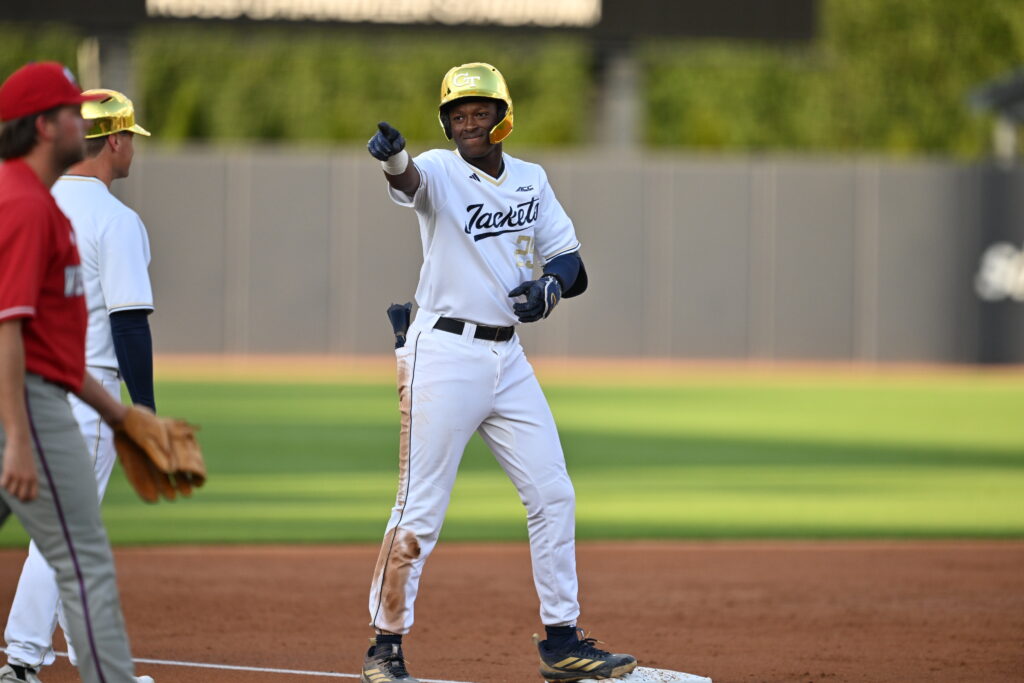
Lackey has turned what once looked like a straightforward decision into a genuine debate.
Keith Law mocked him to the White Sox at No. 1 and later wrote that Lackey “may be the best player in the class.” That is about as strong an endorsement as any player in this draft has received from Law.
It is not an isolated thought, either. Lackey has been ranked at the top of at least one major public board (Over Slot), and a dominant 2026 season turned him from a fast-rising prospect into a legitimate contender for the top spot in the class.
He slashed .397/.519/.772 with 20 home runs, 16 doubles, 50 walks and 37 strikeouts while adding 15 stolen bases. Doing that in the ACC only strengthens the case; it is viewed as a tougher weekly pitching environment than the Big Ten. For a more in-depth look at Lackey’s rise and White Sox fit, James Fox broke down the Georgia Tech catcher’s profile at FutureSox.
Lackey was not a major draft name coming out of high school. He then hit .214 as a freshman before he started to climb. He was much better as a sophomore, and then turned himself into one of the best players in the country this spring. That ascent is a big part of the argument against Cholowsky.
The catcher value is what elevates this beyond a simple debate over who had the better season.
A college shortstop with Cholowsky’s track record is easier to project, but an offensive catcher with Lackey’s athleticism is harder to find. His arm stands out behind the plate, and evaluators have framed the defensive question less around whether he can remain at catcher and more around how much impact he can provide there.
If the White Sox believe Lackey can stay at catcher, his path to No. 1 becomes much easier to understand. He has enough athleticism to play elsewhere, and some scouts believe he could handle other premium spots if needed. But that would not be the reason to take him first overall. The pick only makes sense at that height if Chicago is buying the offensive upside and catcher value together.
There are reasons to be careful. Lackey does not have the same long track record as Cholowsky. His wood-bat history is not as impressive, and he has not been a full-time catcher for as long as some top backstops. He may also need a longer developmental track because catching asks so much physically and mentally.
The argument could be made that Cholowsky gives the White Sox the safer path while Lackey gives them the harder profile to find.
The underlying data also gives Lackey a case. The whiff, chase and in-zone contact numbers between him and Cholowsky have been described as close, but Lackey’s hard-hit rate and pull-side air contact give him the better current batted-ball argument.
If the White Sox take Lackey, it should not be framed as a money play. It would be a conviction pick. Chicago would be betting that an impact bat at catcher is simply harder to find than a premium shortstop, and that Lackey’s upside behind the plate is worth the added risk.
Grady Emerson, SS, Fort Worth Christian HS
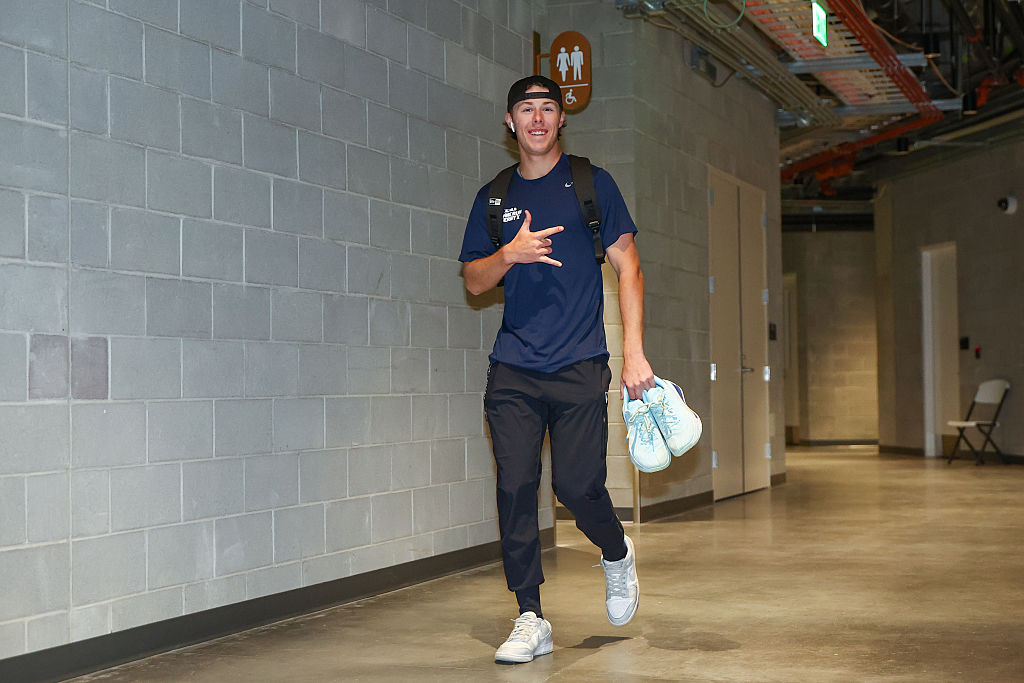
Emerson is the top high school alternative.
If the White Sox want the best prep bat in the class, this is where the conversation starts. Emerson does not have Cholowsky’s college track record or Lackey’s catcher value, but his strongest argument comes from the one tool teams trust most at the top of the draft.
The left-handed swing is advanced for his age. Emerson controls at-bats, shows mature strike-zone judgment and has given decision-makers more confidence in his hit tool than any other high school player in the class. Just Baseball also kept Emerson as the No. 1 prep prospect in its updated 2026 MLB Draft rankings.
Jacob Lombard has the louder athletic package, but Emerson is the hitter teams trust more. The hit tool still carries enormous weight at the top of the draft, and that contrast was central to my FutureSox profile on Lombard as a potential White Sox fit.
There is potential for 20-25 home runs annually for Emerson as he matures, and he has enough athleticism to stick at shortstop long term. Those traits give him a chance to develop into an impact player rather than simply a hitter valued for his floor.
Taking a high school hitter at No. 1 requires a different kind of commitment. Even the most advanced prep bats typically need more development time than college players, and that reality is part of Emerson’s evaluation.
The upside is substantial—many evaluators believe he was a stronger prospect at this stage than Cholowsky was coming out of high school—and he has a legitimate case as one of the highest-ceiling players in the class. Still, his path to the majors is less direct than Cholowsky’s or Lackey’s because of the longer developmental runway that comes with prep hitters.
He would not be a reach, but it would recontextualize the decision. Instead of choosing between the two most established college profiles, the White Sox would be betting that Emerson’s long-term offensive upside outweighs the added risk and development time that come with a high school hitter.
If the White Sox believe Emerson is the best hitter in the class and are comfortable with the development path, he belongs in the conversation. He just has to clear a higher bar because the two college options give Chicago more certainty in the spot the club is currently in.
The Dark Horses
Jacob Lombard is the name worth watching most closely from the next group.
The Gulliver Prep shortstop has the type of upside that makes teams uncomfortable passing too early. He is a better athlete than Emerson by most accounts, and some prefer his long-term defensive projection at shortstop. The power and speed give him a different type of ceiling, but the hit tool makes him harder to price at No. 1.
Emerson is the prep hitter teams trust more, while Lombard is the more explosive athlete if a club wants to bet on development. The White Sox could justify him if they believe the spring gains are tangible and the contact issues can be managed, but that would be the boldest outcome of the main position-player group.
Jackson Flora is the pitching option if the White Sox want to break from the bats, although the White Sox have had no meaningful link to pitching at any point during this process. That has not stopped them from surprising people before, but Flora still feels more like a theoretical option than a likely outcome.
He is widely viewed as the best arm in the class and should be near the top of the board, yet he has not separated from the hitters the way a pitcher usually needs to at No. 1. Some scouts still see a development runway with the breaking ball, changeup and fastball shape.
Eric Booth Jr. belongs in the broader second tier because of his athleticism and upside, but he does not feel as connected to the White Sox as Lombard. Tyler Bell is more of a board-shaper than a White Sox target. If another team pushes Bell into the top five, it could affect how the early picks unfold, but it does not change Chicago’s decision much.
How the Bonus Money Fits
Bonus money is part of the decision, but it should not control the pick.
The No. 1 pick slot value is $11,350,600. Cholowsky has been projected in a record-setting range, likely around $9.5 million, with a $10 million-plus bonus a possibility. That would still come in below the full slot and give Chicago room to work later.
The White Sox already have enough flexibility in their pool to be aggressive later in the draft without forcing a discount at No. 1. More importantly, it is difficult to envision Cholowsky sliding very far if Chicago passes on him.
Tampa Bay at No. 2 and Minnesota at No. 3 have both been connected to him throughout the process, making it hard to build a realistic scenario where he gets down to No. 4. If a team picking behind those clubs is looking for savings, Lackey or Emerson are more plausible candidates than Cholowsky.
That keeps the first pick from becoming a savings exercise. Lackey would likely come at the largest discount of the realistic candidates, given the agency ties that have been discussed throughout the process, but that still should not drive the decision.
If Chicago takes Lackey, it should be because the organization believes in the catcher profile. If it takes Emerson, it should be because it believes in the bat, and if it takes Lombard, it should be because it trusts the upside and its own development group.
The smartest approach is to treat any bonus savings as a secondary benefit rather than the primary objective. Chicago has enough pool flexibility to maximize the rest of the draft without compromising on talent at the top. If the White Sox believe one player is clearly the best fit, they should make that selection and build the rest of their strategy around it.
The Pick
My projection is still Roch Cholowsky.
I would be shocked if the White Sox moved away from a hitter at No. 1. From there, the most likely path still points back to the shortstops, with Cholowsky and Emerson representing the clearest alternatives.
That does not mean the internal debate is fake. There has been enough chatter to believe the room may not be unanimous, especially with different influential voices involved in a decision this high. But the White Sox are not going to publicly tip Cholowsky if he is the pick. Keeping that part guarded feels more like draft process than evidence they are moving away from him.
Lackey has made the debate much more interesting. If the White Sox believe he is a long-term catcher with a top-of-class bat, there is a legitimate case to take him first overall. Emerson belongs in the same conversation because of the hit tool, while Lombard gives Chicago the bigger prep upside swing if it wants to lean into player development.
Flora and Booth are talented enough to discuss, but they still feel more like board-shapers than likely answers at No. 1. Bell could change how the first few picks unfold behind Chicago, but he does not change the White Sox’s decision much.
That brings the pick back to Cholowsky. He “held serve” this spring, even if he did not run away from the class. The case for Lackey has become increasingly compelling, but Cholowsky still stands out as the strongest combination of proven performance, premium defensive value and fit within the organization’s long-term vision.
The White Sox have done the hard part by narrowing this class to a handful of worthy options. Now the challenge is trusting their evaluation.
Cholowsky offers the steadiest profile in the class with a strong floor and enough upside to envision impact at a premium position. That blend fits both Chicago’s immediate goals and its long-term roster vision, which is why he remains the prospect who makes the most sense at the top of the board.
If the White Sox believe championships are built by consistently making sound decisions rather than chasing uncertainty, choosing Cholowsky would be the clearest reflection of that philosophy. Take the player who checks the most boxes, trust the process that led you there, and walk away from the draft with confidence in the foundation you’ve added to the future of the franchise.
Become a Member of Just Baseball
Subscribe and upgrade to go ad-free!
* Save 25% by subscribing annually.

Written by
Adrian White covers the Chicago White Sox for Just Baseball and FutureSox. He studies sports management at Florida Atlantic University and focuses on player development and…