
The Athletics Have a Lawrence Butler Problem
Struggling mightily so far in 2026, Lawrence Butler has failed to return value on his extension, creating a challenging problem for the A's.
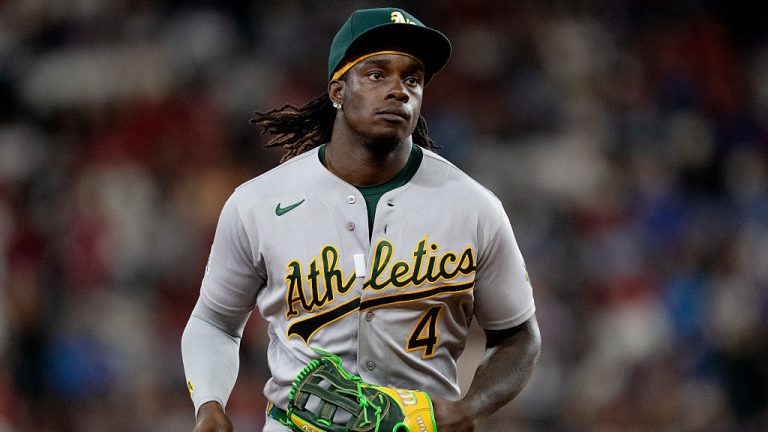
The Athletics have gone through a lot of change over the past few years. After entering a rebuild and announcing their departure from Oakland, a city they called home for 54 years, the A’s were looking like the saddest show in professional sports.
Then they started to change their ways. Always known for shipping out their best talent before it became time to put up money, the A’s made a move we rarely see, inking Brent Rooker to an extension.
They followed it up with a slew of extensions, including Lawrence Butler, who was coming off a breakout season in 2024.
Slashing .262/.317/.490 with 22 home runs, 18 stolen bases, and a 130 wRC+ at 23 years old was certainty enough reason for excitement. Even if Butler had some holes in his game, his improvements in 2024 felt like enough to take the risk on a long-term deal.
Well, I think the A’s are regretting it now.
Butler’s 2025 season still saw him reach the 20-20 mark, but the overall production did not have the same feel. Moving ballparks helped Butler put up fine raw numbers, but a closer look told a truer story; a home OPS of .789 — in a minor league park — and an away OPS of .633, in hindsight, is not very encouraging.
Some thought it could be chalked up to a down year and that the 2026 season would be an opportunity for Butler to rebound. But so far, everything looks much worse.
Stats were taken prior to play on May 20.
Butler’s Drop Off in Production
The 2026 season started about as bad as you could imagine for Butler.
Through 45 games, he’s slashing .176/.275/.267 with only three home runs and a 53 wRC+. The home-field boost that saved his baseline production in 2025 has gone out the window, as he sports a .656 OPS at home and a .443 road OPS, which includes only one extra-base hit.
Now, we are working with a relatively small sample, as we are just over a quarter of the way through the season. But, these struggles are not a case of small sample size skewing numbers. Instead, we’re seeing a player whose worst flaw is getting exposed, proving how small the margins for success are for Butler.
To understand what’s going wrong, we must first understand what went right in 2024 when we saw the best version of Butler.
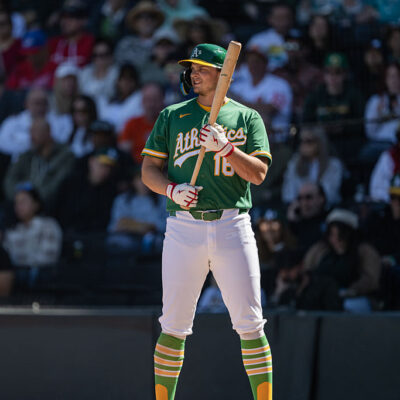
Butler is still posting similar enough exit velocities when comparing the two seasons, and a number of advanced metrics are close to 2024. When you squint at the numbers, it’s enough to lead some to think that he has not completely lost his ability.
The biggest difference for Butler has been his ability to hit fastballs.
When you watched Butler early in his minor-league career, you saw a ton of swing-and-miss in his game. He wasn’t swinging at everything or expanding the zone, but he struggled to make contact consistently enough to prove he would become a major leaguer. Once he corrected that flaw in 2023, he took off.
In the 2024 season, Butler posted a 27% whiff rate against breaking balls and batted .295 off spin. This allowed him to spoil pitches and get through tough at-bats even if he still buttered his bread on fastballs, where he did the majority of his damage.
He still performed well on velocity in 2025, collecting 13 of his home runs off fastball and batting .252 against them. But breaking balls exposed his greatest flaw; a 42% whiff rate and only .211 average put a glaring hole in his game. The same could be said against off-speed pitches.
This season, Butler has a 33.3% whiff rate and .167 average on breaking balls to go with a 37.5% whiff rate and .120 average against off-speed. The biggest difference is that he’s not taking advantage of fastballs like he did in the past — it’s been just a .200 average and .267 slugging percentage against the pitch type.
Now, we see plenty of players make a career off hitting fastballs and nothing else. Butler absolutely could fit that profile, but when he’s not hitting velocity he has no room for error. All of his power and production comes off of fastballs, and the more he struggles with them, the less value he has.
Once you add in his platoon disadvantage, the margin for error gets even smaller. In 2024, Butler was excellent in a small sample (89 PA) against lefties, slashing .291/.315/.523, pushing his .838 OPS higher than he had against righties. Since then, he’s been a sub-.550 OPS hitter against southpaws, making him unplayable.
The A’s now have a platoon bat who lives and dies off hitting fastballs, and, well, he’s not hitting fastballs at the moment. The more he struggles against fastballs, the more opportunities pitchers have to use that pitch to set up a breaking ball, which gives him little chance to succeed.
Take a moment and think about how a pitcher would attack Butler in an at-bat. In the past, they needed to land their breaking balls early because they could not work back into a count with fastballs due to the damage he could do on one pitch that caught too much of the plate.
When Butler cannot do an damage on fastballs, it allows a pitcher to lean into his fastball to get ahead in counts. Then, the pitcher can lean on a breaking ball to force poor contact or generate swing-and-miss.
He might only get one or two pitches a game to capitalize on, and he’s not taking advantage. That goes to show just how small the difference can be from good to bad for Butler.
The production, or lack their off, is causing the A’s lineup to have a speed bump each time he’s up to bat. But, his play on the field is not the only problem he’s causing for the A’s.
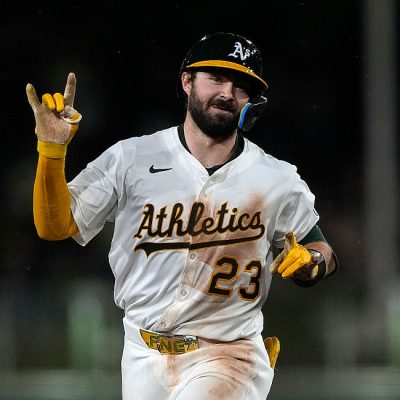
Butler’s Contract Handcuffs the A’s
Giving out a number of extensions was refreshing to see, especially for an organization that never made paying players a priority. After years of having a bottom-tier payroll, the A’s set a franchise record by carrying a payroll around $132 million into 2026. But will the trend continue?
The A’s can, and should, spend more money. No doubt about it. But, if their money does not bring back the return they had hoped for, what makes us think they will continue to dump more money into the team?
History does not tell us that will be the case, and if deals like Butler’s turn sour, I doubt the A’s will continue to invest in their young talent.
The two names on everyone’s mind are Nick Kurtz and Shea Langeliers, the A’s two best players, both of which are without a long-term deal. Although they are still under team control, will these players fit into the A’s budget into the future?
On the flip side, what does the conversation look like surrounding trading Butler?
Moving him and his contract would free up money that could be reallocated to a different young player or outside talent. However, five more years with an increasing salary and a club option for year six, with a $4 million buyout, is not a deal many teams will sign up for. Especially when Butler is playing at the level he has this season, showing 2025 was a trend and not an outlier.
A player like Butler, with a contract like his, is going to get every opportunity to get back on track. Considering the A’s are truly contending for a playoff spot, giving at-bats to Butler is only hurting the team for the time being.
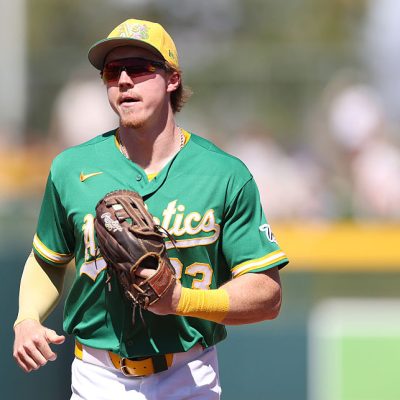
Henry Bolte is now up and a better option in center, Carlos Cortes is hitting well in right, and Tyler Soderstrom, although struggling, is not moving out of left.
Once Denzel Clarke and Max Muncy return, what happens? If Tommy White or Leo De Vries get called up and Zack Gelof plays more outfield, where does Butler fit into the puzzle?
Butler does not have much time to turn around his season. The A’s could send Colby Thomas or Bolte down and use the other in a platoon role with Butler, but I do not think either Thomas or Bolte deserve the short end of that stick.
Bottom line, the A’s have a real issue with Lawrence Butler — not just now, but possibly into the future.
Become a Member of Just Baseball
Subscribe and upgrade to go ad-free!
* Save 25% by subscribing annually.

Written by