
2026 Fantasy Baseball Sleepers: First Base
These first basemen have the potential to be gems in your upcoming fantasy baseball drafts.
Here at Just Baseball, we are continuing to help you prepare for fantasy drafts with spring training in the near future.
We have already provided ADP guides on the first several rounds of fantasy drafts and provided a top 200 list to set you up for success, picking apart strengths, flaws, and draft position.
Now, it’s time to focus on the later rounds. It’s the part of the draft where you take a swing on a rookie, go with an upside play, or invest in a player coming off injury.
The definition of “sleeper” will change depending on who you ask. For the sake of this series, we will be pulling from the National Fantasy Championship ADP rankings, as we also did with our ADP series, and selecting players with an ADP of 250 or lower.
Players lower than 250 usually fall at or near the end of your draft for most leagues. If you are in a super deep league, this outline can still be helpful for your middle-to-late rounds. Keep in mind, these selections are usually not intended to be starters, but depth options.

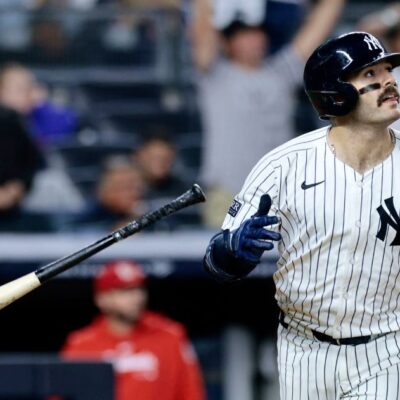
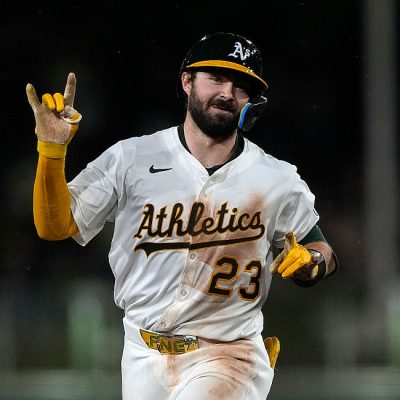
It’s Time to Appreciate Ryan O’Hearn — No. 295 NFBC ADP
The career arch for Ryan O’Hearn has been a fun one to follow.
Bouncing back and forth from Triple-A with Kansas City to carving out a role in Baltimore to being an impact bat at last year’s trade deadline, O’Hearn has given us three straight seasons of success. I think it’s time we take notice.
O’Hearn has the look of a power hitter but has focused more and more on contact the past few years. He’s cut down on his chase rate, which has improved his walk rate, and he consistently outperforms the average zone contact rates.
I do think there’s enough juice to reach 20 home runs, but his value doesn’t solely rest on power. All in all, O’Hearn is a much better hitter than many have given him credit.
Now in Pittsburgh, O’Hearn will have an opportunity to hit in the middle of the lineup and be featured in a way we have not seen before. I’m not sure where he’ll be slotted into the batting order, but I’m sure it will be in the top four. Last season, he was moved around the batting order quite a bit but I think he’ll have a more stable spot in Pittsburgh, which only helps his value.

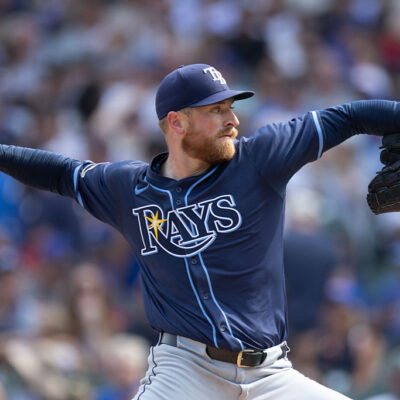
Nolan Schanuel Continues to Improve Every Year — No. 318 NFBC ADP
I know what you are saying: “Nolan Schanuel, the guy with no power?” Hear me out.
Schanuel was drafted in the first round in 2023 and debuted weeks later. The Angels did him no favors with his development, but he’s improved each year and I think 2026 will be his best one yet.
His first full season was 2024, where he walked at an 11% clip, struck out 17% of the time, and slashed .250/.343/.362 with 13 home runs.
He cut his strikeout rate last season to 12.6% while improving to a .264/.353/.389 slash. He also posted an average exit velocity of 87.5 mph, an improvement from 86.1mph in ’24 and 85.4 mph in 2023. The quality of contact continues to improve without a dip in the amount of contact, which is a trend that always interests me with sleepers.
By no means do I think Schanuel will become a power hitter, but he excels at all other aspects of being a good hitter. With more time on task and growth, is 17 home runs out of the question? I don’t think so. Seeing such a high walk and high average at only 23 years old is encouraging, and there is more room to grow.
The Angels’ lineup does not scream run production opportunities, but we know Schanuel will be hitting high in the lineup — probably the two hole — which should give him more at-bats than some first basemen in this ADP range. More at-bats equals more opportunity.
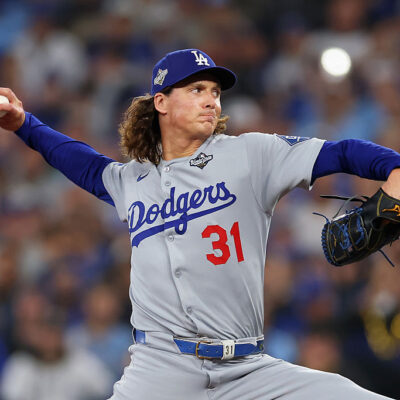
Triston Casas Is Getting Playing Time, Somewhere — No. 482 NFBC ADP
When the Red Sox acquired Willson Contreras, questions immediately came up about where Triston Casas will play. The former top 100 prospect has seen his momentum halted by injury after injury and did not look like himself in a small sample last season.
The only time we saw Casas have over 500 plate appearances was in 2023, which resulted in a .263/.367/.462 slash with 24 home runs at 23 years old. How much have the injuries impacted his ability? It’s hard to say for sure, but I believe there’s enough talent, and opportunity, to make this selection make sense.
The Red Sox have been involved in trade rumors all offseason and at some point will likely pull off a trade that frees enough at-bats for Casas to see time at DH or first. It’s also possible Casas is the one traded, which would likely open up everyday at-bats, making him even more intriguing.
I struggle to believe someone as young and talented as Casas will be playing in the minors for an extended period of time in 2026. Considering we are approaching pick No. 500, this upside play could pay off in a big way.
Charlie Condon Is Closer Than You May Think — No. 631 NFBC ADP
The Rockies moved on from Michael Toglia this winter, whose role is fairly similar to what Charlie Condon could fill in 2026. After being the third-overall pick in 2024, Condon has quickly worked his way up to Double-A where he posted a 132 wRC+ in 55 games.
The strikeouts will be something to monitor, but the power potential, especially at Coors, could be a steal this deep in your draft. If you have reached the 600s, I assume you are in a league deep enough where stashing a player is not uncommon.
Colorado’s first base situation is currently Troy Johnson or Blaine Crim — two 28-year-olds who have combined for fewer than 200 plate appearances. I see why the Rockies have brought them in, but they aren’t exactly the caliber of player or prospect to block someone of Condon’s upside.
Condon could also play in the outfield, which is much more stable than first. Regardless of how much he plays in the outfield, the positional flexibility makes it that much easier to stomach on your roster. The pick is risky because playing time is not guaranteed in any way, but that’s the ecosystem you live in once you reach the 600s.

Written by