
The Top 10 Second Basemen in Major League Baseball for 2026
Second base might be a weaker position, but these rankings still include some of the best hitters, fielders, and baserunners in the game.
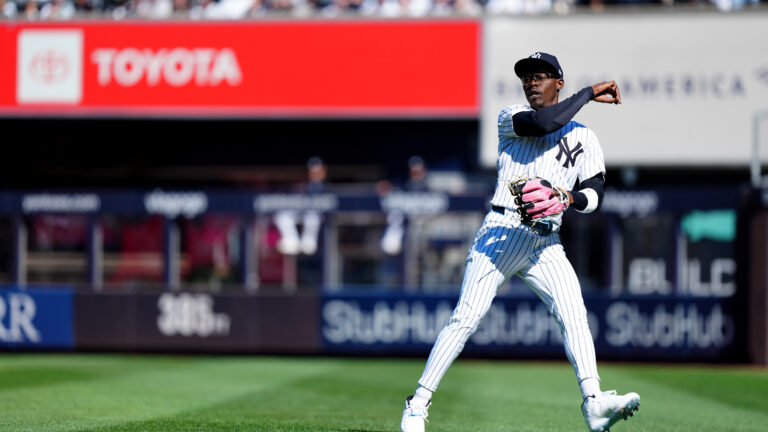
Second base is a relatively weak position right now, which made it one of the hardest rankings to put together. There’s one clear star at the keystone, and you won’t be surprised to see him at number one on our list.
After the star at the top, it would be much easier to sort the league’s best second basemen into categories. There are the multi-talented young studs, the former superstars hoping for a career renaissance, the high-ceiling youngsters still looking to break out, and the veterans who just need to stay healthy.
But of course, we did rank them.
After starting our rankings series with designated hitters and utility players last week, we’ve moved on to catchers, first basemen, and now, I’m here to present Just Baseball’s top 10 second basemen for 2026. Let’s get to it.
The voting panel for Just Baseball’s 2026 position rankings comprised editors Ryan Finkelstein, Leo Morgenstern, Eric Treuden, and Joey Peterson, as well as Just Baseball’s Aram Leighton, Peter Appel, Peyton Ginas, and Jack McMullen.
Each panelist ranked players 1-15 and gave those outside of their top 15 a numerical score of 20. The list below reflects the average of those rankings – the lower the mean score, the better.
Honorable Mentions
- Brandon Lowe, Tampa Bay Rays
- Luke Keaschall, Minnesota Twins
- Ozzie Albies, Atlanta Braves
When he’s healthy, Brandon Lowe is a consistent source of power, which is rare at the keystone. I wouldn’t be shocked at all if he’s a more productive hitter in 2026 than everyone on this list below number one. Constant injuries and poor defense explain why he’s only an honorable mention.
Injuries cut into much of Luke Keaschall’s rookie season, but he was electric in the 49 games he played. He hit .302 with 19 walks, 29 strikeouts, and 14 stolen bases, finishing with a 132 wRC+ and 1.6 fWAR. Besides the SSS of it all, Keaschall’s glove is keeping him out of our top 10. He’s more of a second baseman by default than a second baseman by trade.
What happened to Ozzie Albies? Over the last two years, his bat has become a shell of what it once was. It would be foolish to completely write off a 29-year-old with a quartet of four-win seasons under his belt, but the version of Albies we saw in 2024 and ’25 looked more like a role-player than an All-Star.
10. Bryson Stott, Philadelphia Phillies
- Average Ranking: 9.75
- 2025 Stats: 147 G, 13 HR, 66 RBI, 24 SB, .257/.328/.391, 100 wRC+, 3.1 fWAR
Plus speed and range give Bryson Stott a solid floor, but his performance at the plate has alternated between average and unplayable through his first four big league seasons.
2022: 84 wRC+
2023: 100 wRC+
2024: 87 wRC+
2025: 100 wRC+
It doesn’t help that Stott’s limited arm strength and trouble turning double plays have cut into his defensive value. As he enters his age-28 season, his value remains hard to nail down.
Stott doesn’t have as much upside as anyone ahead of him on this list (or indeed, any of the honorable mentions), but he’s a safe bet to be a capable everyday player.
9. Jackson Holliday, Baltimore Orioles
- Average Ranking: 8.875
- 2025 Stats: 149 G, 17 HR, 55 RBI, 17 SB, .242/.314/.375, 96 wRC+, 1.2 fWAR
Jackson Holliday’s ranking is all about potential. According to fWAR (or bWAR), all four of Stott, Lowe, Keaschall, and Albies were more productive than Holliday last season. Yet, Holliday only just turned 22, and despite his mediocre final numbers, he really did make progress in his first full big league campaign.
At this time two years ago, Holliday was our No. 1 prospect, with a rare 70 future value grade. And when Aram Leighton gave him that grade, he did so with the understanding that Holliday still had growing to do: “He will likely be a contributor for the Orioles far before he is a finished product.”
Almost every aspect of Holliday’s game still needs work, but it wouldn’t take much more than a small step forward at the plate, in the field, and on the bases for him to comfortably assert himself as a top-10 second baseman in the game. The bigger those steps are, the higher he’ll rise.
8. Xavier Edwards, Miami Marlins
- Average Ranking: 8.75
- 2025 Stats: 139 G, 3 HR, 43 RBI, 27 SB, .283/.343/.353, 95 wRC+, 2.5 fWAR
Xavier Edwards didn’t make my personal top 10, and I’m still a little surprised he made almost everyone else’s. I’m just not sure I see a high ceiling or a high floor.
His defensive metrics were excellent after he moved to second base last year, but the sample was small. In roughly the same number of games at shortstop and second base, Edwards has compiled -11 DRS, -17 OAA, and -12 FRV at shortstop compared to +12 DRS, +9 OAA, and +7 FRV at second base.
I believe Edwards is a much better fit at second than short, but I don’t believe a position change can really make that much of a difference.
Evaluators were split on his future defensive value in his prospect days, and it didn’t help that he moved around the diamond quite a bit in the minors too. He may have passed the eye test at second base last year, but I need to see more before I’m convinced he’s a plus defender.
His glove will be especially important, because he hasn’t proven he can hit yet either. Edwards turned heads with his 129 wRC+ in 2024, but that was over a 70-game sample with an inflated BABIP (.398) and a massive difference between his wOBA (.359) and xwOBA (.296).
The contact skills and baserunning are good, but are they good enough to make up for a total lack of power? It depends if you have more trust in his career .322 wOBA or .292 xwOBA.
I know I’ve been pretty down on Edwards in this blurb, but I’ve also laid out the case for why he does belong in the top 10. His defense at second base was elite last year, and he’s flashed above-average skills at the plate to go along with good speed on the basepaths.
Edwards been worth at least 2.0 fWAR in each of the past two seasons, and his total 4.8 fWAR from 2024-25 (in only 209 games) ranks eighth among the players on this list.
7. Marcus Semien, New York Mets
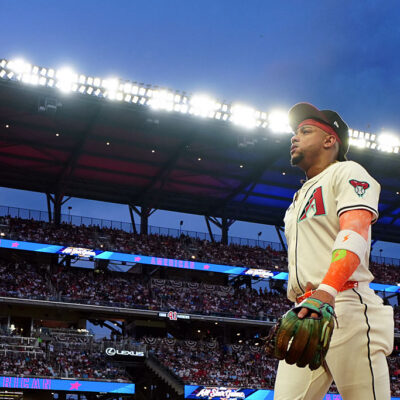
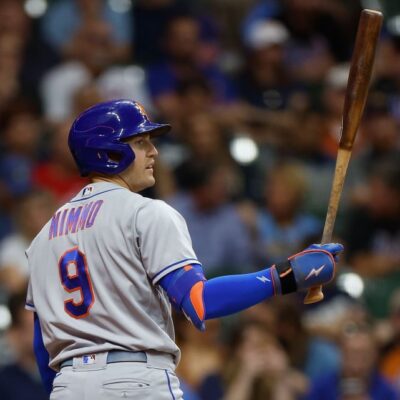
- Average Ranking: 8.125
- 2025 Stats: 127 G, 15 HR, 62 RBI, 11 SB, .230/.305/.364, 89 wRC+, 2.1 fWAR
So much for the odd year, even year theory. Marcus Semien slid backward for a second straight season in 2025, posting his lowest wRC+ since his 21-game cup of coffee in 2013.
The good news was that his defense and baserunning remained strong. Considering the low offensive expectations at second, he was still a productive player. The question is: How long will that continue to be true? Semien turns 36 in September, and even a little more age-related decline could knock him out of the top 10.
On the other hand, this is a player with a trio of top-three MVP finishes who was an All-Star as recently as 2024. He was a top-five second baseman in the game every year from 2021-24. It’s not irrational to think he could bounce back to that form for one more year or two.
6. Gleyber Torres, Detroit Tigers
- Average Ranking: 5.5
- 2025 Stats: 145 G, 16 HR, 74 RBI, 4 SB, .256/.358/.387, 113 wRC+, 2.6 fWAR
Gleyber Torres has never been known for his glove or his wheels, but at his best, the man can really hit. Through the first half of 2025, he slashed .281/.387/.425 with a 131 wRC+. His .385 xwOBA was one of the best in the American League.
Unfortunately for Torres, his performance dropped way off in the second half, and he ended up accepting a one-year contract in free agency for a second year in a row.
Torres had surgery to fix a sports hernia in October that he claimed was affecting his play post-All-Star break. If the hernia was indeed the reason for his second-half struggles, and if he gets back to hitting the way he did at the beginning of 2025, he could be the best offensive second baseman in the American League.
However, Torres has been less than consistent over his eight MLB seasons. He should be much better than he was when he playing through the hernia, but that doesn’t mean his pre-hernia performance was any more reflective of his true talent.
Torres finished 2025 with a 113 wRC+, right in line with his career 114 wRC+. That’s the level of production I expect from him again in 2026.
5. Jose Altuve, Houston Astros
- Average Ranking: 5.25
- 2025 Stats: 155 G, 26 HR, 77 RBI, 10 SB, .265/.329/.442, 113 wRC+, 2.1 fWAR
If Jose Altuve continues on the downward trajectory he’s been on for the last couple of years, this ranking could end up looking far too bullish. Yet, I’m not ready to rule out a career renaissance from the greatest second baseman of the 21st century.
Altuve’s 113 wRC+ last year was his lowest since 2020 and his worst in a full season since 2013. New career-highs in fly ball rate and pull rate helped him slug 26 home runs, despite a career-worst average exit velocity. There’s no question he was taking advantage of the Crawford Boxes, but that’s fine – he’ll get to play half his games in Daikin Park again in 2026.
The bigger problem was that his batting average on balls in play plummeted. Altuve hit a lot of popups, a lot of double play balls, and all told, his wOBA and xwOBA on balls in play (in other words, batted balls that weren’t home runs) were both the worst of any full season of his career.
Sometimes, worse results on balls in play are just due to bad luck. Other times, the culprit is poor-quality contact.
So, can Altuve make better contact in 2026? One reason for optimism is that he recorded two of the three hardest-hit batted balls of his career this past year, a pair of 110-mph liners.
Indeed, poor swing decisions, rather than declining strength, seemed to be the primary source of his struggles. Hopefully, that’s something he’s been working to fix over the winter.
4. Brice Turang, Milwaukee Brewers
- Average Ranking: 3.375
- 2025 Stats: 156 G, 18 HR, 81 RBI, 24 SB, .288/.359/.435, 124 wRC+, 4.4 fWAR
Brice Turang was as productive as any other second baseman in MLB last season. What’s holding him out of our top three is that he had never played like that before.
To some of our voters, the former top-100 prospect’s breakout season was just the beginning, and they’re expecting even more from the 26-year-old going forward; three of our panelists ranked him as the second-best player at his position. However, the rest of our voters placed him either fourth or fifth.
Speaking for myself, I need to see more from Turang before I’m fully convinced he’s put his first two major league seasons behind him. From 2023-24, he produced a .631 OPS and 77 wRC+ in 292 games, with consistently low exit velocities and a lot of trouble making quality contact in the air.
Then again, if Turang can increase his bat speed some more and continue refining his swing decisions, he could absolutely be at the top of this list a year from now.
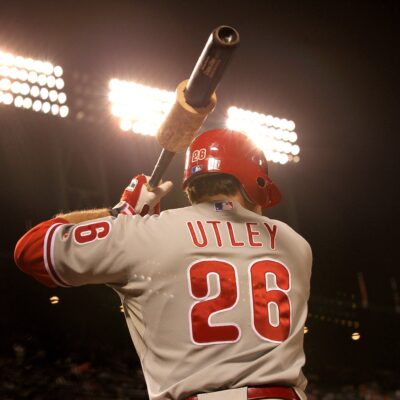
3. Jazz Chisholm Jr., New York Yankees
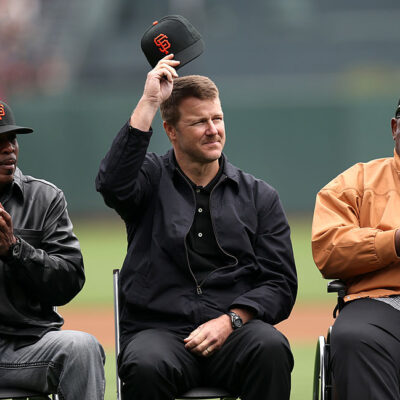
- Average Ranking: 3
- 2025 Stats: 130 G, 31 HR, 80 RBI, 31 SB, .242/.332/.481, 126 wRC+, 4.4 fWAR
Jazz Chisholm Jr. helped the Yankees by playing some third in 2024 and ’25, but second base is where he belongs. The dynamic young infielder enjoyed the best season of his career last year, and his overall numbers would have been even better without the poor defensive metrics from his time at third base dragging them down.
Chisholm took his offensive game to the next level in his first full season with the Yankees. The lefty batter used a more selective approach to increase his walk rate and barrel rate, setting new career-highs in on-base percentage (.332) and home runs (31). He was a threat on the bases too, swiping 31 bags.
Inconsistent hitting, frequent injuries, and numerous position changes have held him back so far, but Chisholm has the tools to be the game’s most well-rounded second baseman.
2. Nico Hoerner, Chicago Cubs
- Average Ranking: 2.875
- 2025 Stats: 156 G, 7 HR, 61 RBI, 29 SB, .297/.345/.394, 109 wRC+, 4.8 fWAR
With Andrés Giménez moving to shortstop in Toronto, it seems safe to say that Nico Hoerner is the best defensive second baseman in MLB.
Hoerner flashed his elite infield defense from 2019-21 before breaking out as a Gold Glove-caliber shortstop in 2022. When the Cubs acquired one of the only defenders talented enough to push Hoerner off shortstop, he moved over to the keystone full-time. Since then, he and Dansby Swanson have made up one of the most leakproof middle infields in the game.
All told, Hoerner boasts a career 55 DRS and 59 FRV in 5,900 infield innings. That’s an average of about 13 runs saved per full season.
In addition to his glovework, Hoerner has stolen at least 20 bases in each of the last four seasons, with an 83.4% success rate in his career. At the plate, he compensates for limited power and discipline with some of the best bat-to-ball skills in the league. The result is consistently above-average offensive performance.
1. Ketel Marte, Arizona Diamondbacks
- Average Ranking: 1
- 2025 Stats: 126 G, 28 HR, 72 RBI, 4 SB, .283/.376/.517, 145 wRC+, 4.6 fWAR
The top spot safely belongs to Ketel Marte, who earned a first-place vote from everyone on our panel. It’s the only ranking on this list we all agreed on.
All four of Marte, Hoerner, Chisholm, and Turang had similarly productive seasons in 2025, but Marte has been playing at an All-Star level for the longest. He’s also the best hitter at the position by a lot.
While the average second baseman slashed a pitiful .243/.310/.371 for a 90 wRC+ last season, Marte led qualified primary second basemen with a .376 OBP, a .517 slugging percentage, and a 145 wRC+. The only NL players to outhit the D-backs second baseman were Shohei Ohtani, Kyle Schwarber, and Juan Soto.
There’s a case to be made for Hoerner over Marte in the top spot, but Hoerner’s value is much more closely tied to his fielding, and defensive metrics are less stable and predictable from year to year.
Hoerner’s glove might be just as elite as Marte’s bat, but the latter’s skill set makes me more confident he’s going to be an All-Star again in 2026. Ketel Marte is MLB’s top second baseman until proven otherwise.

Written by
Leo Morgenstern is one of the managing editors for Just Baseball. He is also the managing editor at Jays Centre. His writing has appeared all over…