
Chaim Bloom Has To Clean Up Someone Else’s Mess Again
The St. Louis Cardinals have new captain at the helm in Chaim Bloom. Unfortunately for him though, he's inherited quite the mess.
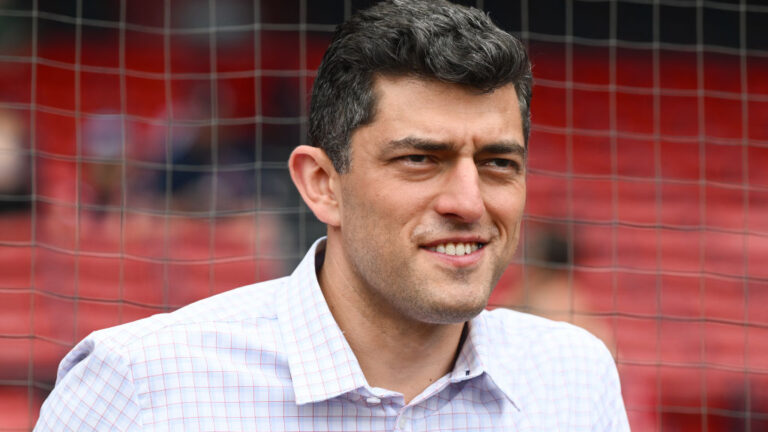
The St. Louis Cardinals once again find themselves in a state of limbo. They’re three years removed from the postseason and still don’t seem any stronger of a contender than they’ve been in recent seasons.
That being said, they also sport a payroll that still features some salaries far too large for an organization in the re-structuring phase that they’re currently in.
In scenarios like this, fans and critics will typically point their fingers towards the front office when trying to identify the responsible party for such a mess like this. And when it comes to the Cardinals, they’re entirely right to do so.
The issue is however, the mastermind behind this chaos is gone.
You see, this current St. Louis roster was a product manufactured by Jon Mozeliak, who served as GM and President of Baseball Ops through 2025.
While their current president Chaim Bloom has been with the organization since 2023, serving as an advisor to Mozeliak, his title tells the story so well. This was Mozeliak’s world and we’re all just living in it.
But the Bloom era has begun in St. Louis, and unfortunately for him, he finds himself on a very similar cleanup duty as he did back in 2020 when he took over the Boston Red Sox’s front office.
Boston proved that Chaim Bloom is No Stranger to Inheriting Messes
Bloom got the keys to the Red Sox after Dave Dombrowski (2015-2019) and Ben Cherington (2011-2015) had previously held them.
In terms of Dombrowski run teams, there’s usually a strong element of success to them but it comes at an expensive cost, usually in the form of expensive veteran contracts that don’t always age well and little prospect capital remaining.
Then, when it comes to Cherington, he’s been heralded as a great baseball mind throughout his career, but he’s also been faced with his fair share of criticism.
Between these two previous administrations, the Red Sox found themselves in a questionable spot when Bloom took over, one that didn’t lend itself to longer term success. One postseason appearance during his four years at the helm being the prime example of that.
The one name that arguably caused Bloom the most issues was David Price. One of the first moves of the Bloom era was the blockbuster deal with the Dodgers that infamously sent Price but more notably Mookie Betts to Los Angeles.
Price was an aging arm coming off an injury-ridden and underwhelming 4.28 ERA season, while also eating up a good chunk of change with three years of a monster seven-year contract left.
To move a contract of someone like this, you have to package him with someone desirable. While in hindsight the deal looks lopsided and frankly laughable on the Red Sox end, the former MVP in Betts was entering his final year of arbitration with no guaranteeing he’d come back in free agency after 2020.
He offered Bloom a way to not only get a return on their investment in him, but made it easier to move Price and a sizeable portion of his contract. This was key considering Boston held a weaker system at the time that only featured one Top 100 caliber prospect at the time in Michael Chavis.
Then, there was J.D. Martinez, who happened to be coming off an All-Star 2019 campaign where he hit .303 with a .939 OPS. However, the fact remained that Martinez was a costly luxury who’s fielding days were essentially behind him, meaning Boston was stuck with a nearly $24 million designated hitter.
On top of that was the series of injured salaries the Red Sox were forced to pay out that were a product of Cherington and Dombrowksi.
Dustin Pedroia was awarded was awarded an eight-year, $110 million contract back in 2014. After just nine games between 2018 and 2019, Pedroia never made an appearance beyond that before his 2021 retirement, but still costed the Sox $13.125 million in 2020 and $12.125 million in 2021 in injury payroll.
Then there’s Chris Sale, who may’ve rebounded to a Cy Young with the Braves in 2024, but didn’t throw at all in 2020 and made just 11 starts between 2021 and ’22, yet made $30 million per season in that span.
Add to that some sizeable retained payroll during that time including Price (roughly $38 million from 2020-22), Pablo Sandoval ($5 million in 2020), Jackie Bradley Jr. ($17.5 million in 2022) and Enrique Hernandez (nearly $9 million in 2023), plus the monster international free agent deal for Rusney Castillo (over $14 million in 2020) and there was no shortage of pre-determined handcuffs to shackle Bloom.
Still, you can’t deny the fact that despite the lack of postseason success, he built up a core and farm system that has Boston in a good place of contention right now, featuring future stars like Roman Anthony. He just unfortunately wasn’t there to really reap the benefits of his hard work.
Bloom Has His Work Cut Out For Him This Offseason
Now, entering his first season with total control of the Cardinals, Bloom certainly has his work cut out for him.
He’s already started to resolve some of those issues but even then, he’s had to resort to some all too familiar methods to offload some money in order to better lineup a rebuild.
When the Cardinals traded Sonny Gray to the Red Sox, it finally meant they had moved one of their trio of high-paid veterans with no-trade clauses. However, it certainly didn’t come without a cost.
While the Cardinals were able to land one of Boston’s Top 10 organizational prospects in Brandon Clarke, it came at the expense of retaining $20 million of Gray’s contract in 2026 and likely not landing the major league ready starter they’ve been rumored to be coveting this winter in Richard Fitts.
There’s also still the matter of Nolan Arenado and Willson Contreras, the remaining members of the aforementioned high-cost veteran trio that aren’t necessarily names conducive to a rebuild.
Last offseason already proved moving Arenado would be a hard task. So a .666 OPS and 84 wRC+ season while also not playing Platinum Glove-worthy defense in 2025 will certainly not help their efforts.
Then, while Contreras with a 124 wRC+ is still a productive piece to have in the lineup, there’s some potentially concerning flaws to his game.
He’s entering his age-34 season and set to make $18 million and is no longer playing the premium catching position he was originally signed to play. Contreras also happens to be coming off a well below average season in terms of his plate discipline, including a 24th percentile K-rate of 25.2%, 23rd percentile whiff rate of 28.9%, 35th percentile chase rate of 30.1% and a career-low 44th percentile walk rate of 7.4%
Then there comes the younger pieces that usually would fit the age profile of being a coveted name on the trade market, and were once promising names themselves, but would likely fetch a lot lower of a value this winter as opposed to if they’d been traded earlier.
Lars Nootbaar is no longer the 3.1 fWAR player with a 118 wRC+ and .784 OPS that he was back in 2023, as he’s coming off just an 0.8 fWAR campaign with a 96 wRC+ and .686 OPS.
Then there’s Nolan Gorman, who may still be positionally versatile but is coming off his second straight year below a 90 wRC+ and .700 OPS.
Bloom also has to try an navigate the confusing situation of Jordan Walker, who after his rapid rise to the majors as one of the game’s top prospects as a 21-year-old back in 2022 has since fallen off a cliff. He’s become a back-to-back negative fWAR player with just a 66 wRC+ and .584 OPS in 2025.
Bloom Still Has Some Promising Pieces to Work With in St. Louis
While there’s plenty of challenges facing the Cardinals this winter, it would be wrong to say they don’t have strong pieces at their disposal this winter.
From a trade standpoint, while some of their younger names like Nootbaar and Gorman may not hold the same trade value as they once did, St. Louis still has one of the offseason’s top trade pieces in Brendan Donovan to help bring in some new assets.
The utility man added All-Star to his resume this season, after slashing .287/.353/.422 with a 119 wRC+ and 2.9 fWAR. And from a wider perspective, he’s now posted a 115 wRC+ or better in all four of his MLB seasons while being a 2.0+ fWAR player in three of those four campaigns.
Then, from an existing asset standpoint, youngsters like Masyn Winn and Iván Herrera have proven their worth at the big league level already.
There’s also the likes of Top 100 prospects in J.J. Wetherholt (Just Baseball’s No. 9 prospect), Rainiel Rodriguez (JB’s No. 46 prospect) and Liam Doyle (JB’s No. 82 prospect) along with other names with pedigree like Quinn Mathews and Tink Hence to anticipate in the majors down the road.
There’s no denying Bloom is in a less than ideal situation as he enters his first season back in the driver’s seat of a front office, but he’s not working completely from scratch.
However, things are going to have to get worse before they get better, and that can only be attributed to the mess he was given.
He’s played the role of custodian well in the past before and he’ll be be tasked to do it again in St. Louis.
But who’s to say he can’t?

Written by
Caleb Moody is a contributing writer for Just Baseball and has been covering topics across Major League Baseball with them since he started as an intern…