
What Is the Portland Cascade’s Secret to Winning Games?
The Portland Cascade rank close to last in most offensive stats, but they're second in the league. How do they do it?
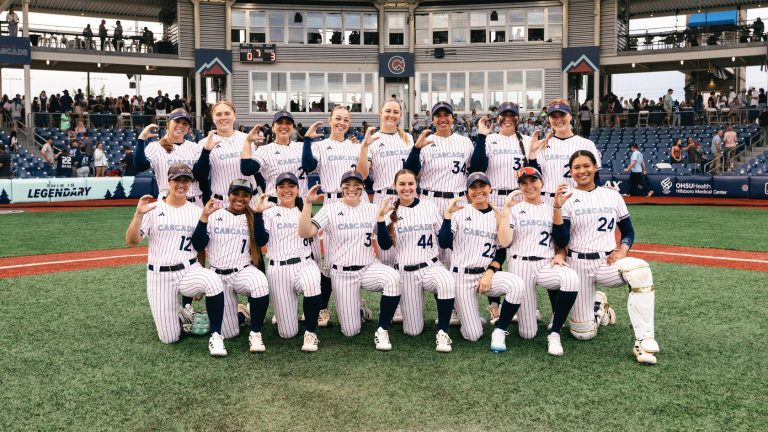
The Portland Cascade are on a three-game win streak after a sweep over the Volts. With a current record of 8-4, the team sits in second place overall in the Athletes Unlimited Softball League rankings, just one game out of first place.
Remarkably, they sit in last place in a slew of offensive categories. The Cascade are last in average and slugging at .225 and .371, respectively. They are last in hits with 68 and RBIs with 40. They’re second-to-last in key remaining categories, like on-base percentage at .335 and runs scored with 46.
Individually, just one player, Korbe Otis, bats above .300, and she’s the only player with double-digit hits (13). Only Orbis and Megan Grant have double-digit RBIs with 11, while the remainder of the team falls at five or fewer.
Anyone looking at just these offensive statistics would assume the Cascade aren’t doing so hot, so it comes as a shock to all that they are top contenders for the championship series. How do they do it?
An All-Star Worthy Pitching Staff
The Cascade are proof that good pitching wins ball games. Their incredibly low offensive numbers might be overshadowed by the sheer dominance of their pitching staff.
Lead by Sam Landry and rookie Kenzie Brown, the team’s go-to pitchers have an average ERA of 2.26. Landry boasts a remarkable 1.11 ERA, fifth in the league among those with more than five innings pitched and first among those with more than 10.
Combined, Landry and Brown account for 45.2 of the Cascade’s innings. With four starts each, Landry has tossed three complete games and Brown nailed one herself.
Landry, the ace, holds a WHIP of 1.18, allowing fewer than 1.2 runners on base per inning. With this, she’s given up just four earned runs and has claimed three wins.
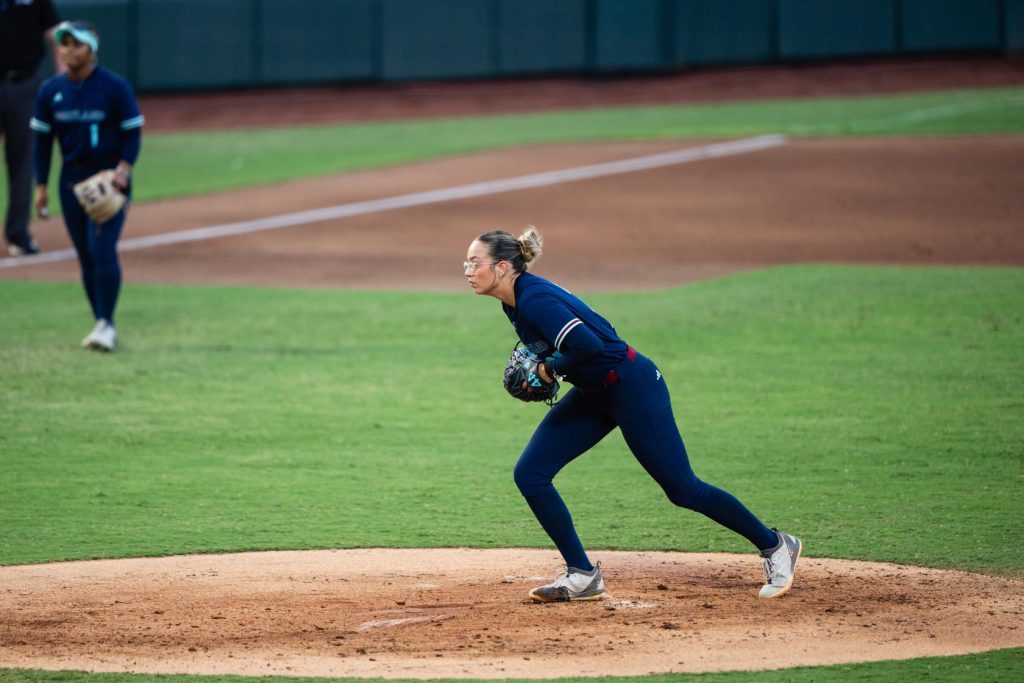
Brown, new to the professional scene, has managed to get her footing quickly, but still sits slightly behind Landry in pitching statistics.
She’s allowed 10 earned runs and 15 walks, which sit among the higher end of pitchers in the league. Nonetheless, she’s solidified her spot in the starting rotation and has proven to be a huge help to the Cascade.
The rest of the staff is not one to overlook. Including Landry and Brown, the Cascade staff is second overall in ERA with 2.51. The staff only allows a .225 batting average against them, the best in the league.
Most importantly, the Cascade pitchers have given up the fewest number of hits in the league with just 67 through 78 innings. Of those 67 hits, only five have left the park, the fewest in the rankings. The Cascade have only allowed 39 runs, the second fewest in the league.
It’s safe to say that the dominance of Portland’s pitching staff helps them win ball games. They keep runners off the bases and avoid hard contact to limit runs scored.


How Do They Score?
The Portland Cascade have a run differential of +7. Though positive, it’s comparatively lower than their opponents. When looking at game scores, two key observations stand out.
Rallied Runs
A quick look at the scores from Cascade games by inning will show any fan that they know how to get a rally going.
In their first season victory over the Blaze, the Cascade scored all 12 runs in the second inning from 12 baserunners all scoring while collecting just one out.
In the first game against the Volts, they scored all five runs in the top of the seventh inning for a comeback victory. And in the third game, four of the five runs were all scored in one inning. Even in a loss to the Spark, the three runs the Cascade did score all came from the second inning.
It seems like the Cascade know how to string hits together, and it’s proving to be enough to propel them to victories.
Close and Low-Scoring Games
The Cascade play close games, often taking the win by fewer than three runs. Supported by that run differential, the Cascade don’t often rely on a high-scoring offense. The pitching staff’s ability to limit runs scored mean they just have to plate a few to outscore their opponents.
In a key series against the Utah Talons, the Cascade swept with 3-1, 2-1, and 3-2 victories. Relying on just three to four hits, the Cascade manage to score just what they needed while silencing the Talons bats.
Is This Pattern Sticking?
In the Cascade’s most recent series against the Texas Volts, the team showed a difference in their run-scoring. The 5-1, 6-3, and 5-2 victories might be showing a breakthrough for the offense as they start to score more runs.
As the Cascade prepares for their next series, let’s hope the hot bats are sticking around. A large part of their increased runs comes from Grant, who launched three homers against the Volts. The current league leader, she’s not showing any signs of slowing down.
Become a Member of Just Baseball
Subscribe and upgrade to go ad-free!
* Save 25% by subscribing annually.

Written by
Roxie Freifeld is an intern for Just Baseball, leading coverage of Athletes Unlimited Softball. A student-athlete at Oberlin College studying psychology and sports management, she is…