
Three 2025 Prep Bats Already Making Noise in Full-Season Ball
Cooper Flemming, Kayson Cunningham, and Jaden Fauske are three young hitters to keep an eye on as they begin their pro careers.
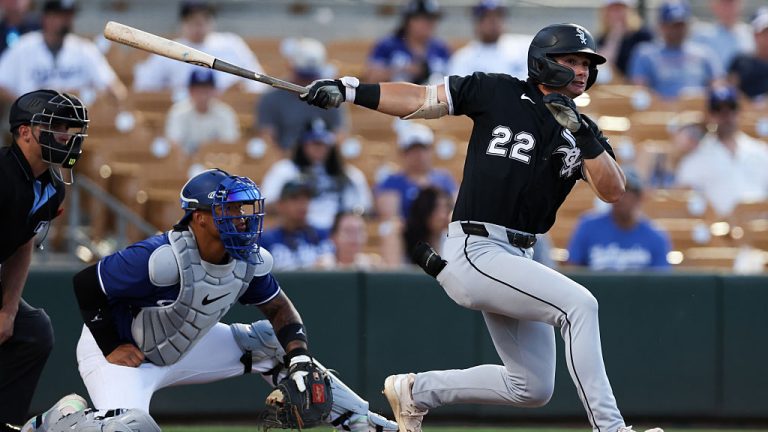
The first full professional season for a prep bat is rarely a linear progression. The jump from high school baseball to full-season pitching brings better velocity, sharper breaking balls, more advanced sequencing, and the daily grind that comes with playing nearly every day for the first time.
That is what makes early lower-minors production so intriguing, particularly when it comes from players who already entered pro ball with real prospect pedigree.
We do not need to overreact to April and early May stat lines from teenagers and recent draftees. But when strong early production is backed by pre-draft traits, underlying contact data, athleticism, and organizational investment, it becomes something worth more attention.
Cooper Flemming, Kayson Cunningham, and Jaden Fauske were all selected in the 2025 draft out of the prep ranks. All three are now getting their first extended taste of full-season ball. Each has taken a slightly different path early in 2026, but all three are showing the type of foundation that could push them up prospect lists as the season progresses.
Cooper Flemming, SS/3B, Tampa Bay Rays (A)
Prospect TL;DR
Taken 53rd overall by the Rays last summer out of the California prep ranks, Cooper Flemming brings one of the cleaner hit-tool foundations in Tampa Bay’s system.
A tall, lean left-handed hitter at 6-foot-3 and 190 pounds, Flemming has a compact swing that allows his bat-to-ball skills to show consistently against quality pitching.
Per Joe Doyle’s Over Slot, Flemming posted a 95th percentile contact rate and ranked in the 90th percentile in strikeout rate as an amateur, reinforcing the idea that his offensive profile begins with contact quality and swing decisions rather than raw power.
The long-term upside comes from what could still be added. Flemming has plenty of physical projection remaining, and while the present game is more hit-over-power, his frame gives him room to grow into more impact as he matures. Defensively, he may eventually move off shortstop as he fills out, but the arm strength should allow him to handle third base if that transition becomes necessary.
For now, the appeal is straightforward: a projectable left-handed bat with high-end contact skills, defensive flexibility, and a developmental environment in Tampa Bay that should give him every chance to maximize the offensive foundation.
2026 So Far
Flemming’s carrying tool has translated immediately to professional baseball. Through his first month-plus at Single-A, he is running an 81.3% overall contact rate, reinforcing the same bat-to-ball foundation that made him one of the more appealing prep bats in the 2025 class.
The more encouraging development has been the early impact. Flemming has already tallied 12 extra-base hits in 26 games, including three home runs, while also going 5-for-6 on stolen-base attempts. For a player whose amateur profile leaned more hit-over-power, that kind of early extra-base production is a meaningful sign that there may be more offensive ceiling than initially baked into the profile.
The plate skills have been just as impressive. Flemming is walking nearly as often as he is striking out, and the overall result has been a 166 wRC+ in his first taste of pro ball.
It is early, and Single-A production for a recent prep pick always needs to be handled with some restraint, but this is exactly the type of opening stretch Tampa Bay would have hoped for: contact skill translating, the body beginning to show impact, and enough athleticism showing up to add value beyond the batter’s box.
Overall Season Outlook
Flemming already looks like the next in a long line of Tampa Bay prep position players who profile as high-probability big leaguers because of how quickly their underlying skills translate.
A 165-plus wRC+ over a full season is unlikely, especially for a young hitter navigating his first full professional schedule, but the shape of the production looks real. The contact skills are carrying over, the plate discipline has been better than expected, and the early power gives the profile more offensive margin than a pure contact bat.
A successful 2026 season does not require Flemming to continue producing like one of the best hitters in the minors. If he settles into the 130-140 wRC+ range while maintaining strong contact rates, controlling the strike zone, and continuing to show enough extra-base impact to keep pitchers honest, that would be a major developmental win.
Given Tampa Bay’s typically patient approach with young hitters, the Rays do not need to push him aggressively. Still, if the underlying contact and plate skills remain this loud, Flemming could force his way to High-A before the end of the season.
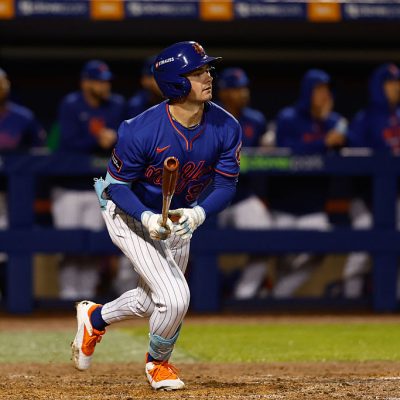
Kayson Cunningham, SS/2B, Arizona Diamondbacks (A)
Prospect TL;DR
Kayson Cunningham was one of the more high-profile prep bats in the 2025 class, signing with Arizona for roughly $4.5 million to pull him away from his commitment to Texas. A standout amateur performer from the Texas prep ranks, Cunningham’s calling card has long been his bat-to-ball ability, and that skill already looks among the best in the lower minors.
The foundation is loud. Per Joe Doyle’s Over Slot, Cunningham posted a 98th percentile contact rate as an amateur, an elite mark even within a strong prep class.
The interesting nuance is that it came despite a 36th percentile chase rate, suggesting that his pure hand-eye coordination and barrel control are carrying a lot of the profile. If the swing decisions sharpen as he gets more professional reps, there is a chance for Cunningham’s offensive game to take another meaningful step forward.
Defensively, Cunningham played shortstop as an amateur and has posted plus run times, but he is likely destined for second base as he progresses through Arizona’s system. Even with that potential move, the offensive bar is not especially daunting if the contact skills continue to translate. The carrying trait is clear: Cunningham can really hit, and players with this level of contact ability tend to give themselves a lot of developmental runway.
2026 So Far
Cunningham’s elite contact skills have translated immediately to Single-A. Through his first 25 games, he is slashing .394/.487/.485 with a 160 wRC+, looking every bit like one of the more advanced pure hitters from the 2025 prep class.
The most encouraging development may not even be the batting average. Cunningham is currently walking more than he is striking out, with a 15.3% walk rate against a 12.7% strikeout rate. For a player who was more swing-happy as an amateur, that is a meaningful early sign that his approach is already taking steps forward in pro ball.
The bat-to-ball ability was never really in question, but pairing an 87% overall contact rate with improved swing decisions gives the offensive profile much more room to breathe.
He has also held his own defensively at shortstop so far, which matters even if second base remains the most likely long-term home. Cunningham’s plus speed has not yet turned into much stolen-base production, but given how often he is reaching first base, there should be plenty of opportunities for that part of his game to develop as the season goes on.
At this stage, the early returns are exactly what Arizona would have hoped for: elite contact, improved patience, and enough defensive/athletic value to keep the profile well-rounded.
Overall Season Outlook
Cunningham was on the older end of the 2025 prep class and will turn 20 at the end of June, but that may actually work in his favor when it comes to moving through Arizona’s system. His blend of elite contact skills, plus speed, and a chance to provide defensive value up the middle gives him the type of foundation that can handle more aggressive assignments if the production continues.
The main question is how much impact will ultimately come with the profile. Cunningham’s ground-ball rate remains high, and for a player who is closer to maxed out physically, that does limit the power projection.
He does not need to become a major home run threat to be valuable, but lifting the ball with more consistency would give pitchers more to worry about and help the offensive profile play beyond a batting-average-driven skill set.
Even with that caveat, the early signs are extremely encouraging. If Cunningham continues to control the strike zone, maintain elite contact rates, and provide value defensively, he could move quickly for a recent high school draftee. A push toward High-A feels realistic, and if the production holds, it would not be surprising to see him knocking on the door of Double-A by the end of 2026.
Jaden Fauske, OF, Chicago White Sox (A)
Prospect TL;DR
Jaden Fauske was an overslot second-round pick by the White Sox in 2025, signing out of the Illinois prep ranks to move him away from an LSU commitment.
At 6-foot-3 and already north of 200 pounds, Fauske brings a physical presence to the box, but the appeal goes beyond size. He is an easy mover with springy athleticism, giving him the type of frame and movement quality that points to more impact as he matures.
As an amateur, Fauske stood out for his blend of bat-to-ball skill and advanced plate discipline. He showed the ability to control the strike zone while producing at a high level, posting an OPS north of 1.000 on the summer circuit ahead of his draft year. That combination of contact skill, approach, and physical projection made him one of the more intriguing prep bats in the class.
There is still room for more game power to come, and that will likely determine how high the offensive ceiling climbs. Defensively, Fauske projects well in a corner outfield spot, where his athleticism should allow him to be more than just a bat-first profile.
The ingredients are here for a well-rounded corner outfielder with on-base skills, contact ability, and enough physicality to grow into meaningful power.
2026 So Far
On the surface, Fauske’s production is not quite as loud as the first two names on this list, but the early returns are still encouraging. Through 26 games at Single-A, he is slashing .263/.417/.400, good for a 128 wRC+. The impact has not fully arrived yet, but the approach has carried over quickly.
Fauske is walking at a 19.2% clip, an impressive mark for a 19-year-old getting his first extended taste of professional pitching. The tradeoff is that the offensive profile has come with some early swing-and-miss. He is running a modest 74.1% overall contact rate and striking out 30.0% of the time, though some of that may be tied to an approach that borders on passive.
With a 36.1% swing rate, Fauske is clearly comfortable taking pitches and working deep counts. That patience is a strength, but for young hitters, it can also inflate strikeout rates when they are consistently hitting with two strikes.
What makes the start encouraging is that the athleticism is already showing up. Fauske is 7-for-8 on stolen-base attempts through 26 games, giving him another path to impact games while the bat continues to develop. He will be 19 for the entire season, has a physical frame with room for more game power, and appears to be just scratching the surface.
The statistical line may not scream breakout yet, but the underlying ingredients remain highly intriguing.
Overall Season Outlook
Fauske has already drawn strong reviews from within the White Sox organization, and as a local Illinois product, he is the type of player the organization will undoubtedly want to showcase if the performance continues to justify it.
The early line is solid, but the real appeal is in the ingredient mix. His plate discipline has translated, his athleticism is already impacting games on the bases, and there are flashes of power that point to a much higher offensive ceiling if he begins to elevate the ball with more consistency.
The contact rate and strikeout rate are still worth monitoring, especially if the patient approach remains closer to passive than selective. But for a player who will be 19 for the entire season, those are developmental checkpoints rather than major red flags. If Fauske starts attacking more pitches he can drive while maintaining his walk rate, the profile could take off quickly.
A successful 2026 season would be one where the strikeout rate settles into a more manageable range, the power begins to show up more consistently in games, and the athleticism continues to give him value beyond the bat. If that happens, Fauske has the type of well-rounded offensive foundation that could push him up prospect rankings and potentially have him knocking on the door of Double-A before his 20th birthday.
Final Thoughts
It is important not to overreact to a few weeks of Single-A production. These are young hitters in their first full professional seasons, and the minor league schedule has a way of testing every part of a player’s game. Pitchers will adjust. Slumps will come. The shape of these stat lines will almost certainly change by the end of the summer.
But early-season production matters more when it lines up with pre-existing prospect indicators. Flemming’s contact skills were a major part of his amateur appeal, and they have translated immediately. Cunningham’s bat-to-ball ability was among the best in the class, and he is already pairing it with better swing decisions. Fauske’s plate discipline, athleticism, and physical projection are showing up even while the contact profile is still developing.
That is what makes this trio exciting. This is not just three recent draftees off to hot starts. It is three prep bats with real pedigree, loud underlying traits, and enough early professional success to make them worth tracking closely as the 2026 season unfolds.
Become a Member of Just Baseball
Subscribe and upgrade to go ad-free!
* Save 25% by subscribing annually.

Written by