
State of the Tigers’ Rotation and Why They Still Need More
With so many questions needing to be answered, the Tigers must add to their rotation if they hope to make a deep playoff run.
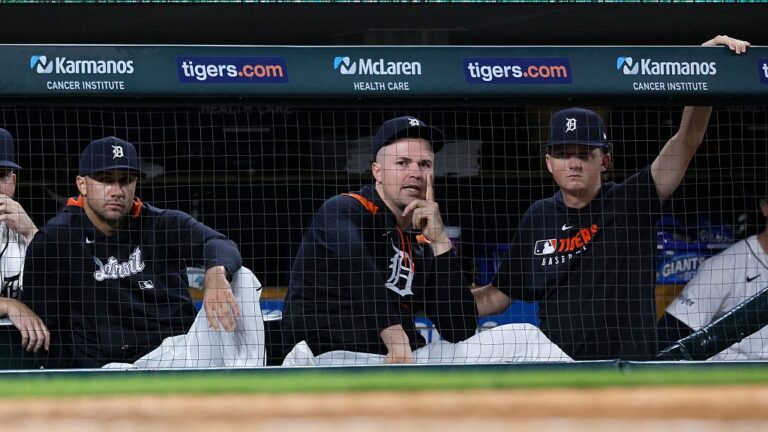
Entering spring training of this past season, the Detroit Tigers had a plethora of starters. Top prospect Jackson Jobe was the flashy new guy, with Cy Young winner Tarik Skubal leading the charge. Jack Flaherty returned, Casey Mize was ready to go, Reese Olson was ascending, and Alex Cobb was signed for $15 million (for some reason).
It did not take long before their depth disappeared.
Cobb never threw an inning, Jobe was lost to Tommy John surgery after 10 starts, and Olson went down with injury after 13 starts. The situation was dire enough for Chris Paddack (6.32 ERA in DET) and Charlie Morton (7.09 ERA in DET) to be added into the rotation, for a brief moment.
If there’s one thing we know about pitchers it’s that they get injured. Most teams will need roughly eight starters to get through a season, often times even more. The Tigers do not currently have eight options I’d feel comfortable with, and that’s a problem.
Jobe and Olson are working their way back from injury while Skubal is the focal point of every January trade discussion.

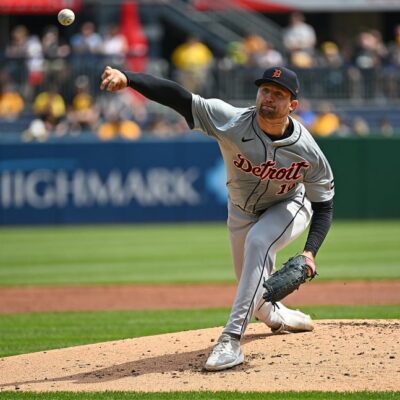
Oh yeah, Flaherty, Skubal, and Mize are all set to be free agents at the end of the season too.
With so many questions needing to be answered, the Tigers must add to their rotation if they hope to make a deep playoff run.
The Tarik Skubal Situation
Let’s go ahead and get the easy discussion out of the way. Tarik Skubal is coming off his second straight Cy Young season and somehow was better in 2025 than he was in 2024. Two historical seasons that are currently in the rearview as his contract situation and potential trade from the Tigers remains in focus.
You know the talent he brings. You understand how having him go every fifth day stops losing streaks, elevates your team, and adds a level of moxie that cannot be generated from just any old arm giving you six shutout innings. Skubal is one-of-a-kind, a leader, and a weapon the Tigers cannot simply replace.
He’s also extremely expensive and will likely demand the type of term we have never seen the Tigers give to a pitcher.
For obvious reasons, his name comes up in trade discussions. If traded, the Tigers become worse on paper. Plain and simple: you are better with Tarik Skubal than without him.
Groundbreaking analysis, I know.
However, trading Skubal could help solve a significant problem – depth and long term outlook. If the Tigers are able to land multiple starters who are ready for a major league workload, with numerous years of control, the long term outlook looks better than seeing him walk in free agency.
But, we aren’t focused on the long term outlook today. Right now the discussion is about 2026 and the rotation the Tigers have in place right now. And the leader if that rotation just happens to be the best pitcher in baseball. Without a single doubt.
If the Tigers keep Skubal they have a bona fide ace and the exact arm you want in any playoff game no matter how good the other team is. Right now they have that, but it can disappear at any moment.
The Current Options
Now that we have the Skubal discussion tackled, let’s look at the next batch of starters. Instead of assigning an number to each name such as “a number two starter” I prefer to put these pitchers in buckets. Disclaimer – this is for the 2026 season and not a long term outlook.
- Bucket One – Ace, front-line upside with a proven track record that doesn’t leave any question about his ability. Current players: Skubal
- Bucket Two – Middle of the rotation. Think a typical number three, maybe has two upside but back-of-the-rotation floor. Usually comes with question marks. Current pitchers: Flaherty, Olson
- Bucket Three – Back of the Rotation. Number four or five, maybe too many question marks to be higher but has upside. Current Pitchers: Mize, Jobe, Troy Melton
- Bucket Four – Depth. Preferred minor league starter, developing prospect, or a unique unproven pitcher. Current Pitchers: Drew Anderson, Keider Montero, Sawyer Gipson-Long, Jake Miller
We could go back and forth on where those pitchers in the third and fourth bucket fall, but not having a clear picture of which bucket they fall into makes me lean towards the third bucket. Example: Mize is a good pitcher that has been productive but I’m not so sure he has earned an iron clad spot in the second bucket.
Last season, another year removed from surgery, was a step forward and he did bump his K/9 to over 8.00, but also did not generate nearly as many groundballs. A player that’s as reliant as Mize is to pitching to contact is susceptible to BABIP either driving his value or sinking it.
I put Olson in bucket two, which might seem a bit aggressive considering his injury history, but he’s using his sinker more and decreasing his four-seamer (his worst pitch) usage all while continuing to show improvement. The changeup is a great pitch for Olson and helps neutralize lefties which, in my mind, gives him more opportunity to succeed than Mize.
Now, you all might not agree, but I think Flaherty is clearly in bucket two. He’s now put the injury concerns behind him (for the most part) and has struck out over 175 hitters in back-to-back years. There were some bad stretches last season but he ultimately finished with a 3.85 FIP and 4.64 ERA with an xERA of 4.03. He was better than a lot of fans remembered, mostly because the lows were pretty low.
If you are wondering about Jobe and where he falls, I’ll make the explanation simple. He’s going to miss most, if not all, of the season and still has work to do in order to prove his production matches the prospect hype. I think he’ll eventually be higher, but not this season.
Now for Melton. One of my favorite arms coming through the minors the past few seasons who debuted in mostly a relief role posting a 2.76 ERA, 4.60 FIP, and 7.09 K/9. I think he has the stuff to be higher on this list in the coming years, but will likely have some growing pains and inning restrictions which ultimately lands him in bucket four for 2026.
Lastly, the depth guys. You all know what Montero and Gipson-Long bring, but how about Anderson and Miller?
Anderson has spent the past four seasons overseas with the most recent two coming as a starter. In 2025 he pitched to the tune of a 2.25 ERA, 2.62 FIP, and struck out 12.84 K/9. A high strikeout and groundball rate is something we love to see, but there’s too much unknown to assume he can be the fifth starter without more of a plan B. He’s shown an ability to pitch out of the bullpen which could be a good fall back option if starting doesn’t work.
Miller is a lefty that was high on my prospect list but missed most of 2025 due to injury. He has fantastic command that leans on a plus change up and breaking ball to offset his low velocity fastball. A nice depth piece with intriguing upside but the type of pitcher you don’t want to have to rely on, but instead make it where he forces your hand to add to the rotation.
Why the Tigers Need Another Starter
Do you notice a theme? The Tigers have upside and talent but most of their options come with either an injury or red flag attached to their name. In recent years, this would be a perfectly fine rotation to roll into a season. Add a few non-roster invitees you can stash in Toledo and focus on the development and refinement of young arms.
Not anymore. After earning playoff series wins in back-to-back years, the Tigers need to treat this season as what it is: a chance to win the World Series.
Does that mean they need to trade the farm or sign several free agents? No, but rolling into the year with a fifth spot that is completely unproven and your fingers crossed that players return to form off injury is not an equation for success.
Let’s not forget the long term issue at hand. Flaherty and Mize and set to hit the open market next winter and Skubal could be gone as soon as tomorrow, but almost guaranteed next winter, as well. Adding a starter is no longer limited to one-year deals, but open to any and all avenues to improve the rotation.
There’s no excuse to sit on your hands.
If the Tigers like a player and they want three or four years, it fits the plan. Let’s say it’s a player interested in one or two years. There’s room for that as well. How about a trade? You have a number of infielders without a clear defensive home but a good enough bat to be intriguing. Move one.
Having five or six names you are comfortable with is not enough. Especially when some of those names are currently injured or have potential innings limitations. How often have we felt good about the rotation only to feel like the Tigers need another arm by May?
As much as I like Melton, if he has to start in the minors that’s okay. Having minor league options is a great way to build depth and the chances of an injury occurring and Melton being called upon are high. A little more time in Triple-A where managing his innings is easier might be the best chance to have him down the stretch.
Potential External Options
The Tigers have recently been linked to free agent veterans Lucas Giolito and Chris Bassitt. Giolito spent last season in Boston where his strikeout numbers went down but his production (3.41 ERA, 4.17 FIP) were both respectable and better than his 2023 numbers.
Bassitt hits the market after starting at least 30 games each of the past four seasons with all but one finishing with an ERA under 4.00. Neither are front-line starters but raise the floor and help improve the depth of the rotation. The exact level of veteran that makes sense and gives you an added level of comfort.


There was also a report that these names might be too expensive if Skubal wins his $32 million dollar arbitration case. Knowing that, I want to highlight some cheaper options that could fall into the four or five bucket from above.
- Nick Martinez – Martinez is a name I keep coming back to for the Tigers. He’s been a production bullpen arm that slides into the rotation at anytime and can give you innings. Nearing the end of his career, I doubt the term will be an issue. If he doesn’t win the fifth spot you have an answer in the bullpen.
- Nestor Cortes – A funky low-velocity lefty that missed most of 2025 due to injury. Cortes is only a year removed from 174.1 innings at a 3.77 ERA, 3.84 FIP season with the Yankees. He needs a bounce-back opportunity and the Tigers could use another lefty. They have not gone away from low velocity in the past, but we still aren’t sure how much the injury impacted Cortes and if the velocity dipped to a point where this would not make sense. If healthy, he’s worth a shot.
Detroit has mostly handed out one year deals since Scott Harris arrived. Is that because the team was not as established and too much was unknown, or, is Harris afraid of commitment? If the market does not materialize (as we saw with Flaherty last year), could Zac Gallen reach a point where he makes sense on a shorter multi-year deal?
I think the Tigers need to be open to a trade, but there’s too many names to list here. MacKenzie Gore is intriguing but would cost a lot for two years of control and the 2027 season having a potential lockout.
Final Thoughts
I hope this thought exercise helped paint the picture of why the Tigers rotation, even for 2026 alone, needs more. Think about how many times injury has quickly changed the outlook. Remember scrambling for Morton and Paddack, or resorting to a number of bullpen games because there weren’t enough trusted arms to start games for a playoff team.
Adding a high-end arm with multiple years of control would be the best route, but also the more unlikely. At this point, the Tigers need an arm that has at least shown, recently, that they can be successful at this level. Depth is nearly as important as top end talent.
If the Tigers truly have higher aspirations than making the playoffs, instead going deep in the playoffs, they will dig deeper in their pockets to ensure unproven players are not filling 200 innings this summer. We’ll learn a lot about Scott Harris and the ownership group in the coming months.

Written by