
Predicting the BBWAA Hall of Fame Class of 2027
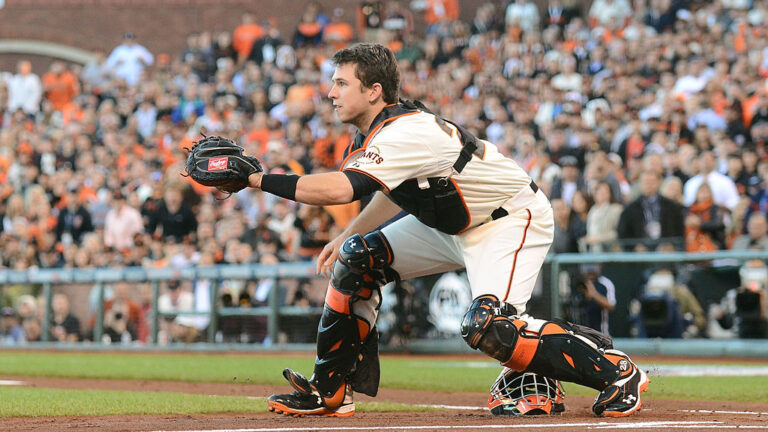
A three-time World Series champion and one of the best catchers of his generation, Buster Posey will be the star of next year's ballot.
 | |
| | 
The National Baseball Hall of Fame gained two new members in January, with center fielders Carlos Beltrán and Andruw Jones finally crossing the 75% threshold.
One of the greatest five-tool players of the 21st century, Beltran was forced to wait four years for induction, despite ranking ninth all-time among center fielders in JAWS, due presumably to his involvement with the Houston Astros cheating scandal.
Eventually, the voters were no longer able to ignore Beltran’s sterling on-field resume, and, after falling just a few points shy in 2025, he topped all players with an 84.2% vote share this year.
While Beltran always seemed destined for Cooperstown, Jones’ path to enshrinement was far more unlikely. Debuting on a crowded 2018 ballot that featured 11 other future Hall of Famers, Jones received just a 7.3% vote share, barely exceeding the 5% threshold needed to stay on the ballot.
Slowly but surely, however, Jones was able to build his support, as his 434 career home runs and almost unprecedented defensive chops began to appeal to voters. Double-digit vote gains in 2020, 2021, and 2023 pushed him to over 58%, and, after modest gains in 2024 and 2025, another 12% vote gain in 2026 solidified his spot in Cooperstown.
The fact that two of the top center fielders of all time were forced to wait a combined 12 years shows just how hard it is to reach the 75% plateau. At its core, Hall of Fame voting is a subjective decision, and everyone has their own standards of what makes someone a Hall of Famer.
The next five years will feature some no-doubt candidates, including a couple of players who should get in unanimously, but just as fascinating are the players with on-the-fence cases who will undoubtedly spark lively debate. This is the first entry in a series projecting who could earn induction in the next five cycles of BBWAA voting.
Full Series
Predicting the 2027 BBWAA HoF Class
Holdover Electees: None
In all likelihood, 2027 will be the first election cycle since 2022 in which no returning players will earn induction. Chase Utley will come close, but gaining 16% a year after gaining 20% feels like a tall ask. The likeliest scenario is that he comes in around 70% and positions himself for induction in 2028.
First-Ballot Electee: Buster Posey
Buster Posey presents one of the most fascinating Hall of Fame cases in recent memory. A couple of injury-plagued seasons and early retirement at age 34 leave his counting stats well short of Hall of Fame standards. His 1,500 hits would be the fewest of any post-World War II Hall of Famer besides Ralph Kiner and Roy Campanella.
On the flip side, Posey spent nearly a decade as the undisputed best catcher in baseball, headlined by a 2012 MVP campaign in which he led the league in WAR (7.6) and batting average (.336).
His seven-year peak WAR of 36.5 is the 10th-highest mark among catchers all-time, trailing eight Hall of Famers and Thurmon Munson.
Despite losing some power towards the end of his career, Posey’s combination of bat-to-ball skills and patience while playing in one of the most pitcher-friendly ballparks in baseball resulted in a career 129 OPS+, trailing only Mike Piazza and Gene Tenace among full-time catchers.
Posey is far from a shoo-in on his first ballot, but the recent election of Joe Mauer will help his case:
| Player | G | H | HR | RBI | AVG/OBP/SLG | OPS+ | bWAR/Peak WAR/JAWS |
|---|---|---|---|---|---|---|---|
| Joe Mauer | 1858 | 2123 | 143 | 923 | .306/.388/.439 | 124 | 55.6/39.1/47.4 |
| Buster Posey | 1371 | 1500 | 158 | 729 | .302/.372/.460 | 129 | 45.0/36.5/40.8 |
What Posey lacked in longevity, he made up for by being the undisputed best position player on three championship teams.
Though he only slashed .252/.321/.345 in 58 postseason games, Posey’s prowess behind the plate, particularly as a game-caller and pitching staff leader, proved invaluable during the Giants’ postseason runs.
It might not be a near-unanimous selection like Ichiro Suzuki or Derek Jeter, but Posey should get in comfortably next year.
First-Year Above 5%: Jon Lester
One year after Cole Hamels debuted with a solid 23.8%, another durable lefty with a sterling postseason reputation will join him on the ballot: Jon Lester.
Given that the two will undoubtedly be pitted against each other, let’s take a look at how their resumes stack up:
| Player | W-L | ERA (ERA+) | IP | K | WHIP | bWAR/Peak WAR/JAWS |
|---|---|---|---|---|---|---|
| Jon Lester | 200-117 | 3.66 (117) | 2740 | 2488 | 1.278 | 43.5/34.2/38.8 |
| Cole Hamels | 163-122 | 3.43 (123) | 2698 | 2560 | 1.183 | 59.0/37.4/48.2 |
| Player | ASG Selections | Top-5 Cy Young Finishes |
|---|---|---|
| Jon Lester | 5 | 3 |
| Cole Hamels | 4 | 1 |
With wins becoming less important in each election cycle, it’s evident that Hamels has a pretty significant statistical edge, having allowed fewer walks, runs and hits with a nearly identical strikeout rate.
The advantage Lester has comes from the fact that he was a key part of not just one World Series championship team, but three.
Lester’s 2.51 career postseason ERA is the lowest mark among pitchers with at least 100 innings pitched, and that total dropped to a remarkable 1.77 in his six World Series appearances.
While Hamels had a legendary performance during the Phillies’ 2008 World Series title run, his total postseason body of work doesn’t come close to Lester’s.
His 3.41 career ERA is nearly a full run higher, and his 4.1 inning, five-run performance in Game 3 of the 2009 World Series was a key factor in the Phillies’ failure to repeat as champions.
Therefore, the better comparison for Lester may be Jack Morris, who had an underwhelming regular season resume but was elected largely on the strength of some magical postseason performances.
| Player | bWAR/Peak WAR/JAWS | ERA (ERA+) | Postseason IP | Postseason ERA |
|---|---|---|---|---|
| Jack Morris | 43.5/31.8/38.0 | 3.90 (105) | 92.1 | 3.80 |
| Jon Lester | 43.5/34.2/38.8 | 3.66 (117) | 154.0 | 2.51 |
Of course, just because Lester has a better case than perhaps the most controversial recent Hall of Fame starting pitcher doesn’t make him a lock for Cooperstown.
His career 43.4 bWAR would still be the second-lowest total of any Hall of Fame starting pitcher since World WAR II, surpassing only the injury-shortened career of Catfish Hunter.
What it does prove, however, is that Lester’s Hall of Fame case is one that should be taken seriously. I expect him to at least match Hamels’ debut total out of the gate and perhaps exceed it if the two are able to boost each other’s candidacies.

Falling Off: Omar Vizquel
Once a presumed lock after debuting in 2018 with a 37.8% vote share and rising to 52.6% by his third year on the ballot, Omar Vizquel is now on the cusp of falling off the ballot. A pair of disturbing off-the-field scandals in 2020 and 2021 stymied any momentum he had, causing him to lose over 50% of his support in just one year.
Vizquel has continued to gradually lose support since then and has plateaued at around 17-19%. With one of the worst offensive profiles of any recent Hall of Fame candidate, along with the off-the-field issues, it’s difficult to see him getting any real consideration from an era committee either.
Written by
Daniel Fox is a contributing writer for Just Baseball. He has previously written for Pitcher List, BoSoxInjection, and in the Cape Cod Baseball League. He is…