
Playing GM: 3 Moves to Complete the Brewers’ Roster for 2026
Here are three moves that will help round out the Milwaukee Brewers' roster as they prepare to defend their division title.
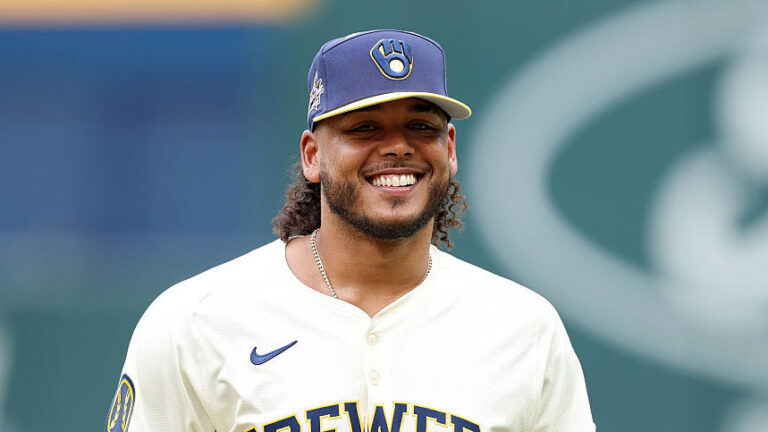
In a winter that’s been filled with big signings and noteworthy trades, it’s been a quiet offseason for the Milwaukee Brewers.
To this point, they brought back starter Brandon Woodruff on the one-year qualifying offer, they signed outfielder Akill Baddoo to a one-year contract, and they made a splash in the trade market, sending outfielder Isaac Collins and reliever Nick Mears to the Kansas City Royals in exchange for lefty Angel Zerpa.
Though it’s been an uneventful winter for the Brew Crew, it’s not as if they entered the offseason with a ton of holes to fill.
For the most part, much of their roster will look that same as it did in 2025, they still have two-time Manager of the Year Pat Murphy leading the charge, and this is a team that expects to be right back in contention in 2026 despite not making a flurry of additions.
That said, there are a handful of moves within the margins that could shore up the roster as they prepare for the new season. Likewise, a decision will need to be made in the coming weeks on how the ball club wants to proceed with ace Freddy Peralta, who has been in the heart of trade discussions since the offseason began.
The Just Baseball Show has been churning through its “Playing GM” series for all 30 MLB teams. Peter Appel and Jack McMullen discussed the Brewers on an episode earlier this week and broke down three moves can be made to put them in a better position to defend their division crown.
Here is a closer look at each of the three moves that would complete the Brewers’ roster for 2026.
1. Keep Freddy Peralta
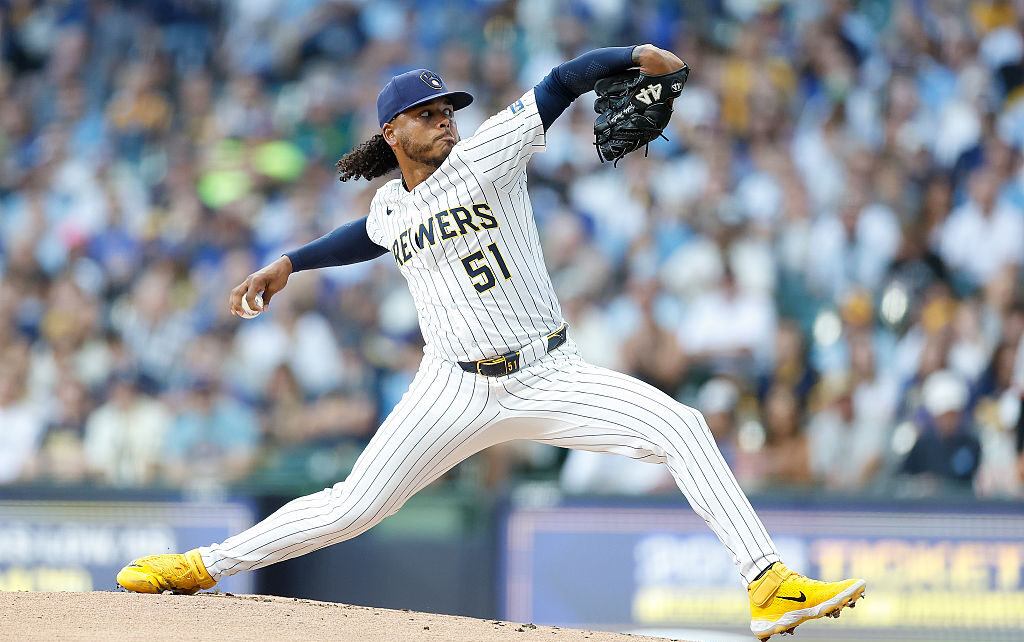
Freddy Peralta has been one of the most discussed trade assets not just for the Brewers, but in all of Major League Baseball this offseason.
Peralta, 29, is coming off a sensational season, pitching to a career-low 2.70 ERA while finishing fifth in NL Cy Young voting. He’s one of the steadiest frontline arms in all of baseball, as he’s thrown 165 or more innings, made 30 or more starts, and racked up at least 200 strikeouts in each of his last three seasons.
Set to make just $8 million in 2026 before hitting free agency next offseason, that’s a bargain considering Peralta’s impressive strikeout material and year-to-year consistency. That type of production on that salary doesn’t come around very often, hence why so many MLB teams are calling for his services.
Flipping Peralta would typically be a no-brainer for Milwaukee, as they’re an organization that thrives on replenishing its assets. However, this team is in a different situation than in previous offseasons.
The Brewers are coming off their third consecutive division crown, a franchise-record 97 regular season wins, and a trip to the NLCS. This team has the pieces in place to get back to the postseason and make the World Series run fans have been waiting years to see.
Without Peralta, that goal of getting over the hump in October becomes much more difficult to achieve. While not impossible — the Brewers have shown us time and time again that they can overcome losing their most valuable players — it’s a move that would put them behind the eight ball before the season even begins.
What Peralta means to the organization, both in terms of presence in the clubhouse and consistency on the mound, is borderline irreplaceable. While cashing in on Peralta’s sky-high value may be prosperous in the long run and net a significant prospect return, the best path forward for contention in 2026 is to retain their ace and build upon their magical 2025 campaign.
2. Trade Jared Koenig to the Toronto Blue Jays
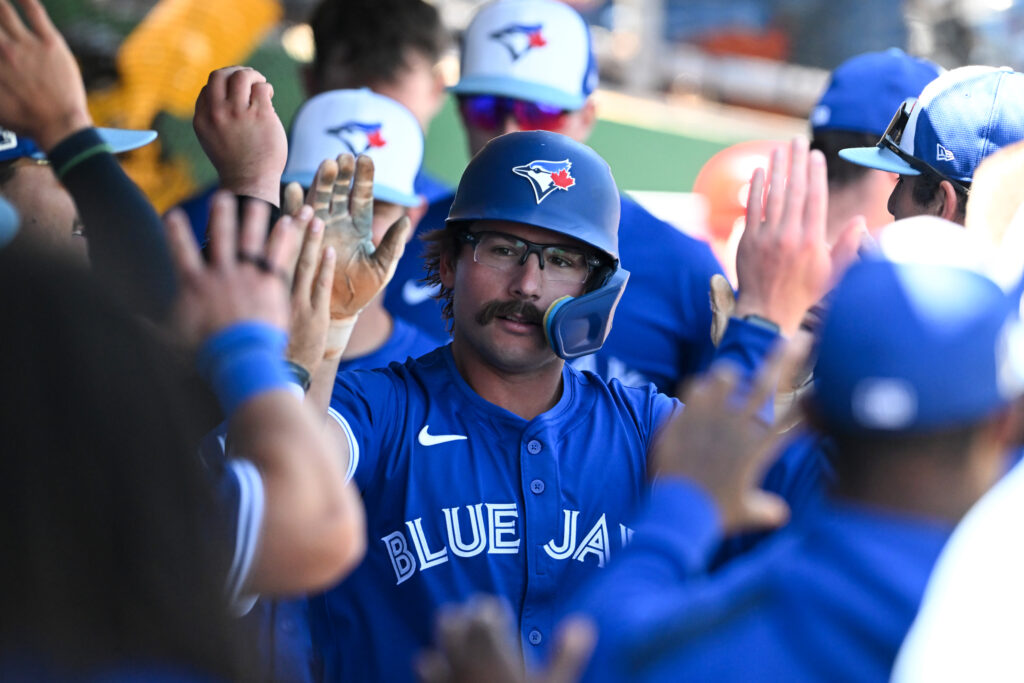
- Milwaukee Brewers Receive: 2B/OF Davis Schneider
- Toronto Blue Jays Receive: LHP Jared Koenig
With the aforementioned addition of Angel Zerpa, Milwaukee now has a surplus of southpaws in their bullpen. That list includes Aaron Ashby, Jared Koenig, Angel Zerpa, Rob Zastryzny, and DL Hall.
Koenig, who is in pre-arbitration in 2026 and will enter his first year of arbitration in 2027, has been a fireman for Milwaukee across the last two seasons. He’s been one of their most valuable relief options, pitching to a 2.47 ERA in 62 innings in 2024 and a 2.86 ERA in 66 innings in 2025.
Still, the bullen is a strength of this roster, and there is an opportunity to trade from a surplus here and improve the bench in a big way.
As it currently stands, Andruw Monasterio is the Brewers’ primary utility piece on the bench. While he’s been adequate in that role throughout his time with the Brewers and even thrived at times in 2025, he does still have three option years remaining. That means the Brewers have flexibility to add depth to the bench.
Davis Schneider, 26, is coming off a year in which he put up 1.3 fWAR in just 82 games for the AL-winning Toronto Blue Jays. Ending the year with an OPS near .800 and a 127 wRC+ in 227 plate appearances, Schneider has experience playing left field, second base, and third base at the big-league level.
We all know how valuable positional versatility is for Milwaukee, and Schneider provides that while being capable of starting games if need be.
Moreover, the Brewers’ grouping of backup outfielders consists of Christian Yelich (lefty), Garrett Mitchell (lefty), Blake Perkins (switch), and Jake Bauers (lefty). The Brewers could use another right-handed bat to plug into the outfield when needed, and being able to spell reps in the infield when called upon is an added bonus.
In 252 career MLB games, Schneider is slashing .217/.325/.411 for a .736 OPS and 109 wRC+. That’s an upgrade from the other internal options the Brewers have at their disposal. It’s not flashy, but it’s a move that makes the bench a little bit deeper.
3. Sign LaMonte Wade Jr. to an MiLB Contract
The final of the three moves is signing LaMonte Wade Jr. to a minor-league contract. Wade, 32, was once a steady bat for the San Francisco Giants, racking up 3.2 fWAR while posting a 120 wRC+ and .777 OPS in 920 plate appearances between 2023 and 2024.
Wade hit a wall in 2025, hitting just .167 with a .546 OPS in 50 games before being designated for assignment and then traded to the Los Angeles Angels in June. A clubhouse change didn’t help his case, as Wade hit only .169 and his OPS dropped to a dreadful .476 in 30 games before being released by the Angels in August.
When Wade was at his best in San Francisco, he was walking more than 10% of the time, was one of the best in baseball at limiting chase, and kept the strikeout totals at a respectable mark.
What’s more, he’s had seasons where he paired that strong approach with some solid pop. Back in 2023, he launched 17 homers while walking nearly 15% of the time and punching out less than 19% of the time. Perhaps that power surge was a flash in the pan, but that type of player profile fits the mold of what the Brewers like to bring in.
Why not take a shot on a minor-league contract to see if Wade can recapture some of that old form? If they can add first base depth on an MiLB deal, that could go a long way in 2026. Wade’s best days are likely behind him, but the Brewers have shown a willingness to take a gamble on these low-risk moves in previous years.

Written by
Joey Peterson is a graduate of the University of Wisconsin-Madison and an editor for Just Baseball. He covers the Milwaukee Brewers, along with general MLB topics…