
Luis Robert Jr. Claim Fills a Void for Playoff-Hopeful Orioles
The Orioles, who desperately needed a right-handed option in the outfield, claimed Luis Robert Jr. in hopes of catching lightning in a bottle.
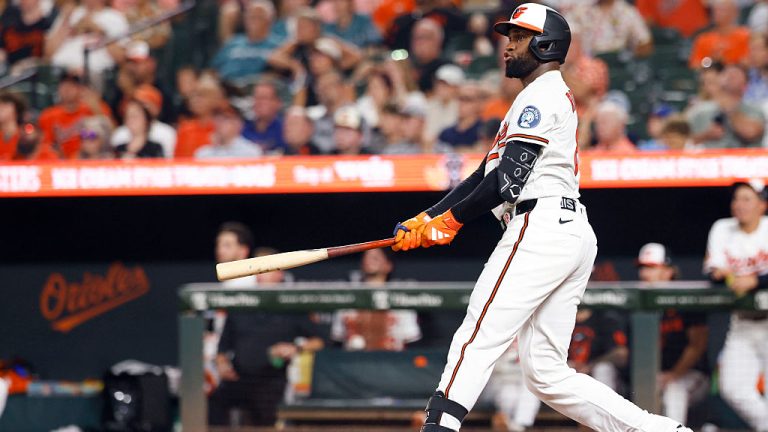
The Baltimore Orioles, in need of a right-handed-hitting outfielder who can play center field, claimed Luis Robert Jr. off waivers from the New York Mets on Monday.
Robert, 29, spent the first six seasons of his career with the Chicago White Sox. The White Sox gave him a six-year, $50 million pre-arbitration extension in 2020, and picked up his $20 million club option for 2026.
Despite picking up that club option, Chicago never paid Robert. He was traded to the New York Mets this past offseason for Luisangel Acuña and Truman Pauley.
The highlight of Robert’s White Sox tenure came in 2023, when he hit 38 home runs and recorded 5.0 fWAR. He never played more than 110 games in any other season with the club.
With New York this season, Robert slashed .223/.297/.364 with 10 home runs in just 223 plate appearances. He spent nearly three months on the injured list with a herniated disc in his lumbar spine.
The Mets, thought by many to be a favorite in the National League entering the year, have endured a disastrous season. Currently sitting at 63-77, they had no interest in picking up Robert’s $20 million club option for 2027 or paying him his $2 million buyout. They decided to cut their losses and place him on waivers.
It’s surprising that the Mets were unable to trade Robert in a salary-dump deal for a low-level prospect at the deadline. Perhaps they wanted to get a longer look at Robert to see if they would want to pick up that option for next year and later decided against it.
Regardless, the Mets sold numerous pieces at the trade deadline. It probably would have been responsible to deal Robert, as well.
The Orioles will be on the hook for ~$3 million of Robert’s remaining salary, as well as that club option or buyout for 2027.
Analyzing Luis Robert Jr.’s 2026 Season
Robert is still an incredibly exciting player. His 77.2-mph bat speed and 28.9 ft/s sprint speed readings are both among the game’s elite.
Despite the upper-echelon bat speed, Robert has only posted an elite barrel rate once – during that breakout 2023 campaign (15.5%). Since then, his barrel rate has hovered between 8.9-10.3%.
His extreme bat speed has often caused extreme swing-and-miss, which Robert is trying to counteract this year. He has always posted high strikeout and chase rates, but it appears he’s trying to be less aggressive.
Robert is swinging less than ever this season, which is a likely explanation for his career-high 10.2% walk rate this year. His strikeout rate has also fallen to 24.3%, the second-best mark of his career.
It’s a positive development that swinging less is helping Robert swing at pitches out of the zone more infrequently. However, Robert also has his lowest zone swing% (71.8%) and heart swing (75.5%) of his career. This means that he’s watching hittable pitches at the highest rate of his career.
It’s clearly something Robert is working on, and the three-month absence due to a back injury surely didn’t help him establish a rhythm with these adjustments. Ultimately, you’d like to see him remain aggressive in the zone while taking more pitches out of it. He’s missing opportunities to do damage.
The Orioles can’t expect Robert to waltz into the clubhouse and win September’s Player of the Month honors, but he at least has the tools to help them. If he can continue to improve his plate approach and do damage to pitches in the strike zone, he should be a contributor to the team’s success.
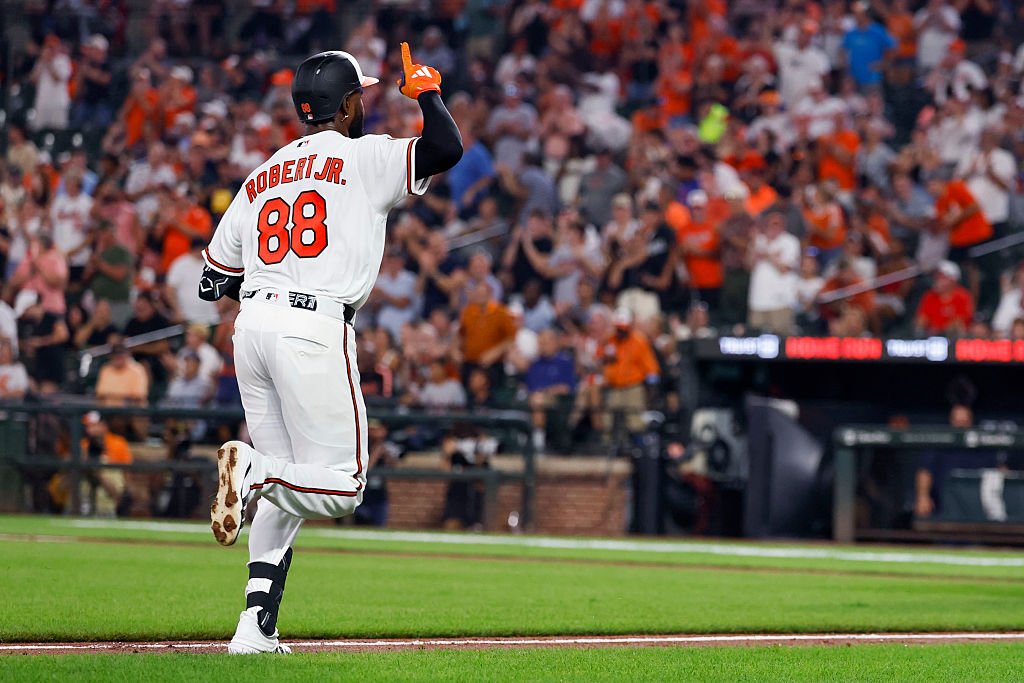
Robert’s Fit with the Orioles
Baltimore, which was 68-69 at the time of the claim and is currently 69-72, is still in the hunt for a playoff spot despite being sellers at the trade deadline.
After flipping Taylor Ward to the Seattle Mariners, the O’s were really lacking an impact right-handed outfield bat. Leody Taveras (46 wRC+ vs LHPs) and Christian Franklin (63 wRC+ overall) were Baltimore’s two outfielders that hit right-handed post-deadline.
Blaze Alexander (124 wRC+) recently returned from injury and is another right-hander who can man the outfield. Alexander functions as a super-utility player and plays all over the diamond, so getting him back will help the club and likely won’t interfere with Robert’s playing time much.
The Orioles roster three homegrown left-handed-hitting outfielders in Colton Cowser, Dylan Beavers, and Heston Kjerstad, as well. Cowser has been the team’s primary center fielder and surprisingly bumped Robert to left in his team debut. It will be worth following to see if that trend continues.
Beavers has been hitting well of late but is a poor defensive outfielder (-7 OAA). He will likely occupy a strong-side platoon role down the stretch. Kjerstad was just recalled as rosters expanded and is unlikely to start more than a couple of times per week and pinch-hit.
The designated hitter spot is often occupied by the team’s logjam of corner infielders and catchers between Pete Alonso, Samuel Basallo, Coby Mayo, and Christian Encarnacion-Strand, so outfielders probably won’t be picking up many starts as a DH.
In Robert’s Orioles debut, he started against a right-handed pitcher, signaling that he’s likely to play most days down the stretch. As someone who closely follows the team, I’d expect Cowser, Robert, and Beavers to start in the outfield often against right-handed pitching, with Robert, Alexander, and either Taveras, Beavers, or Cowser starting against lefties. Taveras’ role is likely impacted most by Robert’s arrival.
Baltimore is paying Robert $3 million over one month to play and hold things down in the outfield defensively. The team desperately needed a solid defender who offers some offensive upside, and Robert fits that mold.
This move may not be enough for the team to secure a playoff spot at this point, but it showed that they’re willing to supplement the team and try.
Become a Member of Just Baseball
Subscribe and upgrade to go ad-free!
* Save 25% by subscribing annually.

Written by
Daniel Rotter follows the game of baseball with passion. He was the youngest participant in the inaugural year of The Great Fantasy Baseball Invitational, at 17…