
First-Time MLB All-Star Candidates at Each Position
Which players are making a case to appear in their first All-Star Game this summer?
Though we are still months away from the 2026 All-Star Game in Philadelphia, we have a pretty good idea about which players will headline the festivities.
MVP winners Shohei Ohtani and Aaron Judge are up to their usual tricks and are the likely candidates to be the leading vote-getters in their respective leagues, while last year’s starting pitchers Paul Skenes and Tarik Skubal are making strong cases to get the ball again.
But what about the newcomers? Last year saw 30 players make their All-Star Game debuts in Atlanta, and some strong candidates are emerging to make up this year’s first-timer class.
Today, I’ll take a look at potential first-time All-Stars at each position, including three starting pitchers and three relief pitchers.
To narrow down the pool of candidates, I only chose players in their third season or later, which is why you won’t see guys like Sal Stewart or Nolan McLean on this list.
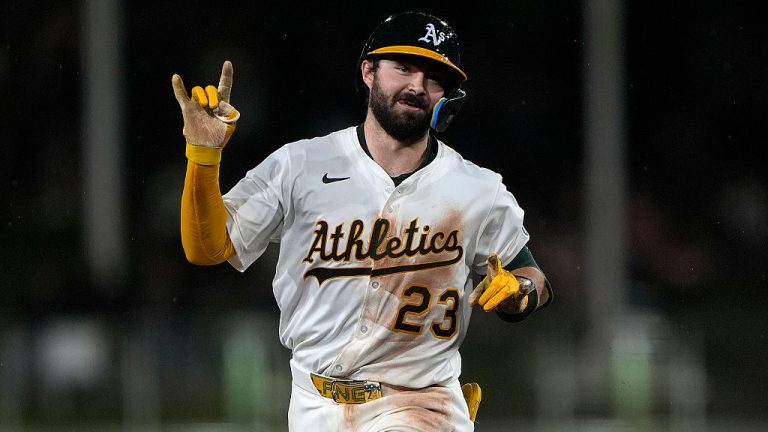
Catcher: Shea Langeliers, Athletics
- 2026 Stats: 27 G, .304/.361/.563, 8 HR, 14 RBI, 146 OPS+, 1.4 bWAR
2025 was a coming-out party for Langeliers, as the former top prospect finally kept his strikeout rate in check enough to let his elite power play up.
Only MVP runner-up Cal Raleigh hit more than Langeliers’ career-high 31 longballs from the catcher position, spurred by a 7.5% reduction in strikeout rate.
Unlike many catchers who seem to wear down as the season goes along, Langeliers was one of the league’s best hitters in the second half, slashing an incredible .322/362/.640 to go along with 19 home runs.
While many of his Athletics teammates have struggled to repeat their 2025 performance thus far, Langeliers has picked up right where he left off.
He leads all American League catchers with eight home runs and a .304 batting average while ranking in the top 10 among all AL hitters with a .923 OPS.
While his strikeout rate has crept up to its pre-2025 level, Langeliers has maximized the balls he has put in play better than at any point in his career. He has raised his launch angle sweet spot percentage from 33.4% to a whopping 39.5%, which ranks in the 83rd percentile among all qualified hitters.
With Alejandro Kirk sidelined for the next month with a fractured thumb, there is a clear path to a catching job on the American League All-Star team, and Langeliers looks poised to take advantage.
First Base: Ben Rice, New York Yankees

- 2026 Stats: 27 G, .326/.459/.733, 9 HR, 21 RBI, 224 OPS+, 1.5 bWAR
It isn’t difficult to see why Rice was a popular breakout pick entering his third MLB season.
His 2025 campaign wasn’t bad by any means, as he posted a 131 OPS+ and hit 26 home runs despite platooning with Paul Goldschmidt, but it could have been even better. Rice was arguably the unluckiest hitter in the sport, underperforming his expected batting average by 28 points and his expected slugging percentage by 58 points.
The baseball gods were bound to smile favorably on Rice if he continued to post top-end exit velocities, and that is exactly what has happened this year. He trails only Astros superstar Yordan Alvarez with a .450 on-base percentage, .733 slugging percentage, and 1.182 OPS, good for an unfathomable 224 OPS+.
In fairness, Rice has practically forced the baseball gods’ hands by ranking in the 100th percentile in hard-hit percentage and walking at an incredible 18.3% clip.
Though he possesses only league-average bat speed, Rice’s uncanny ability to barrel up baseball and spit on pitches outside the zone has made him one of the best all-around hitters in the sport since the start of the 2025 season.
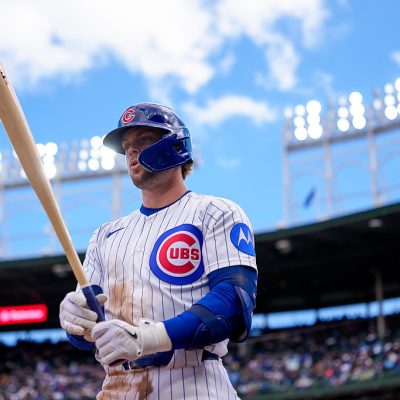
Second Base: Nico Hoerner, Chicago Cubs
- 2026 Stats: 28 G, .307/.382/.474, 4 HR, 23 RBI, 23 OPS+, 7-for-7 SB, 2.0 bWAR
Both Nico Hoerner and Brice Turang have picked up right where they left off from their 2025 seasons and currently rank first and third, respectively, in bWAR among all MLB second basemen.
A model of consistency and reliability atop the Cubs’ order, Hoerner may lack the power of the game’s best hitters but makes up for it with elite bat-to-ball skills and a 93rd percentile squared up rate, helping him post a .307 batting average despite a measly 86.3 mph average exit velocity.
As good as Hoerner is at the plate, his true calling card is his impact on the bases and in the field. He looks well on his way to a second consecutive Gold Glove, having racked up seven Outs Above Average in just 246 defensive innings, and has gone a perfect 7-for-7 in stolen base attempts.
Turang, meanwhile, has built on his 2025 power surge with four early longballs and a .204 isolated power that ranks second among second basemen. Since 2024, Turang has remarkably raised his average exit velocity from 87.0 mph to 93.3, all while maintaining his elite plate discipline and near-league-average strikeout rate.
While Turang may be the better overall hitter, Hoerner’s advantage in the field and on the bases gives him the slight edge in this race, but it would hardly be a surprise to see both of these budding stars get rewarded with their first All-Star selection this summer.
Shortstop: Xavier Edwards, Miami Marlins
- 2026 Stats: 28 G, .343/.425/.467, 1 HR, 9 RBI, 152 OPS+, 1.0 bWAR
In an era that has seen power-hitting shortstops like Bobby Witt Jr., Gunnar Henderson and Corey Seager become the norm, Edwards is a refreshing throwback to how the position’s best used to play.
The 5-foot-9 switch-hitter’s calling cards have always been his speed and his bat-to-ball skills, as he swiped 58 bases in his first two full MLB seasons and ranked in the 98th percentile with a 12.2% whiff rate in 2025.
What has allowed him to take the leap this year has been a shocking rise in power, as he currently leads MLB with a 40.5% squared-up percentage, while his hard-hit percentage has jumped all the way from 29.4% to 42.9%
On top of his offensive improvements, Edwards has maintained defensive improvements from last season despite having one of the game’s weakest arms, a testament to his glove, range, and instincts.
Moreover, unlike in his 2024 season, in which Edwards hit .328 in 70 games but had a dismal 86.1 mph average exit velocity, his place atop the NL batting average leaderboard in 2026 looks much more sustainable.
If he can start turning some of his hard singles into doubles and triples, his offensive resume could be impressive enough to crash the power-hitting shortstop party in Philadelphia this summer.
Third Base: Amed Rosario, New York Yankees
- 2026 Stats: 20 G, .263/,302/.526, 4 HR, 5 RBI, 126 OPS+, -0.1 bWAR
The hot corner was perhaps the most difficult position to find a first-time All-Star candidate, as most of the best players are established stars like José Ramírez, Manny Machado and 2025 first-time All-Star Maikel Garcia.
If there is one unexpected name raising eyebrows, however, it’s Rosario, the journeyman utility infielder who has forced his way into regular playing time due to a newfound power stroke.
Rosario has already gone deep four times in 63 plate appearances after homering a combined nine times in his previous two seasons, more than doubling his barrel rate from 6.0% to 12.5%
Though he was largely a league-average hitter in 2025, Rosario made substantial under-the-hood improvements in a season split between Washington and New York. His 91.2 average exit velocity and 45.0% hard-hit percentage easily set new career-highs, while his 16.2% strikeout rate set a new career-low.
For Rosario to become a legitimate All-Star candidate, however, he will need to continue to steal playing time away from the struggling Ryan McMahon, which will mean continuing to do damage against right-handed pitching.
He has more than held his own against them with an .819 OPS in 33 plate appearances thus far, but his career .669 OPS against same-side pitchers is a far cry from his .801 mark against southpaws.
Given Rosario’s well-documented success against left-handed pitchers, even a league-average performance against right-handed pitchers could be enough to earn him a surprising All-Star nod.
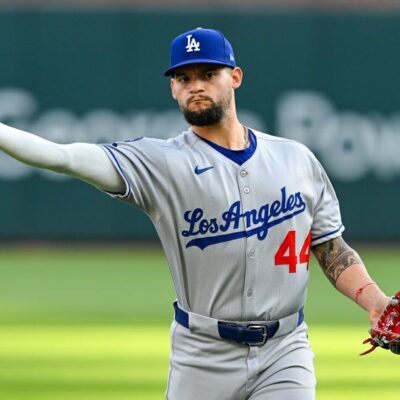
Outfield: Andy Pages, Los Angeles Dodgers
- 2026 Stats: 28 G, .337/.378/.554, 5 HR, 25 RBI, 161 OPS+, 1.8 bWAR
For all the stars littered up and down the Dodgers order, it is the unheralded Pages who has been, arguably, their best position player through the first three weeks of the season.
After an up-and-down rookie campaign in 2024, Pages took major strides in his sophomore season, doubling his home run total from 13 to 27 and tripling his bWAR total from 1.2 to 3.8 thanks to Gold Glove-caliber defense in center field.
A poor postseason performance unfortunately overshadowed much of the progress Pages made last year, but he has come back even stronger in 2026. He currently leads qualified MLB outfielders with a .337 average and 1.8 bWAR.
While many of the players on this list have entered the All-Star conversation due to improved plate discipline numbers, Pages’ walk and strikeout rates have remained fairly stable from year to year.
His breakout has simply been the result of making more loud contact more frequently, as he has raised his average exit velocity from 88.6 mph to 90.2 mph and his hard-hit percentage from 37.2% to 55.1%.
It remains to be seen whether Pages can sustain those improvements all season long, but his already established defensive excellence and power provide a high floor, and he should be in position to rack up RBIs all season long, batting behind on-base machines like Will Smith, Freddie Freeman, Max Muncy, and Kyle Tucker.
Outfield: Oneil Cruz, Pittsburgh Pirates

- 2026 Stats: 27 G, .259/.320/.518, 8 HR, 24 RBI, 129 OPS+, 10-for-12 SB, 0.5 bWAR
Is this the year that Cruz finally puts it together? There is still a long way to go, but the early returns are promising for the frustratingly talented 27-year-old.
Like in each of his first two full seasons, Cruz ranks near the top of the leaderboards in average exit velocity and hard-hit percentage, but the key difference has been a 4.7% increase in launch-angle sweet-spot percentage.
That may not sound like much, but any increase in launch-angle optimization will pay massive dividends for a player who hits the ball as hard and as frequently as Cruz does. It also helps explain how his expected batting average has climbed from .218 to .264, despite the fact that he continues to strike out in around one-third of his plate appearances.
In addition to his work at the plate, Cruz has already swiped 10 bases (second in the NL) while getting caught only twice.
A notoriously inconsistent player throughout his career, Cruz will need to prove he can put it together over a longer period, but the ingredients are all there for a truly special season.
Outfield: Wilyer Abreu, Boston Red Sox
- 2026 Stats: 27 G, .298/.354/.481, 4 HR, 12 RBI, 134 OPS+, 1.4 bWAR
Unlike many of the players on this list, Abreu has already established himself as an above-average big leaguer. He tallied 6.8 bWAR and a 118 OPS+ over his first two full seasons.
What has stymied his jump to stardom has been a series of nagging injuries, including a calf strain last August that knocked him out for over a month.
The ill-timed absence cut short what was a sophomore season of real improvement for Abreu, as he hit seven more home runs in 17 fewer games and shaved nearly four points off his strikeout rate.
Fully healthy entering 2026, Abreu dropped the first hint he may be in for a monster season in the World Baseball Classic, as he demolished two critical home runs during Venezuela’s title run. He carried that momentum into the start of the season.
Although Abreu has cooled off considerably after a red-hot first two weeks, his under-the-hood numbers show real signs of improvement. He has once again cut several points off his strikeout rate while increasing his hard-hit rate from 44.9 to 50.0%.
As with many of his Red Sox teammates, Abreu’s power production has been capped by a substantial increase in groundball rate and a decrease in pull-air percentage.
His combination of launch angle and exit velocity in 2025 was matched only by Cal Raleigh, but while his average exit velocity is practically unchanged from last season, his average launch angle has dropped 23 degrees to 14.1.
Even with these issues, however, Abreu trails only Mike Trout among American League outfielders with a 1.4 bWAR, a testament to his outstanding right field defense and his development as an all-around hitter.
If he can recapture his ability to elevate while maintaining his sliced-down strikeout rate, Abreu should have no problem earning his way to Philadelphia for his first career All-Star appearance.
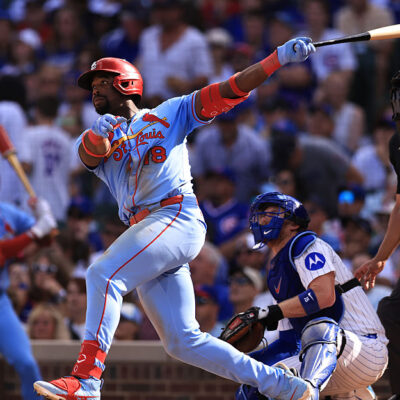
Designated Hitter: Jordan Walker, St. Louis Cardinals
- 2026 Stats: 26 G, .283/.360/.566, 8 HR, 16 RBI, 163 OPS+, 1.7 bWAR
Maybe this is bending the positional rules a bit, but no list of potential first-time All-Star candidates would be complete without Walker.
One of the most hyped hitting prospects of the last decade, Walker has been unable to find his footing in the big leagues thanks to a combination of unsightly strikeout and groundball rates.
While Walker has continued to strike out in nearly a third of his plate appearances, his newfound ability to consistently elevate the ball has made all the difference. He has shaved his groundball rate from 47.9% to 37.5% while notably increasing his average launch angle.
Most importantly, Walker has made these changes without losing what made him special in the first place, as he ranks near the top of the charts in expected slugging percentage, barrel rate, hard-hit percentage, average exit velocity and bat speed. In other words, he is absolutely mashing the baseball.
Walker’s improvements have not just been limited to the batter’s box, as he has graded out as a roughly average defender in right field after accumulating -20 Outs Above Average over his first three seasons in MLB.
The more pessimistic of Cardinal fans will point out that this is not the first time that Walker has shown signs of putting it all together, but given that he has already hit more home runs through the first month of 2026 than he did in either 2024 or 2025, there is ample reason to believe that the 23-year-old has really done it this time.
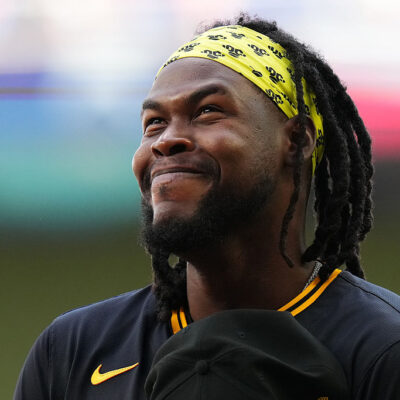
Starting Pitcher: José Soriano, Los Angeles Angels
- 2026 Stats: 6 GS, 5-0, 0.24 ERA, 37.2 IP, 3.1 BB/9, 10.3 K/9, 2.7 bWAR
Soriano has always been one of the most fascinating pitchers in baseball, as his inability to limit hard contact and avoid free passes overshadowed the game’s highest groundball rate and an electric arsenal headlined by a bowling-ball upper-90s sinker.
While Soriano always had ace-level potential if he could ever harness his control, even his most fervent supporters couldn’t have seen his 2026 performance.
The 27-year-old has allowed just one run in 37.2 untouchable innings, good for a microscopic 0.24 ERA and a 2.7 bWAR that is nearly a full point higher than any other pitcher in MLB.
Though he has made only a small improvement in his walk rate, Soriano has been a more complete pitcher through the first six starts of his fourth MLB season. He has cut his sinker usage significantly and increased the usage of both his four-seamer and knuckle curve.
The result has been more chases and less hard contact, as his opponent’s chase rate has climbed from 27.0% to 35.8%, while their hard-hit percentage has dropped all the way from 48.2% to 29.8%.
It’s a near certainty that Soriano won’t be able to sustain his nearly unprecedented level of production, especially if his walk rate continues to hover around double digits, but there are tangible reasons to believe that Soriano’s numbers can finally match his wipeout stuff.
Starting Pitcher: Taj Bradley, Minnesota Twins
- 2026 Stats: 6 GS, 2.91 ERA, 3-1, 34.0 IP, 3.4 BB/9, 9.8 K/9, 1.2 bWAR
Perhaps the most intriguing piece the Twins acquired in their midseason fire sale last year, Bradley never quite put together the numbers to match his elite stuff during his time in Tampa Bay, leading the Rays to include him in a trade deadline one-for-one swap for Griffin Jax.
Bradley’s first two months in Minnesota were largely a continuation of his struggles with Tampa Bay, but his performance this season has shown why the Twins were willing to take a chance on his immense talent.
Bradley allowed just five runs over his first five starts (before a rough outing last Friday), striking out 34 in 27.2 innings.
The biggest key to Bradley’s turnaround has been the rebirth of his splitter, a pitch that was his calling card as a prospect but abandoned him during the end of his Tampa Bay tenure. He has induced a .125 opponents’ average and a 42.3% whiff rate on the offering. According to Baseball Savant’s run value, it has been one of the top 10 splitters in the league in 2026.
His curveball has also seen its whiff rate climb over 40%, giving Bradley two bat-missing breaking balls to pair with his upper-90s fastball.
For Bradley to be able to sustain this success and earn his first All-Star appearance, however, he will need to do a better job of limiting hard contact.
His 94.1 mph opponent’s average exit velocity ranks in the 1st percentile, and his expected ERA is more than a run higher than his actual output.
Starting Pitcher: Gavin Williams, Cleveland Guardians
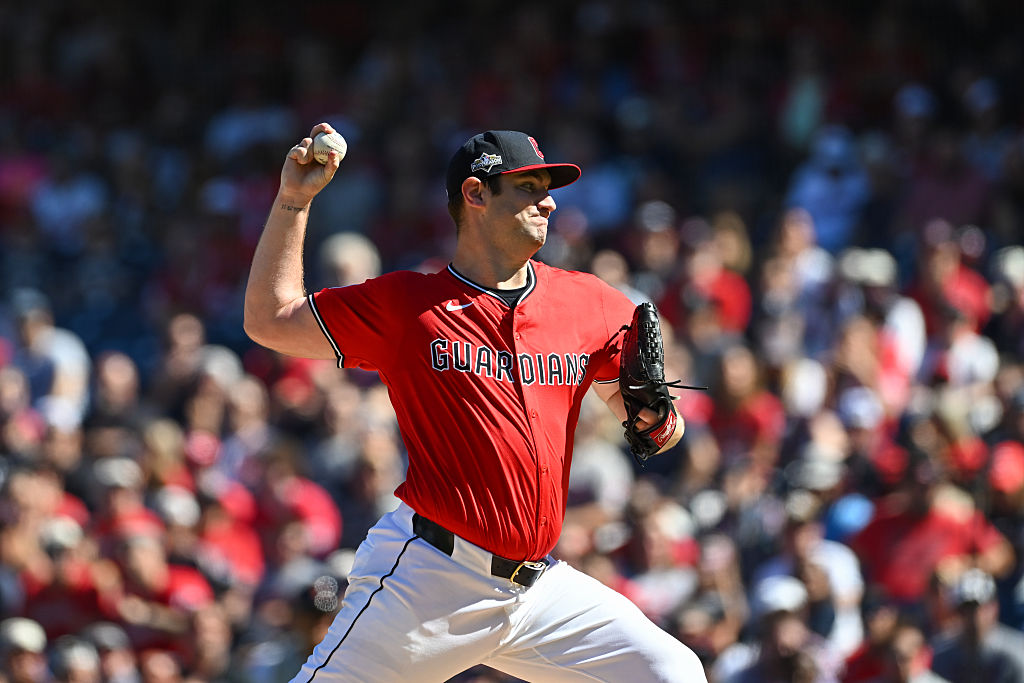
- 2026 Stats: 6 GS, 4-1, 3.28 ERA, 35.2 IP, 4.8 BB/9, 11.1 K/9, 1.0 bWAR
Williams is a change of pace from many of the other Guardians pitching development success stories, relying on an explosive upper-90’s fastball to overcome subpar control.
It’s possible that Williams is never able to cut his walk rate to single digits, but as he has proved this year, it might not matter that much. His stuff is simply that good.
The headliner of Williams’ attack is his four-seam fastball, a pitch that sits in the upper-90s and plays even harder due to his 93rd percentile extension. However, his first six starts of 2026 have seen him display a more well-rounded arsenal.
He has doubled the usage of his sinker while upping the frequency of both his cutter and sweeper, the latter of which is generating whiffs at a startling 46.5% clip.
The result has been more groundballs and more strikeouts, and his minuscule .133 batting average against has helped him keep runs off the board despite a 13.4% walk rate.
It is a fine line to walk when you issue as many free passes as Williams does, but he is beginning to look a lot like a right-handed version of Blake Snell, a pitcher who has epitomized the term “effectively wild.”
While Williams may not win two Cy Young Awards like the Dodgers left-hander, his ability to generate both groundballs and strikeouts at a high rate makes him one of the toughest pitchers to hit in all of baseball.
Relief Pitcher: Antonio Senzatela, Colorado Rockies
- 2026 Stats: 8 G, 0.50 ERA, 18.0 IP, 2.0 BB/9, 9.0 K/9, 1.2 bWAR
One of the biggest early-season surprises has been the dominance of the Rockies’ bullpen, and the most shocking performer of them all is a guy who was arguably the worst pitcher in all of baseball last season.
After he was battered to the tune of 6.55 ERA and a .347 opponents’ batting average, the Rockies moved Senzatela to the bullpen and swapped out his ineffective slider for a cutter. The shift to a long relief role also helped Senzatela get a couple of much-needed ticks on his four-seam fastball, raising his average velocity from 95.0 to 96.9.
The biggest remaining question is whether Senzatela can maintain his dominance when hitters adjust to his new fastball-heavy approach, especially if he continues to work in a multi-inning capacity out of the bullpen.
Still, it’s clear that Senzatela is a different pitcher than he has been at any point in his big league career, and his simplified four-seam/cutter combination gives him a fighting chance to stand his ground in the thin Denver air.
Relief Pitcher: Riley O’Brien, St. Louis Cardinals
- 2026 Stats: 14 G, 1.26 ERA, 14.1 IP, 0.6 BB/9, 10.0 K/9, 7-for-9 SV, 0.7 bWAR
A journeyman reliever who made only 10 MLB appearances during his twenties, O’Brien was a rare bright spot during the Cardinals’ frustrating 2025 campaign, pitching to a 2.06 ERA and even recording six saves after the mid-season trade of closer Ryan Helsley.
Locked into the closer role entering 2026, O’Brien has picked up right where he left off, allowing just a single unearned run in 13.1 innings (before a blown save over the weekend).
O’Brien’s stuff has never been in question, as his arsenal features an upper-90s sinker that generates one of the league’s highest groundball rates and a pair of swing-and-miss breaking balls.
What has finally allowed him to stick at the back-end of a big league bullpen is a dramatic shift in control. After walking 5.1 batters per nine innings in Triple-A in 2023 and 9.0 in his abbreviated MLB cameo in 2024, O’Brien sliced that figure to a more manageable 4.1 in 2025 and has only walked one batter in 2026.
O’Brien’s ability to generate both whiffs and groundballs makes him nearly impossible to string together hits against, and if he sustains his improved command, he could become one of the National League’s best closers.
Relief Pitcher: Tyler Rogers, Toronto Blue Jays
- 2026 Stats: 12 G, 0.63 ERA, 14.1 IP, 2.5 BB/9, 4.4 K/9, 0.6 bWAR
Sandwiched in between the high-profile acquisitions of Dylan Cease and Kazuma Okamoto, the Blue Jays’ signing of Rogers to a three-year, $37 million deal looks like one of the best reliever contracts given out this winter
The side-winding 35-year-old has done exactly what he has done his entire career, ranking in at least the 99th percentile in both average exit velocity and groundball rate, despite his sinker averaging a Jamie Moyer-esque 82.6 miles per hour.
As with any pitcher who strikes out just one of every eight hitters they face, Rogers is heavily dependent on his infield defense to convert his avalanche of groundballs into outs, and the middle-infield combo of Andrés Giménez and Ernie Clement has proven to be the perfect match for his pitching style.
Given closer Jeff Hoffman’s continued struggles in his second season in Toronto, it’s possible Rogers takes on an even greater role in the Blue Jays’ bullpen, which should only help him garner more All-Star attention.
Become a Member of Just Baseball
Subscribe and upgrade to go ad-free!
* Save 25% by subscribing annually.

Written by
Daniel Fox is a contributing writer for Just Baseball. He has previously written for Pitcher List, BoSoxInjection, and in the Cape Cod Baseball League. He is…