
For the Tigers To Reach New Heights, Colt Keith Must Do the Same
Colt Keith may be the key to unlocking a new level for the Detroit Tigers. What should we expect from the 24-year-old in 2026?
 | |
| | 
When the Detroit Tigers inked Colt Keith to a six-year contract in January of 2024, before he had even debuted, they made a statement. A statement that things were heading in a new direction in Detroit and Keith would be part of the nucleus in the turnaround.
A top-25 prospect who showed plus power, advanced feel to hit, and an above-average eye for the zone led many to believe he would be a middle-of-the-order bat in Detroit’s lineup immediately.
Well, the profile fans were expecting is not what we have seen. At least not yet.
Keith struggled out of the gate his rookie year, flashed his potential for a stretch, then ultimately finished with a respectable .260/.309/.380 slash line but only 13 home runs in his rookie season. That’s a solid season, but it didn’t exactly light the world on fire.
Keith’s sophomore campaign last season was an improvement from 2024. He increased his walk rate from 6.5% to 10.3%, saw his ISO go from .120 to .157, and his wRC+ jump from 95 to 109. In fact, most of the underling numbers are trending in the right direction too.
But, it doesn’t quite feel like the breakout we have been waiting for. A platoon bat without a defensive home and 26 home runs across 285 games is, well, not the Colt Keith we all envisioned as a catalyst to the Tigers offense.
The good news? Keith is only 24 years old and still a developing player. He showed last season that improvement is continually happening and he is far from a finished product. As the Tigers enter 2026, Keith is going to have a larger role, and in order for the Tigers to reach new heights, Keith must as well.
Colt Keith’s Progression & Next Steps
In some ways, I think Keith has become underrated by Tigers fans. A blind resume of .256/.333/.413 with a 109 wRC+ as a 23-year-old would have fans excited if this player was acquired via trade. Our prior thought on what he would be are clouding the production we have seen.
Oh yeah, he can still be the player we all envisioned.
There’s no denying Keith’s rookie season was disappointing, but it wasn’t disastrous. He looked overmatched out of the gate, adjusted in a major way in May, struggled in June, then hit seven home runs in July; a yo-yo type season that at least provided plenty of reason to believe in a better 2025.
We saw improvement in 2025, but not quite a breakout.
| 2024 (516 AB) | 2025 (414 AB) | |
| Slash Line | .260/.309/.380 | .256/.333/.413 |
| Home Runs | 13 | 13 |
| Walk % | 6.5% | 10.3% |
| Chase % | 29.9% | 25.2% |
| Avg. Exit Velo | 87.8 mph | 90 mph |
| Barrel % | 5.6% | 9.2% |
| Pull Air % | 14% | 18% |
| Whiff % | 23.2% | 22.5% |
| wRC+ | 95 | 109 |
A major reason why Keith’s OPS jumped from .689 to .746 was due to him chasing fewer pitches and walking more because of it. That’s a trend we often see with young hitters as they grow, but an improvement that is still important to check the box.
Not only does this lead to Keith drawing more walks, but it will also result in pitchers having to work back into counts, therefore entering the strike zone more often. Obviously, pitches in the zone are going to lead to better opportunities to do damage; However, Keith still needs to make strides in parts of the zone.
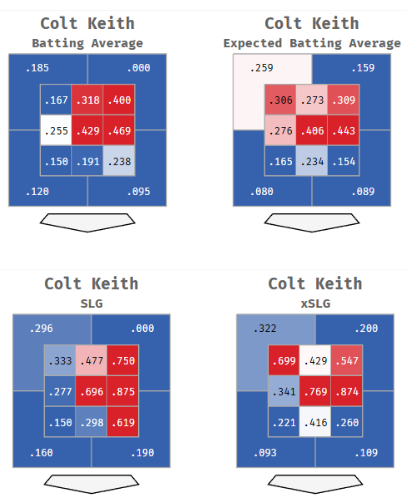
Via Baseball Savant
The graphic above can be a lot to absorb and apply, so we’ll take it step by step.
Keith performed well on pitches on the inside, especially middle and high. That area is where he did the majority of his damage while pitches low and on the outer part of the zone were troubling for him.
Of the 21 hits he accumulated on the outer part of the zone, 19 were singles. We all saw the frequency of him hitting a blooper to left, which is fine and an acceptable result for pitches in that third, but it’s an area for improvement. That’s especially true when you consider the majority of his contact in that third was on the ground.
Now, let’s focus on the positive. See at that Red? The darker the better, and Keith capitalized on pitches on the middle and inner part of the zone, which is where he’ll get the most power from. We did see him pull the ball in the air more last season, which is the next step in improving his power.
Finally, we get to the power discussion. Seeing back-to-back 13 home run seasons is pretty mediocre, but keep in mind that he had about 100 fewer at-bats in 2025. The improvements in exit velocity, launch angle, and fly-ball rate lead me to believe more power is to come.
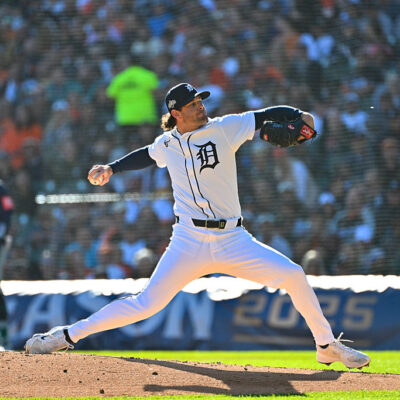
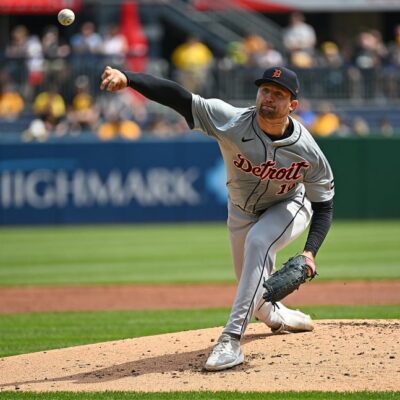
The power might be extra-bases and not a 25-homer outbreak, but that would still be welcomed.
Keith’s bat speed does not lead to generating a ton of pop (it instead leads to more contact), but you have to wonder if that changes as he becomes more confident in reading pitches and understanding when to attack, especially if he works his way into more hitter’s counts.
I also think it is time to start allowing Keith to face lefties with more frequency. I understand that Hinch prefers certain platoons, and I mostly agree, but we need to see if Keith can settle into being a true everyday player.
In 2024, Keith slashed .305/.352/.366 against lefties across 82 at-bats. In 2025, he was only afforded 43 at-bats and put up a .163/.217/.186 slash.
In 2023, his last season in the minors, Keith slashed .306/.385/.524 in 124 at-bats against southpaws. This is not a case of a player showing he’s drowning against lefties, and perhaps a larger, more consistent opportunity will allow him to find his footing.
The reason it might not work is due to Keith’s struggles against breaking balls. Left-on-left sliders and curveballs might be be ugly. It was a 27% whiff rate on breaking balls from lefties last season and 40% the year prior, albeit small samples.
Platoon bat or not, Keith is going to be a big part of this team’s offense. After all, he was the team’s leadoff hitter in 55 games last season. Another step forward could lift this Tigers offense and help offset what they might miss out on in free agency.
Can Keith’s Defense Improve?
Keith is entering year three and we are still not sure what position he will play. After coming up as a third baseman who spent time at second, Keith was the Tigers’ primary second baseman his rookie season.
Last offseason, a statement was made when the team said he would be the first baseman. That was before Torkelson bounced back, leading to Keith only playing first in 18 games. The addition of Gleyber Torres pushed Keith into a DH role before he once again saw time at third.
For a player who has his limitation defensively, moving Keith around certainly has not helped. I get why they did it, and I don’t necessarily disagree with the move, but a better understanding of where Keith will play in 2026 would help him defensively.
I think Keith can play an average second base. However, I’m not sure if that is where he will be in 2026 and beyond. The biggest hole right now is at third, and Keith could be the best internal answer to that question.
Last season, Keith had 110 plays at third with an estimated success rate of 65% and an actually success rate of 63%, which resulted in a -2 outs above average (OAA).
While the sample size is still small, a full season of plays usually sees third basemen in the 70% or higher range for estimated success rate. In fact, his 65% estimated success rate would be tied for the lowest amongst qualified third basemen.
All this to say, Keith did not have a lot of routine opportunities at third. The arm strength is a question as well. He did show better arm strength last year than he did in 2024, though, and another year removed from should surgery could be the reason.
Is it ideal to have Keith at third? Probably not. Can he improve if the team gives him notice and he has all offseason to work on his footwork, angles, and reps at third? Absolutely.
Final Thoughts
I think two things can be true: Colt Keith has not been what we were expecting, and he has also been better than we have given him credit for. The lack of power is a concern, but there’s reason to believe he is trending in the right direction.
Players don’t reach their ceiling at 23 years old. Sure, I have concerns about what his ceiling might ultimately be, but we’ll have that discussion when the time comes.
Considering what is available on the free-agent market within the Tigers budgetary range, Keith and the upside he presents is still better than a number of external options. Regardless of where he plays, Keith is going to be an important piece to the 2026 Detroit Tigers.
Written by