
Three Preseason Contenders at a Crossroads for the 2026 Season
The Mets, Mariners, and Tigers are all below .500. What is the right path forward for each of these teams that were supposed to be contenders?
Baseball seasons do not unravel all at once. They usually bend first.
A bad month becomes a concerning trend. A few injuries expose a lack of depth. A veteran slump starts to look less like noise and more like decline. Before long, a team that entered the season with October expectations is forced into a much harder question than anyone expected to ask this early: Is this roster worth doubling down on?
That is where the New York Mets, Seattle Mariners, and Detroit Tigers find themselves. All three entered 2026 with legitimate postseason aspirations. All three have underperformed expectations in different ways. And all three have enough prospect capital to change the trajectory of their season if they are willing to dip into the farm system.
But the answer should not be the same for all three. Some teams need patience. Some need precision. Some need urgency.
What is the right path forward for these three supposed contenders?
Stats updated prior to games on May 22.
New York Mets
What’s Gone Wrong?
No team is spending more cash on its 2026 roster than the New York Mets, but through the early portion of the season, they are not getting what they paid for.
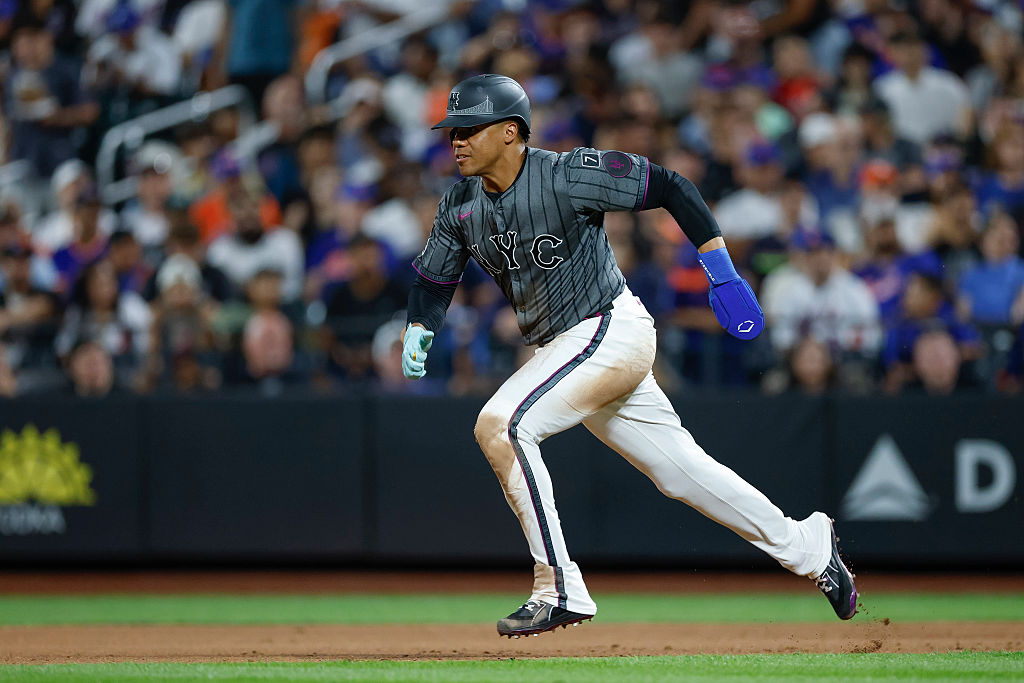
Injuries have played a role. Francisco Alvarez has missed time, Francisco Lindor is dealing with an injury too, and Juan Soto had a brief stint on the shelf of his own. But the crux of the issue for the Mets is simple: Their offense has been putrid.
As a team, they own an 89 wRC+, and the lack of lineup depth has been glaring. Among Mets hitters with at least 30 plate appearances, only four have posted a wRC+ above 100. One of them is rookie A.J. Ewing, who was only recently called up.
That is a stunning outcome for a roster built with this much financial aggression.
Bo Bichette, who inked a monstrous three-year, $126 million contract this offseason, has struggled immensely. He has picked it up of late, but he is still running a 74 wRC+ with a 38% chase rate, an approach issue that has submarined his production thus far.
The Mets paid Bichette to be a stabilizing force in the middle of the order. Instead, his early-season struggles have become one of the defining symptoms of the lineup’s broader dysfunction.
Marcus Semien, acquired this offseason in a “bad contract” swap involving Brandon Nimmo, has been even worse. Semien is 35 years old and has been trending in the wrong direction offensively since 2024.
After posting an 89 wRC+ in 2025, he is running a 70 wRC+ thus far in 2026, and even his calling-card defense has begun to trend downward. He remains under contract through 2028 at $25 million per year, a deal that increasingly looks like an albatross.
The two big-money additions are emblematic of the Mets’ broader offensive struggle. This was supposed to be a roster expensive enough to withstand injuries and volatility. Instead, the early-season version of the Mets has been defined by too many injured stars, too many underperforming veterans, and too little production from the lineup spots that were supposed to raise the club’s floor.
Can It Be Salvaged?
The Mets have shown signs of life after a horrendous April, largely because their pitching staff has kept the season from spiraling. Despite all of the offensive dysfunction, New York ranks sixth in FIP, and Nolan McLean has flashed frontline stuff. Freddy Peralta, the big-ticket arm they traded for this offseason, has been solid thus far, even while not yet pitching at the peak of his powers.
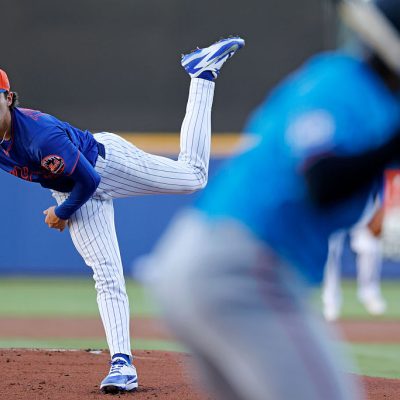
The Clay Holmes injury complicates things. Holmes had been an elite arm for the Mets in 2026, and losing him creates a real innings gap. But New York does have a stable of young arms that could help absorb some of that loss. Jonah Tong, Jack Wenninger, and Jonathan Santucci all give the Mets options to soak up innings and prevent the pitching staff from being overextended.
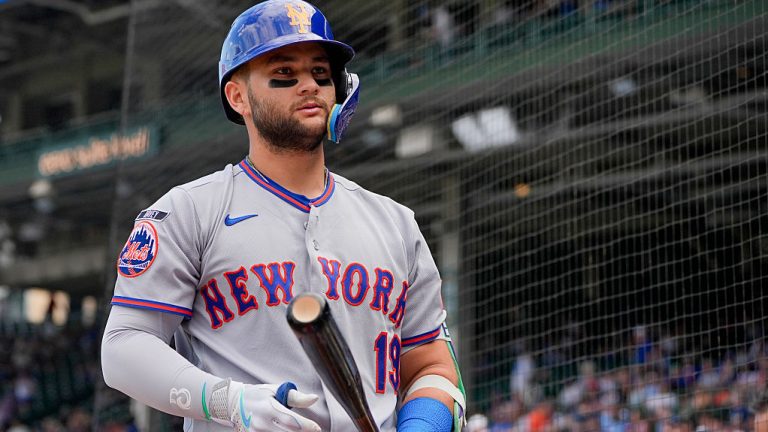
Offensively, there are at least some reasons for optimism. Rookie phenom Ewing has given the lineup a much-needed jolt. His speed, plate discipline, defense, and sneaky pop have been a breath of fresh air for a roster that badly needed athleticism and energy.
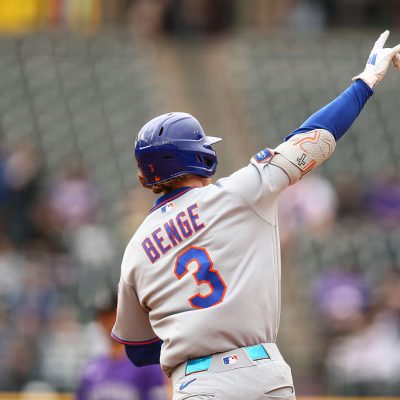
Carson Benge, another rookie, struggled badly out of the gate, but he has since climbed to a 98 wRC+ and is now producing at a much better level from the leadoff spot than he did in April.
The biggest reason the Mets still have a path forward, however, is that Soto remains one of the three best hitters in baseball. If Lindor returns healthy and Soto anchors the lineup, the floor of the offense changes quickly.
There is also reason to believe Bichette can be better than he has been. Bichette has started to turn the corner, hitting three of his five home runs over an 18-game stretch in May.
He remains one of the premium bat-to-ball artists in the league, and for a player with a career 119 wRC+, it is reasonable to expect him to move closer to that baseline than the 26 percent below league-average hitter he has been thus far.
The offense does not have the same level of reinforcement waiting in Syracuse after the Ewing call-up, but Ryan Clifford is one name to watch.
His Triple-A production has been underwhelming, with an 82 wRC+, but that number is being dragged down by increased chase and whiff for a player who has historically made strong swing decisions. The underlying impact remains intriguing. Clifford is running a 53 percent hard-hit rate and has already produced a 113 mph max exit velocity as a 22-year-old.
The Mets are likely saddled with Semien as an everyday player because of the contract, and that limits some of their flexibility. But if Lindor returns, Soto continues to be Soto, Bichette moves closer to his career norms, and the young bats provide even league-average support, the Mets have enough ingredients to creep back toward a passable offense.
Given the quality of the pitching staff, “passable” may be enough to keep them firmly in the race.
Verdict: Hold
The Mets are not committed to this iteration of the roster because of their monstrous payroll, but that does not mean they should treat 2026 like a season that needs to be maximized at all costs. There is a difference between staying alive and pushing the chips in.
For the Mets to become a real threat, the path has to come primarily from internal improvement. They need the veteran additions to normalize, the stars to get healthy, and the rookies to continue developing.
If Bichette moves closer to his career norms, Lindor returns to form, Soto remains Soto, and Ewing and Benge provide competent production, the offense can climb back toward respectability. With the quality of the pitching staff, that may be enough to drag them into the Wild Card picture.
But that is not the same thing as being one trade away from the top of the National League. The NL is incredibly strong at the top, and the Mets should not leverage meaningful prospect capital just to chase the final Wild Card spot. This is still a roster with real upside, but too much of that upside depends on health and rebound performances from players already in the organization.
The Mets should remain opportunistic, especially if a controllable player becomes available, but they should not be shopping from the top of the farm to maximize 2026. Their best path is to hold, let the roster stabilize, and reassess closer to the deadline if the underlying performance begins to match the payroll.
Seattle Mariners

What’s Gone Wrong?
The Mariners entered 2026 as one of the favorites in the American League after pushing Toronto to seven games in the 2025 ALCS. On the surface, they still look like one of the better teams in baseball. Seattle ranks inside the top 10 in both wRC+ and FIP, a combination shared only by the Braves, Dodgers, and Yankees.
That is the frustrating part. The underlying production suggests the Mariners should be firmly grouped with the sport’s top contenders, but their record has lagged behind that tier. They have not been bad as much as they have been uneven, with too many key players underperforming at the same time.
The most glaring example is Cal Raleigh. The 2025 AL MVP runner-up opened the season with a 64 wRC+ before recently landing on the injured list. The injury could help explain some of the struggles, but there is no real way to sugarcoat it: Raleigh has been bad offensively.
For a Mariners team built around run prevention and timely power, losing that level of impact from the middle of the lineup changes the entire complexion of the offense.
Josh Naylor has also failed to find his footing after signing a new contract last offseason. Naylor was a major factor in Seattle’s 2025 stretch run, but he has been closer to average than impact bat this season, running a 97 wRC+ with a .675 OPS.
He has always been an aggressive hitter, carrying a career 7.8 percent walk rate, but he has historically slugged enough to make that approach work. This season, the slug has lagged behind, and with it, his overall offensive value.
Brendan Donovan gave Seattle exactly what it hoped for early on, but he has since been sidelined by a groin strain. That has only added to the stop-start nature of the lineup. The Mariners have still produced at a respectable level overall, but the offense has lacked the consistent impact from its expected core pieces.
On the pitching side, Logan Gilbert and Luis Castillo have been underwhelming, to say the least.
Gilbert’s issues can be traced directly to the long ball. He has already allowed 11 home runs in 56.1 innings after giving up 20 in 131 innings in 2025 and 26 across 208 innings in 2024. The stuff and command baseline still make him a high-end arm, but the margin for error narrows quickly when the home run rate spikes like this.
Castillo’s struggles are more knotty. He is allowing the worst quality of contact of his career, with a 51 percent hard-hit rate, an 11.9 percent barrel rate, and a 92 mph average exit velocity allowed. Despite being the highest-paid arm on the team, he has been relegated to a piggyback role, a jarring development for a pitcher who was supposed to remain one of the anchors of the rotation.
The Mariners are not broken in the way some underperforming preseason contenders are broken. Their team-level indicators still point to a good club. But when Raleigh, Naylor, Gilbert, and Castillo all fall short of expectations while Donovan is sidelined, the gap between “good underlying team” and “actual AL powerhouse” becomes much harder to close.
Can It Be Salvaged?
The good news for Seattle is that there are plenty of reasons for internal optimism.
Julio Rodríguez has historically been a better second-half player, so improving on his current 115 wRC+ is absolutely in the cards. Randy Arozarena is running a 151 wRC+ and once again looks like one of the best power-speed outfielders in the sport.
Luke Raley is having an out-of-body experience, already sitting on a 150 wRC+ with 10 homers. Dom Canzone and J.P. Crawford have both been above-average hitters this season, while second-year infielder Cole Young has held his own with a 102 wRC+.
There is also real excitement around rookie Colt Emerson, a top-10 prospect for us at Just Baseball, who was called up when Brendan Donovan went down. Emerson will not turn 21 until July and should absolutely be viewed as an ascending player, even if immediate big-league impact is never guaranteed for a hitter this young.
The Mariners also do not need Raleigh to be the 60-homer force he was in 2025 for the offense to stabilize. They simply need him to be something closer to his established level of production. Even if he is not going to come close to replicating last year’s historic power output, Raleigh should normalize to something much better than 36 percent below league average.
On the pitching side, Seattle has seen a breakout from former first-rounder Emerson Hancock, and its overall depth of arms gives the club enough flexibility to gently phase Castillo out of a traditional rotation role if his struggles continue.
Gilbert has earned enough faith to believe he is better than the 4.42 FIP he is currently running. Bryan Woo remains one of the most consistent arms in baseball, while George Kirby and Bryce Miller are still finding their footing but have both shown elite stuff.
The wild card is 2025 No. 3 overall pick Kade Anderson, who is making Double-A look like Little League. Anderson may be good enough to pitch his way into the big-league mix at some point this season, whether that comes as a starter or in a swingman role. He would also be the only left-hander in the rotation, which adds a fun wrinkle to Seattle’s decision-making process.
The Mariners’ path back to looking like an American League heavyweight does not require a full-scale reinvention. It requires Raleigh to normalize, Rodríguez to find his second-half gear, Donovan to get healthy, and the rotation to settle into its usual shape.
Given the amount of talent already on the roster — and the internal pitching options still pushing from below — that is a far more realistic salvage path than most underperforming contenders can claim.
Verdict: Soft Buy
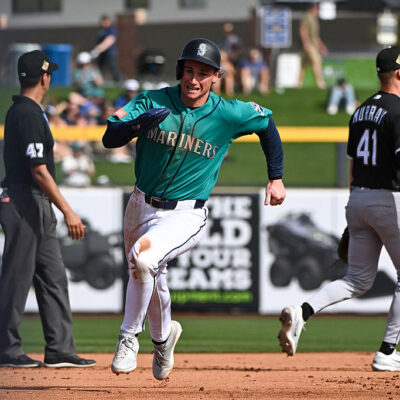
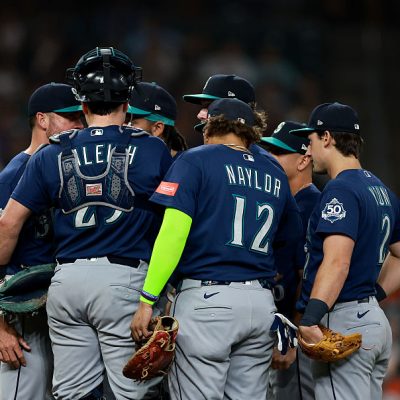
Seattle has enough internal irons in the fire that it does not need to empty the clip at the 2026 deadline to get back into the contender tier. This is not a roster that needs a dramatic reshuffling. The Mariners already have a top-10 offense by wRC+, a top-10 pitching staff by FIP, and enough underperforming core pieces with track records to believe there is more coming internally.
That should make them buyers, but not reckless ones.
The Mariners have a bevy of position player prospects who could headline a deal for a bullpen arm or another marginal upgrade without forcing the organization to move its highest-end pieces.
Michael Arroyo, Johnny Farmelo, Lazaro Montes, Felnin Celestin, and Luke Stevenson all give Seattle flexibility if it wants to supplement a bullpen that is already solid but could use another impact option for October.
That is where the Mariners’ deadline posture should live. They do not need to chase the biggest name on the market or compromise the long-term position-player pipeline. But with Rodríguez, Raleigh, and Naylor inked to long-term extensions, Seattle is firmly in a winning window. The goal should be to raise the roster’s floor around that core, not tear through the farm system chasing a marginal upgrade.
For a team with legitimate World Series aspirations, the difference may come on the margins. Seattle should buy, but it should buy surgically.
Detroit Tigers
What’s Gone Wrong?
The shorter list might be the things that have gone right for the team that came inches from the ALCS a year ago.
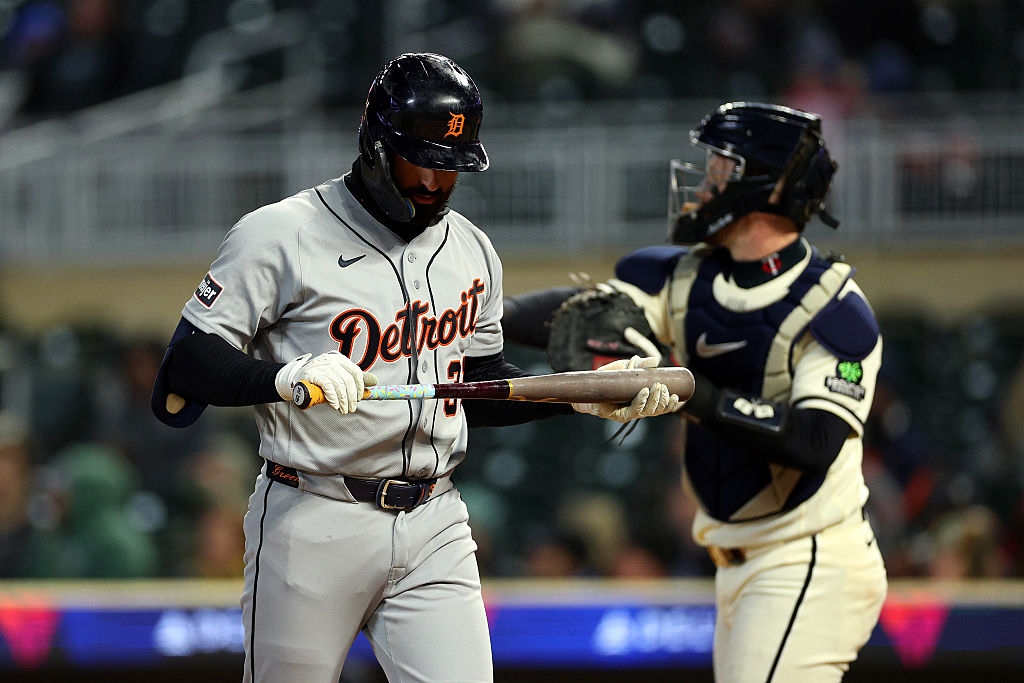
Detroit’s offense has underwhelmed, running a 97 wRC+ as a team. A.J. Hinch has long been comfortable playing matchups and working platoon advantages, but the bottom half of the lineup has been so unproductive that the Tigers may have to reconsider how often they can lean into that approach.
Zach McKinstry, Jahmai Jones, and Wenceel Pérez all have wRC+ marks below 40, creating too many dead spots for a team already short on margin.
Those struggles have been magnified by injuries to Gleyber Torres and Kerry Carpenter. Spencer Torkelson and Colt Keith are both hovering around average, with 95 and 87 wRC+ marks, respectively, but neither has provided the level of impact Detroit needed while the lineup has been thinned out.
Injuries have also pushed Matt Vierling into a more regular role, and his 82 wRC+ is emblematic of the broader issue. The Tigers have too many players being asked to carry lineup spots they have not produced enough to justify.
On the pitching front, the surface-level numbers do not scream disaster. Detroit ranks 11th in FIP and 13th in ERA, which would normally point to a solid enough run-prevention group. But a peek under the hood reveals some glaring concerns.
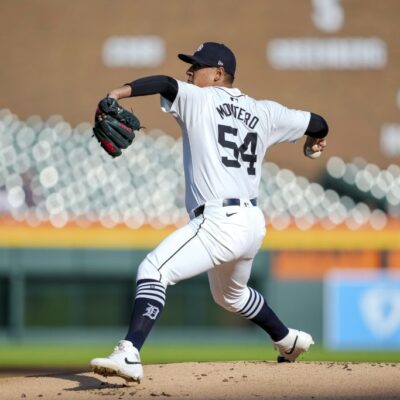
Those team-level numbers are buoyed by how brilliant Tarik Skubal has been, and his recent stint on the IL has shone a light on how thin the rest of the rotation looks without him.
Big-money addition Framber Valdez has been both ineffective and volatile, running an ERA in the mid-4s while also adding another high-profile on-field incident when he intentionally hit Trevor Story and was suspended. Valdez had a muted market as a free agent in part because of concerns about fit and volatility, and the early returns in Detroit have done little to quiet those questions.
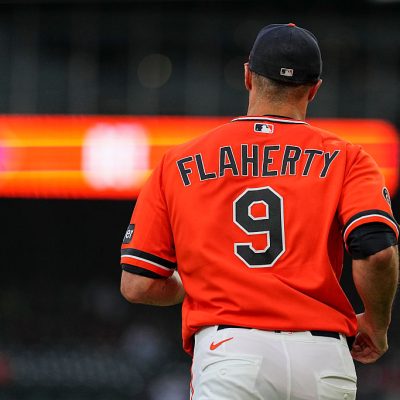
Jack Flaherty has been a disaster as well, posting a 5.77 ERA while walking nearly six hitters per nine innings. With Skubal on the shelf, the Tigers’ pitching staff has been exposed for how thin it is behind its ace. That is uncomfortable enough in the short term, but it is even more unsettling because Skubal’s looming free agency has already been giving fans in Detroit palpitations.
For a team that looked positioned to turn last year’s October breakthrough into something more stable, the early 2026 version of the Tigers has instead exposed how fragile the foundation still is. The lineup lacks depth, the rotation lacks reliability behind Skubal, and too many of the offseason bets have either failed to stabilize the roster or actively made the problems more glaring.
Can It Be Salvaged?
Skubal avoided the worst-case scenario with his elbow injury and should be back relatively soon, which is the single biggest reason Detroit’s season is not already teetering.
Casey Mize has also returned and performed well in a small sample. While it has been clunky thus far, Valdez has been one of the more consistent starters in baseball over the last half-decade, so there is reason to believe he should normalize closer to his previous form.
Offensively, there are real building blocks. Riley Greene is having a career year in his age-25 season, running a 163 wRC+ with a career-high 13.5 percent walk rate. That, coupled with his immense power, gives him a steady offensive floor despite the swing-and-miss concerns.
Rookie Kevin McGonigle has come up and immediately produced, running a 132 wRC+ while walking more than he is striking out and elevating the ball at an elite rate with a 29 percent ground-ball rate. He has also held it down at shortstop and been a plus on the basepaths thus far.
Dillon Dingler has built upon his breakout 2025, solidifying himself as one of the best catchers in the sport. And while they are currently on the shelf, Torres and Carpenter should return at some point in 2026, giving the offense a much-needed shot in the arm.
The Tigers also have some earned benefit of the doubt because Hinch has shown he can push the right buttons to maximize a flawed but talented roster, as he did in 2024.
They need to stay afloat until Skubal returns, which is easier said than done, given how they are playing right now. But this is still a team that has shown that when it gets hot and rolling, it can become the kind of dangerous opponent no one wants to see in a short series.
Verdict: Push the Chips In
This is almost never advisable. Teams are trying to build sustainable winners, and leveraging the future for a single season is rarely the right course of action. This is one of the rare exceptions.
There will be calls for Detroit to potentially shop Skubal and other veteran rentals, reset the timeline, and kick the can into 2027. My pushback to that is twofold.
The first is that Skubal’s injury, even if he returns at full strength, will likely knock down the return for a rental. The issue with trading a player of his caliber is that it is almost impossible to recoup enough value to justify moving on from him. That is especially true in this scenario, where Skubal is a free agent at the end of the season.
Even if teams still value him as a potential October ace, the lack of control and recent injury uncertainty would almost certainly suppress the price.
The second is that the American League is as weak as it has been in recent memory. It is currently wide open, and Detroit is exactly the kind of team no one wants to see in a short series if Skubal is firing on all cylinders.
The Tigers have been frustrating, uneven, and thin in places they cannot afford to be thin, but the ceiling of the roster still matters. When Skubal is right, Greene is anchoring the lineup, McGonigle is providing a jolt, and Dingler is producing like one of the best catchers in the sport, there is enough here to justify aggression.
Detroit also has the powder in the farm system to make a real splash. Bryce Rainer, Max Anderson, Jackson Jobe, Jordyn Yost, and Cris Rodriguez give the Tigers enough prospect capital to pursue a player who can provide the kind of immediate jolt this roster badly needs.
This does not mean being reckless for a rental bat or back-end arm. It means recognizing that this may be the best chance to maximize the Skubal version of the Tigers.
Robbing Peter to pay Paul is rarely advisable. But given the unique circumstances with Skubal, the weakness of the American League, and the potential of this roster if it can simply get unstuck, Detroit is the exception to the rule. The Tigers should push the chips in.
Final Thoughts
The hardest part of deadline season is not identifying flaws. Every contender has them. The hard part is deciding which flaws are worth paying to fix.
The Mets are expensive, talented, and flawed, but their path forward depends too heavily on internal normalization to justify a major prospect sacrifice. Hold.
The Mariners have the underlying indicators of a contender and enough internal rebound candidates to avoid desperation, but their winning window is open enough that marginal upgrades matter. Soft buy.
The Tigers are the uncomfortable case. The roster is flawed, the rotation is thin, and the offense has not been deep enough. But the American League is wide open, Skubal is still the kind of arm who can tilt a postseason series, and trading him as an injured rental may not bring back enough to justify waving the white flag.
Three contenders. Three crossroads. Three different answers.
For New York, patience is the play. For Seattle, precision is the play. For Detroit, this might be the rare moment where caution is the bigger risk.
Become a Member of Just Baseball
Subscribe and upgrade to go ad-free!
* Save 25% by subscribing annually.

Written by