
What Would It Take for the Orioles To Move Coby Mayo or Dylan Beavers?
If Mike Elias was to trade a promising youngster like Mayo or Beavers, who would he seek in return?
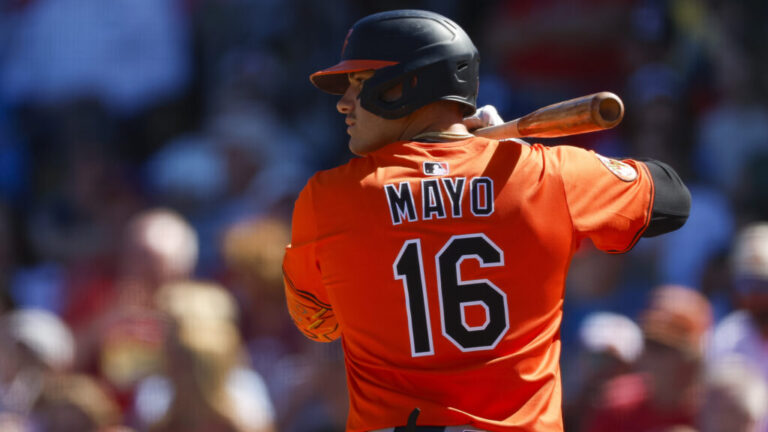
The Baltimore Orioles need starting pitching to compete for a World Series title.
President of baseball operations Mike Elias found key offensive contributors through an arduous rebuild, but the pitching staff of the Orioles has never been a strength.
Elias has made trades for starting pitchers. He acquired Jack Flaherty in 2023, along with Corbin Burnes and Zach Eflin in 2024. In another trade that was less of a clear buy, the Orioles traded All-Star Kyle Stowers to Miami for Trevor Rogers, who turned out to be the team’s best starter in 2025.
What Elias hasn’t done is sign free agent pitchers to multi-year contracts. He continues to draft hitting in the early rounds each season, keeps the projected contributors, and trades the obvious excess for the best pitcher he can. Elias has not shown a willingness to make a trade that includes a top prospect since moving glove-first shortstop Joey Ortiz in the Burnes deal.
Baltimore has selected a position player with its first three picks in every draft since 2019. Now, the team is running out of places to play these prospects. So, it would behoove Elias to capitalize on the value that youngsters Coby Mayo and Dylan Beavers have and trade one of them for another starting pitcher.
Why Are Mayo and Beavers Trade Chips?
At the beginning of the offseason, it appeared that Mayo and Beavers would be receiving the majority of reps at their respective positions in 2026.
For Mayo, many thought that the team would non-tender Ryan Mountcastle, which would open the door for him to be the primary first baseman. That didn’t happen, and now Baltimore projects to roster two right-handed first basemen.
You might ask, why couldn’t one play DH? Well, the O’s also have two catchers, Adley Rutschman and Samuel Basallo, who will each function as the designated hitter often when they aren’t catching. On top of that, Basallo could receive occasional first base reps as well.
Trading Mayo would hurt the Orioles’ talent pool at first base. But if management continues to be unwilling to sign a premier starting pitcher, then trading Mayo for an arm and signing a first baseman (to what would likely be a cheaper deal) could be a good plan of action.
As for Beavers, he was a regular in the Orioles’ outfield for the last two months of the season. He was projected to start in a corner alongside veteran Tyler O’Neill with Colton Cowser in center field, but then the team made a shocking move.
Elias traded starting pitcher Grayson Rodriguez to the Los Angeles Angels for rental outfielder Taylor Ward. In a vote of no confidence towards the former first-rounder, the team bolstered its outfield mix for 2026 by acquiring Ward.
Ward should be an impact bat for Baltimore; he hit 36 home runs in 2025. But for Beavers, this move complicates his playing time greatly.
He’ll be projected to primarily split time in a corner with O’Neill, who is a veteran in year two of a three-year contract. Beavers does have the platoon advantage, but Baltimore may be inclined to give O’Neill a shot to redeem himself following a disappointing first season.
Beavers could become a bench bat, but that seems futile for the 24-year-old’s development. If he isn’t going to play every day, it could be useful to trade him for a much-needed starting pitcher.
Who Could Be of Interest to Baltimore?
Given that the Orioles have options offensively, it’s likely that they would look to add a quality starting pitcher to their staff via trade. Here are some established big league arms who could make moving a controllable bat worthwhile.
Freddy Peralta
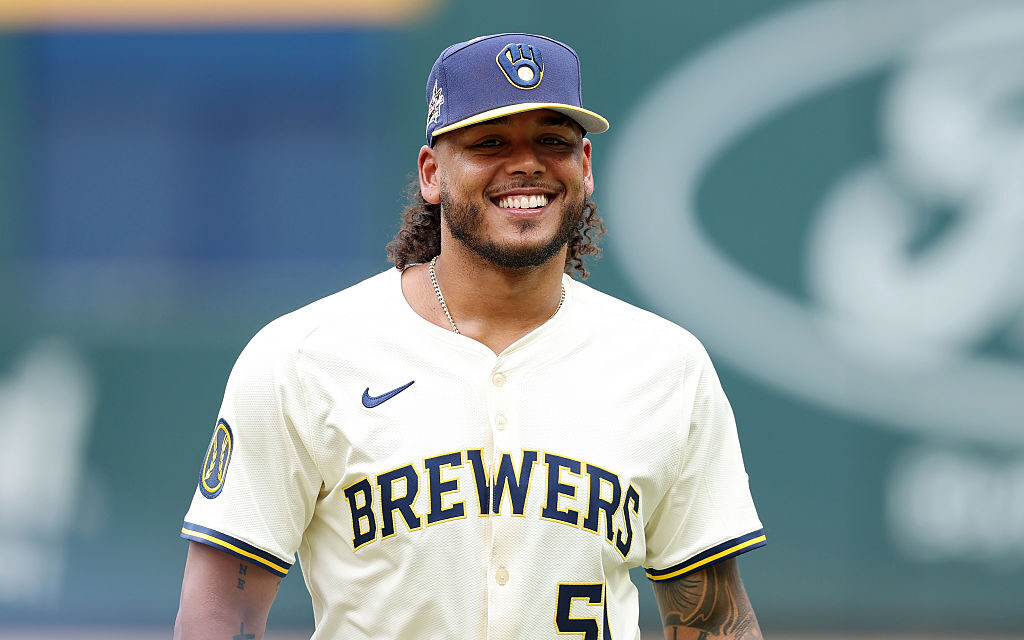
When Baltimore decided to make a move for an ace a couple of years ago, they called the Brewers. Since losing Corbin Burnes in free agency, the Orioles haven’t made any long-term commitments to their rotation and could entertain acquiring another rental.
Peralta, 29, has just one more season of team control on his current contract, in which he will earn $8 million. Getting frontline production at that price is quite the bargain, but Milwaukee could entertain moving him to recoup value if they are unlikely to give him big money next offseason.
In the 2025 season, Peralta pitched a full workload and was effective as ever. He set career-bests in ERA (2.70), innings pitched (176.2), and fastball velocity (94.7 mph). He would give the Orioles, a team with playoff aspirations, a proven and talented arm.
There are some signs that point towards regression, however. Peralta stranded runners at a rate of 85.5% in 2025, the highest of his career by a healthy margin. He also allowed hits on balls in play about three percent less frequently than he had in the two previous years. Couple those metrics with a consistent nine percent walk rate, and it seems likely that more runners on base will score next season.
Peralta’s Steamer projection of a 3.91 ERA reflects that belief of regression, but he is a durable pitcher with good stuff in a contract year. The Orioles may not have to give too much more than Mayo or Beavers to land Peralta for just one season.
MacKenzie Gore

The Nationals are in rebuilding mode, and their new regime has no ties to the current foundation of this club. For president of baseball operations Paul Toboni, trading Gore could be a way to get his hands on more young players that interest him.
Gore, who will be 27 on Opening Day, has been effective but inconsistent in his three full seasons as a big league starter. In the first half of the 2025 campaign, Gore was dominant. Over that span, he threw 110.1 innings with a 3.02 ERA and 2.96 FIP, punching out 138 opposing batters.
Then, in his first four starts of the second half, Gore surrendered 23 earned runs in 15.2 innings pitched. He rebounded to finish the season with a 4.17 ERA in 159.2 innings.
From the perspective of strikeouts and walks, Gore (27.2 K%, 9.3 BB%) was similar to Peralta (28.2% K%, 9.1% BB%). However, Peralta’s arsenal boasts more impressive offerings, per Stuff+.
Acquiring Gore would be taking on a short-term project who could reach a high ceiling if he’s able to surrender less hard contact. Given that Washington could use bats at any position, players like Beavers and Mayo could slot in and project for 500 plate appearances with the Nats in 2026.
Edward Cabrera
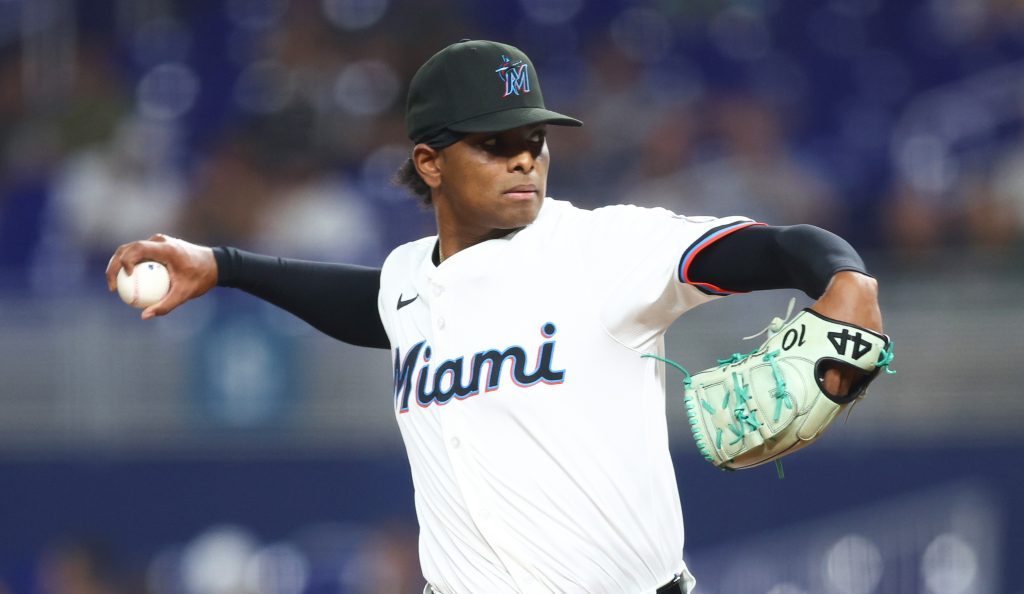
The Marlins likely won the first major bat-for-arm trade that the two teams completed in 2024, but the Orioles did turn Rogers into a productive pitcher as they hoped. Miami had a surprisingly solid season last year, but their offense is still looking weak on paper.
Perhaps moving Cabrera, 27, could get them another much-needed impact bat. Cabrera is under team control for another three years and finally strung together a fairly healthy season with good production.
Cabrera threw 137.2 innings with a 3.53 ERA and 17.6% K-BB% in 2025, accumulating 2.0 fWAR. He’s a bit more unproven than the previously mentioned arms but has solid off-speed offerings, per Stuff+ (119 curveball, 106 slider).
Trading for Cabrera would be a bit of a gamble for the Orioles, and the two teams may need to kick in additional pieces to convince themselves that it was a worthwhile move. To lock down an arm with clear upside for three more years does sound like a trade worth entertaining for Baltimore.
If the Orioles don’t trust Cabrera, they could try to trade for a more proven veteran in Sandy Alcantara. Alcantara had a down year following Tommy John surgery but is a bounce-back candidate. The Marlins, as a team, make sense as a suitor for the Orioles’ offensive excess.
What Other Teams May Be Interested?
Here are some additional teams that have less obvious trade candidates but might be a good fit to acquire a young bat.
Pittsburgh Pirates
Mocked as possible trade partners for years, the Pirates and Orioles could line up on a trade that sends an arm to Baltimore and a bat to Pittsburgh.
The Pirates need offensive help at most positions, and Mayo and Beavers would step in as key contributors instantly. Despite recently moving Johan Oviedo, Pittsburgh is reportedly still entertaining offers on their major league pitching staff.
Baltimore could aim for a more controllable option by trading for Jared Jones or Braxton Ashcraft, but those arms could cost more than one of these major league-ready bats. For a team that has turned a blind eye towards drafting and developing homegrown pitching, that might be the price they need to pay.
Mitch Keller is also an option for the O’s, though he has less team control and upside. Baltimore could probably swing that trade without giving up a projected member of their 26-man roster.
The Orioles are likely the team holding out on these talks. These young Pirates arms come with risks, and Baltimore might prefer to trade a chip like Mayo or Beavers, if they plan to, for a more established option.
Minnesota Twins
Minnesota recently assured the baseball landscape that they are not planning to trade Joe Ryan or Pablo Lopez this offseason. Both are still under team control for two more seasons.
If the Twins hadn’t just sold off numerous pieces at the trade deadline, this would make sense. But given the state of this roster, why wouldn’t they consider a move? Trading one of these arms could be a great way to jumpstart a rebuild and get closer to contention.
By moving one of these two arms to Baltimore, they could get a foundational bat in Mayo or Beavers for the next six seasons, along with more prospects. Since the Twins are highly unlikely to win a World Series in the next two seasons, it feels irresponsible not to be open to negotiation.
Adding Ryan or Lopez would instantly give Baltimore an ace that it desperately needs to compete. If they could pair one of these two with a solid free agent starter, now we are talking about a good rotation.
Kansas City Royals
Kansas City has similar needs to Pittsburgh but is in a better position to compete. They have superstar shortstop Bobby Witt Jr., franchise cornerstone Salvador Perez at catcher, and emerging top prospect Jac Caglianone as impact offensive players.
The overall offensive depth of the Royals, however, isn’t great. According to RosterResource, the team projects to start John Rave and Kyle Isbel in the outfield. Perhaps they could use an outfielder like Beavers to extend their lineup.
Their pitching staff has a few young left-handers who have upside. Cole Ragans is an established ace and would require a hefty return package, but Kris Bubic and Noah Cameron both had promising 2025 seasons.
If the Orioles choose to go the route of acquiring a younger, more controllable arm with their offensive surplus, the Royals are a logical trade partner.

Written by
Daniel Rotter follows the game of baseball with passion. He was the youngest participant in the inaugural year of The Great Fantasy Baseball Invitational, at 17…