
Chase Burns Inks Extension With Cincinnati Reds
While the rest of the baseball world was enjoying a quiet off day post-All-Star Game, the Reds and Burns were hammering out a deal.
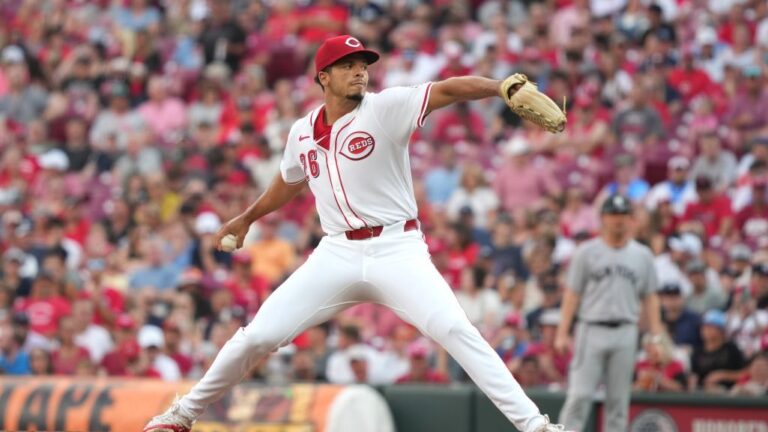
While the rest of the baseball world was enjoying a quiet off day post-All-Star Game, the Cincinnati Reds and Chase Burns were signing an extension that will keep him in Cincinnati through the 2033 season. A seven-year, $105 million deal with no options or funky structures, just seven years of flame-throwing.
Burns, 23, was the second overall selection in the 2024 draft and has pitched to a 3.14 ERA with 11.40 K/9 over his first 146 career innings. From the moment he debuted last season, you could see the upside based on his electric fastball and lethal slider. Those pitches have made Burns one of the more exciting young arms in the game.
Cincinnati’s season has not gone as planned, but Burns establishing himself as a frontline starter has been one of the success stories of the year. The Hunter Greene pre-arb extension has been money well spent, even with his injury history, and Burns being under contract long-term gives the Reds a fantastic duo to build the rest of their rotation around.
What It Means for the Reds
We now have two data points, Greene and Burns, that show pitchers will not immediately dart from Great American Ball Park as soon as they can. Both were the level of talent that could have hit the open market, landed a multi-year deal, and departed Cincinnati, but instead chose the security and organization over waiting out arbitration to test the market.
Many, myself included, thought the leaders in the Reds front office were on the verge of losing their jobs. I even wrote about it in great detail a little over a week ago. However, ownership allowing the current front office to secure a contract of this magnitude might be a tell that their job security is stronger than we may believe. Regardless, Burns is the type of talent any front office should want to lock up long-term.
For the Reds, they have an Ace. Maybe that was Greene, but the fact that there’s an argument to be had goes to show how impressive the talent is atop this team’s rotation. We all know how expensive finding high-end free agent starters can be, especially for the Reds, which makes it that much more important for them to be able to keep their own.
When you invest the second overall pick into a player, you need them to be a franchise cornerstone. Although we are only 26 starts into Burns’ career, he is trending in that direction, which is why this risk made so much sense for the Reds. Drafting well is the first part of the equation, with the second part being retaining that talent.
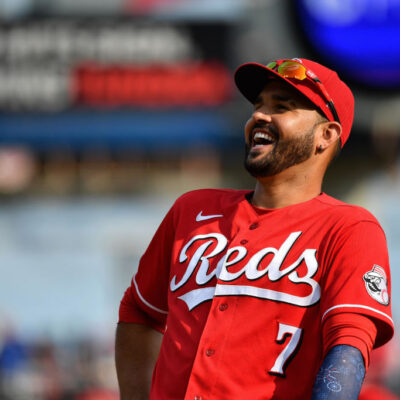
Burns’ deal will start during the 2027 season and run through 2033, paying him a flat $15 million a year. That’s less (by AAV) than Shota Imanaga, Zac Gallen, Merrill Kelly, and Chris Bassitt, and others, signed for this past offseason. The same amount that led to Eugenio Suárez returning to the Reds.
In terms of AAV, this deal is a steal. Where the trade-off comes is paying more during his pre-arbitration and arbitration years in exchange for what would have been two seasons (2032, 2033) of free agency.
In my opinion, that’s well worth the added upfront money to lock Burns in for two more seasons than you might have been able to sign him to if you played out his arbitration. Heck, I would have been comfortable paying him more.
With that said, the deal does come with some risk. Burns is essentially a two-pitch pitcher (with a changeup that is making strides) with a heavy reliance on his fastball setting up his 51% whiff rate curveball to get strikeouts. As we know, pitchers do deal with injuries at a higher rate than the average position player, adding another potential layer of risk to the deal.
Sure, there is risk, but the Reds placing their money in a risk pool that includes the type of stuff Burns has is exactly where they should be placing their risk. I haven’t agreed with a lot of the moves the front office has made in recent years, but this one is a deal I am excited they were able to pull off.
What It Means for Burns
Security. In life, when you have an opportunity to write your name on a piece of paper and have someone give you $105 million, guaranteed, you should usually do it. Especially when your line of work comes with a high probability of injury. No matter what happens to Burns the rest of his career, he and his family will be set for life. That alone is something to celebrate, baseball aside.
Burns’ fastball sits at 98 mph and often reaches higher. History tells us that players with this profile will more likely than not deal with some type of surgery in their career. I do not say that to sound morbid or negative, but instead to address reality.
When an arm injury happens to a pitcher, you can miss a significant amount of time, even more than a year, and coming back does not always lead to the same pitcher. Having a guaranteed life-changing amount of money lessens the worry.
Another aspect of the contract structure that plays in Burns’ favor is having the opportunity to hit free agency at age 30. Older pitchers are still getting big money on the open market, but 30 has been the threshold where most long-term deals can still be signed. If Burns pitches to a high level throughout the contract, he’ll be in line to sign another five-plus-year deal at perhaps double the money he signed for today.
Cincinnati is not the type of organization that will take a risk on signing a pitcher to over $100 million from their age 30-plus season onward, so in many ways, you can call this a win-win.
Dylan Cease was 30 when he signed his contract this offseason that landed him in Toronto for seven years, $210 million. Max Fried, Corbin Burnes, and Blake Snell were all around the same age when they inked their long-term deals in 2025. Some had dealt with injuries, but age and strikeout stuff were on their side.
I think there’s something to be said for how Burns feels about the organization. Money talks, yes, but to lock yourself up for seven years means you also have some level of comfort and certainty in where you are. While we fans might not feel the same way Burns and Greene before him did.

Final Thoughts
I’m not sure there’s a negative to take away from this deal. The money is not significant enough to cripple the small market Reds, and they now have a legit answer to their team-building questions moving forward. Fans have struggled with the idea that the Reds are not interested in winning, myself included, but this deal at least shows they are willing to take a risk and roll the dice on a homegrown talent.
Although pre-arbitration deals have become more common and they are not as shocking as they once were a few seasons ago, seeing the Reds grow with the times is refreshing. There is still a lot of work to be done, but any time you can check a box like this, it’s encouraging to see them do so.
Become a Member of Just Baseball
Subscribe and upgrade to go ad-free!
* Save 25% by subscribing annually.

Written by