
Ben Brown Is Becoming a Valuable Swiss Army Knife for the Cubs
Ben Brown has emerged as a key piece of Chicago's pitching staff, and his role for the Cubs in 2026 will be an important one.
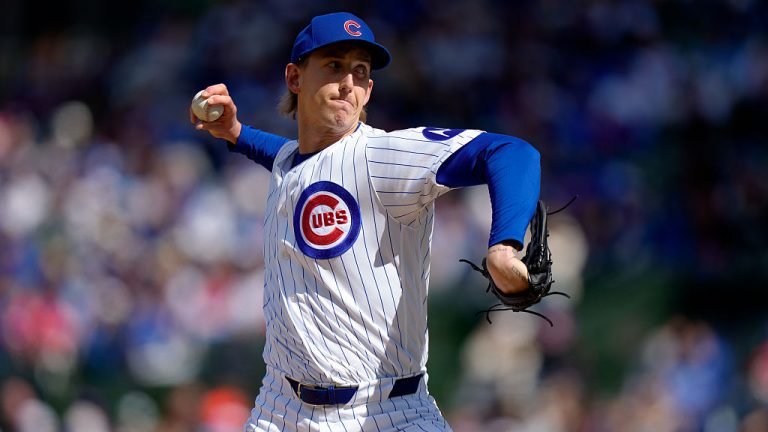
Coming into Spring Training, Ben Brown‘s spot on the Chicago Cubs‘ Opening Day roster was anything but a guarantee. He’d shown flashes of success in the past, but between injuries and inconsistent performance, Brown once again found himself battling.
He made his case for that spot with a strong showing down in the Cactus League and ultimately broke camp with the big-league squad. Not only did he make the team, but he has begun to develop into a meaningful piece.
He has shown he can be a versatile arm. So far this season, we’ve seen him work two or more innings multiple times in relief. Add to that the fact that he can been stretched out as a starter, something he’s done in the past.
He has seemingly found his bearings and begun to produce in his current role. Looking at the numbers and revamped pitch mix, there’s reason to believe the success is more sustainable this time around.
All stats updated before play on April 23.
Past Struggles
In his rookie season in 2024, Brown had a lot of success. He posted a 3.58 ERA over 55.1 innings while inducing strikeouts at a well-above-average rate.
Unfortunately, his season was cut short after suffering a neck injury. Still, that season was a promising beginning to the career for the tall righty, with few negative takeaways.
However, there was one glaringly obvious hole in his game: allowing too much hard contact. Among qualified pitchers in 2024, his 91.8 mph average exit velocity was third worst, and his 51.4% hard-hit rate was dead last. This was an issue that eventually caught up to him last season.
His strikeout ability remained a positive factor, but it wasn’t enough to make up for the contact being made against him. Brown finished the season with a 5.92 ERA across 106.1 innings and opponents slashing .279/.333/.467 against him.
A likely reason for this success against him became clearer as the season went on. He relied heavily on two pitches, his four-seam fastball and knuckle curve, suggesting that he simply became too predictable. A two-pitch mix can work for some guys, but those guys are often short-innings relievers and don’t face the same players multiple times a game.
Brown made 15 starts last year, meaning he was facing the same batters at least twice if not three times on some days. When going through the lineup a third time that season, he had a staggering 13.19 ERA.
It was clear that something had to change, and so far this season, it has.

A New Wrinkle
There was speculation heading into 2026 that Brown would add a pitch to his arsenal. He had flashed a changeup in the past, though it was clear he lacked confidence in that offering and it never really became a part of his arsenal.
The new addition ended up being a sinker. During Spring Training, he told Sahadev Sharma from The Athletic that he had developed the pitch over the offseason. While he acknowledged that it wouldn’t blow anybody away with its movement profile, he believed that it could be a reliable third pitch for him.
The idea behind having another fastball look is simply to prevent opposing hitters from sitting on one pitch. That is exactly what the sinker has done for him so far. Here is a look at the difference in profiles between his four-seamer and sinker:
| Four-Seam Fastball | Sinker | |
| Induced Vertical Break | 17.3 in | 13.8 in |
| horizontal Break | 7.6 in | 14.7 in |
| Pitch Velocity | 96.5 mph | 96.6 mph |
The sinker generates nearly double the horizonal break while getting a bit more than three inches of depth compared to the four-seamer. That difference has been huge for him in the early going.
Finding His Stride
Early this season, his adjustments have paid off. With multiple relievers on the 40-man roster already going down with injuries, they’ve needed quality innings and he’s given them just that.
He’s pitched to a 2.37 ERA through his first 19.0 innings, all of which have come in relief. It hasn’t been a fluke either, as he’s shown growth in the quality of contact department while continuing to generate swing-and-miss.
Let’s begin by looking at the contact that he’s allowed.
| 2025 | 2026 | |
| Average Exit velocity | 92.4 mph | 90.2 mph |
| Hard-Hit Rate | 47.3% | 35.3% |
| Barrel Rate | 11.4% | 3.9% |
Clear improvements across the board. To go with this, he is keeping the ball out of the air, so even if the ball is hit hard, it’s been on the ground almost half of the time.
Both the increase in ground-ball rate and decrease in hard contact allowed can be at least partially attributed to his sinker. That pitch has induced an 88.4 mph average exit velocity and an impressive 63.6% ground-ball rate.
His ability to suppress hard contact is something that may prove vital to him sticking in the majors long-term. His stuff always has, and likely always will play, so pairing that with soft contact and ground balls could help him sustain his early success.
More importantly, this version of Brown looks far less predictable. With a legitimate third pitch in the mix, hitters can no longer sit on the four-seam/curveball combination that gave him trouble last season. That added layer of uncertainty has allowed his raw stuff to play up, rather than be exposed.
Value in Versatility
Throughout Ben Brown’s career, he has been used in a plethora of different spots and roles. From 2024 to 2025 he appeared in 40 games and made 23 starts. This season, he has yet to make a start, instead pitching out of the bullpen seven times. He can be and has been stretched out as a starter and is currently working as a multi-inning reliever.
With the current status of the Cubs roster, this may prove to be very important as the season progresses. Injuries and inconsistency have tested the pitching staff early on, and having an arm capable of covering multiple innings in a variety of situations carries big value.
Whether it’s bridging the gap to the late innings, providing length after a short start, or even stepping into a spot start if needed, Brown gives the Cubs flexibility that few pitchers on the roster can match.
Brown may not have a clearly defined role, but that is part of where his value to the Cubs stems from. The improvements to his pitch mix and growing ability to limit hard contact suggest that his early success might not be a fluke.
If he continues his current performance, he won’t just be filling innings, he’ll be a key piece of a pitching staff that needs stability in multiple areas. For a Cubs team with postseason expectations, having a pitcher who can adapt and contribute in a variety of ways is not just useful, it’s essential.
Become a Member of Just Baseball
Subscribe and upgrade to go ad-free!
* Save 25% by subscribing annually.

Written by
Carson Wolf is a writer at Just Baseball covering the Chicago Cubs and MLB, he is the creator of The Wrigley Wire on X. He is…