
Analyzing Craig Breslow as if He Were a Developing Young Player
If you think of Breslow like a developing player, there are quite a few reasons to be optimistic about the Red Sox CBO.
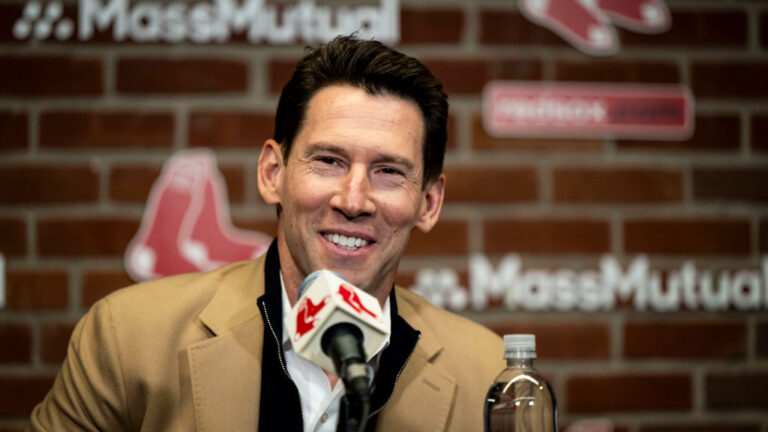
To call Boston Red Sox chief baseball officer Craig Breslow unpopular in his market would be underselling it.
He’s more than earned that with his up-and-down tenure to date. Through two and a half seasons under Breslow, the Red Sox are 211-202. They made the playoffs in 2025, but lost to the New York Yankees in a playoff series for the first time since 2003.
This year, they’re 41-48. Though it’s not a completely sunken season, as they’re four back of a playoff spot entering play on Wednesday, they’ve got an uphill battle ahead of them. The Red Sox already fired longtime manager and World Series champion Alex Cora, along with several key members of staff. The roster construction has also been nothing short of confusing.
That said, they’re showing signs of life. Since bottoming out at 32-46, they’re 9-2. That brief run has them within striking distance of a playoff spot in a wide-open American League playoff picture.
But back to Breslow. Despite his lack of popularity, there’s a lot to like about what he’s done. It’s been far from a perfect tenure, but that’s the nature of the business. It’s hard to change perspective in a thankless role such as lead executive, especially for a big market team.
However, perhaps looking at the first-time organizational head through a lens similar to that of a young player would be wise.
Through that scope, let’s take a step back and analyze Breslow’s performance as CBO as if he were a developing player.
Craig Breslow: Year 1
Breslow’s first season in Boston was doomed from jump street. Ownership set him up to fail, announcing at his introductory press conference that they were “full throttle” that offseason. Fresh off firing Chaim Bloom, replacing him with another rookie executive made it hard to imagine Fenway Sports Group (FSG) would open its metaphorical wallet.
However, their words are public record. Breslow, unfortunately, did not deliver.
He signed right-handed pitchers Lucas Giolito and Cooper Criswell, traded much-maligned outfielder Alex Verdugo for a trio of pitchers headlined by reliever Greg Weissert, and swung another deal with the St. Louis Cardinals for outfielder Tyler O’Neill.
Giolito hurt his elbow in spring training, but Criswell blossomed as a swingman. In 99.1 innings, he posted a 4.18 ERA; much better as a starter, he had a 3.49 ERA and 4.21 FIP across 18 starts.
O’Neill dealt with injuries, as he’s historically prone to. But he provided legitimate thump in the heart of the Red Sox order. He hit 31 homers with a 133 wRC+ in 113 games. His 2.5 fWAR was good for the second-highest mark of his career.
Breslow also made a savvy move to stabilize first base after Triston Casas hurt his rib cage in April, adding Dominic Smith.
That said, injuries doomed the Red Sox. Casas missed several months, O’Neill 49 games, Trevor Story played just 26 games, etc. Overall, they went 81-81. Disappointing, sure, but an improvement from the 78-84 record they’d produced consecutively in 2022 and 2023.
It wasn’t pretty, but there was cause for optimism in Year 2.
Craig Breslow: Year 2
Breslow got bold, even if some moves somewhat fell into his lap.
Unpopular at the time, with left-hander Tanner Scott still available, Breslow opted for the short-term gamble of Aroldis Chapman. Most of the ire that move drew stemmed from Chapman’s checkered off-the-field track record, but his production had also waned in previous seasons.
Scott struggled with injuries and performance with the Los Angeles Dodgers, while Chapman went on to win AL Reliever of the Year. He also finished seventh in AL Cy Young voting, 18th in Most Valuable Player voting, and made his eighth All-Star team thanks to a 1.17 ERA and career-best 5.7 strikeout-to-walk ratio.
Additionally, Breslow plucked from his deep farm system to trade for southpaw Garrett Crochet from the Chicago White Sox. Though he missed out on pairing Crochet with a second high-end starter, the man he landed finished second in Cy Young voting and dominated in his Game 1 start against the Yankees.
The move that fell into his lap was Alex Bregman, who failed to get the long-term contract he sought after a successful decade in Houston. Bregman dealt with a quad injury that took him out for nearly two months, but his presence as an extension of the coaching staff outweighed his 125 wRC+ and 3.5 fWAR across 495 plate appearances.
Bregman also had a critical hit in their Game 1 win, and went 3-for-10 with three walks and an RBI in the series.
Giolito came back from injury and impressed in his one season actually pitching for Boston. Though he suffered an elbow injury at the end of the regular season, forcing rookie southpaw Connelly Early to start an elimination game, he posted a 3.41 ERA and 2.0 fWAR in 26 starts.
The Rafael Devers Saga
The big blow was the issues with Rafael Devers. After the ink dried on Bregman’s contract, the team walked back initial reporting that he’d play second base. Devers didn’t take too kindly to going to full-time designated hitter, then took even less kindly to later being asked to play first base.
That issue led to the eventual trading of the longtime Red Sox slugger, as on Father’s Day he wa traded to the San Francisco Giants.
Say what you want about the return, which looks worse seeing as James Tibbs III and Kyle Harrison were subsequently dealt and are shining in their new homes. However, the decision to move Devers looks better and better by the day. Moving him opened up playing time for Masataka Yoshida, as well as clearing salary for the extensions of Chapman and then-top prospect Roman Anthony.
The Red Sox were a game over .500 when Devers was traded. After struggling in the immediate aftermath, they went eight over .500 from that point onward.
They missed Devers’ production in the postseason, especially with Anthony out due to an oblique strain. But trading him, over a year later, looks smart.
Craig Breslow: Year 3
Entering the season, the book was out that the Red Sox offense would struggle. Boy, have they ever.
Though, not all the fault of Breslow. He brought in first baseman Willson Contreras, who has a 153 wRC+, 20 homers, and 2.8 fWAR in the first half.
Additionally, after a bad start, Caleb Durbin has been one of the best third basemen in baseball since the start of June. He’s seventh in wRC+ at the position since June 1 and fifth in fWAR. His defense has been great all season, but the bat is coming around.
Breslow’s pitching acquisitions are dominating as well. So much so that Crochet’s absence since late April hasn’t been felt much at all. Ranger Suárez, an All-Star, has a 3.15 ERA and 3.0 fWAR across 17 starts. Sonny Gray, despite not being a popular acquisition at the time, is tied for second in the AL with a 2.61 ERA. He also leads the league with 10 wins.
That said, the Red Sox are without Casas again, and Anthony hasn’t played since May 4. Story also hasn’t played since mid-May, and his production seemed to take a hit playing through a sports hernia.
As it stands, they’re the hottest team in the AL save for the Tampa Bay Rays. Having won eight of 10, they’re within four games of a playoff spot with 73 games remaining. Though chasing several teams, there’s plenty of time for them to right the ship.
Equating Breslow to a Player
Thinking about it through the lens of a prospect, there’s a lot to be optimistic about when it comes to the future of Breslow in his role. Year 1 was up-and-down, while Year 2 saw the Red Sox return to October. Year 3 has the makings of a lost year, but there’s a lot about his moves to like.
Right now, the issue is more about the moves he didn’t make — like not resolving the outfield logjam — that have the Red Sox in limbo. That said, with Anthony out, trading Jarren Duran would’ve left them with Nate Eaton — who owns a career 63 wRC+ against right-handers — as the everyday left fielder. Maybe Yoshida factors in more, but he’s only got a 95 wRC+ and -0.1 fWAR.
If a young player followed a similar trajectory to Breslow, there’d be plenty of reason to believe in his future. Especially given his drafting and overhaul of the pitching infrastructure. Payton Tolle is already putting the league on notice, with a 3.14 ERA and 1.9 fWAR in 80.1 innings this year. Fellow left-hander Jake Bennett has also impressed, with a 3.10 ERA and a 2.84 expected ERA.
Right-handers Anthony Eyanson and Kyson Witherspoon give them promise in the low-to-mid minors as well, not to mention several other promising young arms. Additionally, draft picks such as Henry Godbout (133 wRC+ in High-A) and Mason White (.241 isolated power) give them an intriguing couple of infield prospects as well.
There’s plenty Breslow needs to work on, like communication and conviction in targeting offense. But the long-term health of the organization looks promising. A lot’s gone wrong with the Red Sox in 2026, but they’ve got a real opportunity to make some headway in the AL Wild Card race.
The Red Sox Organization Needs Continuity
The rap sheet on FSG is that they’re erratic, especially when it comes to the lead executive position. Since moving on from Theo Epstein after the 2011 season, no head of baseball operations has survived four full seasons.
At some point, you can’t keep firing guys in hopes the next is a grand slam. For all of Breslow’s faults, there’s a lot to like about what he’s done for the organization. No executive is perfect, especially in a game of failure such as baseball.
New perspectives should always be welcome in building a championship-level roster. However, changing organizational philosophies every four years oftentimes creates more Jekyll & Hyde results. The Red Sox haven’t made the postseason in consecutive seasons since doing so thrice from 2016 to 2018. Since then, they’ve fired two executives.
Dave Dombrowski, the high-end spender with less regard for the farm system, and Bloom, the prospect-driven executive with his best moves being on the margins. Both moved on to other endeavors. Breslow isn’t necessarily owed a monster extension for his efforts, but firing him during or after the 2026 season would just be another reset for an organization that lacks consistency.
Become a Member of Just Baseball
Subscribe and upgrade to go ad-free!
* Save 25% by subscribing annually.

Written by