
2027 MLB Draft – Top 50 Prep Prospects
Just Baseball ranks and previews the top 50 prep prospects who could be selected in the 2027 MLB Draft next July.
 | |
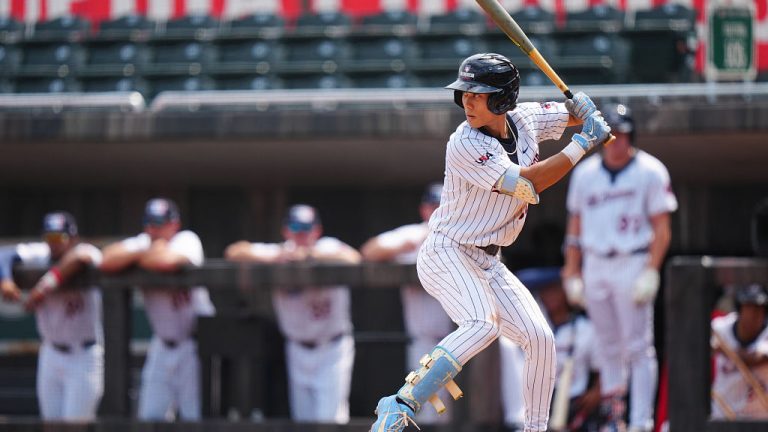
The postseason is in the rearview mirror, and with the World Series on deck and the offseason not far off, it’s time to unveil our Top 50 Prep Prospects and complete our initial board drops for the 2027 draft cycle.
Over the past few months, we’ve been getting our hands dirty with data, live looks, film, and more as we arrived at a confident ranking. Yes, it is not just a solo adventure this time around, as writers Peyton Sower and Josh Catlett put in tons of effort to make this list a reality. They deserve praise (and a follow) for their contributions, and they’ll make more appearances in future lists.
At this stage, this year’s class looks like a strong crop of hitters, especially among the shortstops. Seven shortstops will appear in our top ten, and more down the board will be worth watching in the spring. There’s a decent group of arms, as well, though it’s not as loud as the bats.
Dylan Seward holds the top spot in our rankings, with an incredibly loud toolset. An elite runner with above-average offensive upside and a plus glove is worth the top spot, and he may be able to go pole-to-pole in this year’s ranks.
We will add direct links to video, interviews, and articles with our blurbs, and we are incorporating scouting grades for the first time!
1. Dylan Seward – SS
HT/WT: 6’0/177 | Bat/Throw: S/R | School: Norco (Eastvale, CA) | Commitment: Tennessee | Projected Age: 18.10
California hasn’t produced a top-five prep pick since Marcelo Mayer in 2021, but Dylan Seward should end that streak in 2027. The switch-hitting talent is an incredibly gifted athlete with advanced tools and elite speed, and he’s locked in as the top high school player in the class.
Seward will carry a high floor defensively, as he’s one of the more decorated infield defenders available. Playing with confidence and composure, Seward has the makings of a plus shortstop defender. His twitch is evident in his actions, with strong lateral range and a gliding style, paired with a strong internal clock, exquisite body control, and quick exchanges. It’s above-average arm strength across the diamond, too. He should contend for Gold Gloves at the next level.
At the plate, Seward offers tantalizing upside, though there are some rough edges to smooth over in the coming months. Both iterations of his swing show repeatable mechanics, with a rhythmic waggle and a compact path. Scouts currently prefer the right-handed swing, which features a flatter plane and better barrel control than his left-handed swing, which has more loft through the zone. Seward isn’t afraid to use the entire field to his advantage, driving the ball into gaps with authority from the left side and showing a more pull-oriented approach from the right.
He has surprising power for his stature, coiling well and producing electric bat speed from both sides thanks to lightning-quick hands and explosive hips. He has generated robust exit velocities with wood bats, up to 107 MPH at times, and most believe he has above-average juice at the end of the day. With 80-grade speed in the back pocket, he’s not afraid to use his legs to produce extra-base hits, and he’ll be a legitimate base-stealer at the next level.
Seward has solid zone awareness and makes good swing decisions, though he can get overpowered by velocity upstairs, particularly from the left side. Scouts will want to see this cleaned up in the spring, especially against the level of competition he’ll face in Southern California. However, his loud tools and defensive polish point to a very high draft pick, and it’s hard to envision Seward wearing the Orange and White at Lindsey Nelson.
Scouting Grades: Hit: 50 | Power: 55 | Run: 80 | Field: 60 | Arm: 55
Video: https://x.com/TylerJennings24/status/2078888915797225817?s=20
Video: https://bsky.app/profile/tylerjennings24.bsky.social/post/3mp3hsc4zs22f
2. Malachi Butler – SS
HT/WT: 6’3/190 | Bat/Throw: L/R | School: McEachern (Powder Springs, GA) | Commitment: Georgia Tech | Projected Age: 17.10
In a polished crop of prep shortstops, Malachi Butler looks to be the best of the bunch. He’s got the size, hitterish traits, and defensive prowess to be an early first-round pick, and that’s without mentioning he’s one of the youngest eligible players (17 years, 10 months old on draft day).
Butler possesses a silky-smooth left-handed swing with a wide base, excellent balance, and a calm move through the baseball. He’s direct and quick to the ball, with pristine bat-to-ball skills. Butler rarely whiffs, stays on velocity consistently, and adjusts well to secondary pitches. He’s unafraid to spray the ball around the yard and regularly attack the gaps with ease. Butler will make sound swing decisions, and he’s added a bit more aggression at the plate to stave off passivity concerns. There’s not a ton of holes to poke in the hit tool.
Power isn’t a big part of his game yet, though scouts believe he’ll add more as he develops. He has developed more bat speed and consistently finds the barrel, though he sometimes lacks leverage in his swing. However, he hits the ball hard enough at this stage to project average power, especially if he can pull the ball more.
While he’s merely an average runner, Butler moves extremely well at shortstop, and he has the actions and arm strength to stick at the position long-term. Crisp actions, strong lateral range, and smooth transfers point to above-average defense at a key position on the diamond. If he moves elsewhere, his size and tools fit best at third base.
Boasting this kind of well-roundedness at this age is impressive, and it should lead to the Georgia Tech commit being selected in the first half of the first round next summer.
Scouting Grades: Hit: 60 | Power: 50 | Run: 50 | Field: 55 | Arm: 55
3. George Ferguson – RHP
HT/WT: 6’4/216 | Bat/Throw: R/R | School: Abilene (Abilene, TX) | Commitment: Texas | Projected Age: 18.8
A native of Abilene, Texas, Ferguson is looking for a storybook ending to his high school career after an incredible summer showing.
A physical athlete with an unorthodox delivery, he is the best prep arm in the class thanks to outstanding arm strength, pitchability, and arsenal strength. It’s not a delivery you’d expect from a starting pitching prospect, with violence and recoil at release and a tall-and-fall style that lacks efficient lower-half drive. Despite this, Ferguson repeats his mechanics well and frequently pounds the strike zone, throwing strikes over 70% of the time during the summer circuit.
His fastball has all the makings of a plus pitch, sitting in the mid-90s with downhill plane and a robust mix of ride and run through the zone. It’s a true bat-misser (54% whiff rate in 2026) with impressive spin rates, consistently ranging from 2,500 to 2,800 RPM.
He pairs this with a hard, diving change-up in the upper-80s with excellent conviction and feel, racking up empty swings and chases below the zone. He mostly reserves it for left-handed hitters, though he’s shown confidence throwing it against right-handed hitters. It’s an easy plus offering at this stage, and some scouts will slap a double-plus grade on it depending on who you ask. His final offering is a mid-80s slider that has added power and sharpness, with a mix of depth and sweep that makes it an out pitch against righties. It lags behind the fastball-cambio combination, but it has enough traits and power to reach above-average upside.
The Texas commit is as well-rounded as they come on the mound, and despite the inefficiencies that require additional polish, Ferguson has a chance to be the first prep arm off the board in July.
Scouting Grades: Fastball: 60 | Slider: 55 | Change: 60 | Command: 55
4. Graham Houston – SS
HT/WT: 6’1/175 | Bat/Throw: S/R | School: Venice (Nokomis, FL) | Commitment: Louisiana State | Projected Age: 18.11
By now, amateur baseball fans should be well acquainted with the Houston family. Graham’s older brother, Marek, was a first-round pick of the Minnesota Twins in 2025 after a stellar three-year career at Wake Forest. Graham has the same polish and tools, though many believe he’s a better prospect than his brother at this stage.
A true switch-hitter, Houston is a bat-to-ball artist with super quick hands and a direct path to the ball. He covers every quadrant of the zone exceptionally well, posting a 96% in-zone contact rate this summer, and his affinity for fastballs is equally impressive, with north-of-90% contact overall and in the zone. Houston is an aggressive swinger, posting chase rates around 30%, but the pure contact skills and adjustability help keep strikeouts to a minimum.
He won’t be a huge power threat, but Houston has a knack for lacing line drives into the gaps and letting his above-average speed do the work. He does have better power projection from the right side because his swing plane has more loft, though most expect him to have fringe-average power at best.
Like his brother, he’s a smooth shortstop defender with exceptional lateral range and controlled actions. His instincts are great; he gets solid reads off the bat, takes a quick first step, and has above-average arm strength and accuracy across the diamond. Scouts expect Houston to become a plus defender.
His profile is incredibly well-rounded, and he could be drafted higher than his brother. If he goes undrafted, Houston would enroll at Louisiana State.
Scouting Grades: Hit: 60 | Power: 45 | Run: 55 | Field: 60 | Arm: 55
5. Carter Hadnot – SS
HT/WT: 6’2/175 | Bat/Throw: S/R | School: Aquinas (Rialto, CA) | Commitment: N/A | Projected Age: 19.2
Hadnot is a perfect example of how you draw up a prospect. With a wiry, lithe build and plenty of projection, he’s an explosive athlete with an outstanding glove and offensive upside that has trended up over the past calendar year.
Hadnot projects to be the best glove in the shortstop class. He glides across the dirt with little effort, controls his body extremely well, and has a bouncy style to his game. His exchanges are smooth and quick, and he adjusts to the ball extremely well. Additionally, Hadnot has shown more arm strength, now grading as above average. As a result, Hadnot can be a double-plus glove, which makes him the best defender among the top shortstops in this class.
Offensively, Hadnot grew into more extra-base impact on the summer circuit. As a switch-hitter, scouts prefer his smooth, controlled left-handed swing to the right-handed version, which has less barrel control and a flatter plane. It’s been serviceable so far, though scouts are split on whether he can remain a full-time switch-hitter. From the left side, he backspins the ball well and has loft to his swing plane, which has led to a few balls over the right-field fence.
That said, most of his impact will come in the gaps, where he’ll use his plus speed to generate doubles and triples. Hadnot rarely expands the zone, though he can get too passive on pitches inside the zone, leaving him behind in counts early. Despite this, he has solid bat-to-ball skills and should play more aggressively.
His glove gives him a high floor as a prospect, and if the bat continues to surge in production, Hadnot has all-star appearances in his future. In late October, Hadnot announced his commitment to Oklahoma.
Scouting Grades: Hit: 55 | Power: 40 | Run: 60 | Field: 70 | Arm: 55
6. Jack Leeper – OF
HT/WT: 6’2/200 | Bat/Throw: R/R | School: St. Francis (Menlo Park, CA) | Commitment: Stanford | Projected Age: 18.5
Possessing some of the best offensive upside in the class, Leeper looks the part walking off the bus. He’s a physical athlete with broad shoulders and strength throughout his body, and he stands out on the diamond among his peers. It’s not just his physicality and athleticism; his bat is extremely potent from the right side of the plate.
Leeper’s operation looks unorthodox, but it works. He starts with an open front leg and a noteworthy bat waggle that loads his hands into the launch position, then flicks his hands forward with a flatter entry into the zone than most. This lets Leeper cover the top rail of the strike zone well, and he’ll consistently barrel up pitches in the zone, posting a 93% in-zone contact rate this summer. He tends to expand the zone frequently, though he’s shown the ability to barrel up the ball regardless of its location. It’s an impressive hit tool that projects as plus.
While he hasn’t yet sold out for power in-game, he’s shown robust bat speed and plus raw power in batting practice. With an exit velocity of 110 MPH already attached to his name with a wood bat, scouts expect that power to translate in due time.
Leeper has turned in plus run times, which help him cover plenty of ground in the outfield, where he can play all three positions with average defense. He’s been trotted out primarily in center, though below-average arm strength will likely limit him to left field as he adds more mass to his frame. This will put pressure on the bat to perform, but it’s hard to envision Leeper not producing in bunches.
His demographic and Stanford commitment may scare some suitors off, but based on talent level, Leeper has earned a first-round grade.
Scouting Grades: Hit: 60 | Power: 60 | Run: 60 | Field: 50 | Arm: 40
7. Sebastian Castillo – SS,3B
HT/WT: 6’0/195 | Bat/Throw: R/R | School: Byron Nelson (Justin, TX) | Commitment: Louisiana State | Projected Age: 18.8
Considered one of the more balanced profiles on this list, Castillo has a track record of success against elite competition over recent years.
In the box, he features a slightly open stance with a calm load and leg lift, followed by tight turns and premium bat speed. His swing decisions and contact ability also rank among the best for his age, evidenced by an in-zone whiff rate below 10% and multiple triple-digit exit velocities across premier circuit events. Castillo sees the baseball best on the outer half, unafraid to rifle balls to the opposite field while still letting his hands fly against pitches middle-in.
Defensively, he projects to stick on the dirt, showcasing good glove work and plus arm strength. Whether he stays at shortstop is up for debate, as his projection could push him to third base. Castillo is a fine runner, posting average home-to-first times and using his athleticism to create good angles on the left side of the infield.
Though most scouts view him primarily as a bat, he’s been up to 93 MPH on the mound, filling the zone with a tight, bullet-shaped breaking ball. Regardless, Castillo’s tools, headlined by his bat, rightfully place him near the top of our rankings. Castillo is committed to Louisiana State, led by head coach Jay Johnson.
Scouting Grades: Hit: 60 | Power: 50 | Run: 50 | Field: 50 | Arm: 60
8. Juan Diaz – SS,2B
HT/WT: 6’0/180 | Bat/Throw: S/R | School: IMG Academy (Hialeah, FL) | Commitment: Florida | Projected Age: 18.10
He might not be the most imposing in stature, but Juan Diaz is one of the most frustrating at-bats in this entire prep class. A former Florida State commit, Diaz flipped to the Noles’ in-state rival from Gainesville in early September, though he may not make it to campus. The Miami native’s profile has a couple of standout qualities, at the plate and beyond.
His bat-to-ball is at the very top of the class, as evidenced by his sub-15% whiff rate on the summer circuit. In fact, he didn’t swing and miss at a single pitch during his weekend at East Coast Pro this year. You could argue he’s a top-three switch hitter in the entire prep class, with positive returns from both sides of the dish. His swing is fluid and definitely a little longer from the left side, where he’s gotten most of his reps to date, but it’s more compact and connected from the right side as well. That length as a left-handed hitter has created some issues getting to his pull side, but this profile seems designed to pepper the gaps regardless.
The upside isn’t confined to the bat either. He’s a plus runner, if not better, with sub-6.5-second 60-yard dash times this summer and multiple 60-grade home-to-first times from both sides of the plate.
It’s hard to fully own the heralded shortstop position at IMG Academy, but Diaz has shown this summer he can maintain that role through his senior season and into his professional career, despite likely having to split time with Max Hemenway this spring.
Overall, there’s a lot to like here. Diaz has quick hands, lots of twitch, and next-level instincts. That’ll be good enough to get him a seven-figure deal this summer alongside a couple of his teammates.
Scouting Grades: Hit: 55 | Power: 40 | Run: 70 | Field: 55 | Arm: 50
9. Lubin Rincon – SS
HT/WT: 6’3/185 | Bat/Throw: L/R | School: The Bennett School (Pearland, TX) | Commitment: Texas | Projected Age: 18.9
One of the class’s more polished shortstop prospects, Rincon is a lean, wiry athlete with a gorgeous left-handed swing, and scouts believe there’s another version of his game waiting to be unlocked. He has a track record of hitting at big events, and while he’s not as flashy as some of his peers, his instincts and high IQ make him a high-floor prospect to follow.
Rincon’s swing is low-effort and balanced, with a simple, direct path to the ball and tight turns through the zone. His contact prowess stands out the most in his profile, dominating pitches inside the zone and adjusting well to secondary offerings. He makes smart swing decisions and will rack up plenty of walks, making him a legitimate on-base threat.
He’s not as twitchy as others, which limits his power projection moving forward, but he has solid bat speed and barrel feel. Most of that power will play to his pull side, and most believe he’ll grow into fringe-average power, if not average. He will need to incorporate consistent leverage in his swing to do that, as he tends to let his hands do most of the work right now.
On defense, Rincon projects as more of a consistent defender than a flashy one. His actions are smooth and controlled, and quick exchanges let his average arm strength play up. His tools may ultimately play better at second base, though he should stick at shortstop unless he comes across a better defender. A Texas commit, Rincon will likely climb the board if his tools improve during the spring.
Scouting Grades: Hit: 55 | Power: 45 | Run: 50 | Field: 50 | Arm: 50
10. Connor Salerno – LHP
HT/WT: 6’4/225 | Bat/Throw: R/L | School: Sun Valley (Indian Trail, NC) | Commitment: Mississippi State | Projected Age: 19.0
A well-built southpaw who has performed across multiple summers, Salerno enters the fall as the top southpaw in the prep class. He’s a unique arm to dissect because his quick-paced mechanics and herky-jerky motion create significant deception, even with head-whack and violence. Despite the noise in the operation, Salerno repeats his delivery extremely well, peppering the strike zone.
He sinks well into his back hip and drives himself down the mound, creating a lower arm slot with width at release. Salerno operated in the 92-95 MPH range this summer, peaking at 97 MPH in shorter spurts. The fastball shape leans more toward a dead zone profile (similar carry and run metrics), though his command and VAA traits will let the heater play up from its perceived velocity. It’s particularly impressive on the top rail, boasting a 40% whiff rate in the upper-third and higher. It’s an above-average heater right now, and with more velocity, it should become a plus pitch.
His best secondary is a low-to-mid-80s slider that mixes lift and sweep, and his feel and command of it stand out. It’s a tough pitch to pick up out of his hand, and he can land it in the lower quadrants of the zone, with a 71% strike rate and 56% whiff rate this summer. He relied on this one-two punch often, sprinkling in a fringe-average mid-80s cambio with alright shape and feel at this stage. Scouts would like to see it sharpened and used more to earn a starting role at the next level.
Given the size, command, and pure stuff, the Mississippi State commit should be a rotational piece once fully developed. If he makes it to Starkville, he would be eligible as a sophomore in 2029.
Scouting Grades: Fastball: 55 | Slider: 55 | Change: 45 | Command: 55
11. Isaiah Snavely – SS,3B
HT/WT: 6’3/195 | Bat/Throw: L/R | School: Zionsville Community (Fort Wayne, IN) | Commitment: Texas A&M | Projected Age: 18.10
Our top player in the Midwest, Snavely is a long-limbed infielder with significant offensive upside.
A hit-over-power profile as we speak, the batted-ball track record is impressive. Snavely sees premium velocity well, working from a quiet, level stance with a subtle hinge into his load and unleashing a whippy, adjustable barrel. The big question is how much power he can unlock in his six-foot-three frame, as his in-game and batting-practice exit velocities have not often reached triple digits.
Defensively, Snavely’s glove will keep him on the left side of the dirt, with good footwork and a quick release. His arm is equally intriguing, showing the ability to let it rip in close plays and throw on a line even off-balance. He performs best when the stakes are highest, as shown by a .571 average during East Coast Pro and multiple extra-base hits. Snavely holds some of the most raw strength in the class, posting incredible force plate and grip strength results.
The best is yet to come for the Indiana product, whose hitterish instincts, run times, and defensive value will make him one of the top prep hitters available in the 2027 class. Once committed to Wake Forest, Snavely flipped to Texas A&M late in the summer.
Scouting Grades: Hit: 50 | Power: 50 | Run: 50 | Field: 50 | Arm: 50
12. Samir Mohammed – RHP
HT/WT: 6’5/250 | Bat/Throw: R/R | School: Tampa Jesuit (Trinity, FL) | Commitment: Louisiana State | Projected Age: 18.9
Samir Mohammed’s stock has steadily risen through the spring and summer months, and one live look is all it takes to understand why.
At East Coast Pro, he pitched three innings of one-hit ball, striking out four batters on 69% strikes. Two months later at WWBA, he cemented himself as a top arm in the class by punching out eleven batters in five innings on a jarring 75% strikes. Results like that are pretty hard to deny. It’s an imposing look on the mound with a workhorse frame and a fastball that blows right past batters.
The four-seam doesn’t have the most dynamic shape in its current state, and it will need improvement in that department to increase swing-and-miss to the level it needs to be, but to be sitting 95-98 MPH and touching triple digits at this stage in his career shows that there’s not too much to worry about. On top of that, he holds velocity exceptionally well late in outings and has shown an innate ability to work the four-seam on the top rail, while also flashing a two-seam that plays more toward the middle of the zone.
Despite those redeeming traits, it’s pretty unanimous that Mohammed’s best pitch is his changeup. It has real potential for 70-grade value, sitting in the mid-80s with huge depth and massive whiff production. Mixed with his two breaking balls, it’s become a nearly impossible look for LHHs. On the topic of those breakers, he mixes in a mid-80s gyro slider and low-80s slurve roughly 20% of the time throughout his outings. He shows real feel to spin the ball with both offerings, and he’s gotten up to 20” HB with the slurve, so there’s no question about his ability as a supinator, despite what one might assume given the quality of his offspeed.
Mohammed is the best arm in a loaded Louisiana State recruiting class, but realistically, his making it to campus would be Logan Schmidt-level shocking.
Scouting Grades: Fastball: 55 | Slider: 55 | Change: 70 | Command: 50
13. Jake Cueto – OF
HT/WT: 5’11/175 | Bat/Throw: L/L | School: Belen Jesuit Prep (Miami, FL) | Commitment: Miami | Projected Age: 18.5
Few players helped themselves more on the summer circuit than South Florida native Jake Cueto.
The athleticism jumps off the page immediately, and it’s backed up by a professional look at the plate. He stands with a wide left-side base and transitions into a connected swing, with sneaky bat speed from a handsy load. Cueto has proven to be a bat-to-ball demon, using a patient approach that fits his hit-over-power profile.
He’s flashed some pop on occasion despite a smaller frame, with a few triple-digit exit velocities lighting up the radars throughout the summer months against high-level arms. He does struggle to get to his pull side often, but that could be polished if his swing shortens as he continues to develop.
Defensively, he could provide as much value as his bat, if not more, thanks to a plus glove in center field, with strong instincts and routes to the ball as the standout features. Our scouts have clocked him with average-to-above-average run times on the bases and in the 60-yard dash across many events, and there are plenty of signs he can improve and turn it into real value.
Cueto clearly profiles as a long-term lead-off/center fielder and is a prime candidate to make seven figures in the draft next July.
Scouting Grades: Hit: 60 | Power: 45 | Run: 55 | Field: 60 | Arm: 55
14. Grant Westphal – OF
HT/WT: 6’2/205 | Bat/Throw: L/R | School: Blue Valley (Leawood, KS) | Commitment: Texas | Projected Age: 18.0
Kansas hasn’t had a first-round selection since 2016 (Riley Pint & Joey Wentz), but Westphal could break that streak in July. He’s a toolsy outfield prospect with the potential to be a true five-tool player. He blends physicality and stout athleticism, with a broad-shouldered frame and plenty of strength, and his athleticism shines on both sides of the ball.
With a medium-width base, Westphal takes tight turns to the ball with a compact left-handed swing and impressive bat speed. His swing plane is flatter through the zone, generating more groundballs than you’d like, and this is because of the noise in his hands during the load. He uses a rhythmic waggle as a timing mechanism, but he must stop it before pushing his hands out and firing through the zone. It’s a complex move that scouts want to see calmed down.
With that note out of the way, Westphal doesn’t have much swing-and-miss, and his hand-eye coordination is impressive, as he gets off his B-swing to spoil pitches outside the zone. He’ll rack up walks, too. Westphal isn’t afraid to lace the ball on a line to either side of the field, and he can hit for above-average power if he can lift the ball more.
A plus runner, Westphal has the tools and instincts to play in center long-term, though his size may move him to right field. If he moves, his above-average arm would be a perfect fit, though he should start his professional career at the “eight.”
Tweaks will be needed to unlock his true potential, and to add a feather in his cap, Westphal will turn 18 just before the draft. This gives the Texas commit plenty of time to develop into the player we believe he can be.
Scouting Grades: Hit: 50 | Power: 55 | Run: 60 | Field: 50 | Arm: 55
15. Max Hemenway – SS,2B
HT/WT: 6’1/185 | Bat/Throw: L/R | School: IMG Academy (Puyallup, WA) | Commitment: Tennessee | Projected Age: 19.2
If there’s anyone in the class with the most consistent track record of hitting, it’s Max Hemenway. Once a star in the Pacific Northwest, he took his talents to IMG Academy in Florida, where he has hit at every stop possible.
Everything about Hemenway’s swing screams hitter. It’s a loose, controlled left-handed stroke with outstanding barrel accuracy and a direct path to the ball. Hemenway’s bat-to-ball skills are pristine, posting an 89% contact rate across a large sample this summer, including a 95% in-zone rate. His zone awareness is outstanding, stringing together strong swing decisions and rarely expanding the zone. It’s a mature approach at this stage of his development, and the contact skills point to a plus hitter.
While he is a hit-over-power archetype, Hemenway has sneaky twitch and power. He’s shown the ability to backspin the ball, and he’ll lace line drives to all parts of the field. He has the projection to achieve average raw power, though his game power fits better in the fringe-average bucket.
Hemenway is a polished infield defender with the athleticism and range to play shortstop, though his arm strength and accuracy need to improve to avoid moving to second base. If he moves to his left, he should be an above-average defender there.
If he makes it to Knoxville, the Tennessee commit would be a draft-eligible sophomore, but with a plus hit tool, it’s hard to envision him making it to campus.
Scouting Grades: Hit: 60 | Power: 45 | Run: 50 | Field: 55 | Arm: 50
16. Ethan Gustus – RHP
HT/WT: 6’6/192 | Bat/Throw: R/R | School: Roseville (Roseville, CA) | Commitment: Vanderbilt | Projected Age: 18.4
Gustus arguably had one of the class’s loudest summer campaigns, highlighted by 100 MPH at Area Code Games and dominant outings in various All-American Games.
With a three-pitch mix, Gustus goes after hitters with his four-seam, especially early in counts. It’s a plus fastball, sitting in the mid-90s, featuring spin rates north of 2,500 RPM, plus command and excellent whiff rates. His primary offspeed weapon is his slider, an 81-84 MPH high-spin pitch that’s dominant, possessing sweeper shape and well executed low in the zone.
Gustus rounds out his arsenal with a mid-80s changeup that trails his other two offerings in quality but remains a competitive pitch, giving left-handers something else to think about. That said, one question is whether he can adjust the changeup’s spin and orientation to create more consistent separation from his fastball. He tinkered with a cutter in prior summers, showing good lift and tight break, leading some to wonder if he adds it back to his arsenal at the next level.
Gustus screams projection given his lean six-foot-six frame and excellent arm speed down the slope, with plenty of room to fill out. Vanderbilt does a nice job of recruiting in Northern California, so it’s no surprise that they hold Gustus’ college commitment.
Scouting Grades: Fastball: 60 | Slider: 55 | Change: 50 | Command: 50
17. Brady Cunningham – 3B,1B
HT/WT: 6’3/225 | Bat/Throw: R/R | School: Brother Rice (Mokena, IL) | Commitment: Texas A&M | Projected Age: 18.4
A true brute on the diamond, Cunningham is built like a tight end at six-foot-three, 225 pounds. It’s an imposing presence in the box with prodigious power to match it.
The swing will remind some of Kris Bryant or J.D. Martinez, as it looks like he’s swinging a toothpick from the right side of the dish. It’s a low-effort swing with monstrous bat speed and an uphill path, built to do damage. Cunningham will punish mistakes in the zone, posting 105+ MPH exit velocities this summer and pulling the ball over the left-field fence with ease.
But he’s more than a power threat; Cunningham can adjust to secondary offerings and cover other quadrants of the zone. His biggest wart is catching up to fastballs, especially in the upper third, as his swing path makes it hard to square up. However, this is expected of a slugger, and his ability to adjust and crush mistakes gives him more leeway at this stage. While the contact skills lean towards below-average, Cunningham is capable of double-plus power production.
Despite the physicality, Cunningham is a nimble athlete with good motions and foot speed in the dirt. Most expect an average defender with adequate arm strength across the diamond, but how his body develops will dictate where he lands defensively. A move to first base, or even a corner outfield spot, is certainly in the cards.
Committed to Texas A&M, Cunningham could become one of college baseball’s premier sluggers if he makes it to College Station.
Scouting Grades: Hit: 40 | Power: 70 | Run: 50 | Field: 50 | Arm: 55
18. Grady Grant – SS
HT/WT: 6’0/180 | Bat/Throw: L/R | School: Center Grove (Greenwood, IN) | Commitment: Texas Christian | Projected Age: 18.10
Center Grove High School boasts a plethora of hitting talent in its lineup, and Grady Grant is the biggest riser of the bunch. A wiry prospect with solid athleticism, Grant is a left-handed bat with strong hitting and polished defense at a keystone position, something scouts have coveted in recent years.
It is a noisy operation, with a rhythmic bat waggle and an inward leg kick, though he keeps his weight back and flicks the barrel through the zone on a smooth path. Grant has exceptional barrel awareness and accuracy, lacing the ball on a line to both sides of the field with ease. He’s consistently on time for velocity and covers every quadrant of the zone well, posting a 90% in-zone contact rate this summer. He is an aggressive hitter with some length to his swing, though he has the hand-eye coordination to fend off strikeouts. Grant’s power plays best to the gaps right now, and he has an innate feel for backspin. Most scouts expect him to develop into fringe-average power, and average raw power is worth considering.
While he’s not the rangiest or most explosive defender at the “six,” Grant has impressive body control and instincts to stick at the position. A fringe-average runner, scouts want to see the foot speed improve, though he has efficient actions, soft hands, and the ability to throw from multiple angles that you’d expect from a shortstop. Grant is committed to Texas Christian University.
Scouting Grades: Hit: 50 | Power: 45 | Run: 45 | Field: 55 | Arm: 50
19. Cullen Scott – RHP,3B
HT/WT: 6’3/225 | Bat/Throw: R/R | School: Melissa (Melissa, TX) | Commitment: N/A | Projected Age: 17.2
After the Area Code Games in August, Cullen Scott announced his reclassification into the 2027 ranks, and it’s easy to see why. Boasting a physically advanced frame and loud tools on both sides of the ball, his talent level was too advanced for the underclassmen. As a result, he will be one of the youngest draft-eligible players ever, joining Jared Grindlinger and Rocco Maniscalco from a year ago at 17.2 on draft day.
Scouts are split on whether Scott will be a bat or an arm, as both cases present significant upside. We’ll start on the mound, where Scott has true starter traits. He’s still learning to command his arsenal, but the fastball creates a strong foundation. On the summer circuit, the heater averaged 95 MPH, and he’s touched triple digits on multiple occasions. He operates with two distinct fastball shapes: a four-seamer with good carry on the top rail and a two-seamer with more zip and run through the zone. He also creates solid extension from a lower arm slot. It’s every bit a plus heater at the end of the day, and there’s more command on the horizon. While he pitches solely from the stretch, Scott moves fluidly and has repeatable mechanics.
He has two breaking balls in his arsenal: a firm upper-80s cutter that tunnels well off the fastball and a bigger low-to-mid-80s slider with gyro action that shows more depth than sweep. Both pitches have above-average upside, and he began using both more as the summer went on. He has a decent mid-80s change-up in his back pocket, but it’s seldom used presently. The pitchability and command should improve with additional reps as an arm.
That said, don’t sleep on the bat. Scott more than held his own against high-end competition, posting an 80% contact rate in the summer and crushing baseballs to either side of the park. He takes tight turns at the ball with robust bat speed and loft, pointing to plus power potential. He handles velocity well, though he can be susceptible to spin below the zone. He is an aggressive hitter who expands the zone frequently, though he’s fought off strikeouts at a decent clip.
The arm strength translates to the hot corner, though he plays heavy on his feet and needs to improve his lateral agility. The obvious comparison is Grindlinger, though he lacks Grindlinger’s projection. A more comfortable comparison is Austin Riley, a highly touted two-way player in high school. He’ll be an interesting case study through the draft, and from this chair, we believe the arm talent will supersede the bat.
Scouting Grades: Hit: 45 | Power: 60 | Run: 40 | Field: 45 | Arm: 50 | Fastball: 70 | Slider: 55 | Cutter: 55 | Change: 45 | Command: 45
20. Jake Turner – LHP,OF
HT/WT: 6’4/215 | Bat/Throw: L/L | School: Centennial (Las Vegas, NV) | Commitment: Texas Christian | Projected Age: 18.10
One of the country’s top two-way talents, Turner has loud upside on both sides of the ball, though many scouts believe his future will be on the mound. He’s an uber-physical athlete with length, broad shoulders, and a chiseled frame, with plenty of projection despite his current build.
He’s a unique arm who is still understanding his mechanics and how to pitch. With significant crossfire at release, Turner’s delivery fits more of the tall-and-fall mold, though it’s easy left-handed velocity with impressive arm speed. He tends to sit in the 91-95 MPH bucket, reaching 97 MPH when he needs it, and he looks like an arm that can touch triple digits in due time. He gets behind the ball well at release, generating solid backspin and carry through the zone with some late running action.
Turner spins two breaking balls well: a mid-80s cutter-ish slider and a larger low-80s sweeper. Both pitches have loud spin rates (2,700+ RPM) and play well off the angle he generates, sweeping across the zone with sharp bite. He has shown feel for a decent change-up with fading action, though he’s focused more on his breaking pitches to date. His command is below-average and brings about relief risk, though he’s someone who should gain more traction if he becomes an arm full-time.
Some scouts prefer the bat, and it’s easy to see why. Turner has double-plus power upside and incredibly easy bat speed thanks to a tight coil and stretchy mechanics, though the noisy operation hampers his bat-to-ball skills. He would fit well in right field with his arm strength and athleticism if he goes this route.
The book on Turner is not closed yet, but from this chair, we believe the Texas Christian commit is an arm.
Scouting Grades: Fastball: 60 | Slider: 55 | Curveball: 55 | Change: 45 | Command: 40
21. Brogan Witcher – RHP,C
HT/WT: 6’5/205 | Bat/Throw: R/R | School: Liberty (Bakersfield, CA) | Commitment: South Carolina | Projected Age: 17.11
Witcher was initially a 2028 member before reclassifying to 2027 in the spring, making him one of the younger members of our Top 50 group. A West Coast product who played all summer as a two-way player, most consider his future to be on the mound.
With a strong, sturdy six-foot-five frame, Witcher has a four-pitch mix, three of which are plus offerings, each with quality shape. The fastball is loud and effective, sitting 94-96 MPH and reaching 99 MPH with plus ride and spin rates up to 2,900 RPM. Witcher has two breaking balls: a low-80s slider with big lateral movement and a firm curveball with more depth, thrown at the same velocity. Both breakers average well over 2,600 RPM and generate absurd whiff rates, but Witcher needs to improve command on both to enter the next stage of his career.
On the mound, he has a controlled delivery with short, swift arm action, generating excellent power from his back leg while making it look simple. There’s plenty of clay if he chooses to become a pitcher, given his arm talent, spin capacity, and low-effort mechanics.
As mentioned earlier, Witcher also catches, and some folks are intrigued by the offensive profile headlined by both the power upside and defensive skill set. Whichever route they take, his projection will have front office personnel salivating over what’s left to unlock down the road, while he already looks the part.
Witcher was South Carolina’s first big commitment after the hiring of Kevin Schnall and company.
Scouting Grades: Fastball: 60 | Slider: 55 | Curveball: 60 | Change: 40 | Command: 45
22. Chase Fuller – 3B,RHP
HT/WT: 6’3/210 | Bat/Throw: R/R | School: Lincoln (Tallahassee, FL) | Commitment: Florida State | Projected Age: 18.9
A Tallahassee product who attends a high school not even 20 minutes away, Fuller is a Florida State commit who’s also the son of ten-year NFL veteran Corey Fuller. An elite two-way talent, most scouts project him more as a bat, while what he offers on the mound is arguably just as loud.
Breaking down his talent at the plate first, he’s easy 60-grade juice, power-over-hit in-game, and has some of the fastest bat speed and twitch in the class. Fuller is very physical, standing at six-foot-three; he’s an aggressive bat who chases a good bit, and his swing-and-miss will need to be mitigated. Defensively, he’s currently a shortstop who may wind up at third overtime. That said, Fuller moves very well for his size, gliding to baseballs on the dirt with swift transitions and obvious arm strength.
On the mound, it’s a three-pitch arsenal headlined by velocity and raw stuff. Fuller goes after opponents with his fastball, a pitch that reached 99 MPH (more than once) during East Coast Pro while sitting comfortably at 95-97 MPH. It holds run/ride action through the zone, generating absurd whiff rates while being spun north of 2,500 RPM often. Fuller mixes an upper-80s, low-RPM changeup against lefties and a mid-80s slider with some sweep action against righties, though both pitches need command refinement. It’s extreme reliever risk, but the ability to repeat the delivery and lively arm action are impossible to ignore.
Fuller has some of the most physicality and raw strength in the class; he will be a force to be reckoned with at the next level.
Scouting Grades: Hit: 45 | Power: 60 | Run: 60 | Field: 55 | Arm: 60 | Fastball: 55 | Slider: 50 | Change: 55 | Command: 45
23. Luke Gladchuk – OF
HT/WT: 6’0/185 | Bat/Throw: L/L | School: Aledo (Willow Park, TX) | Commitment: Texas | Projected Age: 18.11
An incredibly gritty prospect who likes to play the game with his hair on fire, Gladchuk will attract suitors with his style of play. After breaking his hand on a hit-by-pitch at USA Trials in July, he showed up to multiple events and didn’t let the injury stop his production as the summer ended.
However, he’s more than just a gamer. Gladchuk possesses a compact build with electric twitch and pure hitting chops. The twitch is immediately evident on film, with his swing staying controlled and calm through his load before exploding through the zone with explosive hand speed. He’s on time for heaters and simply does not miss them.
Admittedly, Gladchuk isn’t a power hitter, focusing more on lining the ball to both gaps and staying on plane with the pitch given to him. That said, he has solid raw juice in the bat, though he tends to hit off his front leg and use his hands more than his lower half. This approach does reduce his overall impact, but he’s the type of player who can cause chaos on the basepaths.
A plus runner, Gladchuk isn’t afraid to be aggressive on the bases, and he’s a real base-stealing threat who fits perfectly at the top of the lineup. He’s a pest to opposing players. That speed translates to the grass, where he covers plenty of ground in center field, with aggression and a strong arm. A change in approach could help Gladchuk unlock more power, but scouts tend to gravitate toward this archetype. The Texas commit will be an attractive bat to follow in the spring.
Scouting Grades: Hit: 55 | Power: 40 | Run: 60 | Field: 55 | Arm: 60
24. Andrew Carlson – RHP
HT/WT: 6’3/230 | Bat/Throw: R/R | School: Trinity Classical Academy (Valencia, CA) | Commitment: Texas Christian | Projected Age: 18.3
A California product and QB1 for Trinity Classical Academy, Carlson is easy to like on the mound thanks to his distinct pitch shapes, command, and ability to miss bats.
It’s a durable and physical 6-foot-3, 230-pound frame that generates average extension from a three-quarter slot, though the lower-half drive and arm action are excellent. Carlson works in the mid-90s and has touched 98 MPH with his four-seamer, featuring run/ride traits that play well at the top of the zone. His best weapon, however, is his low-80s changeup, a true-dive, low-spin pitch he can throw across most counts. Carlson rounds out his arsenal with an 83-86 MPH cutter with a bullet shape and impressive whiff and chase rates, plus a 78-81 MPH sweeper he typically deploys when ahead in the count.
Carlson has put together an impressive summer, posting amongst the highest K-BB rates in the class while maintaining a strike rate near 70%. It’s an obvious starter and high-floor profile, a name to know to shoot up future boards over time. Carlson is committed to Texas Christian, where he should compete for a rotation spot immediately if he reaches campus.
Scouting Grades: Fastball: 55 | Slider: 55 | Curveball: 50 | Change: 55 | Command: 50
25. Drake Hawpe – OF,1B
HT/WT: 6’4/220 | Bat/Throw: L/R | School: Liberty Christian (Argyle, TX) | Commitment: Louisiana State | Projected Age: 18.7
Drake, the son of former big leaguer Brad Hawpe, has been one of the better performers in this class, with exciting offensive potential. At six-foot-four and 220 pounds, Hawpe is already a physical athlete, with the classic projection indicators scouts look for at first glance. It’s a broad-shouldered frame with long limbs attached, indicative of a body that can withstand another 10-15 pounds of muscle.
Drake inherited the same swing mechanics as his dad. While his dad showed a more exaggerated leg kick, Hawpe opts for more of a toe-tap trigger in his mechanics, though the same sway into a stacked back leg and long stride forward is evident. He takes tight turns to the ball with a flatter swing plane, laces line drives around the park with his best contact, and occasionally loses the ball beyond the fence in the gaps.
The barrel feel and accuracy are strong, and his approach is selective, feasting on fastballs in the zone when he gets them. This summer, against velocity in the zone, Hawpe posted a 92% contact rate, covering every quadrant well. He can struggle some with secondary offerings, but it’s nothing alarming at this stage. Scouts want to see him add loft to his bat path and elevate the ball more, as he boasts above-average raw power in batting practice.
The bat will carry most of the weight here, since his defensive home isn’t set in stone. He’s a solid athlete at this stage, though his lumbering running style and physicality limit him to a corner outfield role. He boasts above-average arm strength, but how his athleticism evolves will determine his long-term home. Like his dad, Hawpe is committed to play at Louisiana State if he goes undrafted.
Scouting Grades: Hit: 50 | Power: 55 | Run: 45 | Field: 45 | Arm: 55
26. Kellen Rogers – SS
HT/WT: 5’11/165 | Bat/Throw: L/R | School: Wake Forest (Wake Forest, NC) | Commitment: NC State | Projected Age: 18.6
Rogers has emerged onto the national scene this calendar year, putting together loud performances against premier competition and showing off what he can in all facets.
It’s a beautiful and clean stroke with level hands, creating hinge in his lower half up to contact with tight turns and noticeable extension throughout the swing. The contact ability is intriguing, creating impact most often against fastballs regardless of velo that can also sit or spit on spin. It’s a lateral barrel path with fringe power at the moment, though scouts believe that can grow into average at the next level.
An above-average runner, Rogers can impact the game with his legs on the bases and on the left side of the infield, hovering around 6.65-6.7 sixty times. He has great defensive traits, playing with pace while showcasing arm strength and fluid exchanges from any angle. Rogers’ calling card is his pure offensive ability, with room to add power. Couple that with the defensive dynamics he brings to the field, and you get a very appealing profile.
Rogers is the number one shortstop from North Carolina, committed to NC State and first-year head coach Chris Hart.
Scouting Grades: Hit: 50 | Power: 45 | Run: 60 | Field: 50 | Arm: 50
27. Kade Luker – LHP
HT/WT: 6’2/190 | Bat/Throw: L/L | School: Cedar Creek (Ruston, LA) | Commitment: Louisiana State | Projected Age: 18.10
A projectable, athletic southpaw from Louisiana, Luker has shed the two-way label and looks the part of an intriguing data-darling in the prep class. His stock has jumped significantly over the past calendar year, as his velocity has climbed consistently into the low-90s, and scouts believe there’s more on the way.
His arm action is longer, with a flared elbow behind his back, but he keeps his limbs in sync and repeats his mechanics well. Luker’s release traits have a “unicorn” feel to them. Boasting a release height that hovers around five feet off the ground, he extends down the mound extremely well with some crossfire. This creates a wider angle with a flatter VAA to the plate, and hitters will struggle to square up the heater, especially when he locates it on the top rail.
The shape itself isn’t outstanding, featuring more run than ride routinely, but he can generate solid carry for his slot, boosting the fastball’s value and letting it play up from low-90s velocity. It’s already solid fastball quality, and if he sits closer to his 95 MPH peak, he’ll have the makings of an above-average or plus fastball.
Luker can turn over a quality low-80s change-up that mimics the shape of his heater, sometimes falling below the x-axis of a pitch plot with good depth. He has good vertical and velocity separation, and he maintains arm speed. It’s a potentially lethal pitch with above-average upside. His breaking ball strength will play a big role in his future role. For now, it’s a slurvy upper-70s breaking ball with plenty of sweep, though it lacks firmness, and he’s struggled to command it.
A lot of Luker’s profile is based upon projection, but there’s a solid foundation set in stone for the Louisiana State commit. Additional velocity and an improved breaking ball should boost his stock in the spring.
Scouting Grades: Fastball: 55 | Curveball: 45 | Change: 55 | Command: 50
28. Sebastian “Sushi” Wilson – OF
HT/WT: 6’0/195 | Bat/Throw: L/R | School: IMG Academy (Chicago, IL) | Commitment: Tennessee | Projected Age: 18.8
Another prep hitter with a long track record on the circuit, Sebastian “Sushi” Wilson is another five-tool player in this class. Hailing from the Midwest, Wilson has a strong, explosive build from the left side of the dish and has evolved his game at IMG Academy.
Starting from an upright stance with relaxed hands, Wilson coils well and unleashes loud bat speed, with strong hands and wrists at impact. He’s a mistake hitter, pummeling most pitches left in the middle or lower third of the zone with ease.
Wilson often takes aggressive hacks, and he has above-average power upside, as shown by his 107 MPH home run at the Under Armour All-American Game in Baltimore. That said, his swing plane produces many ground balls, which has limited his in-game production to date. His approach is also built more for stung liners to the opposite field, flicking the baseball the other way in deeper counts. He has some underlying swing-and-miss woes against heaters that scouts want to see cleaned up, but he adjusts well to spin and has solid zone awareness. There’s work to be done, but the upside is loud.
In the grass, Wilson is a plus runner with a strong, accurate arm built for right field. He tracks the ball well off the bat and covers plenty of ground, giving him above-average upside with the glove.
IMG Academy will give him plenty of looks in the spring, though scouts want to see his raw tools simmer and improve. If that happens, the Tennessee commit could become much like a Spicy California Roll, fiery with a hint of enjoyable, savory play that could be a mainstay at the big-league level.
Scouting Grades: Hit: 45 | Power: 55 | Run: 60 | Field: 55 | Arm: 60
29. Greyson Parker – RHP
HT/WT: 6’1/180 | Bat/Throw: S/R | School: Mandeville (Mandeville, LA) | Commitment: Louisiana State | Projected Age: 18.3
The projection on Greyson Parker is through the roof, and early returns on his toolkit are already loud enough to take seriously. The 17-year-old New Orleans native was viewed as the top Ole Miss commit as he toured the country this summer, but he flipped late to his home-state Louisiana State Tigers as fall began.
He presents a unique, effective look, driving down the mound to create funky angles while employing some crossfire to toy with right-handed batters a little more. Parker has some intangible traits for someone his age, with a smooth, composed operation that’s helped him fill up the zone at an alarming rate. He has a three-pitch arsenal for now, led by a low-90s fastball with real promise. It’s a four-seamer that’s touched 96 mph with big cut-ride shape, reaching up to 23” IVB this summer. With true double-plus carry and nearly seven feet of extension, the sky is the limit as he adds more muscle over the years.
The most used secondary to this point has been a slurvy slider that lives in the low-to-mid-80s most often. It consistently gets around 2,500 RPM and got huge swing-and-miss this past summer when located well, so look for it to become a well-above-average offering down the line. To keep LHH’s off balance, there’s a mid-80’s changeup with good depth mixed into the arsenal as well. He noticeably drops his arm slot pretty badly on his secondary offerings, so he’ll need to clean that up and show he can hold velo late into outings, but those seem like minor nitpicks on an overall outstandingly projectable profile.
If he continues to perform throughout the spring as he has in the summer, look for Greyson Parker to make a strong case to be the first Louisiana prepster taken in the first round in over a decade.
Scouting Grades: Fastball: 55 | Slider: 55 | Change: 50 | Command: 50
30. Trip Ostergard – SS
HT/WT: 6’1/187 | Bat/Throw: R/R | School: James Island Charter (Charleston, SC) | Commitment: North Carolina | Projected Age: 18.8
Ostergard ranks among the higher floors on this list, offering a well-rounded collection of modern tools with both offensive skill and defensive value.
It’s a sturdy, well-built six-foot frame in the box, starting with a wider stance and level hands. He has a noticeable arm bar up to contact, but it doesn’t hold him back, posting above-average contact rates while showing a compact, lateral barrel with some adjustability. How much in-game power he’ll develop is one of the bigger boxes left to check, though he posted exit velocities up to 103 MPH with wood during East Coast Pro.
Ostergard is a quality defender who can play anywhere on the dirt at a high level, having hit 94 MPH on the infield. He gets instinctive reads at shortstop, creating good angles and flashing arm strength, but Ostergard could transition to the hot corner or even second base. He’s an average runner, consistently posting 6.7-second 60-yard dash times, with enough speed to steal bags and generate burst out of the box.
Again, Ostergard does a bunch of things well given his age. He has a track record of offensive production, blended with arm strength and defensive versatility, over recent summers. Ostergard is committed to North Carolina.
Scouting Grades: Hit: 55 | Power: 40 | Run: 50 | Field: 50 | Arm: 55
31. John Hucko – OF
HT/WT: 6’1/195 | Bat/Throw: L/L | School: Charlotte Catholic (Charlotte, NC) | Commitment: Auburn | Projected Age: 18.11
You can’t hide the athlete you’re getting in John Hucko. He’s got a rare power/speed profile from the left side that any organization would be lucky to have.
It’s a gorgeous, effortless swing you could watch all day, with serious barrel feel and an imposing presence in the box. Everything he does is well connected, and that shows in how his process translates to results on the diamond. His contact rates are average, but he punishes baseballs when he gets ahold of them. It could be gap-to-gap power for now, but if he can add a little loft to the swing and lift the ball more, he’ll be a serious home run threat at the next level, wherever that might be for him.
Even if his current fly ball and ground ball rates stay similar, his blazing speed will help him turn singles into doubles and doubles into triples for years to come. That run tool is easily plus, maybe even double-plus on a good day, and a major asset on both the base paths and the outfield grass.
The glove is very playable in center field, and his reaction times and raw foot speed help him cover enough ground to be an asset up the middle. Whether it’s in the field or at the plate, John Hucko possesses twitch and other intangibles that are hard to come by in this class.
He wasn’t extremely famous before the summer circuit kicked off this year, though he still landed an offer from Auburn that he eventually accepted, and he was consistently one of the most talked-about names coming out of each event he attended over that span of a few months. Expect him to be one of a few North Carolina prep bats heavily talked about come draft day.
Scouting Grades: Hit: 45 | Power: 50 | Run: 60 | Field: 55 | Arm: 55
32. Isaac Vidal – RHP
HT/WT: 6’1/220 | Bat/Throw: R/R | School: Miami Southridge (Miami, FL) | Commitment: N/A | Projected Age: 18.4
Isaac Vidal has taken himself from an under-the-radar prospect who looked like he was headed to campus to a surefire day-one draft candidate. Honestly, there’s little not to like at this point. He’s flashed four or five, depending on who you ask, different pitches to this point, all of which could be at least league-average.
Vidal pitches from a low ¾ slot with a very composed delivery, leading to more strikes than most at his age. Everything in his arsenal plays off the fastball, which is mostly a four-seam that sits in the mid-90s with ridiculous ride and carry through the zone. He regularly gets around 6.4’ of extension on the fastball, and it can reach 98 MPH. Occasionally, he’ll mix in a two-seam, but its shape isn’t nearly as dynamic as the four-seam.
As for his secondary offerings, the star is clearly a low-80s slider with gaudy spin traits. It could use some refining to get depth more frequently, but its huge sweep has been enough during summer showcases to induce egregious chase rates from batters. A serious third look is in the works, too: an upper-80s changeup with good shape that he commands well.
Expect Isaac Vidal to jump into the Top 50 of many evaluators’ high school rankings, if not higher, over the next few months. There are four distinct pitches, composure, and big whiff generation to go along with a frame that’s designed to start at the next level, so you’ll have to nitpick to find much to scoff at in this profile.
Scouting Grades: Fastball: 60 | Slider: 55 | Change: 50 | Command: 50
33. Drake McClurg – OF
HT/WT: 5’11/185 | Bat/Throw: S/R | School: Center Grove (Greenwood, IN) | Commitment: Texas A&M | Projected Age: 19.0
What Drake McClurg doesn’t have in size, he makes up for in athleticism. The Texas A&M commit was all over the country this summer at tons of events, and amassed an OPS over 1.200 in those showings.
Unlike most highly touted prepsters, McClurg’s standout qualities are mostly away from the plate. He’s a dynamic center fielder who consistently gets great jumps and still made room for a couple of diving plays over the summer. He’s about as much of a lock to stay up the middle long-term as you’ll find in this prep class, though several of his counterparts make a strong case for the same. His abilities in the grass are amplified by his plus run times, with our scouts clocking consistent 60-grade or better sprint and long-distance times at some of the most prestigious showcases.
While McClurg’s glove is his most redeeming quality, the bat offers solid value as well. He’s a switch hitter who has natural loft in his swing from both sides, though most prefer his stroke as a lefty. He also gets to his pull side well and has run very respectable contact rates at the highest level. Although the 5’11 frame might tell you differently, there’s some real raw power in there too. He definitely plays bigger than his size, though I’d chalk some of that up to growing up in Indianapolis, where just getting on the field means fighting through months of freezing weather.
Maybe the best thing about McClurg so far is that he has no glaring issues, and there’s plenty of room to polish some average qualities instead of covering big holes. He’s easily one of the more tooled-up and fun-to-watch bats in this class, and honestly, who doesn’t have a soft spot for a good Midwestern prospect?
Scouting Grades: Hit: 50 | Power: 50 | Run: 60 | Field: 60 | Arm: 55
34. Elyjah Mason – OF,SS
HT/WT: 6’3/180 | Bat/Throw: L/R | School: Huntington Beach (Lake Forest, CA) | Commitment: Oklahoma State | Projected Age: 18.5
One of the most projectable athletes in SoCal this cycle, Mason has his best baseball laid out ahead of him. With a wiry, lean frame and tons of athleticism, it’s easy to dream about what the final product could be.
He’s still learning how to grow into his body and swing, and his evolution has been fun to watch this summer. His efforts culminated in a standout showing at WWBA Worlds in October, where he started pulling the ball with more impact in front of a large scouting contingent. It’s similar to what Connor Comeau did a year ago.
Using an upright stance with some drift down the box, Mason rotates hard through impact, with quick hands and leverage. In batting practice, he has shown he can lose a few balls to right field, and the transition to in-game production is a welcome sight. Mason can hold his own inside the zone, and while high fastballs can hamper him, they aren’t debilitating, and his bat-to-ball skills are impressive for a player of his length. Scouts will look for him to continue pulling the ball with authority in the spring, especially against the talent level he’ll face in the Sunset League.
Defensively, he’s taken reps at shortstop and center field, with scouts leaning toward a more plausible home in the grass. He has a gliding style to his routes with above-average speed, making him a more natural fit at the position. He has improved his glove at shortstop enough to suggest he can stick there, though he does rush himself on plays and needs to work on his internal clock to slow the game down.
The Oklahoma State commit has an exciting future ahead of him, and he could land in the Top 100 picks if his development continues.
Scouting Grades: Hit: 45 | Power: 55 | Run: 55 | Field: 50 | Arm: 50
35. Jacob Seamon – OF
HT/WT: 6’5/200 | Bat/Throw: L/R | School: Metrolina Christian Academy (Waxhaw, NC) | Commitment: Louisiana State | Projected Age: 17.10
While a shoulder injury thwarted his summer plans, Seamon is a freak talent with tools that are hard to teach for his size. For starters, it’s a long, powerful frame that oozes athleticism and has plenty of room to add more muscle. These kinds of players don’t grow on trees.
Given his size, it’s no surprise that Seamon is a slugger through and through. He has prodigious bat speed from the left side, with natural loft and leverage, and when he barrels up the ball, he makes incredibly loud contact. It’s plus power with the potential for double-plus in the tank, and it plays to both sides of the field with ease.
His ability to impact the ball helps ease the swing-and-miss concern that comes with the profile. He’s more of a free-swinger who tends to expand the zone at a frequent clip, and while he does a decent job of reining in his levers, the bat-to-ball skills leave a bit to be desired presently. However, his other tools keep his profile afloat.
He runs like a gazelle on the savanna, posting double-plus run times and gliding in the outfield grass. He’s a capable center fielder for now, but as he adds weight, he’ll likely move to right field, where his above-average arm strength will fit well.
His profile is akin to Jacob Lombard from a year ago: a freak athlete with loud tools, hampered by hit-tool concerns, though the injury and missed time put more weight on his spring performance for scouts. The Louisiana State commit’s stock will need close monitoring as the draft inches closer, though the upside may be too loud to ignore.
Scouting Grades: Hit: 30 | Power: 60 | Run: 70 | Field: 50 | Arm: 55
36. Hank Rippy – 3B,SS
HT/WT: 6’3/190 | Bat/Throw: L/R | School: Anderson (Austin, TX) | Commitment: Texas | Projected Age: 19.0
Hank Rippy hasn’t had the best injury luck over the past couple of years, as numerous ailments have limited his playing time. However, scouts got to see Rippy perform against stout competition at Area Codes, showing little to no rust in his play.
Much of Rippy’s profile relies upon his projection. He has a long, wiry frame with plenty of growth left, and he’s already shown solid offensive tools. Rippy’s swing is beautiful, showing little effort through the zone, quick hands, and an accurate barrel. There aren’t many holes in his contact skills, handling velocity well and staying within the zone, though he’s a bit of a free-swinger who likes to attack early and often.
Most of his production goes to the opposite-field gap, though he’s been able to open up his swing and punish balls to his pull side during batting practice. Given his projection, bat speed, and barrel feel, scouts believe Rippy can reach above-average power upside in time, though he’ll need to generate more leverage and lift in-game.
An average runner with solid foot speed in the dirt, Rippy has the athleticism and range to handle shortstop, though his body will likely push him over to the hot corner. He has above-average arm strength across the diamond and the composure and control to play on the left side of the dirt. Committed to Texas, Rippy would be draft-eligible as a sophomore if he goes to school.
Scouting Grades: Hit: 50 | Power: 55 | Run: 50 | Field: 50 | Arm: 55
37. Brady Guzzie – LHP
HT/WT: 6’2/187 | Bat/Throw: L/L | School: Conwell Egan Catholic (Fairless Hills, PA) | Commitment: Virginia | Projected Age: 19.1
High-floor pitching prospects aren’t the “sexy” options on the diamond, but they’ll grab your attention with their pitchability and command. That’s exactly what Brady Guzzie did this summer. Across multiple outings, he was unafraid to attack hitters, commanding his pitches exceptionally well and working with a game plan.
He’s not the most ominous figure on the mound, but he has projectable traits and one of the easiest deliveries in the class. Guzzie’s mechanics are smooth and controlled, gliding down the mound with no effort and some deception thanks to a crossfire release.
He operates in the 89-92 MPH range, brushing 94-95 MPH in short spurts, and relies heavily on his command. That said, he gets behind the baseball well, creating plenty of backspin and carry that lets him abuse hitters on the top rail with ease. Despite an average velocity of 89.3 MPH, Guzzie missed bats at a 45% clip with the fastball, and his chase rate sat at 41%. With more weight and velocity, the heater has above-average upside.
He pairs the fastball with a solid low-80s slider with more depth than sweep, playing well below the zone, which he locates effectively. He’ll tinker with a fading low-80s change-up that is reserved for right-handed hitters, flashing average upside.
Guzzie’s performance has garnered pro comparisons, and he’s the kind of arm that could thrive with time in a professional development program. Committed to Virginia, Guzzie would be draft-eligible as a sophomore if he lands in Charlottesville.
Scouting Grades: Fastball: 55 | Slider: 50 | Change: 50 | Command: 55
38. Striker Pence – RHP,1B
HT/WT: 6’6/215 | Bat/Throw: L/R | School: Santiago (Corona, CA) | Commitment: N/A | Projected Age: 18.3
Pence reclassed up to 2027 this past June, even still holding some of the most premium arm talent and raw strength amongst his new peers. His long-term projection remains uncertain, however, as most baseball evaluators view him primarily as a pitcher, and for good reason.
Pence owns a lively 96-98 MPH fastball that regularly flirts with triple digits, touching 101 MPH at the 2025 Area Code Games. It obviously collects its fair share of in-zone whiffs while averaging 2,500 RPMs, with run traits and a late tail. Pence also works a mid-80s slider with hard bite and lift that gives opposing bats fits, particularly right-handers. He wraps up his three-pitch repertoire with a low-90s changeup that holds good offset and fade off the four-seam. However, it currently lacks command and is still rarely used.
As a bat, it’s unorthodox, but it works just fine. With an upright setup and a healthy leg kick, Pence’s physical strength and easy barrel whip through the zone fuel a pull side power approach. His swing decisions are above average; he rarely whiffs pitches in the strike zone and shows the ability to work counts and wait on his pitch.
Pence is a raw talent with age and bloodlines on his side; his ability to generate quality stuff and spin the baseball gives him significant pitching upside, making him one of the more intriguing follows in the 2027 cycle. The book on Pence the hitter should not be closed, but his future is likely on the mound. He is one of the country’s top uncommitted talents.
Scouting Grades: Fastball: 60 | Slider: 55 | Change: 40 | Command: 40
39. Frank Thomas III – 1B,OF
HT/WT: 6’2/210 | Bat/Throw: L/L | School: IMG Academy (Sarasota, FL) | Commitment: Auburn | Projected Age: 18.8
Son of Hall of Famer Frank Thomas, the left-handed protégé is considered one of the class’s more polished offensive prospects.
Wherever he goes, Thomas III hits. It’s a high waisted, high hand setup at the dish with a current hit-over-power profile and room to fill out for additional juice. He can barrel baseballs to all fields, shooting pitches backside often on a line or deep into outfield pockets while flashing pull side power. It’s obvious bat speed in the six-foot-two frame with a zone-contact rate nearly at a 90% clip, showcasing a slight incline in the swing that’s a quick rotator. Good luck striking him out also, as he consistently grinds out at-bats while refusing to chase bad pitches, regardless of pitch type.
A current first baseman, Thomas III is a plus defender at the position, showcasing advanced instincts; there’s some thought if he could also transition to left field given that he’s a decent runner. Thomas has an abundance of traits at the plate, blended with being a performer at bigger events and having big league bloodlines.
He’s an Auburn commit, giving him a chance to follow in his father’s footsteps.
Scouting Grades: Hit: 50 | Power: 55 | Run: 50 | Field: 50 | Arm: 50
40. Leo Nockley – SS
HT/WT: 5’9/165 | Bat/Throw: L/R | School: Wyoming Seminary (Plains, PA) | Commitment: Tennessee | Projected Age: 18.6
With a compact, dynamic five-foot-nine frame, Nockley has some of the most advanced makeup and skill sets in the 2027 class.
Perhaps the first word to describe Nockley’s overall game is smooth. At the plate, it’s loose, fluid levers that stay close to the body, producing a flat barrel while flashing more power than some may perceive. His game has some swing-and-miss, especially against spin, though Nockley’s swing decisions improved as the 2027 circuits went on. He put together one of the louder campaigns during WWBA Worlds, hitting .455 with two loud pull side home runs (94/98 EVs respectively) and six walks.
Defensively, Nockley is one of the best defenders in the country, displaying excellent range and arm strength for his size. He plays with a well-developed internal clock, quick exchanges, and accuracy on nearly all throws. Nockley will ultimately transition to second base, though he projects as a premium defender wherever he lands on the diamond. He’s an aggressive baserunner who takes healthy turns on base hits and consistently shows the instincts to steal bags, with 6.7-second 60-yard dash times in the past.
Our top player from The Keystone State, Nockley is committed to head coach Josh Elander and The University of Tennessee, amongst the headliners of a ridiculous recruiting class.
Scouting Grades: Hit: 40 | Power: 50 | Run: 60 | Field: 55 | Arm: 55
41. Devlan Daniel – OF
HT/WT: 6’0/215 | Bat/Throw: S/R | School: Indian Hill (Cincinnati, OH) | Commitment: Mississippi State | Projected Age: 19.0
A two-sport star at Indian Hill High School, Daniel is a stout football player who has gotten reps at quarterback and running back. However, his future belongs on the diamond, where his athleticism and tools will attract a bevy of suitors in this draft.
Unsurprisingly, Daniel is a physical player with a football build, displaying plenty of strength throughout a compact frame. He’s a twitchy athlete with plus speed and hitting chops from both sides of the plate. The left-handed swing is built to do damage with natural loft, while his right-handed swing has a flatter plane to lace line drives around the field. He’ll attack the gaps regularly and use his speed, but he has enough strength to suggest fringe-average power production over the fence.
The hit tool leads the power, as Daniel makes sound swing decisions and has solid bat-to-ball skills in the zone. If there’s any critique of his approach, it’s that he can get a bit too passive, letting pitchers get ahead in counts. However, he’ll be an on-base threat with a keen eye and zone awareness, racking up walks aplenty.
In the outfield, Daniel has a plus arm built for right field, where he projects to have an average glove thanks to sound route-running and good reads off the bat. The biggest question mark with Daniel is how his body and athleticism will develop as he continues to mature. While he is physically maxed out, he’ll need to maintain the twitch as he gets older and climbs the ladder. Daniel is committed to Mississippi State.
Scouting Grades: Hit: 50 | Power: 45 | Run: 60 | Field: 50 | Arm: 60
42. Colin Doyle – RHP
HT/WT: 6’7/235 | Bat/Throw: R/R | School: Downers Grove North (Downers Grove, IL) | Commitment: Duke | Projected Age: 18.6
You’ll be hard-pressed to find more physically imposing pitchers than Doyle in the country. Standing at six-foot-seven and weighing 235 pounds, he is a behemoth on the mound with long levers and durability in his frame.
Given his size, most would assume he struggles to repeat his mechanics, but that’s not the case here. Doyle has pristine body control and moves fluidly down the mound with drop-and-drive mechanics, giving him a lower release height than expected for someone of his size.
He has fastball quality few in the class can rival. Operating primarily in the 91-94 MPH range, Doyle can reach 96 MPH with considerable backspin and carry through the zone, flashing late cut. It’s a heater built for missing bats, doing so at a 44% clip this summer at multiple big events. It’s every bit a plus heater projection moving forward.
His secondary pitches aren’t as advanced as his fastball, but he has upside in both offerings. His low-80s slider has gyro shape and gets solid depth out of his slot, playing well below the zone, but it leans on the softer side presently. It will need more power as he develops. His low-80s splitter can miss bats when he locates it, but he’s working on his feel for the pitch. Doyle tends to slow his body down to throw either pitch, which will be a developmental focus in the future.
However, it’s hard to ignore his fastball quality, body control, and physicality, which means the Duke commit will draw a lot of scouting heat this spring. It may cost a pretty penny given the commitment, but it may be worth it.
Scouting Grades: Fastball: 60 | Slider: 45 | Splitter: 45 | Command: 50
43. Demarcus “DJ” Lowery – OF
HT/WT: 5’11/180 | Bat/Throw: R/R | School: Knoxville Catholic (Knoxville, TN) | Commitment: Louisville | Projected Age: 17.11
One of the summer’s biggest breakout stars, Lowery is an explosive athlete with the physicality and power to be an impact player at the next level. He performed at every stop on the circuit, and he saved his best for last, wowing scouts with a remarkable performance in Jupiter.
Lowery can unleash violence upon the baseball. With a no-stride swing, his hips open explosively, letting him annihilate baseballs to his pull side with authority. Lowery also has ludicrous bat speed, solid barrel feel, and tons of leverage at impact. It’s every bit of plus power projection.
He’s more than just a power hitter, with a polished approach and sound swing decisions. Lowery will rarely expand the zone, looking for mistakes to crush and opportunities to draw walks. That said, his bat-to-ball skills lag behind, and he’s struggled against velocity inside the zone. It’s something to work on, but the mix of athleticism and power is enough to make it work.
He’s a plus runner with an aggressive style of play in center, covering tons of ground while sacrificing his body to make plays. His balls-to-the-wall mentality will draw your attention, and he has the makings of an above-average glove at the position. A Knoxville native, Lowery is committed to Louisville and will be one of the youngest players in the class, not turning 18 until after the draft is complete.
Scouting Grades: Hit: 40 | Power: 60 | Run: 60 | Field: 55 | Arm: 50
44. Brennan Neal – SS,RHP
HT/WT: 6’3/190 | Bat/Throw: R/R | School: Brookstone (Columbus, GA) | Commitment: Vanderbilt | Projected Age: 18.11
Among the top two-way talents in this class, Neal’s game is loaded with athleticism and tools. Scouts seem split on whether he’s a pitcher or a hitter, though recent helium has him trending as an arm.
It’s a fiery and fluid delivery while competing with energy each pitch. The fastball is loud, a 92-96 MPH offering that features plus command and ride, missing a significant share of barrels. Neal mixes in two other offspeed weapons: a mid-80s slider with lift and late bite, along with an upper-80s changeup with low-spin traits that fades well off the four-seam.
Shifting to the offensive profile, the raw juice and bat speed stand out fairly loudly. He put on a show during Area Code BP, creating easy leverage and barrel whip with obvious wrist strength. As prefaced earlier, Neal is an excellent athlete who posts sub-6.6 60-yard sprint times consistently; he’s a current shortstop who displays fine range for the position but could be a candidate to transition to an outfield position (where he’s been up to 93 MPH). Neal was the best two-way prospect at East Coast Pro, punching out the side in relief while running it up to 97 MPH and going 103/363 in-game.
He leads a stout Auburn recruiting class, though it’s unlikely he’ll arrive on campus.
Scouting Grades: Fastball: 60 | Slider: 50 | Change: 45 | Command: 40
45. Calum Andersen – RHP
HT/WT: 6’5/195 | Bat/Throw: L/R | School: Vauxhall Academy (Calgary, AB) | Commitment: Oklahoma | Projected Age: 17.8
Calum Andersen is widely regarded as the top prospect from our neighbors up north, and it’s clear to see why. It’s a fun profile: a 6’5″ athletic frame paired with a long operation that passes the eye test.
He’s a smooth mover who presents deception and a projectable body that has plenty of room to continue to fill out. Beyond the mechanics, his underlying metrics tell an equally positive story. Andersen utilizes a four-seam fastball out of a low ¾ slot that sits in the low-to-mid-90s. It has solid ride and has touched 97 MPH at a couple of events, so even if it’s not his best offering now, it could be down the line.
For the time being, Andersen’s most effective pitch has been his curveball, which has a slurvy shape with big spin traits. It typically sits between 79-82 MPH and is used as a big putout pitch when applicable, mostly to righties. When attacking the other side of the plate, he likes to use a mid-80s changeup as the second option. He’s struggled to control it, but its depth separates it enough from the fastball that chase rates have made up for the lack of precision against high school bats.
It’s hard to get much publicity playing high school baseball in Canada, but Andersen really made a name for himself with his outings at WWBA and East Coast Pro this summer. He throws lots of strikes, gets plenty of ground balls, and will be under 18 on draft day. If he makes it to campus, he would immediately play a big role for the defending champs, who’ve already shown no hesitation to throw freshman arms right into the fire. However, what he showed this summer suggests he’s more likely to be pitching in Single-A than the SEC as an 18-year-old.
Scouting Grades: Fastball: 55 | Curveball: 55 | Change: 45 | Command: 45
46. Easton Sarmiento – LHP
HT/WT: 6’4/180 | Bat/Throw: L/L | School: Ruben S. Ayala (Chino Hills, CA) | Commitment: N/A | Projected Age: 17.10
After decommitting from UCSB late in the summer, Sarmiento finds himself among the class’s top uncommitted arms, with plenty of traits to dream on.
Standing six-foot-four, Sarmiento has a lanky, intriguing frame and delivers from nearly a six-and-a-half-foot launch. Sarmiento works vertically in the zone, primarily with a low-90s fastball that’s been up to 93 MPH, hovering around 20 IVB (24″ max) with subtle cut he executes well at the top of the zone.
His primary breaking ball is an upper-70s curveball with a slurve-like shape that generates above-average whiff rates and consistently registers 2,500-plus RPMs. Sarmiento also mixes in an 80-82 MPH slider with sharp lateral action, primarily against lefties, though he needs to refine his command. Rounding out his arsenal is a low-80s changeup that he rarely throws, but that features intriguing shape, with negative IVB readings that give right-handed hitters fits.
Sarmiento has really good clay as an amateur prospect; plus shapes, elite extension numbers, feel for spin, and is among the leaders in whiff rate across the ’27 class. Refining command of his secondary offerings remains the next step, while an uptick in velocity is on the horizon for an already appealing profile.
Scouting Grades: Fastball: 55 | Slider: 50 | Curveball: 50 | Change: 50 | Command: 45
47. CJ Wall – C,1B
HT/WT: 6’1/195 | Bat/Throw: L/R | School: Georgia Premier Academy (Statesboro, GA) | Commitment: Arkansas | Projected Age: 18.10
Wall is one of the more bat-driven profiles, producing wherever he plays while putting together one of the loudest campaigns in the 2027 group.
He’s a headache for opposing arms, consistently grinding out quality at-bats while rifling triple-digit exit velocities throughout. His pull side power is special, as he can turn around velocity and punish pitches in the upper quadrant routinely. Perhaps most impressive is his sub-20% chase rate, one of the best marks in the class and a testament to his ability to take pitches outside the zone. Wall creates a smooth rhythm through the load, keeping his upper and lower halves connected while syncing his timing with loft in his barrel.
The one question is where he’ll fit defensively long-term. He’s a fine catcher with good actions and arm strength, though a move to a corner infield spot may ultimately be in his cards. At the end of the day, hitters hit, and Wall is the epitome of that. He hit .571 at East Coast Pro before earning MVP honors in Jupiter, where he hit .455 with 12 RBI and posted wood exit velocities up to 104 mph.
Wall is committed to the University of Arkansas.
Scouting Grades: Hit: 55 | Power: 50 | Run: 40 | Field: 45 | Arm: 45
48. Stephen Bobo – OF
HT/WT: 5’11/180 | Bat/Throw: L/L | School: Shelbyville Central (Shelbyville, TN) | Commitment: Vanderbilt | Projected Age: 18.9
If you looked up “ballplayer” in the dictionary, Stephen Bobo’s name would come up.
A Vanderbilt recruit, Bobo offers an athleticism-led profile blended with offensive traits and game-changing defensive skills. His speed is double-plus, with several home-to-third times under twelve seconds that carry into the outfield, showing elite angles and the ability to breeze to baseballs. The arm strength is equally as excellent, up to 98 MPH during outfield drills with smooth actions and quick transitions (also up to 93 MPH on the mound).
In the box, Bobo often creates leverage with a fluid swing. It’s strong wrists with a quiet toe-tap through his load, releasing a flat barrel path gap-to-gap. His swing decisions are intriguing, too, posting strong zone-contact rates while keeping his chase at an average clip. When he connects with wood, exit velocities sit comfortably in the upper-90s, with triple digits sporadically.
Bobo is a top-of-the-order type player with elite raw strength and speed. Even if his future is more hit-over-power, he’s one of the most toolsy players in the amateur group.
Scouting Grades: Hit: 50 | Power: 40 | Run: 60 | Field: 60 | Arm: 70
49. Trent Lutz – RHP
HT/WT: 6’5/183 | Bat/Throw: R/R | School: Souderton Area (Telford, PA) | Commitment: Wake Forest | Projected Age: 18.7
A former Penn State commit, Lutz decommitted before later shifting to Wake Forest following a standout spring and summer campaign. His delivery and movement down the slope are smooth, with a hinge through his high leg kick and exceptional arm speed, averaging over six-and-a-half feet of extension at release.
Diving into the pitch mix, Lutz features five pitches with distinct shapes and promise. His four-seam fastball is a quality offering, sitting 92-95 MPH with some ride through the zone and a fair share of whiffs, with more velocity in the tank. Lutz’s best weapon, however, is his slider, which features short bite, averages 2,400 RPM, and shows the command to attack hitters on both sides of the plate. His upper-70s curveball has sweeper-like characteristics that he blends in against righties, particularly when he locates it in the lower part of the zone. Lutz also throws an 82-85 MPH splitter, primarily against lefties, with late dive and spin rates around 1,000 RPM. He’s also tinkered with a sinker grip, though he rarely uses it and it sits around 90 MPH. He’s a candidate to incorporate it more often into his arsenal at the next level against left-handers also.
Lutz has the typical starter profile, but his command, especially with the fastball, remains the main question, as does his ability to consistently sync his mechanical rhythm. There’s plenty to build upon, however, given his frame, numerous quality secondary weapons, and the potential to reach 100 MPH in the future.
Scouting Grades: Fastball: 55 | Slider: 55 | Curveball: 50 | Splitter: 50 | Command: 40
50. Jake Ivey – LHP
HT/WT: 6’3/200 | Bat/Throw: L/L | School: Gunter (Gunter, TX) | Commitment: Arkansas | Projected Age: 18.4
A six-foot-three southpaw from Northeast Texas, Ivey leads our list as the top left-handed prep in the Lone Star State. Ivey is a quick worker who pitches with an up-tempo delivery and power down the mound while maintaining long-arm direction and deception.
Repping a four-pitch mix, he leans on the fastball against opponents. His heater sits 92-94 MPH and has reached 96 MPH, with plus ride through the zone, plus command, and plenty of whiffs. Moving into his arsenal, he throws a mid-80s cutter with lift and late bite, with 2,500+ RPM readings, primarily against left-handers. It’s a plus pitch that he executes well to his glove side, tunnels effectively off the four-seam, and generates some funky swings. Ivey also throws a mid-70s slider with a big lateral sweep when he’s ahead in counts, and it gets its fair share of swing-and-miss. His fourth pitch is an 81-83 MPH changeup to righties with a firm dive and low spin, though it’s rare and he doesn’t quite have feel for it yet.
Overall, it’s a big frame that holds velocity, plus extension, and spin capacity. The profile has reliever risk, but his loud stuff and ability to create tough angles offer significant promise. Ivey is the strongest arm in Arkansas’ recruiting class.
Scouting Grades: Fastball: 55 | Slider: 60 | Curveball: 50 | Change: 40 | Command: 40