
2026 Fantasy Baseball ADP Guide: Draft Strategy (201-300)
Don't fall asleep at the tail end of fantasy baseball drafts. Stay ahead of your leaguemates by targeting these five players in the later rounds.
 | |
| | 
In the majority of fantasy baseball leagues with 10 or more teams, your draft will take you beyond pick 200 in the final rounds. By this point, some of your leaguemates may have already turned on auto draft or begun to make some “homer” selections.
Just because your competition may not be taking the end of the draft seriously doesn’t mean that you should follow their lead. There are going to be players who assert themselves at great values at a massive discount.
Some examples of valuable players who were drafted well outside of the top 200 last season include Ben Rice, Drake Baldwin, Michael Busch, and Andrew Abbott. Each of these sleepers were eventually added in almost all leagues out of free agency and benefitted those who took a chance on them.
Read more
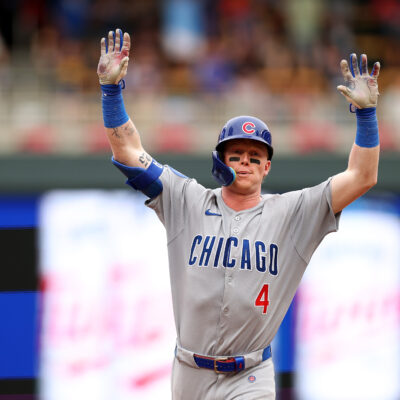
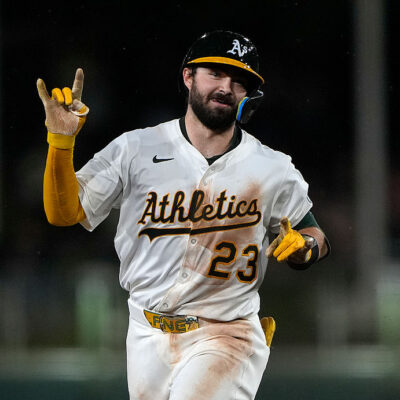
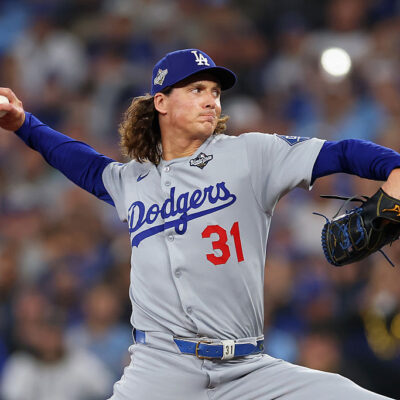
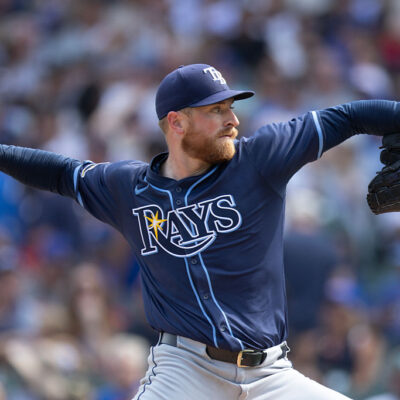
In this piece, we are going to discuss some noteworthy players that fantasy managers are selecting, on average, outside of the top 200. This average draft position (ADP) list, curated by the National Fantasy Baseball Championship, allows us to see trends on who is moving up or down boards in early drafts among experts and high-stakes players.
Contrary to our other ADP articles here at Just Baseball, I’ll be focusing solely on upside in this piece and promoting players who are worth taking a flyer on late in drafts.
| Player | ADP | 2025 stats |
| Shane Baz | 204 | 4.87 ERA, 4.37 FIP, 9.52 K/9, 3.46 BB/9 |
| MacKenzie Gore | 210 | 4.17 ERA, 3.74 FIP, 10.43 K/9, 3.61 BB/9 |
| Gleyber Torres | 245 | .256/.358/.387, 16 HR, 4 SB |
| Max Muncy | 258 | .243/.376/.470, 19 HR, 4 SB |
| Gerrit Cole | 295 | Out for season (torn UCL) |
Shane Baz — Post-Hype Sleeper?
It’s not easy to summarize Shane Baz’s 2025 season positively. His grim 4.87 ERA shed a light on just how ineffective he was from a results standpoint. It didn’t help that Baz was pitching in an ultra-humid, outdoor environment, but fortunately he will be calling a new park home in 2026.
Baz has always had exciting stuff. Last season, he ran the fastball up to 97 mph on average, which is a strong mark for a starting pitcher. By Stuff+ (in order of usage), his fastball (101), knuckle-curve (125), cutter (105), and slider (109) all rank as above-average offerings. Baz’s 24.8% strikeout rate was also above the major-league norm, showing that he was capable of missing bats.
Baz has also eased durability concerns by throwing a career-high 166.1 innings in 2025. Perhaps a change of scenery, with the trade to division-rival Baltimore, will serve Baz well. He’s moving to a much more neutral park for pitchers and will have an opportunity to build off of his first full major-league campaign.
With a guaranteed spot in the Orioles’ rotation, he’s worth considering as one of the final arms on your roster.
MacKenzie Gore — Great Change of Scenery
MacKenzie Gore had an odd season in 2025. In the first half, he threw 110.1 innings with a 3.02 ERA and a 30% strikeout rate — earning him All-Star honors. Then, in Gore’s first four starts following the Midsummer Classic, he allowed 23 earned runs in 15.2 innings while walking 11 and striking out 10. He was serviceable the rest of the way but also spent some time on the injured list.
Overall, last season showed Gore’s potential but also outlined his continued flaws with command and surrendering hard contact. His 27.2% strikeout rate was great, but he would be more effective if he could get that 9.3% walk rate down. Gore was also in the bottom fifth of pitchers in average exit velocity, barrel rate, and hard-hit rate.
Gore’s move from a desolate Nationals team to a competent Texas squad is intriguing. The Rangers may not be among baseball’s elite, but they should put Gore in line for more wins. Gore will also now call decorated veterans Jacob deGrom and Nathan Eovaldi teammates, which could further his development. It’s clear that Gore has some of the makings of an impact starter and is worthy of a flyer late in your fantasy draft.
Gleyber Torres — Solid Four-Category Second Baseman
Gleyber Torres has accumulated at least 600 plate appearances while earning a wRC+ over 100 in each of the past three seasons. This combination of durability and productivity has made him a valuable fantasy depth piece.
While he’s never been able to recreate the heights of his 2019 season, he still hits the ball as hard. In fact, that 38-homer season was more of a fluke — given his league-average exit velos at the time. Torres is great at controlling the zone. His 13.5% walk rate was among the top five percent of hitters, while his 17.1% chase rate was second to Juan Soto.
The projections forecast Torres to hit around .260 with 17-19 round-trippers and just over a few steals. While that may seem underwhelming, Steamer projects Torres to finish as the seventh-best second baseman (2B7) in fantasy.
He doesn’t have much of a ceiling, but Torres is a safe, steady option to take as a late middle infielder or bench piece.
Max Muncy — Exceptional Power on Per-Game Basis
Poor health has limited Max Muncy to combine for just 688 plate appearances over the past two seasons. When healthy, however, he’s still a prolific power bat. If you extrapolate those two campaigns into one stat line, Muncy hit .238 with 34 home runs, 115 RBI, and 95 runs scored.
Muncy saw an even greater uptick in production last season when he decided to start wearing glasses for an astigmatism diagnosis. After beginning the season batting .167 with no home runs in his first 25 games, Muncy then went on to hit .263 with all 19 of his homers.
It’s hard to find this kind of a power bat beyond pick 250. From a power-production standpoint, Muncy can produce like a fantasy starter, when available. He’s almost certain to spend some time on the injured list at age 35, but if your league has ample IL slots then that shouldn’t be a problem.
If Muncy is slated to miss a few weeks, you hold him; if it’s more than that, you drop him. He’s not an untouchable entity, but one who could provide great value at this pick.
Gerrit Cole — Ace on the Mend
Gerrit Cole underwent Tommy John surgery in March and should be ready to return to the Yankees a couple of months into the 2026 season. It’s no secret that when he’s right, Cole has been one of the best pitchers in the game.
The reason why Cole is going so late in NFBC drafts is likely because those leagues do not have IL slots. NFBC leagues generally have seven-man benches, but injuries can pile up on the bench quickly once the season begins. Drafting a player like Cole, who is scheduled to miss extended time to begin the season, can be an inconvenience.
If your league has IL slots, it’s likely that Cole will go much higher than pick 295. It’s hard to say when exactly is the right time to take him, but here at Just Baseball, we have him ranked as No. 184. It’s hard to expect Cole to immediately become an ace when he returns, which is why we have a bit of a conservative ranking for him.
Written by
Daniel Rotter follows the game of baseball with passion. He was the youngest participant in the inaugural year of The Great Fantasy Baseball Invitational, at 17…