
What’s an All-Star Game Without All the Stars?
Alright, it's time to roll up my sleeves and fix absolutely everything wrong with the current All-Star selection process.
Most-Stars Game doesn’t have the same ring to it, does it?
It shouldn’t be controversial to say that the very best players in baseball belong in the All-Star Game. That’s what the game exists for. So when some of the most deserving All-Stars are left on the outside looking in, I can’t help but feel like the system isn’t working the way it’s supposed to.
Obviously, there’s no objective way to determine the “very best players,” and it doesn’t help that everyone has their own opinions about the exact criteria for All-Star selection. For precisely those reasons, I’m not losing sleep over Cristopher Sánchez’s All-Star snub. Sure, I’d include him if I were putting together the roster, but I understand he isn’t a shoo-in, and I can see the case for the other pitchers selected in his stead.
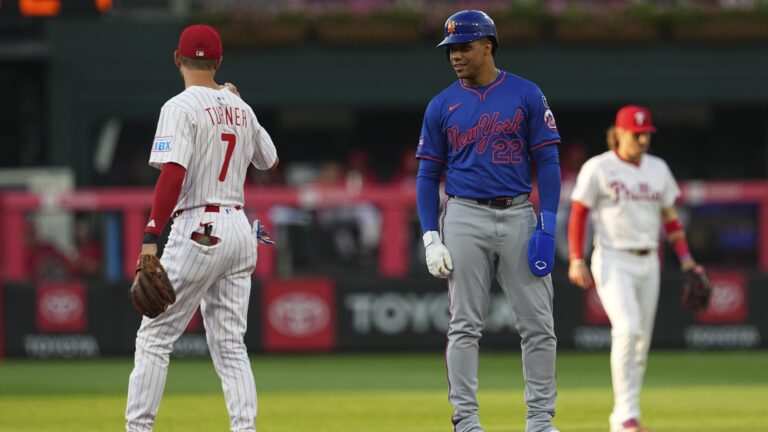
However, there’s no excuse for leaving a hitter like Juan Soto off the roster. Regardless of your favorite stats or personal voting criteria, Soto is one of the biggest stars in the game. Any selection process that leaves a player of his caliber out of the All-Star Game is the wrong system to use. It’s as simple as that.
Look, I get that the fan vote is a popularity contest, and I’m fine with that. Truly, I am! MLB owners and the commissioner’s office overlook the fans so often that I’m never going to complain when we have an opportunity to voice our opinions about what we want to see on the field.
I also understand that the players (at least most of them) aren’t poring over FanGraphs leaderboards and Baseball Savant searches when they cast their ballots. The player vote is more of a reflection of a guy’s reputation around the league than his statistical performance. And I’m fine with that too!
I think it’s great that the players get a say. After all, I’m sure that player-voted honors mean more to many of these guys than anything voted on by fans or writers. It’s nice to be recognized by your peers.
You know what else? I also like the rule that grants an All-Star selection to every team. Sure, it’s a little silly to give a player an honor they don’t “deserve,” but in this case, it’s not about the players or their teams – it’s about the fans.
As a kid, it meant a lot to me that I could always count on seeing a player from my favorite team in the All-Star Game. I didn’t know who technically “deserved” the honor; I just wanted to cheer for someone in a Phillies cap.
Now, I know what you’re thinking: Leo, don’t you understand that the fan vote, the player ballot, and the ‘one All-Star for every team’ rule are precisely what lead to the All-Star snubs you’re so upset about?
Yes! I understand. I promise I do. The current All-Star selection process inevitably leads to snubs. But there are ways to fix the problems without removing the rules that actually work.
After all, the league makes the rules in the first place. There’s no reason they can’t change them when the current CBA expires after the 2026 campaign.
Need proof? Look no further than Clayton Kershaw, who the league chose as an honorary bonus All-Star. MLB is calling him a “legend pick.” When the commissioner’s office did the same thing for Albert Pujols and Miguel Cabrera in 2022, they were called “legacy selections.”
So, what changes do I suggest to fix this broken system? Allow me to break down my whole proposal for you:
- Keep the fan vote the same.
- Keep the player vote, but only winners from the player ballot should make the All-Star team.
- Select the entire roster before appointing All-Stars for teams without representation.
- Don’t worry about roster construction.
- More discretion for the league in selecting injury replacements.
- Both teams should get the same number of All-Stars (not including legend picks).
Fixing the All-Star Game Selection Process
The Fan Vote
First things first, keep the fan vote exactly the same. No changes necessary. (Except, maybe let the fans pick a pitcher or two? But that’s a conversation for another day.)
Fan voting will never be perfect, but for the reasons I already outlined above, the pros outweigh the cons.
The Player Vote
The first change I would make? No runners-up from the player ballot.
Under the current system, fans select the starting lineups, while the players select the All-Star reserves. As long as each winner from the player ballot is different from the fan-voted starter, those players will be named the reserves at their positions. However, if a winner is already the fan-voted starter, then the runner-up from the player ballot will be named the reserve instead. I think that’s ridiculous.
I’ve already explained why I like the player ballot: It gives the players a voice and a way to honor their colleagues. But as long as the players’ first choice is going to the All-Star Game, then the players’ voices have been heard and their colleagues have been honored. Who cares if those players are also the fan-voted starters?
What’s more, being the runner-up is not the same as being the second choice. To find the players’ actual second choice, you’d have to use a ranked ballot system or remove the first choice from the ballot and start over.
Think about it this way: I bet the vast majority of players voted for Cal Raleigh and Will Smith to start for the AL and NL at catcher. Those were the obvious choices. Accordingly, I would guess the players who voted for Alejandro Kirk and Hunter Goodman were a small minority.
If all the players who voted for Raleigh and Smith got to vote again (with Raleigh and Smith off the ballot), they might have selected Carlos Narvaez and Carson Kelly. I can’t guarantee that, but it’s more than possible.
So, I strongly believe that if the winner from the player ballot is already the fan-elected starter, the reserve at that particular position should become another league office selection.
This also goes for injury replacements.
Under the current system, if a position player on the All-Star team suffers an injury and cannot play, the next runner-up from the player ballot automatically takes his spot. This is the case until the top three finishers from the player ballot are all All-Stars, at which point the league can choose the replacement.
I just don’t see the point of this at all. Being the third runner-up on the player ballot isn’t nearly the same honor as being the players’ first choice. The league should have the discretion to pick the most deserving replacements for injured All-Stars.
One All-Star for Every Team
My next major change? I would select the complete rosters before ensuring every team has an All-Star. That means there should already be nine starters, eleven reserves, and twelve pitchers before anyone is chosen for any reason besides merit.
After all, guys like Shane Smith of the White Sox know why they’re there. With all due respect to Smith and the great first half he’s put together, there’s no reason to pretend he’s an All-Star for any reason other than the crappy team he plays for.
I’m more than happy to include players like Smith on the roster, but not at the expense of players like Framber Valdez or Joe Ryan.

Kyle Stowers of the Marlins is another interesting example. Unlike Smith, his numbers are genuinely All-Star-worthy, or at least pretty darn close. His .866 OPS and 138 wRC+ put him among the top 15 qualified batters in the NL.
However, there is absolutely no sound argument for Stowers over fellow outfielder Juan Soto. Indeed, Soto might be the most egregious snub on either All-Star roster.
He is one of the most prominent superstars in the game today, and he’s enjoying another unbelievably productive season. He has Stowers beat in just about every offensive category aside from batting average, and the 17-point difference in their batting averages hardly matters when Soto draws walks almost twice as often.
No one could disagree that Soto is more deserving of an All-Star nod than Stowers. Yet, most would just shrug and say, Well, the Marlins needed someone.
I don’t accept that. There is a way in which the All-Star Game can feature the best talent the league has to offer and still represent all 30 clubs. MLB just has to be willing to think outside the box.
Roster Construction? Who Cares!
This is a big one for me. As long as each league has two guys who can handle every position and enough pitchers to get through nine innings, I don’t care about roster construction for the All-Star Game.
When the league selects All-Stars for unrepresented clubs, they should pick the best players on those teams, regardless of position.
If that means adding two extra catchers, three first basemen, or four relievers, so be it. The All-Star Game is all about showcasing the best talent the league has to offer.
This isn’t an issue this year – I don’t disagree with any of the picks MLB made for unrepresented teams – but it has been in the past.
Equal Representation at the All-Star Game
The AL and NL teams should have the same number of All-Stars. That seems like a no-brainer. Yet, almost every year, one team ends up with more members than the other because one team requires more replacements.
For the most part, I think adding replacement players to the All-Star rosters is unnecessary. This is an exhibition game, and the rosters are already bigger than they would be for any regular season contest. Thirty-two players aren’t required for a single game. In fact, 32 is too many. Every year, there are All-Stars who don’t even get a chance to play.
Moreover, it’s silly that a player can receive the high honor of an All-Star selection simply because the guy who was better than him is dealing with a sore shoulder or an achy back or just happens to be pitching the Saturday before the All-Star break.
At the same time, I’m happy that more players get to be celebrated, and I understand that substitutions help safeguard everyone’s health. After all, no one is supposed to play more than a few innings at the All-Star Game. (Well, at least not anymore…)
So, I’m fine with injury replacements joining the teams. But if there are going to be replacement players at the All-Star Game, and if they’re going to be treated and remembered as legitimate All-Stars, then we need to treat those selections like honorees and not just replacements. That means each league should be able to honor the same number of players.
The Final Failsafe
The solutions I’ve laid out should prevent almost all major snubs, but there will always be those who fall through the cracks.
Therefore, as a final failsafe, I think the commissioner’s office should be able to use its best judgment to fix any egregious mistakes. If that means naming an extra All-Star or two, so be it!
This is not a weapon to be wielded lightly, but sometimes someone in a position of authority needs to step in and do what’s right when the system has failed.
To be clear, I’m no big fan of the commissioner’s office. I’d rather give everyone reading this my bank account numbers and my mother’s maiden name than give Rob Manfred an extra ounce of genuine power.
But like it or not, his office is in charge of making these decisions, and I’m here to fix the All-Star selection process, not to start a revolution. As much as I distrust Manfred, I can’t deny that the league is better at picking All-Stars than the fans or the players.

So there you have it. That’s my proposal for fixing the All-Star Game selection process.
You probably disagree with at least something I wrote, and that’s okay. I get it! Sometimes it’s the most trivial and subjective topics that spur the most debate.
Nonetheless, as trivial and subjective as it all is, I needed to write this treatise to get the vexation off my chest. Now, I can sit back and enjoy the final week of the first half. I promise I won’t still be stewing over snubs when the All-Star Game begins.
That’s the beauty of baseball; it makes me so passionate that I can write a 2000-word angry essay about All-Star selections, but as soon as I turn on a game, all that negativity melts away.

Written by
Leo Morgenstern is one of the managing editors for Just Baseball. He is also the managing editor at Jays Centre. His writing has appeared all over…