
The Dodgers Don’t Need To Add More Starting Pitchers
Despite losing Tarik Skubal to free agency, the Dodgers don't need to add any more starting pitching thanks to their in-house depth.
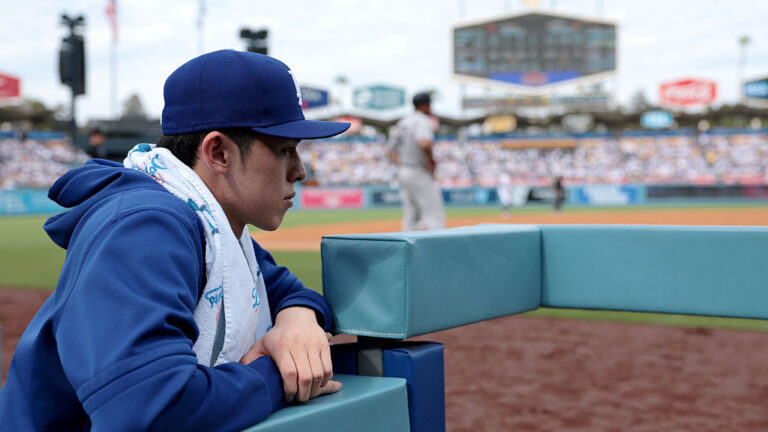
After the Los Angeles Dodgers gave up Zyhir Hope, River Ryan, and Brady Smith to get him, Tarik Skubal signed with the New York Mets on a record-breaking nine-year, $450 million contract. A tough blow for the Dodgers after a heartbreaking NLCS sweep at the hands of the eventual World Series-winning Milwaukee Brewers.
In the end, Los Angeles never made an official offer to Skubal. The team was looking for a short-term, high-AAV deal, which didn’t interest Scott Boras and company. Understandably, Dodgers fans quickly started clamoring to sign the next-best starting pitcher on the market, though that doesn’t seem to be in the front office’s plans.
Fans may point to the finicky health of Blake Snell, Tyler Glasnow, and Shohei Ohtani, or the struggles of Emmet Sheehan, Roki Sasaki, and Justin Wrobleski last year. Valid points, but the pitching depth in LA has long been a strong suit, and that hasn’t changed.
Past the big four, there are five legitimate arms in the stable that could offer valuable big league innings in 2027.
Emmet Sheehan
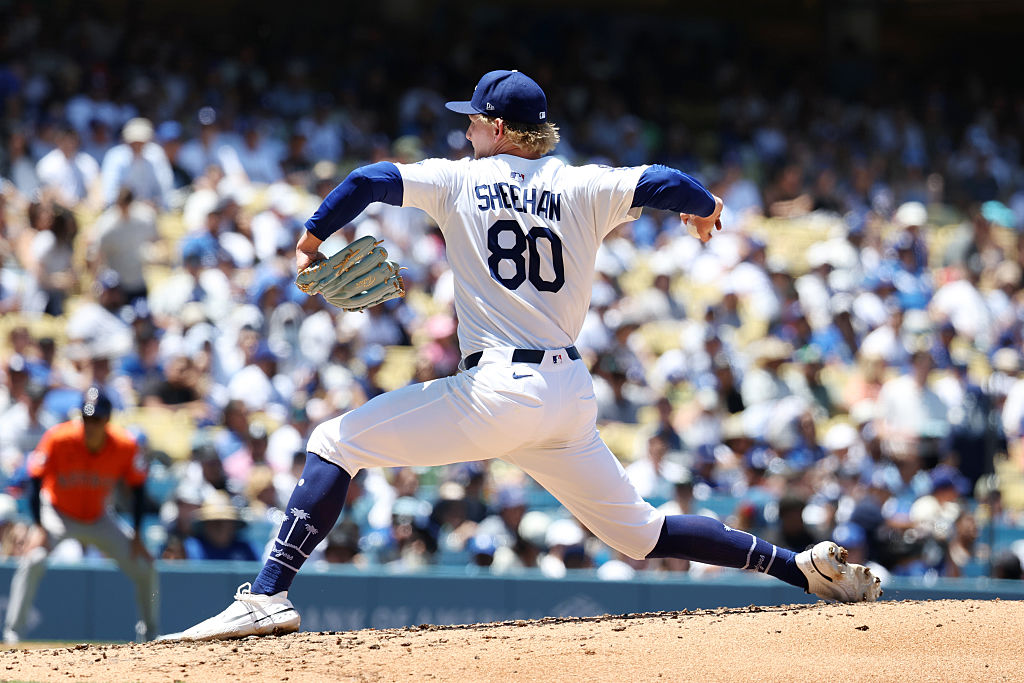
After undergoing Tommy John surgery in 2023, Sheehan came back to stellar results in 2025, posting a 2.93 FIP and 30.6% strikeout rate over 112.1 innings. Year three didn’t go nearly as well; he rocked a 4.57 ERA with a demotion to Triple-A in early August.
Under the hood, the data was quite similar to his 2025 campaign. The catalyst for his struggles was his increased home run output. His HR/FB ballooned from 8.8% to 15%. His above-average marks in xERA, xFIP, and SIERA imply Sheehan was one of the unluckiest pitchers in the league last season.
Of course, the game isn’t played on a spreadsheet. His four-seam and changeup execution were poor, and his velocity was down a tick or two across starts. Yet, those expected stats are a much better measure of future production than ERA alone.
The good thing is that he retained his high strikeout rate and low walk rate despite his slightly subdued stuff, generating 90th percentile whiff and chase numbers. There were just two Statcast-qualified starting pitchers to achieve those marks last season: Sheehan and Skubal. Elite company, to say the least.
The notion that Sheehan is expendable is completely false. At best, Sheehan is a legitimate No. 3 starter with three more years of control remaining. Those players don’t exactly come by often. Heading into 2027, Sheehan’s name should be etched into the five spot without much second thought.
Roki Sasaki
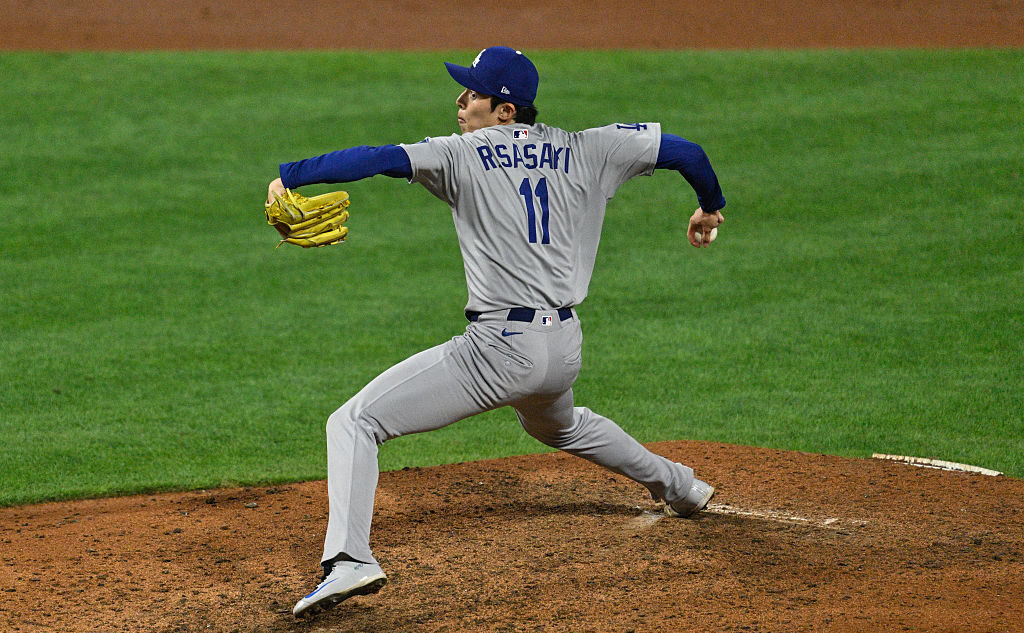
After a poor start to his MLB career, 2026 didn’t seem to be much different for Sasaki. He struggled mightily to begin the season. His velocity was still down with middling fastball shape, and the command was still erratic.
Fast forward into May, and Sasaki seemed like he had returned to form. His average fastball velocity jumped north of 98 mph, touching triple digits on several occasions, along with a slight uptick in vertical action. He also introduced an improved splitter in addition to his forkball, sitting over 90 mph with enhanced feel for the zone.
From the start of May to August 19, Sasaki held a 3.81 xFIP, 29.5% whiff rate, and a 34.4% chase rate. While the run prevention wasn’t dialled in yet, he had the stuff working. This stretch included a seven-inning shutout against the Angels with a career-high 10 strikeouts.
On August 26, Sasaki dealt with a blister and was put on the shelf for nearly a month. He returned as a relief pitcher, striking out six across three scoreless innings. Sasaki’s stints as a relief pitcher have been great, giving up just two runs over 19 innings, 14 of them coming in October.
Still, the Dodgers will continue to chase the potential of a frontline starter he was heralded as out of NPB. The flashes have certainly been there for Sasaki, especially last summer, though his run as a full-time starting pitcher could be in jeopardy in 2027.
Justin Wrobleski
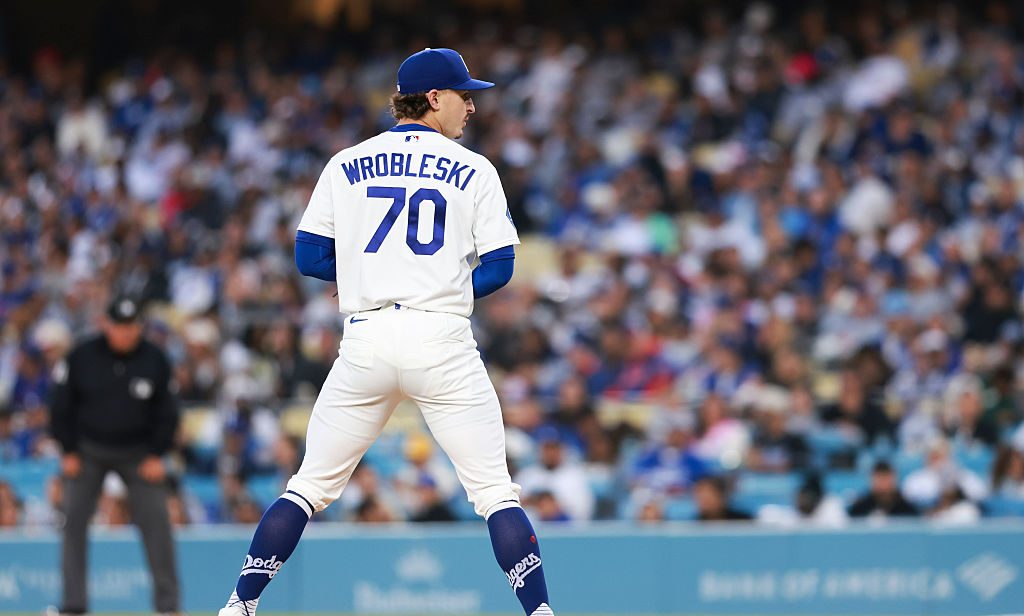
After being primarily deployed out of the bullpen in 2025, Wrobleski got his shot in the rotation in 2026. The returns were more than the Dodgers could’ve asked for. After coming out of the bullpen for his first game, Wrobleski held a 2.52 ERA over 15 starts, averaging over 6.1 innings per game through the All-Star break. This performance earned him an All-Star nod.
Wrobleski would run out of gas coming out of the break, moving into a reliever/opener role into September. Though eclipsing a career-high in innings could be the catalyst for his 6.13 ERA over his last 12 games, it was clear Wrobleski was outperforming his data by quite a bit before then.
He got little swing-and-miss, paired with a high barrel rate, which was far from the case in 2025. It’s clear that the emphasis was getting his four-seam established in-zone, and he got nice results doing so, though the whiff rate dropped from 35% to 23%. Wrobleski’s secondaries aren’t extremely dynamic, so he had trouble putting batters away via the strikeout.
Ultimately, it would be difficult for anyone to last as a starting pitcher with two pitches taking up 77% of their total usage, even if that pitcher is able to create seven different shapes. Wrobleski certainly still has starting intrigue and the track record to back it, though he’ll need to make some tweaks to his usage to be there long term.
At the moment, Wrobleski is likely to start in the bullpen, just missing out on the presumed six-man rotation, but his ability to pitch deep into games is extremely valuable with the poor history of health in the Dodgers’ starting pitching corps.
Gavin Stone
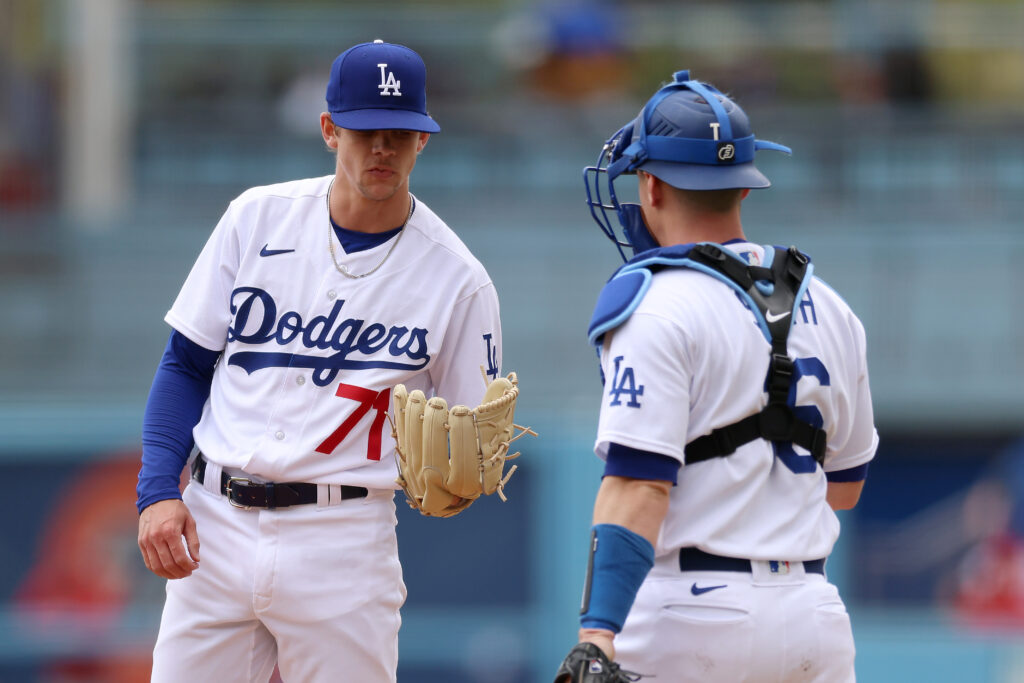
A former top prospect, Gavin Stone bounced back well following a poor 31-inning stint in 2023, throwing to a 3.53 ERA over 25 starts in 2024. Much like Wrobleski last season, Stone was proficient at throwing deep into games, including a complete-game shutout against the White Sox in July.
Unfortunately, Stone would go down in August with shoulder inflammation, ending up needing surgery. He would miss all of 2025, then suffered a setback in spring training, not returning to action until August 2026. Stone’s stuff was quite effective upon return, and he struck out 34.4% of batters across 15.1 innings. His signature changeup generated a 59% chase rate and 46% whiff rate.
Stone’s stuff doesn’t exactly pop on stuff models — he carries a stock release profile, average shapes, and average velocity — but he’s consistently gotten the job done. The feel for his changeup is superb, playing it in and out of the zone, and executing it off his fastball extremely well. Stone has middling spin capacity around the ball, but throws hard enough to derive results from his slider and curveball.
Finding more success against righties will be at the forefront of Stone’s development in 2027. Increasing his right-on-right changeup usage will help, though he’ll need to get his slider dialed as well,
Stone should begin the season in Triple-A, though he’ll likely be the first man up in case of an injury. Given his changeup dominance and command, Stone should have no trouble finding results in the big leagues next season.
Christian Zazueta
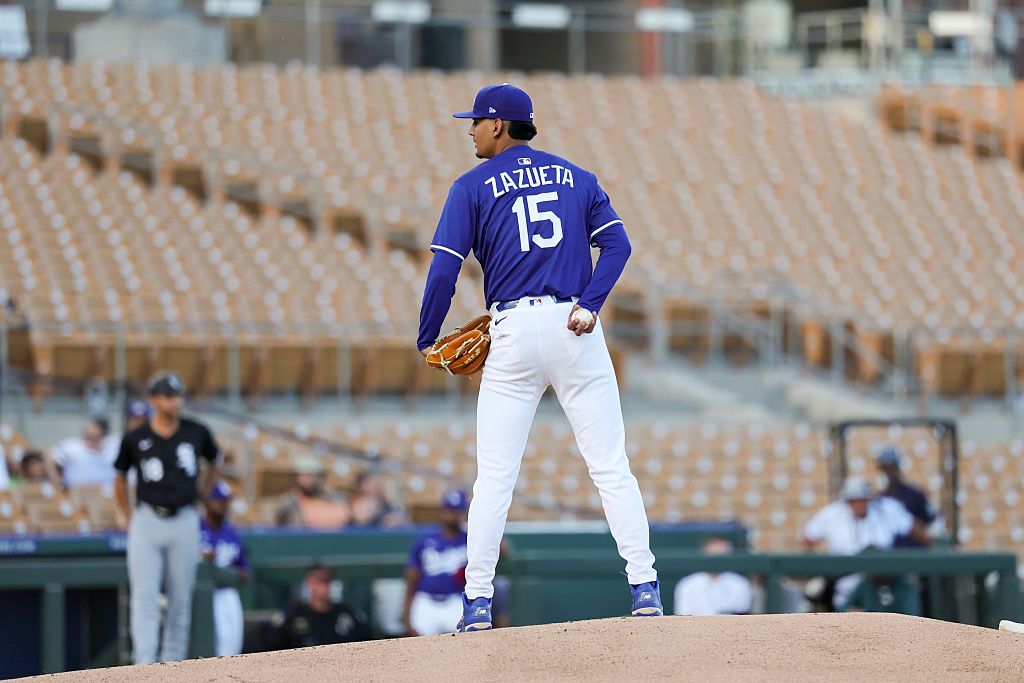
Acquired from the Yankees for Caleb Ferguson in the 2024 offseason, Christian Zazueta has quickly emerged as one of the top pitching prospects in baseball, coming in at No. 41 on our most recent top 100 update. Zazueta climbed up to Double-A last year and was recently added to the 40-man roster to protect him from the Rule 5 Draft.
Zazueta posted a 3.52 FIP across 103.2 innings last season, striking out 35.3% of batters while walking just 4.9%. It’s a smooth operation down the hill, getting down to a 5.3 ft release height with above-average extension. Despite a slight 6-foot-3 frame, Zazueta already sits in the mid-90s, up to 99 mph.
Zazueta stays behind the ball well, generating run and ride on his four-seam. Its flat approach to the plate and velocity make it a tough pitch to square up, especially at the top of the zone. Off it, he goes to a mid-to-upper 80s changeup with dive off his fastball and a mid-80s baby sweeper shape. He’ll also go to a cutter on occasion.
Alongside his pro-ready stuff, Zazueta has advanced feel for the zone, pounding strikes and getting up to the top rail with consistency. His slider will need to develop before he makes his debut, though.
He’ll likely start in Triple-A in his age-22 season. Zazueta’s profile is quite similar to Braves rookie Didier Fuentes, who was one of the league’s best relievers last season. He could realistically be up as soon as June or July, depending on the needs of the big league roster.
Become a Member of Just Baseball
Subscribe and upgrade to go ad-free!
* Save 25% by subscribing annually.

Written by
Landon is a recent high school graduate, currently 18 years old, studying Media and Cultural Studies at UC Riverside. He excels with data analysis inside baseball…