
Troy Melton’s Extension Could Be a Major Win for Detroit
The Tigers signed Melton to a six-year, $46.5 million extension. Here's why the deal could be a major win for Detroit.
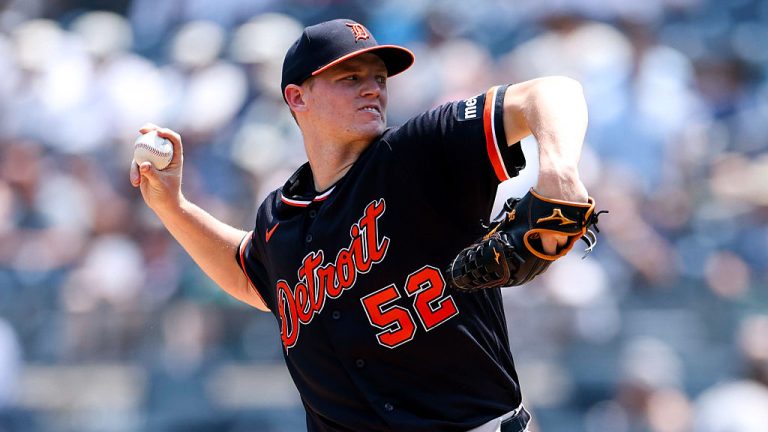
The Detroit Tigers have made another commitment to their young core, signing Troy Melton to a six-year, $46.5 million extension that could reach $80 million with incentives and a club option. After an impressive 2026 season, Melton has given Detroit plenty of reason to invest in his future, and the Tigers are hoping he can remain a key part of their rotation for years to come.
Melton missed the first two months of the season with right elbow inflammation, but once he returned, he put together the best stretch of his young career so far. He quickly established himself as a reliable starter in Detroit’s rotation before a forearm issue brought his season to an end.
The Tigers see Melton as a pitcher who could play a major role in their rotation moving forward, and the extension gives them an opportunity to keep him in Detroit through some of his most productive years. For Melton, the deal provides financial security early in his career while giving him the opportunity to continue developing into the pitcher Detroit believes he can be.
The Performance Behind the Extension
After making his debut with Detroit in 2025 and spending most of that season in the bullpen, Melton entered 2026 with an opportunity to establish himself as a full-time starter. Despite missing the first two months of the season with right elbow inflammation, he finished the year with an 8-5 record, a 2.76 ERA and a 1.128 WHIP across 20 starts and 114.1 innings.
Melton wasted no time finding his footing after returning on May 24, putting together the best stretch of his career so far. Through his first 16 starts after returning, he went 7-3 with a 1.86 ERA and a 1.01 WHIP across 97 innings, striking out 80 batters while walking 28.
One of the biggest changes in Melton’s approach was his increased reliance on the cutter, which he more than doubled in usage from 10.8% in 2025 to 21.9% in 2026. He also relied less on his four-seamer and slider, giving him a more balanced mix of pitches to work with as he settled into the rotation.
The cutter quickly became one of Melton’s most effective pitches, while the rest of his hard stuff also contributed to his success. His four-seamer, cutter and sinker collectively contributed to a fastball run value that ranked in the 85th percentile. While his offspeed pitches didn’t produce the same results, his fastball arsenal stood out as his biggest strength.
Despite the strong results, Melton’s underlying numbers painted a slightly different picture. His 4.09 FIP and 3.84 xERA were both higher than his 2.76 ERA, suggesting that his results may have been better than what his underlying performance indicated. That doesn’t take away from what he accomplished in 2026, but it does leave some questions about whether he can consistently replicate that level of production moving forward.
Melton’s numbers took a noticeable dip over his final four starts of the season, as he went 1-2 with a 7.79 ERA and a 1.79 WHIP across 17.1 innings. He allowed 22 hits, 15 earned runs and nine walks during that stretch, a significant departure from the consistency he showed earlier in the season. With his season ultimately ending because of a right forearm issue, it’s difficult to know how much those late-season struggles were tied to his health.


Why the Extension Makes Sense for Both Sides
The extension gives both sides something valuable, with Detroit securing a young starting pitcher with plenty of upside while Melton receives financial security early in his career.
For the Tigers, committing $46.5 million to a pitcher who has yet to spend a full season in the rotation comes with some risk, but it also gives them the opportunity to lock him in before he potentially becomes a more expensive option. If Melton continues to build on what he showed in 2026, Detroit could end up getting some significant value out of the deal.
Melton’s extension also fits into a broader approach the Tigers have taken toward retaining their young talent. Detroit signed Colt Keith to a six-year extension before his MLB debut in 2024 and followed that up with an eight-year deal for Kevin McGonigle earlier this year.
Keith has been a solid contributor through his first few seasons, while McGonigle has already established himself as one of the league’s most promising young players after earning All-Star and Rookie of the Year honors. Although the long-term success of these deals remains to be seen, the Tigers have shown willingness to invest in young players early, and Melton’s extension continues that trend.
One of the biggest advantages for Detroit is how much team control the extension provides. The deal covers Melton’s remaining pre-arbitration years, his arbitration years, and at least one year of free agency, keeping him under contract through 2032 with a club option for 2033.
If Melton continues developing into a dependable starter, the Tigers could have him under contract through some of his prime years without having to compete with other teams in free agency.
The structure of the deal also gives Detroit a relatively affordable commitment in the early years, with Melton set to earn $1 million in both 2027 and 2028 before his salary increases during the arbitration years. His salary climbs to $4.5 million in 2029, $7.5 million in 2030 and $11 million in 2031, before reaching $18 million during 2032, his first year that would otherwise be spent in free agency.
The rising cost of starting pitching also makes the deal appealing for Detroit, particularly if Melton continues to develop into a dependable starter. Even if his production doesn’t reach the level of a frontline ace, the cost of acquiring comparable talent through free agency could make this contract a worthwhile investment for the Tigers.
For Melton, the extension provides a level of financial security that would have been difficult to guarantee by waiting to go through the arbitration process and eventually reach free agency. By securing $46.5 million this early in his career, he has protected himself against the uncertainty that comes with pitching, particularly given the injuries he dealt with during the 2026 season.
The extension also gives Melton the opportunity to earn significantly more if he reaches the highest level of success as a starting pitcher. The contract includes escalators tied to winning the Cy Young Award, with the potential to add up to $6 million to his salary in both 2032 and 2033. If Melton develops into a Cy Young-caliber starter, he has the opportunity to earn well beyond the initial $46.5 million guarantee.
Overall, the extension gives both sides a chance to benefit from Melton’s continued development. Detroit has secured a young starter who could become an important part of its rotation for years to come, while Melton has guaranteed himself a significant payday with a chance of incentives early in his career.
There is still some risk involved for the Tigers, but if Melton continues building on what he showed in 2026, this deal could turn into a major win for the organization.


What to Expect
Melton will have an opportunity to remain a key name in Detroit’s rotation moving forward, especially after what he showed during his first season as a full-time starter. His performance in 2026 showed the potential for him to develop into more than just a dependable rotation option, and the Tigers will hope he can continue building on that as he gains more experience.
While there is still work to be done, Melton has the potential to become a frontline starter if he continues to develop.
One of the biggest reasons for optimism is Melton’s ability to work with a variety of pitches rather than relying on a single offering. His six-pitch arsenal gives him multiple ways to attack hitters, and continuing to get the most out of that mix will be important as teams become more familiar with him. Improving consistency of his secondary pitches and continuing to sharpen his fastball command could help him take another step forward as he settles into a larger role in Detroit’s rotation.
Ultimately, Tigers fans should be encouraged by what Melton showed throughout the 2026 season. There is still room for him to grow, but he has already given Detroit reason to believe he can be a meaningful part of their rotation moving forward. If he continues to build on his success and takes the next step in his development, the Tigers could have a frontline starter under contract for years to come.
Become a Member of Just Baseball
Subscribe and upgrade to go ad-free!
* Save 25% by subscribing annually.

Written by