
Elly De La Cruz’s Arbitration Applies Pressure to the Reds
With Elly De La Cruz entering his first year of arbitration, the clock is ticking on this era of Reds baseball.
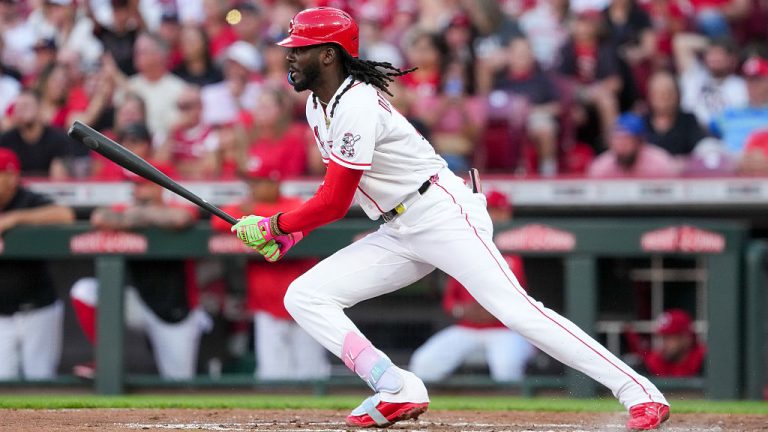
Following an 83-win 2025 season that saw the Cincinnati Reds return to the playoffs for the first time since the COVID-shortened 2020 campaign, there was a good amount of anticipation surrounding the club this spring. With young stars on both sides of the ball, this era of Reds baseball seemed to be trending in the right direction.
However, the 2026 season did not go as planned for the Reds. They ended up finishing with a 75-87 record, putting them in last place in the NL Central for the first time since 2018. Injuries, poor play, and an incomplete 26-man roster led to a last-place finish, completely zapping nearly all the energy out of the buzz that had been building.
Despite finishing with a poor overall record, the perplexing thing was that there were still things to be positive about with their 2026 campaign. Rookie Sal Stewart broke out and became a prolific power threat, slugging over 30 homers and driving in triple-digit runners. On top of that, Elly De La Cruz took the next step toward stardom, finishing with a six-win season for the second time in his young career.
While this was the case, De La Cruz’s excellence brings about an unfortunate reality for the Reds: he’s entering his first year of arbitration, which means the clock on this era of Reds baseball is beginning to tick. With De La Cruz reportedly rejecting multiple extension offers in the past and the team’s unwillingness to spend, it’s a very real possibility that his time in the red and black is more limited than it may seem.
With this in mind, although the Reds have young pieces to be excited about, pressure is beginning to mount on this front office. They have to try to compete while they have one of the sport’s most gifted young stars before it’s too late and they let another golden opportunity slip away.
De La Cruz’s Arbitration
After enjoying four years of Elly De La Cruz’s electric play for no more than $800K in any given season, the Reds are about to see those figures increase steeply as he becomes arbitration-eligible for the first time in his career. Unlike many players whose first arbitration figures come in below $3 million, De La Cruz will likely find himself in a vastly different situation.
According to our offseason arbitration projections, De La Cruz is expected to earn over $8.5 million this offseason, making him one of the pricier first-year arbitration players in the sport. For example, that figure is higher than Paul Skenes’s projected $7 million salary, which goes to show just how extreme this pay increase is for the 24-year-old.
Even though it may seem extreme, De La Cruz absolutely deserves this offseason raise. The only other shortstop in baseball worth more than 6.0 fWAR was Bobby Witt Jr., who received over $20 million from the Royals this season. Granted, Witt has already inked a long-term extension worth nearly $300 million, but the comparison provides a very real picture of where De La Cruz is heading.
Since 2018, only Joey Votto, Nick Martinez, and Homer Bailey have made more than $20 million in a single season with the Reds, as contracts of this nature have been relatively rare in the franchise’s history. This makes it increasingly likely that the clock could be ticking on De La Cruz’s time in Cincinnati.
The league-wide shortstop market makes this even more concerning. In 2026, nine shortstops around the league made more than $20 million, with many of these players locked into long-term deals worth hundreds of millions of dollars.
With De La Cruz set to hit the free-agent market at just 27 years old, it’s not unrealistic to think he could sign one of the largest shortstop contracts in MLB history, thanks to a combination of his excellence and youth. For now, though, he’s on track to become one of the most expensive arbitration-eligible players in MLB history over the next three seasons, potentially seeing his salary creep closer to $30 million before he hits the open market.
De La Cruz’s rapidly increasing salary makes it that much more important for the Reds to act now and try to compete with the core they’ve built. Between De La Cruz, Chase Burns, Sal Stewart, and more, this club is extremely talented, and the front office should feel the pressure to field a competitive squad as quickly as possible.
What’s Next for the Reds?
After seeing how drastic an impact this could have on this era of Reds baseball, we’re left wondering: Where do the Reds go from here? The answer is clear: they need to act quickly to supplement this roster with real talent and pursue upgrades that could bring this club closer to reaching October, as the clock is ticking much faster than it may seem.
Addressing Their Weak Points
If there’s anything we learned from the Reds during the 2026 season, it’s that they left a lot to be desired in multiple areas around the diamond. However, the open market presents multiple opportunities for them to upgrade without breaking the bank, and they shouldn’t be hesitant to act when given the chance.
Beginning with their rotation, the Reds desperately need to shore up their innings and find a veteran workhorse who can help hold down the fort. While Chase Burns was a true highlight of this group, the rotation combined for the third-worst ERA in baseball (4.97), making it tough to watch all year long.
Even though this year’s free-agent market is on the weaker side, veterans like Shane Bieber, Clay Holmes, and Zach Eflin are all players who make sense for this role. Most importantly, according to Spotrac, none of these three players has a market valuation above $14 million, making them perfect candidates if the Reds wish to avoid breaking the bank.
They could also use some veteran help at both second base and in the outfield, needs that can also be addressed through the open market without breaking the bank. For example, Randal Grichuk could be an interesting candidate to help support the outfield, as he posted a 139 wRC+ while playing primarily in a platoon role against left-handed pitching.
These pairings are simply a few hypotheticals, but they show that the Reds are arguably a lot closer to being competitive again than they may seem. As pressure mounts, even short-term veteran deals could help carry them closer to contention.
A Dark Farm System
With pressure mounting to compete and a typical lack of willingness to truly acquire talent through the free-agent market, the Reds will naturally look internally for more support. Unfortunately, the downside of this model is that they currently possess one of the weakest farm systems in the sport, with just one representative on Just Baseball’s most recent Top 100 prospects list.
In fact, this club only has a trio of prospects who routinely crack the 45 future value threshold around the industry, which is quite concerning. Ranking their farm system is an uphill battle for prospect evaluators around the industry, as their crop of prospects is very weak.
Since 2020, the Reds have made 11 first-round selections. Of those 11 players, only four have made their major league debuts, as the Reds have routinely whiffed on their early draft picks. This has been a major reason for their lack of legitimate internal options, as their prized prospects have failed to pan out time and time again.
The one major bright spot in this farm system, though, is Just Baseball’s No. 22 prospect, Alfredo Duno. One of the most prolific power threats in the minor leagues, Duno slugged 19 homers this season as a 20-year-old, posting eye-popping exit velocities along the way.
While Duno is an exciting piece who could certainly help this era of Reds baseball sooner rather than later, he’s only played 32 games at Double-A to this point. The Reds will have to search for external additions to support this core, especially given the poor state of their farm system.
Final Thoughts
With a depleted farm system offering little immediate internal relief, the front office cannot afford to sit on its hands or wait for financial flexibility that may never come.
To avoid letting another golden era slip away and falling back into the basement of the NL Central, the Reds must act aggressively right now, leveraging smart, affordable external additions to supplement their stars and field a competitive playoff contender before their core prices them out of contention.
Become a Member of Just Baseball
Subscribe and upgrade to go ad-free!
* Save 25% by subscribing annually.

Written by
Jay Staph, a huge baseball fan and stat nerd, founded and ran his own baseball writing website, BSBWrites, at just 16-years-old. With focal points around prospects,…