
Where the Cubs Stand After an Abrupt End to the 2026 Season
The Cubs' 2026 season ended abruptly after entering the postseason with World Series aspirations. Now, several questions need answers this offseason.
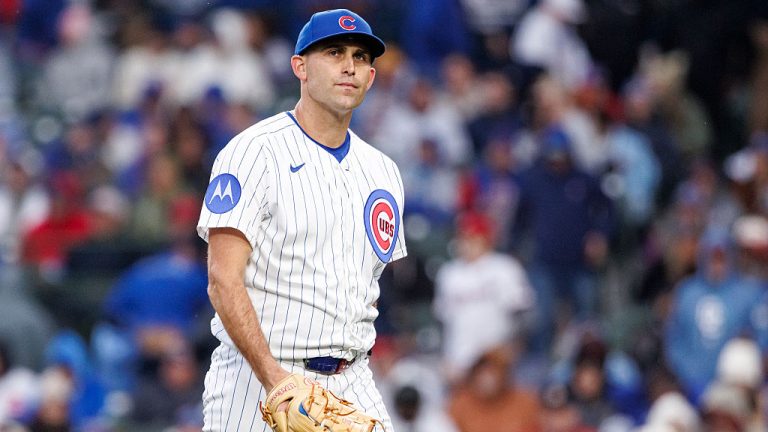
The 2026 Chicago Cubs season ended on a pretty low note, considering how the regular season went.
They were in a commanding position to secure home-field advantage for the Wild Card round before losing it to the Padres in the final days of the regular season. That would prove fatal for the team, as they were swept in San Diego and didn’t put up much of a fight.
Making the playoffs is no feat to be disappointed in, but with one of the highest payrolls in baseball, a major offseason signing in Alex Bregman, and the likely National League MVP in Pete Crow-Armstrong, failing to win a postseason game stings.
It’s hard to blame one person or group for the ending. The position player group was one of the best in baseball but disappeared in the playoffs. Even though the pitching was also mediocre, scoring just one run across two playoff games simply won’t get it done.
Obviously, there were still a few takeaways from the season, both positive and negative, so let’s dive in.
An Excruciating End
The Cubs entered the playoffs in San Diego for the Wild Card series. As exciting as it is to reach the postseason, Chicago had virtually no success.
Over two games, they scored just one run while allowing 12 to the Padres. The offense failed to string together baserunners, while the pitching allowed far too much damage for the team to gain any momentum.
Game 1 starter Matthew Boyd allowed home runs to two of the first three batters he faced. This came after Michael King struck out two and worked a perfect frame in the top of the first. Petco Park was rocking, and the Cubs failed to recover.
The stars in the Cubs’ lineup, along with everyone else, failed to do their part. Here are a few notable players who struggled this postseason.
| Player Name | Plate Appearances | Hits | Strikeouts |
| Pete Crow-Armstrong | 8 | 0 | 4 |
| Alex Bregman | 8 | 0 | 4 |
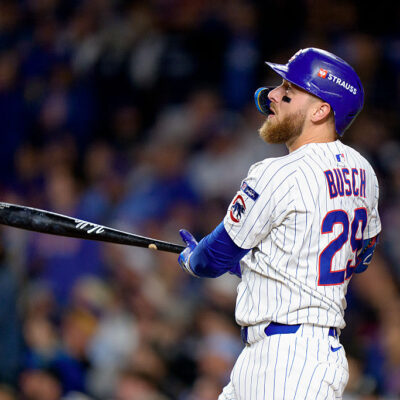
| Michael Busch | 7 | 0 | 1 |
| Dansby Swanson | 6 | 0 | 2 |
It was total domination in favor of the Padres. For how good the Cubs were at times during the regular season, this felt like a letdown. It wasn’t so much that they didn’t advance, but rather that they lost home-field advantage, put up no fight in either Game 1 or Game 2, and then just like that, the season was over.
Positive Takeaways
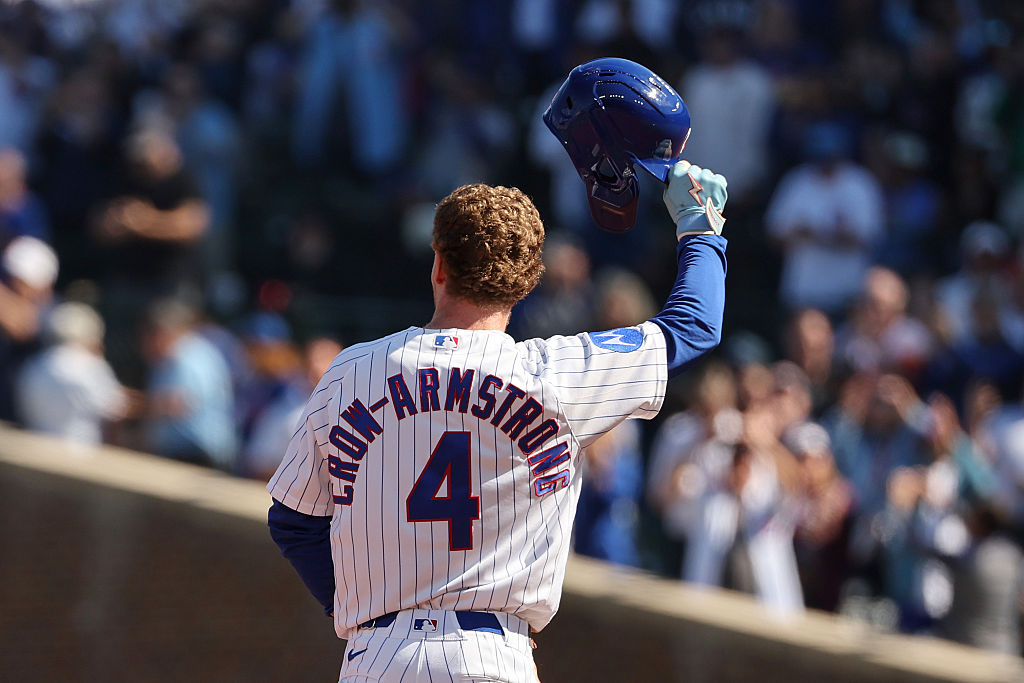
A Budding Superstar
Heading into the 2026 season, there were questions about how Pete Crow-Armstrong would fare at the plate. He was one of the best hitters in the first half of 2025, but arguably the worst in the second half of that season. However, after making some swing adjustments, Crow-Armstrong developed into one of the top players in baseball.
On May 23, he was moved up to the leadoff spot for the first time that season. Later in the week, he tried out some tweaks to his swing. Then, it all came together against the Cardinals on May 30, when he recorded four hits and a home run. From that point through the end of the season, he was elite. Here are his MLB ranks from May 30 through the end of the season.
| STatistic | mlb rank | |
| Home Runs | 39 | 1st |
| Runs Batted In | 83 | 1st |
| Runs Scored | 88 | 1st |
| On-Base Plus Slugging (OPS) | 1.077 | 1st |
| wRC+ | 189 | 1st |
| FanGraphs WAR | 9.1 | 1st |
His offensive profile completely shifted. He started swinging less, chasing less, and walking more. This allowed him to get his A-swing off more often, ultimately fueling one of the best offensive runs in baseball this season.
To go along with that, he was the best defender in the majors. He led MLB in fielding run value (+26) and outs above average (+25), making his season that much more impressive.
All of this pushed him into the National League MVP conversation and eventually made him the overwhelming favorite. Before the market closed, BetMGM had PCA at -10000 to take home the award. The Cubs seem to have a superstar on their hands, and he was the team’s biggest positive in 2026.
With a season like this, Pete Crow-Armstrong elevated his teammates as well, playing a major role in what was one of the best lineups in baseball this year.
Baseball’s Best Lineup
The 2026 Chicago Cubs’ group of position players was about as valuable as they come. They had offensive production up and down the lineup while boasting the best defensive group we’ve seen in years. They weren’t without their cold stretches, but all in all, this was an elite group that powered the Cubs into the postseason.
Offensively, the Cubs combined discipline, power, and speed as well as any team in baseball. They led MLB with a 0.50 BB/K ratio while drawing the most walks and limiting strikeouts. This contributed to their .339 on-base percentage, which trailed only the Brewers this season.
On top of that, they were one of the premier power-hitting teams in the league. They clubbed 220 home runs, posted a .428 slugging percentage, and scored 850 runs, all of which ranked in the top three in baseball. All of this combined for a 114 wRC+, the highest mark in MLB.
Defensively, the Cubs were just as dominant. They led baseball in four of the main defensive metrics listed below, and in most cases, it wasn’t particularly close.
| Cubs Total | Next closest team | |
| Defensive Runs Saved | 115 | 87 |
| Outs Above Average | 74 | 44 |
| Fielding Run Value | 73 | 46 |
| FanGraphs Def | 72.7 | 36.7 |
The team had some of the best defenders in the game. Pete Crow-Armstrong was among the best, as were Dansby Swanson and Nico Hoerner. Right behind them were Michael Busch, Alex Bregman, Ian Happ, and Seiya Suzuki, who took massive strides defensively this year.
They combined for 37.8 fWAR, the most in MLB by a margin of 10.9 and the highest total by a team since the 2023 Braves. Ultimately, this was the main factor in their success and kept them afloat amid some poor performances on the pitching side of things.
Negative Takeaways
Pitching, Pitching, and More Pitching
The clearest takeaway from the season is that the pitching simply wasn’t good enough. While they did deal with some very important injuries, like losing Cade Horton for the season on April 3 and Ben Brown on June 19, the performance from healthy pitchers was disappointing and ultimately became the downfall of the Cubs this year.
The ERA doesn’t look disastrous on the surface, but the underlying metrics suggest Chicago’s elite defense masked some of the staff’s issues. As a whole, they had a 4.12 ERA, but also a 4.54 xERA and a 4.60 FIP. Both the rotation and bullpen had their struggles, and at times, they were extreme.
The rotation struggled throughout the first half of the season. They allowed far too many home runs and failed to strike out opponents at a high rate, but the team had a chance to address these issues at the deadline.
They brought in Kevin Gausman and Clay Holmes, who both had some great stretches but struggled overall. Gausman had a 4.83 ERA as a Cub, with some really strong outings mixed in. As for Holmes, he posted a 1.55 ERA over his first five starts with the squad, followed by an 8.24 ERA over his last four.
For the bullpen, the struggles lasted all season, though they were magnified late. From August 21 through the end of the season, they had a 4.18 ERA and blew more saves than they recorded. While they weren’t the sole reason, they played a big role in the season ending when it did.
Final Thoughts
There is potentially going to be a lot of turnover on both sides of the ball this winter. The core of the offense, outside of Seiya Suzuki, should remain in Chicago, while a multitude of pitchers will hit the market, allowing the team to potentially bring in multiple new faces.
If anything, the organization should view 2026 as a wake-up call for how it approaches pitching. They’ve long targeted budget arms in the bullpen and relied on reclamation projects to pan out. Instead, targeting at least a couple of established late-inning arms could be in their best interest.
If they can establish a reliable back end of the bullpen and rebuild the rotation, with four starters likely reaching free agency, 2027 could be another competitive year for the Cubs. The offense should remain solid with the core they’ve built, so finding a way to put together a successful pitching staff could thrust them into World Series contention.
However, as we saw in 2026, pitching can break a season. If they get gun-shy again this winter, 2027 could turn out very similarly to this year.
Become a Member of Just Baseball
Subscribe and upgrade to go ad-free!
* Save 25% by subscribing annually.

Written by
Carson Wolf is a writer at Just Baseball covering the Chicago Cubs and MLB, he is the creator of The Wrigley Wire on X. He is…