
Five Mariners Who Need To Be Better Next Season
Underperformance from several core players led to a highly disappointing Seattle Mariners season in 2026.
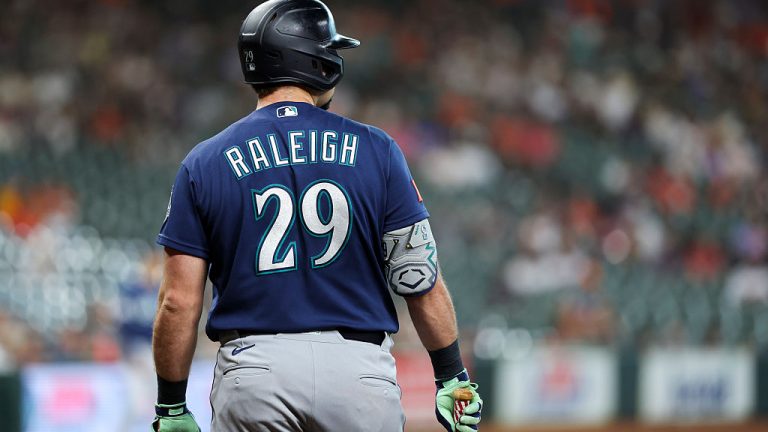
At the start of every season, fans take a look at the Seattle Mariners roster and wonder if it will finally be the season when they win it all. This year was surely no exception.
The rotation had the talent. The lineup, even in a pitcher-friendly ballpark, was on an upward trajectory. And just last season, the Mariners were moments away from their first pennant in franchise history.
Then, amid a 162-game fugue of failed expectations, major setbacks, and unrecognizable players, the Mariners came crashing down. The same roster that looked poised to hoist a trophy finished with 76 wins and failed to win the AL West, a division with the statistical worst champion in any 162-game season in MLB history.
Before the final game of the season, manager Dan Wilson was told he would not be returning. After years of this team struggling to make a playoff run, the man who brought Seattle closer than it had ever been to World Series glory was fired less than one year later.
Managerial capabilities are always challenging to evaluate. Oftentimes, the Manager of the Year Award is given to the manager of a team who exceeded the most expectations. But while this team’s successes and failures are not solely on the shoulders of Wilson, the underperformance of many key players was undeniable.
Cal Raleigh
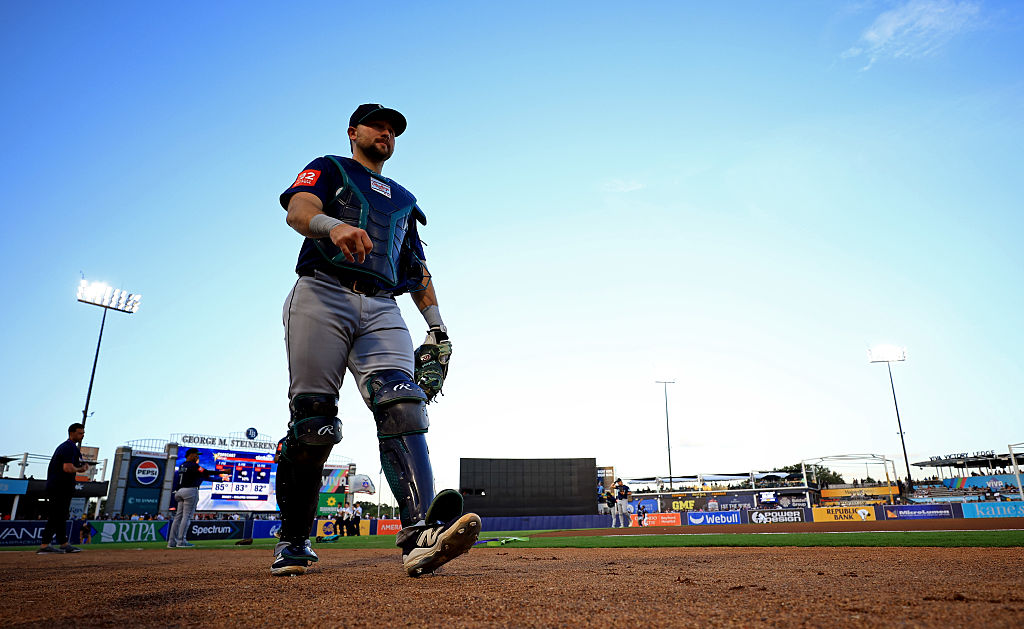
Any conversation about the Mariners’ step back has to start with Cal Raleigh, because he was such a major reason why they performed so well in 2025.
Raleigh accomplished things no one had seen before last season. He was a switch-hitting catcher who clubbed 60 home runs in a pitcher-friendly home ballpark. While his defense wasn’t enough to earn him another Platinum Glove, Raleigh still ranked in the 88th percentile for fielding run value, per Baseball Savant.
While few catchers possess the rare ability to pace the league in offense and defense, Raleigh did just that in 2025, narrowly losing out to Aaron Judge in MVP voting after claiming 13 of 30 first-place votes.
What few expected in 2026, though, was a massive decline in both offensive and defensive output for Raleigh. It always felt like Raleigh would be a high-floor player. He was a power-hitting catcher who could fall back on defensive value during offensive slumps. This, however, was not the case in 2026. Raleigh simply looked outmatched on both sides of the ball.
Raleigh was a below-average hitter with a wRC+ of just 91 across 530 PA. And while a mediocre performance at the plate can typically be saved by defense, especially at a premium position like catcher, Raleigh did the opposite. His fielding run value was in the 15th percentile, leaving Raleigh with a 1.9 fWAR.
Prior to his 2025 breakout, Raleigh was as consistent as they come offensively. His wRC+ ranged between 114 and 122, strong numbers for the Mariners’ primary catcher with excellent defense and poise in controlling a dynamic young pitching staff. It’s unclear now who the real Cal Raleigh is. The record-setting near-MVP or the struggling, below-average catcher.
Only next year will tell where Raleigh’s true middle ground lies.
Josh Naylor

When the Mariners gave Josh Naylor a five-year, $92.5 million contract last offseason, it seemed like a slam dunk deal. Naylor was an ever-underappreciated first baseman who recently tapped into a 30-stolen-base season, despite being one of the slowest players in the league.
The last thing Seattle expected after dishing out this contract? A negative rWAR season in year one.
First base is far from a premium position defensively, meaning that if you can’t hit as a first baseman, your job is quickly on the chopping block. In Naylor’s case, his track record allowed for plenty of job security, but not necessarily plenty of production.
By the season’s end, Naylor’s batting run value was in the second percentile. This was a massive fall from last season’s 85th-percentile production. Despite this dip, Naylor’s strikeout and walk rates did not change significantly.
While his walk rate took a 1% dip, Naylor still avoided striking out exceptionally well. The major difference was in his power production. Naylor’s slugging percentage fell by .112 points, with his home run total falling from 31 in 2024 to 20 in 2025 to 10 in 2026.
Part of Naylor’s struggles could have been due to a wrist ailment, although his offensive woes began before he suffered the injury. Should Naylor be able to return to his slugging ways and faster exit velocities, then there is still hope that he can make this contract worthwhile.
Julio Rodríguez

In selecting the five players for this list, I waffled back and forth the most with Julio Rodriguez. This is largely because he had the best offensive performance of the three hitters and overall has the highest floor because he remains a young, toolsy player who can produce value for his team in several ways.
When Naylor struggles at the plate, it feels as though his primary tool is rendered unimportant and his overall value is negative. When Rodríguez struggles at the plate, he still has a cannon of an arm and runs the bases well.
Struggled at the plate is also a stretch in itself, as Rodríguez was roughly league average with a 103 wRC+. It was, however, a strong falloff from his previous four seasons, in which he never had a wRC+ below 116.
The underlying numbers don’t have an indication, however, of what exactly Rodríguez has changed. He always chased at a high rate with middling K and BB rates. On one hand, perhaps those numbers finally caught up to him, but this impatient approach is not a new revelation. Perhaps teams just began to adapt and gain a stronger understanding of how to prepare for Rodríguez at the dish.
The biggest point of regression for Rodríguez came defensively. After being an excellent defender in center field throughout his career, he took an unexpected hit in 2026. His OAA fell from 11 to -3, destroying his value at a premium position.
If Rodriguez wants to bounce back to his ROY stardom, or even just his 2025 self, he’ll need to revamp his approach at the plate and on the outfield grass.
George Kirby
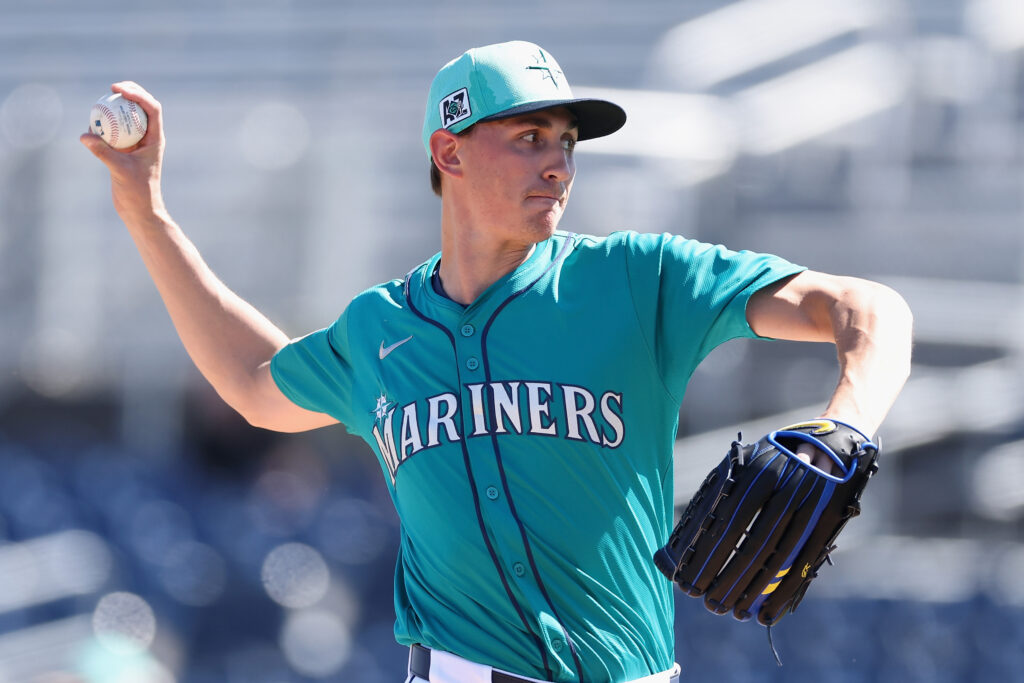
After he posted an ERA over 4.00 in 126.0 innings last year, Seattle fans grew some hesitancy around George Kirby, who had previously been an up-and-coming frontline arm. This meant that 2026 was the kicker year, where a healthy Kirby could bounce back or fall further. Unfortunately for Seattle fans, he did the latter.
Kirby still had a serviceable season for a back-end starter, posting a 4.33 ERA in 174.2 innings, but this was far from what his peak appeared to be in the past. Worst of all, Kirby’s strikeout and walk numbers were the worst of his career by a comfortable margin.
In 2023 and 2024, Kirby led the league in BB/9 and K/BB ratio, two numbers that let fans believe he was destined to be a consistent performer for years to come. This season, however, those numbers changed. Kirby, who walked just 1.1 batters per 9 innings from 2022-24, more than doubled that number in 2026.
Kirby’s K/9 also fell to a career low of just 7.6. What was once his calling card now appears to be a point of struggle. If Kirby hopes to bounce back to the ways of a No. 2 starter in Seattle, he will have to start with his management of the strike zone.
Andrés Muñoz
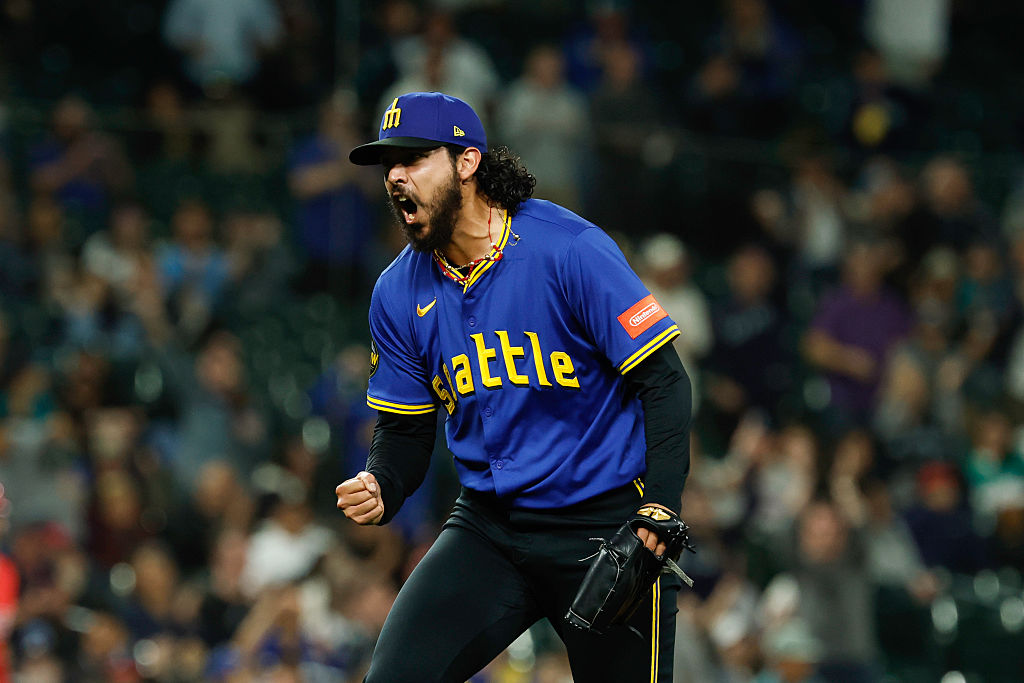
Relievers have always been some of the toughest positions to assess in terms of value to a team. Do you judge them strictly off of high-leverage save situations? A total rate of runs allowed? The pitch mechanics and metrics?
No matter which of these evaluation methods you prefer, it’s undeniable that Andrés Muñoz did not live up to expectations in 2026. This is especially true considering his recent breakout. During the 2025 season, it was hard to pick more than a few relievers who performed better than him.
Before landing on the injured list to end the 2026 season, Muñoz had 28 saves with 10 blown opportunities. Compared to his 38-for-45 mark a season ago and 22-for-27 mark in 2024, the reliability of Seattle’s star closer had suffered.
The other consequential factor in Muñoz’s drop-off was his struggles to limit traffic on the basepaths. After holding a sub-one WHIP in 2024 and a 1.03 mark in 2025, that number ballooned to 1.22 in 2026. If Muñoz wants to bounce back to the type of season that got him two consecutive All-Star Game selections, then he will need to limit hits.
Despite allowing more baserunners, Muñoz actually improved his walk rate in 2026, and signs point to him being very unlucky. This season, he had his lowest xFIP since 2022. It was also more than a run lower than his FIP, showing signs of poor batted-ball luck. The same can be said for his ERA. Muñoz struggled to a 4.24 mark, but held a 3.27 xERA.
If there’s one player on this list of five who has the highest chance of bouncing back strictly based on luck, it’s certainly Muñoz. There’s a great chance he hears his name announced at another All-Star Game in the coming seasons.
Become a Member of Just Baseball
Subscribe and upgrade to go ad-free!
* Save 25% by subscribing annually.

Written by
Gabe Shumway is a prospect writer for Just Baseball. He is a student at Northwestern University studying Journalism and Environmental Policy, and can be seen or…