
Is This the Mets’ Best Rookie Class Ever?
While the Mets have two rookies vying for end-of-season awards, their rookie class goes deeper than that. Is this their best class ever?
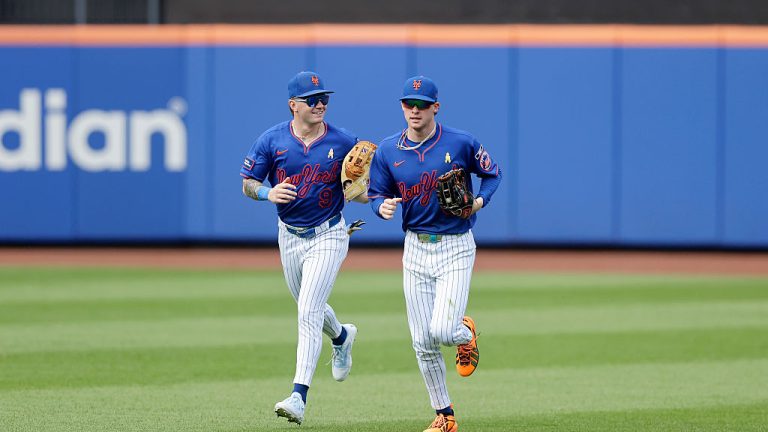
At the halfway point of the 2026 season, the New York Mets waved the white flag by firing manager Carlos Mendoza and immediately turning their attention toward 2027. A key reason the organization made that decision was because of the crop of rookies on its roster.
While Carson Benge and Nolan McLean headline the group and are competing for National League Rookie of the Year honors, rookie depth exists beyond those two. A.J. Ewing, Christian Scott and Zac Thornton have also impressed in their debut campaigns.
Major League Baseball’s rookie class in 2026 is historic, with five of the top 50 most valuable players in the sport being first-year ones. The rookie impact goes beyond that, giving way to highly competitive Rookie of the Year races in both leagues.
Let’s analyze what makes this class of rookies so valuable for the Mets and take a short trip down memory lane to determine whether or not this group is the strongest in franchise history.

Making their Mark in Queens
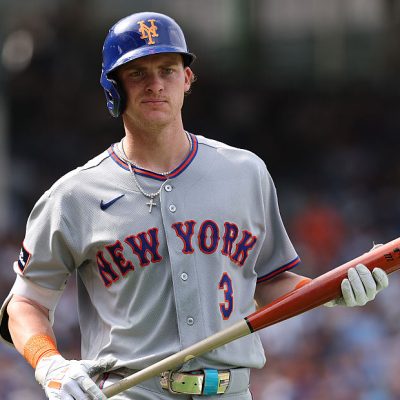
The expectations for both McLean and Benge were sky-high entering the season, for very different reasons. McLean dominated in eight starts down the stretch in 2025 and almost single-handedly willed New York into the postseason.
Benge, a former first-round draft choice, won the right field job in spring training and made his big league debut on Opening Day. The 23-year-old was the first Mets rookie position player to make an Opening Day lineup since Pete Alonso in 2019.
McLean picked up right where he left off last season, pitching to a 3.16 ERA in 31 starts this season. Despite the success, the right-hander still has a tremendous amount of room to grow as a pitcher as he continues to round out his arsenal.
Opposing hitters have fared well against his sweeper and cutter this season, with .366 and .338 BAA on those offerings, respectively. If McLean can improve the effectiveness of his glove-side offerings, he has the potential to be an ace for the Mets.
After a dreadful first month in the show, Benge has excelled ever since and has not looked back. Since May 1, the rookie has slashed .290/.354/.446, blasting 17 long balls and scoring 74 runs during that stretch. He is one home run away from becoming the first rookie in Mets history to have a 20/20 season.
That’s not even to mention the defense, which has helped fuel his 3.7 fWAR, with a Fielding Run Value of 7 in the outfield. Additionally, Benge is in the 100th percentile for arm value, according to Baseball Savant, and registered the fastest throw by a position player in 2026 at 103.9 mph, throwing out a runner at the plate in August.
The Oklahoma State product is a true five-tool player who, like McLean, is still blossoming into his full potential as he continues to develop in the majors.
Benge’s “psychopath counterpart”, as Juan Soto affectionately coined the duo, A.J. Ewing, has also impressed this season on both sides of the ball, posting a 98 wRC+ at the dish and 5 Outs Above Average in the outfield while wreaking havoc on the basepaths.
Ewing broke the Mets rookie club record for stolen bases on Tuesday night, swiping his 25th bag. His numbers would be stronger had it not been for a summer slump that he has pulled out of down the stretch.
The 22-year-old’s best trait at the plate is his discipline, which he shied away from in exchange for some power following the All Star break. Since reverting to his original approach, Ewing has found success again.
The strong defense and speed are already in place for Ewing, and he’s talented enough as a hitter that, as he develops, the results at the plate will come.
A pair of young arms round out this rookie class in the form of Scott and Thornton.
Scott debuted in 2024 before needing Tommy John surgery that same season, keeping his rookie status intact for 2026. The Florida product pitched to a 3.85 ERA in 23 starts this season, as he landed on the injured list Tuesday with knee inflammation, ending his season.
Scott struck out 28.3% of batters faced this season, using a devastating glove-side sweeper to dominate right-handed hitters. Left-handers fared better against Scott, but the 110 innings he tossed this season are by far the most he has thrown in his professional career. Again, like the rest of the bunch, he’s only a rookie, and with further experience and proper development, he could be a mainstay in this Mets rotation.
As could Thornton, who was a more under-the-radar prospect until recently, debuting this year with a 3.40 ERA across 14 starts. The southpaw is a strike-thrower, limiting walks and pitching to contact with his primary cutter.
Under the hood, Thornton’s expected numbers are worse than what he has actually put on paper this year. He has the weakest stuff of the bunch, but a back-end rotation anchor who can eat innings is never something a team will complain about.
The results have still been strong this season, and even if the analytics don’t back up his performance, if Thornton continues to get the job done, the Mets certainly will not complain.
Is This the Best Class in Mets History?
This 2026 class of Mets rookies is certainly a heavyweight, but there is competition throughout franchise history.
1972 makes a case, when John Matlack took home Rookie of the Year and John Milner finished third. Two players finishing in the top three in Rookie of the Year balloting is nothing short of impressive, but this year’s team will likely end up with four guys in the top 10 vote-getters.
If Darryl Strawberry and Dwight Gooden were rookies in the same season, that would most likely be the answer, but they were a year apart, with Strawberry coming up in 1983 and Gooden the following year.
Jacob deGrom led the 2014 class as the National League Rookie of the Year, with Travis d’Arnaud and Jeurys Familia also finishing in the top 10 of voting that year.
When New York went to the World Series the following season, Michael Conforto and Noah Syndergaard both played huge roles as rookies on that team.
There’s a handful of years not mentioned here that you could make a case for. It’s clear that the Mets have a strong history of high-performing rookies, but it’s hard to find a year as strong as 2026.
It’s hard to say that this is not the best rookie class this franchise has ever seen.
Looking Ahead
These rookies are the highlight of the Mets’ 2026 season. The future looks tremendously brighter than it once did based on the performance of this pack of neophytes.
McLean and Benge will finish somewhere in the top four of National League Rookie of the Year voting alongside St. Louis’ JJ Wetherholt and Cincinnati’s Sal Stewart, and a case can be made for either one of New York’s youngsters to take home the hardware.
All five of the rookies mentioned here—McLean, Benge, Ewing, Scott, and Thornton—are locks for the 2027 Mets roster as they continue to build toward their goal of sustained success and an emphasis on homegrown talent. They have all proved this season that they are key building blocks for the future of the franchise.
Become a Member of Just Baseball
Subscribe and upgrade to go ad-free!
* Save 25% by subscribing annually.

Written by
Joe Browne is an aspiring sports journalist and is currently a sophomore at St. John's University. Joe is a lifelong Mets fan who is also passionate…