
Previewing the 2026 MLB Draft Combine
These 10 players have a chance to impress at Chase Field this week during the 2026 MLB Draft Combine.
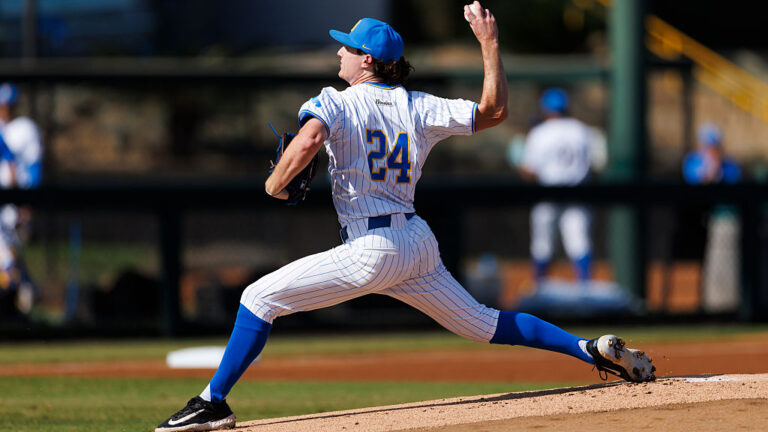
As the sun sets in Omaha on the College World Series, the amateur baseball world now turns its attention to Chase Field in Phoenix, Arizona for the 2026 MLB Draft Combine.
We’re less than three weeks away from the Chicago White Sox making the first overall selection, and somehow, the top of the board seems more unclear than ever.
While the top three players in the class are mostly undisputed (UCLA SS Roch Cholowsky, Georgia Tech C Vahn Lackey and prep SS Grady Emerson), it’s anyone’s guess as to the order they will come off the board next month in Philadelphia.
Are we suffering from a mild case of prospect fatigue with Cholowsky, the draft’s clear-cut 1-1 for much of the past year, or have Lackey and Emerson done enough to convince teams that their ceilings are worth passing on the Bruins star?
Though it is a long way from becoming the spectacle of its NFL counterpart, there is no denying the importance of the MLB Draft Combine for teams and players alike.
It is one of the final opportunities for players to answer lingering questions for front office personnel, address injury concerns with team doctors and benefit from fresh scouting eyes as we enter the home stretch of the evaluation process.
335 players received invitations to this year’s Combine, and while much of the focus will be on the group’s headliners, I’ll be highlighting five hitters and five pitchers who have a chance to impress in the desert this week.
For the second consecutive year, I’ll be serving as Just Baseball’s eyes and ears at the Combine, giving our readers exclusive content and interviews with some of the 2026 Draft’s top prospects. Stay tuned in here and to all our social channels, and follow me on X (@cdorney) throughout the week.
Ryan Cooney | IF | Oregon
Cooney entered the season as a Day 2 bat whose profile lagged behind fellow middle infield teammate Maddox Molony, but Cooney has done more than enough to cement himself as a Day 1 pick and likely the first Duck off the board.
The Portland native spent the year at second base because of the aforementioned Molony’s presence, but he does have enough athleticism and arm strength to begin his pro career at shortstop. Cooney has always displayed sound swing decisions and elite in-zone contact rates, and though he did see an uptick in his average EV numbers, there’s unlikely to be anything more than average power here.
Regardless, Cooney’s consistency, projectable frame and hit-over-power profile will be capable of moving quickly through a pro org’s system. That should help him find a home somewhere in the comp rounds on draft day.
Ryne Barker | IF | Casteel HS (Ariz.)
Barker was one of my favorite follows during the spring here in Arizona and a key contributor in a loaded Casteel lineup that also featured fellow Combine invitee, outfielder Ryan Harwood.
Barker displays outstanding bat-to-ball ability from the left side and easy double-plus speed on the basepaths. There is also enough projection left on his lean, 6-foot-2 frame to dream of more power down the line. Though he’s been listed as a third baseman, Barker is capable of playing pretty much anywhere on the infield or even somewhere in the outfield should a team choose to take advantage of his speed.
I will be most tuned into Barker’s defensive drills and batting practice metrics, which should allude to his potential as one of the more projectable prep bats in the class.
Elliot Lascelles | IF | Upper Canada College (Canada)
If you’re looking for one of the most sure bets to hit out of this prep bat class, you may have to direct your gaze north of the border to Elliot Lascelles.
Lascelles has an old-school, gap-to-gap slasher type aesthetic in the box and is short to the ball with quick hands from the left side. He continues to display elite in-zone contact metrics and has shown an ability to hit to all fields, using his plus speed to turn doubles into triples. Defensively, the arm is fringy and likely pushes him to second base long term, but the bat is undoubtedly the selling point here.
Lascelles may be a tough sign away from his commitment to Yale, though the Detroit Tigers were able to sway Michael Oliveto from that very situation in last year’s draft. I see shades of Brice Turang in Lascelles’ game. A strong Combine showing could help vault him into the top 50 conversation.
Andrew Williamson | OF | UCF
What Andrew Williamson lacks in prototypical size for an outfielder, he makes up for in pure impact in the batter’s box.
In his third season for the Golden Knights, Williamson slashed .322/.442/.645 with a career-high 16 home runs and a well-above-average 15.5 percent walk rate.
All of this is not to say that the profile is without its flaws. If you don’t know what a “barrel tip” is, you will after watching Williamson hit. There are legitimate questions as to whether those mechanics will affect his ability to handle velocity at the next level, as well as his long-term defensive value, but Williamson is as good a bet as any to put on a stellar show in batting practice this week.
If you buy into the power, he’s likely a top 100 pick. The Combine should help to answer some of those lingering questions.
Wessley Roberson | OF | Glynn Academy (Ga.)
Roberson, a current LSU commit, is as tooled up as it comes, displaying plus athleticism in all facets of his game. His quick-twitch and explosiveness show up in the box with a fluid swing from the left side that generates plenty of loft to the pull side.
Roberson has been a consistent performer on the showcase circuit and rarely misses on pitches inside the strike zone. Defensively, he’s athletic enough to handle center field or move to either corner should he fill out and grow into future average power.
If the Georgia native can put some of those tools on display this week, it’s unlikely he makes it to campus in Baton Rouge.
Logan Reddemann (RHP, UCLA)
Reddemann excelled in the Bruins’ Friday night role this season following a transfer from San Diego but dealt with arm fatigue in mid-April that shut him down for the final portion of the season. Thankfully, Reddemann has been cleared to pitch again and is expected to throw a bullpen this week at the Combine.
The California native won’t jump off the page metrically like some of the other arms in the class, but he’s been up to 99, and his deceptive delivery, diverse arsenal and strike-throwing ability all work in his favor to provide one of the highest floors of any arm in the class. The results in Westwood certainly speak for themselves, even in an abbreviated season that included an 18-strikeout performance against Rutgers.
Provided the medicals check out, Reddemann figures to come off the board in the first 20-25 picks on draft day.
Eric Nachtsheim | RHP | McNeese State
Nachtsheim transitioned from a bullpen to starting role for the Cowboys this season, and the move paid big dividends for his draft stock. The right-hander’s calling card is a high-IVB cut-ride fastball, up to 96, playing off plus extension, which generated tons of swing-and-miss this season.
It’s a big, durable frame that’s maxed out physically, but Nachtsheim throws a lot of strikes and could sneak his way into a backend starter role down the line with further refinement of the secondaries. Entering the draft as a 22-year-old means he’s destined to be a money-saving senior sign, but an organization with a strong pitching development track record could extract plenty of value from this profile.
Brody Bumila | LHP | Bishop Feehan HS (Mass.)
I mean no disrespect to high school baseball players in the New England area when I say they stood no chance in the box against towering southpaw Brody Bumila.
Bumila looks like he came straight off the assembly line at the Randy Johnson School of Intimidating Lefties and could land as high as the top 10 picks come July.
The 6-foot-9 frame, elite extension and fastball that has already been up to 100 are the obvious selling points of Bumila’s profile – not to mention the overall athleticism that made him a bona fide star on the basketball court, as well.
Secondaries are still a work in progress, but this type of LHP talent doesn’t grow on trees, even if Bumila rivals the appearance of one on the mound.
Ethan Wachsmann | RHP | Grandview HS (Colo.)
The Colorado prep ranks have been home to several intriguing arms over the past few years, and Wachsmann is the latest in that lineage. The right-hander out of Grandview, the same program that produced Kevin Gausman, has already been up to 100 with the fastball and paired it with breaking balls in the 3,000 rpm range.
Like many prep arms, command is still a long-term goal, but there are enough raw traits and projectability on Wachsmann’s 6-foot-5 frame to dream on a future mid-rotation starter. Teams will have to contend with his commitment to Wake Forest, a program that has a strong track record of getting talented arms to campus in recent years.
Russell Sandefer (RHP, Florida)
Liam Peterson will be the first Gators arm off the board next month, but don’t sleep on his rotation counterpart, righty Russell Sandefer.
Sandefer is a loose, whippy arm who utilizes a unique, low-slot approach and east-west arsenal that generates lots of ground balls. He’s been up to 98 on the fastball with heavy sink and also flashes a plus slider with two-plane movement as well as an above-average changeup.
Teams will likely see if he can continue his progression as a starter at the next level, but the fallback is a potential high-leverage bullpen arm in the mold of Matt Brash.
Become a Member of Just Baseball
Subscribe and upgrade to go ad-free!
* Save 25% by subscribing annually.

Written by
Conor Dorney is a baseball writer, podcaster, and stand-up comedian. He currently lives in Phoenix, Arizona with his wife and dog. He’s available for parties as…