
Role Changes Have Brought Positive Results for the Blue Jays
The back end of the Blue Jays' bullpen has been a sore spot once again in 2026, but changing Jeff Hoffman and Louis Varland's roles have gone a long way to fixing that.
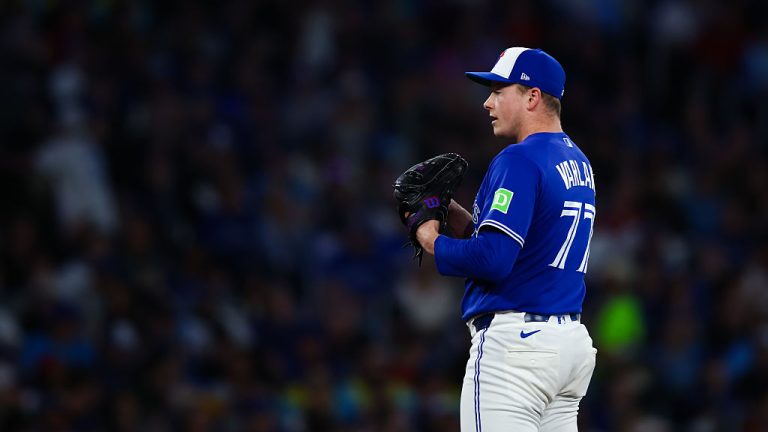
Not far removed from making it to their first World Series in decades, the Toronto Blue Jays have stumbled out of the gates to open the new campaign. The injuries are piling up at a rapid pace, last year’s standouts are having trouble replicating that success, and the longball has disappeared from the Blue Jays’ game.
As of right now, the Blue Jays are 23rd in runs scored, 25th in wRC+, and 27th in OPS. George Springer, Andrés Giménez, and Davis Schneider are among the top hitters to enter the day sporting a wRC+ below 100, signifying that they’re all well below league-average.
On the pitching side of things, they’re 10th in starter’s ERA and 16th in reliever’s ERA. Each of these are much improved over where they were just a week ago, which does matter. It also helps that the rotation’s got the ninth-best FIP and the bullpen’s got the eighth-best FIP, but it’s hard to deny that the staff has thrown away their fair share of games in the still young 2026 season.
The pitching staff is where our focus lies today, primarily on the bullpen. To open the new year, last season’s closer, Jeff Hoffman, was handed the role as the Blue Jays’ primary ninth-inning option. Louis Varland was projected to once again fill an important, versatile role on the pitching staff that could see him do anything from pitching multiple innings at a time to (potentially) closing out ballgames.
Things haven’t gone exactly as planned for the Blue Jays so far this year, and these two arms are a prime example of that. Let’s take a closer look at how things have shifted for two of the most important hurlers on this team’s staff.
Jeff Hoffman’s Role
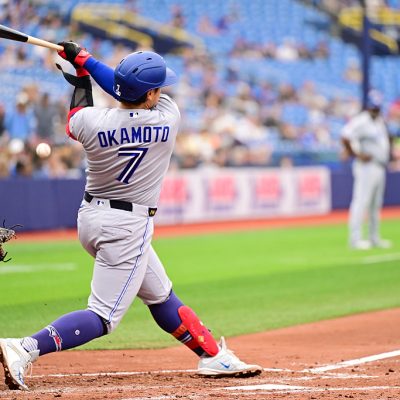
Despite the fact that he was drafted by the Blue Jays in the first round of the 2014 MLB Draft, Hoffman didn’t throw his first regular-season pitch with the team until 2025. The right-hander has put together a solid career that’s already over a decade long, and has experienced nearly all of his success since becoming a full-time reliever.
Hoffman earned 10 saves for the 2024 Philadelphia Phillies but hadn’t gotten a full season’s worth of save chances until last year. Despite the fact that he notched 33 saves and struck out over 11 batters per nine innings, there were some concerning signs.
For starters, Hoffman blew seven saves during the regular season. a number that was topped by only three other relief pitchers. He also surrendered a whopping 15 home runs, topped only by Washington’s Jackson Rutledge. In 41 true save situations, Hoffman posted a 5.06 ERA, while that number fell down to 3.52 in 30 non-save situations. The Blue Jays had reasons to try him in another spot, but they stuck with their guy.
Dreadful months of May (13.50 ERA in 10 innings) and August (6.00 ERA in 12 innings) held down his year-long counting stats, but he was getting barreled up much more frequently than he ever had before.
Finally Making the Change
Even though Hoffman was the one responsible for the Dodgers’ World Series-winning home run in Game 7 of last year’s championship, the Blue Jays entered the 2026 season ready to have him remain their primary ninth-inning arm.
The last save he earned was one month ago yesterday, on April 20, against the Los Angeles Angels. Before officially losing his hold on the full-time closer’s role, Hoffman had allowed eight earned runs on 14 hits in just 10.1 innings of work. He’s still striking out a ton of batters, but a 6.97 season-opening ERA was never going to work.
So, the Blue Jays pulled the plug on the Hoffman Experience. He’s made 12 appearances since his last save, and he’s surrendered five earned runs on 15 hits in 10.2 innings of work. A 4.22 ERA still isn’t great, but it’s an improvement at the very least. His 3.20 FIP and 3.43 xFIP in this small stretch are also encouraging.
The Blue Jays have only given Hoffman single-inning chances, and so far it seems that he’s been most comfortable pitching in the seventh inning. To date, he’s got a 3.86 ERA in five seventh-inning outings. Otherwise, he’s at 7.20 in five eighth-inning showings, and 5.59 in 9.2 ninth-inning ones.
Louis Varland Is Thriving as the Blue Jays’ Closer
The Blue Jays may be five games under .500 and 11.5 games out of first place, but there’s a high likelihood that they’d be far worse off if Louis Varland was not immediately available to fill the Hoffman-sized hole as the team’s closer.
Prior to this year, the right-hander had never earned a save in his big league career, but you could tell as soon as he came over in a midseason trade that he had the stuff for it. The Blue Jays relied on his right arm a ton down the stretch last year, especially in the playoffs, and for the most part, he came through. Outside of the three-run home run he surrendered to Aaron Judge in the ALDS, Varland’s cumulative postseason ERA sat at 2.25.
Back in early September of last season, Varland began to experiment with his pitch mix. The former starter reintroduced a trio of pitches he used to rely on as a starting pitcher and has been reaping the rewards of this decision ever since. He posted a 1.29 ERA in six regular-season outings last year after shuffling his repertoire, and has brought that number down to a sparkling 0.86 when you factor in 2026’s appearances.
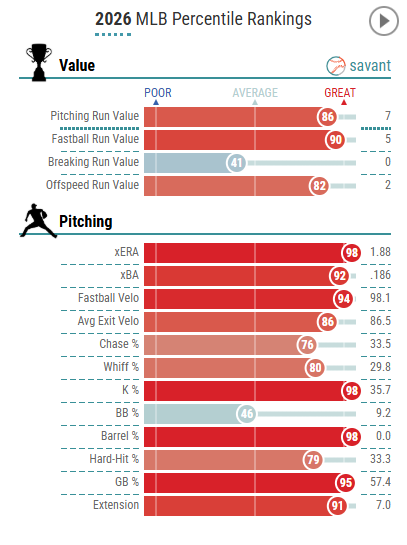
There’s simply no other word to use when talking about Varland’s year so far other than dominant. He’s made it into 24 contests so far and has struck out 37 batters while walking nine and allowing just two earned runs to this point. He’s preventing base hits better than he ever has before, he’s striking out nearly 13 batters per nine innings, and has the third-lowest ERA (0.70) amongst all MLB relievers to this point because of it.
Why He Just Works in the Role
Circling back to the repertoire is where I believe you’ll find your answer to the question of why Varland fits perfectly into this role.
Last year, the right-hander used only two pitches: a four-seam fastball and knuckle curveball, for just under 83% of his total pitches thrown. He filled in the blanks with a slider, sinker, and changeup, but none of those offerings had a usage over 7%.
Down the stretch last season and into the current one, Varland has started to use his non-FB and non-CB pitches more, and it seems to be working nicely. Varland himself said at one point that if you only throw two pitches, hitters are going to have a much easier time sitting on one of them and doing damage to it.
While he’s still throwing his four-seam fastball 45.8% of the time in 2026, he’s able to use it as more of a weapon than he could last season when it was only one of his two primary pitches. After hitters managed a .260 average against it in 2025, it’s now dipped all the way down to .184 since it be can used as a surprise pitch more often.
His curveball is down to 28.5% from 37.5% last season. While opposing players are now hitting .320 off of the pitch (versus .210 last year), he’s able to hide this much better by boosting his usage in his changeup (11.5% usage after 4.7% last year) and slider (9.8% after 5.4% last year). The highest batting average against between these two pitches is .182.
Simply put, the more pitches a reliever has in his arsenal, the harder it’s going to be for batters to square him up. If they know to only look for a fastball or a curveball, the odds of them sitting on a heater and sending it a long way are much higher. The fact that Varland has yet to allow a home run this year speaks volumes about just how far this adjustment has gone.
Closing Thoughts
Jeff Hoffman has been far from perfect as the Blue Jays’ closer, and he’s still a work in progress as a seventh- and eighth-inning arm, but early results have been promising. The pressure significantly ramps up when you’re a closer, so maybe some lower leverage stints are what he needs to find himself.
He’s got a lengthy track record of being a successful and versatile relief pitcher, and he’s still an arm that’s going to positively impact this squad.
Being able to have Varland slot straight into the role to replace Hoffman was picture perfect for the Blue Jays, and he could very well be on his way to the All-Star Game in a few months if he keeps this up.
A few adjustments to his pitch usage has significantly helped the right-hander be a run prevention machine in 2026, and it’s got a lot to do with why he’s at or near the top of the charts on multiple statistical categories.
Become a Member of Just Baseball
Subscribe and upgrade to go ad-free!
* Save 25% by subscribing annually.

Written by
Eric Treuden (troy-din) has covered baseball for years for multiple different outlets including FanSided, Yardbarker, and Wisconsin Sports Heroics. He recently was the editor for Jays…