
The Orioles’ Battered Lineup Is Finding Ways to Produce
Despite an ever-growing list of injuries, the Baltimore Orioles' lineup continues to produce at a high level.
The Baltimore Orioles are right in the thick of the American League East, sitting just a game-and-a-half behind the first-place Tampa Bay Rays.
It’s a strong start for a team many believed should temper expectations due to the division’s depth.
However, it isn’t the stars who deserve the attention. After all, most of the Orioles’ lineup is on the shelf. Baltimore has a major league-leading 13 players on the injured list.
Stars like Jackson Holliday have yet to make their season debut after breaking his hamate bone in spring training. Jordan Westburg is out for at least two months with a partially torn UCL.
Just days ago, Tyler O’Neill entered concussion protocol, while Adley Rutschman landed on the injured list with left ankle inflammation.
Even depth pieces like Ryan Mountcastle and Heston Kjerstad are on the injured list. The injuries keep piling up, yet you’d never know it by the way this team is playing.
Baltimore’s lineup is averaging 4.25 runs per game, the seventh-best mark in the American League. But how have they sustained this level of production despite all the injuries? These players deserve their flowers.
All stats from this article were updated prior to play on Saturday, April 18.
Orioles Hitters Carrying the Offense
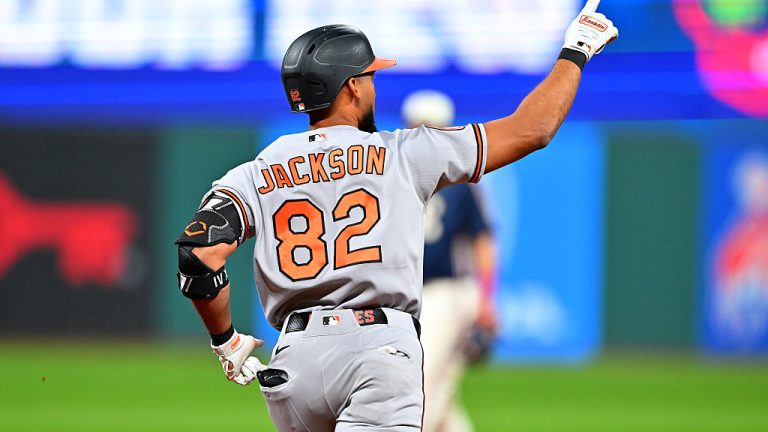
Jeremiah Jackson
Jackson debuted with the Orioles last season after bouncing around with several teams in the minor leagues. He impressed with his bat, hitting .276 with five home runs in 170 at-bats. He also showcased defensive versatility across the diamond.
This season has been even better. Jackson has driven the Orioles’ lineup, delivering clutch hits and sparking rallies. In 62 plate appearances, he is hitting .317 with five home runs and a .923 OPS.
Jackson hit two of those home runs in the same game in a high-scoring thriller on Monday against the Arizona Diamondbacks.
Craig Albernaz has kept the 26-year-old in the lower third of the lineup despite his production. Perhaps for good reason. With the lineup so banged up, the Orioles need reliable bats at the bottom.
And with Jackson routinely finding his way to get on base, he helps set the table for this next guy.
Gunnar Henderson
Henderson was inserted into the leadoff spot on April 8 and hasn’t looked back. He may be hitting just .200, but he has hammered six home runs and driven in 14 with a .744 OPS.
Few players have added more runs to their teams than the former Rookie of the Year. According to Baseball Savant, Henderson owns a Batting Run Value of three, ranking in the 77th percentile.
A major reason for Henderson’s early success is his increased barrel rate. Last season, he hit 17 home runs after launching 37 the year before. His barrel rate dropped nearly three percent to 8.5%. Early this season, it has jumped to 11.9%, lead to those six home runs.
With so many Orioles stars sidelined, it’s imperative that Henderson lives up to his reputation. If he maintains this pace and heats up, he’ll return to the MVP conversation.
Leody Taveras
Taveras, the former longtime Texas Rangers outfielder, was the first offseason signing by Mike Elias. Elias likely envisioned Taveras as a speed threat off the bench and a late-game defensive replacement. But with mounting injuries, Taveras has stepped up.
In a still-growing sample of 44 plate appearances, Taveras has thrived, hitting .371 with a .946 OPS. He also has eight RBIs, which is tied for third-best on the team. That production comes in less than half the at-bats of the everyday starters.
Taveras’ emergence is even more vital due to the lack of quality at-bats from Colton Cowser. Cowser entered the season as the starting center fielder despite limited experience at the position.
Perhaps manning center field has affected Cowser’s bat, as he’s struggled mightily against off-speed pitches, hitting .167. His average exit velocity of 84.8 ranks among the worst in baseball, sitting in the bottom seven percent.
If Cowser continues to struggle and Taveras keeps producing, he could easily take over as the starting center fielder for the Orioles.
Taylor Ward
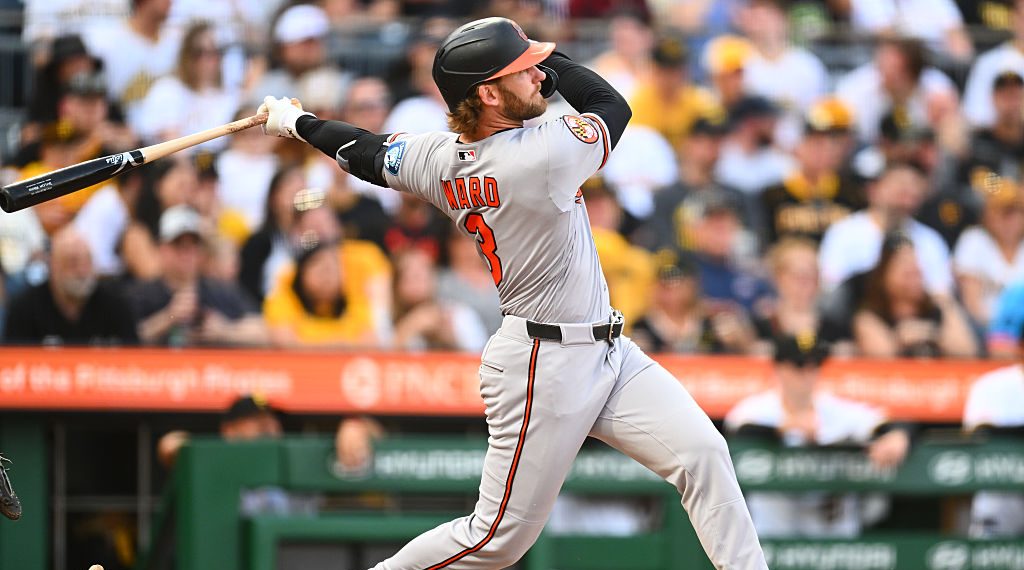
Ward was one of the biggest under-the-radar moves made this offseason. After hitting a career-high 36 home runs with the Los Angeles Angels last season, the Orioles envisioned a power-heavy offense. With Ward, Henderson, and Pete Alonso atop the lineup, the potential was undeniable.
However, Ward hasn’t showcased his power just yet. He remains without a home run but is hitting .291 with an .811 OPS in 94 plate appearances.
What has separated Ward early this season is his discipline at the plate. He owns a chase rate of just 12.4%, ranking in the 100th percentile. He is also hitting more line drives than fly balls this season.
Compared to last year, Ward’s fly ball rate has dropped from 36% to 31%. Meanwhile, his line-drive rate has jumped from 22% to 36%. Although it may not be exactly what the Orioles expected, they will certainly take it.
The Orioles must weather the storm over the next few weeks until they can get healthy. If the stars and this band of misfits keep producing, they’ll be in a good place.
Become a Member of Just Baseball
Subscribe and upgrade to go ad-free!
* Save 25% by subscribing annually.

Written by
Thomas Kelson is an intern at Just Baseball and a graduating senior at Rutgers University, where he studied Journalism and Media Studies with a specialization in…