
Four Bright Spots for the White Sox Early in 2026
The White Sox are off to a disappointing start, but a handful of key players offer reasons for optimism this season.
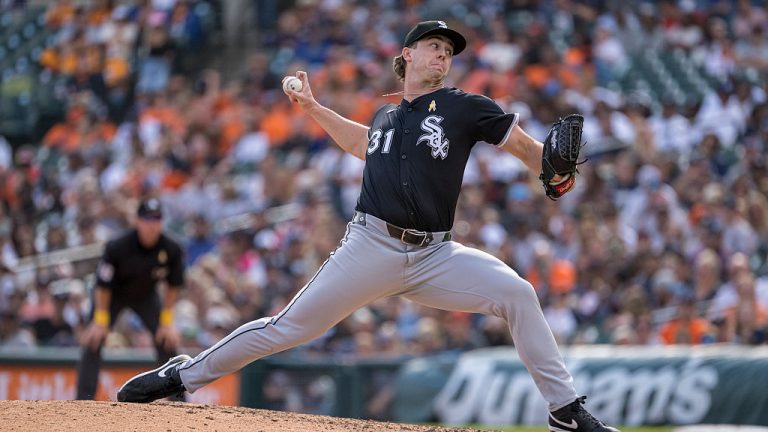
The Chicago White Sox opened division play with a split in Kansas City, and the next time they take the field could mark the beginning of a new wave of baseball on the South Side.
Top pitching prospect Noah Schultz is expected to debut Tuesday, and Sam Antonacci could join him.
More help should follow soon, especially on the pitching side, as the organization begins to lean more heavily on its prospect depth. There has also been added roster churn with the departure of Lenyn Sosa to Toronto, further opening space for incoming talent.
The reinforcements cannot come soon enough. The White Sox’s start to the 2026 season has not been ideal, and it is not what Chris Getz and Will Venable envisioned, even within a realistic range of outcomes.
Still, through the first couple of weeks, there have been a few bright spots that offer some reason for optimism as the season begins to take shape.
Munetaka Murakami has performed as anticipated, bringing immediate power despite the expected swing-and-miss. Miguel Vargas looks more settled in the corner infield and has produced steady at-bats near the top half of the lineup.
Davis Martin has quietly put together a strong opening stretch in the rotation. Grant Taylor has been lights out in an opener and high-leverage role, with a chance to handle more down the line.
It is not a finished product, and for now, these early performances give the White Sox something to build on until the rest of the next wave arrives.
Here are four early bright spots on the White Sox roster so far.
Grant Taylor
Grant Taylor has the kind of stuff that stands out immediately, and it hasn’t taken long for him to enter the conversation as one of the more electric arms in the game, with early results already backing it up.
In 8.1 innings, Taylor has allowed just one run with a 1.08 ERA, a 0.96 WHIP, and a 10.8 K/9. He has limited traffic and consistently finished hitters once ahead in the count. His usage has been unconventional but telling, as Taylor has already opened multiple games while also working deeper into outings when needed.
The underlying data support what the eye test suggests. His fastball velocity ranks near the top of the league, sitting 98-99 mph and touching higher, while generating an 87th percentile run value. He pairs that with a chase rate above the 90th percentile and a strikeout rate north of 30 percent, allowing him to consistently get ahead and put hitters away.
Contact against him has been limited. Opponents are not squaring the ball up with authority, reflected in a low expected batting average and strong ERA indicators. When hitters have made contact, it has rarely come in damaging spots.
Taylor’s role is still evolving, but the usage gives a clear indication of where this could be heading. He has worked into the second inning and could continue to build toward longer outings as the season progresses, especially if the efficiency holds.
The right-hander has the profile of a starter, and this stretch looks like part of a build toward more volume. However it develops, the ceiling is evident. Taylor has already shown enough to project into a prominent role moving forward, with the potential to anchor the front of the staff as early as 2027.
Munetaka Murakami
Munetaka Murakami has delivered as advertised early in his White Sox tenure. While there have been expected ups and downs in a small sample, the overall impact has reflected the middle-of-the-order presence the organization envisioned, backed by a 100 wRC+ through his first stretch.
The power made an immediate impression. Murakami homered four times in his first eight games, the most by a rookie in White Sox history and the most by a Japanese-born player to begin an MLB career. When he’s seen a fastball in the zone, he has consistently done damage.
Pitchers have adjusted quickly. Rather than challenge him, they have leaned more on spin and worked to the edges, forcing Murakami into tougher counts. That has led to some cooling after the early surge, but it has also highlighted his approach.
He seems like he is always in a multi-ball count and continues to draw walks at a strong rate and avoid chasing too far outside the zone, allowing him to remain productive even as the average dips.
The underlying contact supports the profile. Murakami carries a .338 xwOBA with strong exit velocity and hard-hit rates, along with one of the league’s highest barrel rates early on. The swing-and-miss is part of the package, but the quality of contact remains a clear strength.
There has also been stability defensively. Murakami has been steady at first base with neutral run value, providing a clear improvement at a position that was a weakness for the White Sox last season.
There are still adjustments ahead on both sides of the ball. That’s to be expected in April. But the early returns reinforce the profile. Murakami has already shown he can anchor the middle of the lineup and impact games even when he is not at his best.

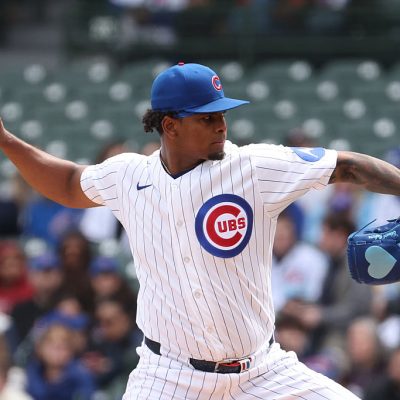
Miguel Vargas
Miguel Vargas has started to look more settled early in 2026, both in the lineup and in the field, giving the White Sox a more stable presence at a position that lacked consistency last season.
The defining moment so far came in Miami. Playing in front of family and close friends, Vargas delivered a six-RBI performance that included a 402-foot grand slam at 105.5 mph, helping secure the White Sox’s first win of the season. Beyond the moment itself, it offered a glimpse of the impact the organization has been expecting.
That production has come with a clearer approach. Vargas has leaned into controlling the zone, reflected in a walk rate north of 14 percent, while still showing the ability to do damage when he gets a pitch to handle. The overall line has been uneven, but the underlying indicators suggest a more stable offensive profile than the surface numbers show.
His role has also begun to settle. Vargas has been used at both third and first base, but third has become his more consistent landing spot, as he fills a need at a position that has been a revolving door. At the plate, he has seen time in the leadoff spot, though most of his work has come in the middle of the order, often hitting third.
There is also value beyond the stat line. Vargas has taken on a more vocal presence within a young clubhouse, something the White Sox have looked to develop as part of their next core.
It is still an evolving profile, but the early signs point to a player beginning to find his footing. If the approach holds and the contact stabilizes, Vargas has a path to becoming a steady everyday contributor in the middle of the lineup.
Davis Martin
Davis Martin has been the most reliable arm in the White Sox rotation through the first couple of weeks, providing a level of consistency the staff has needed early in the season. He has gone at least five innings and allowed three earned runs or fewer in each of his first three starts, giving the White Sox a chance to stay competitive every time he takes the ball.
Nothing is overpowering about the profile, but the execution stands out. Martin has leaned on a deep mix, using his changeup and sinker to keep hitters off balance while consistently working in the zone.
His command has been a key driver. Martin is throwing strikes at a high rate and avoiding free passes, allowing him to dictate counts and work ahead more often. When he gets to that point, he has been able to finish hitters without needing to rely purely on velocity.
There is also value in what he brings beyond the mound. As one of the more experienced pitchers on the roster, Martin has taken on a steady presence within a young rotation, helping set the tone as the group continues to develop.
It is not a flashy profile, but it has been effective. For now, Martin has given the White Sox a dependable starter who can stabilize games and anchor the rotation while the rest of the staff finds its footing.
Become a Member of Just Baseball
Subscribe and upgrade to go ad-free!
* Save 25% by subscribing annually.

Written by
Adrian White covers the Chicago White Sox for Just Baseball and FutureSox. He studies sports management at Florida Atlantic University and focuses on player development and…