
Roster Construction Issues on Full Display During Red Sox’s Slow Start
Boston's rough start in 2026 has revealed some real issues about the way this roster is constructed.
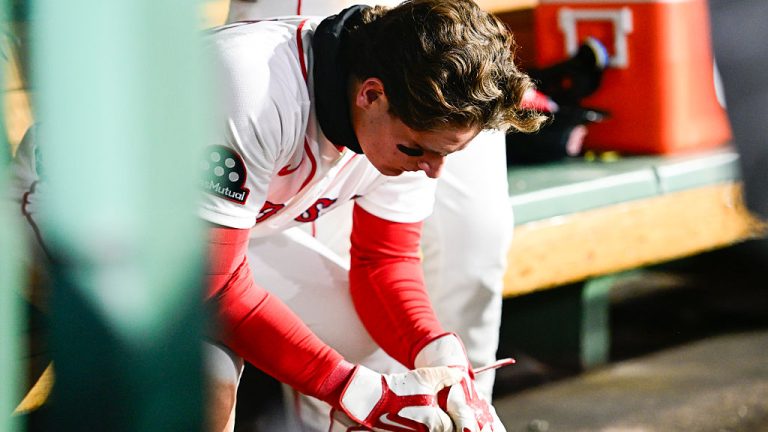
If there was ever a team in need of a couple of April wins, it’s the 2026 Boston Red Sox.
After a 2-8 start that sent massive panic throughout the New England area, the Red Sox finally showed some signs of stability, riding strong starts from Garrett Crochet and Sonny Gray and some timely hitting to a pair of victories and a series win over the Milwaukee Brewers.
The Red Sox should now finally get a chance to breathe after beginning the season with a 12-game gauntlet of postseason contenders, as they will head to St. Louis and Minnesota for a pair of three-game sets.
In an American League that has seen a number of top teams get off to a slow start, a 4-8 record is hardly too deep a hole to overcome, and the Red Sox have received a number of encouraging performances thus far, most notably in the form of AL bWAR leader Wilyer Abreu.
At the same time, the Red Sox’s slow start has revealed some real issues about the construction of the roster, and five situations in particular are worth monitoring as the season kicks into high gear.
Stats updated prior to games on April 10.
1. Who Bats Second?
While the Red Sox brass have stressed patience during this tough stretch, they have already made one significant pivot with their batting order.
The loss of Alex Bregman to the Cubs left the Red Sox in need of a two-hole hitter to slot in between Roman Anthony and Jarren Duran, and the initial choice of Trevor Story always felt like an odd fit.
While Bregman has been one of the best hitters in baseball at making contact and laying off pitches out of the zone throughout his career, Story was well below average in both categories in 2025, and his penchant for streakiness is far from ideal for a top-of-the-order hitter.
True to form, Story got off to another slow start, slashing .119/.119/.333 with a 40.4% strikeout rate over the season’s first eight games before Alex Cora dropped him to the fifth in order.
The move paid immediate dividends for both the team and Story, who recorded hits in each of the next three games while striking out just twice, but the alternative two-hole hitters are not without their own concerns.
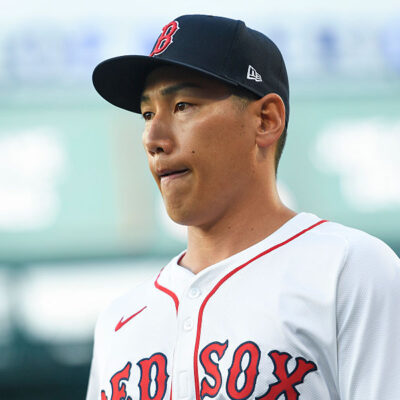
Both Duran and Masataka Yoshida got a chance to bat second against a right-handed pitcher in the Brewers series, but each player’s drastic career platoon splits leave the top-of-the-order susceptible to left-handed relievers late in games.
Cora then sat both Duran and Yoshida on Wednesday against the left-handed starter Shane Drohan (more on that later) and put Andruw Monasterio in the two-hole. While Monasterio can bring some of Bregman’s contact skills and plate discipline to the table, his career slashline of .247/.321/.348 pales in comparison to the three-time All-Star and is underqualified to be a top-of-the-order hitter for a contending team.
Unless Caleb Durbin suddenly becomes the East Coast version of Nico Hoerner, there is no perfect in-house solution, a reflection of the Red Sox’s failure to add a second impact right-handed hitter this winter to go along with Willson Contreras.
2. Story at Short

Despite talking all winter about the need for more power, the Red Sox decided to double down on run prevention once Bregman signed with the Cubs, adding Ranger Suárez to an already deep rotation and trading for the glove-first Durbin to man the hot corner.
With Contreras taking over first base duties and Marcelo Mayer replacing Kristian Campbell and his -8 Outs Above Average at second base, there was hope that the Red Sox could take a step forward defensively from 2025, when they finished fifth in Baseball Savant’s Fielding Run Value leaderboard but led MLB with 116 errors.
While there has been some early-season sloppiness, including three throwing errors from catchers and some bizarre Rafaela reads in center field, they still rank 8th in baseball in fielding run value, as Contreras, Abreu and catcher Carlos Narvaez have been among the best defenders at their position.
All told, the Red Sox should receive anywhere from above-average to elite production from seven of the eight defensive positions, but it’s that eighth spot that threatens to undermine it all.
Once a premier defender at the six, Story took a noticeable step back in his age-32 season, ranking 68th out of 71 qualified with -8 Fielding Run Value. He particularly struggled moving laterally towards third base, accumulating -6 Outs Above Average on such events.
To be fair, Story’s defense was much more stable over the middle part of the season, as he registered +2 Fielding Run Value from June to August before nosediving with a -6 mark in September, perhaps due to the toll of his first full season since 2021.
Yet if the hope was that Story could revert back to his summer 2025 form in 2026, the early returns have not been promising. He has already made 3 errors in his first 12 games while displaying the same awkward throwing motion that plagued him at the end of last season.
With the Red Sox featuring four different starting pitchers that generate ground balls at a well-above-average clip, they cannot afford to have a liability at the most important infield position.
Story’s track record and midseason performance last year earn him a slightly longer leash, but if these issues continue as the weather warms up, it will be worth discussing if Marcelo Mayer, who has been an above-average defender at both third base and second base during his brief career, should take over the shortstop duties.
3. The Five-Man Outfield Dance
As far as roster questions go, there are much worse issues to have than shuffling between five healthy, productive outfielders, but there is no denying the weirdness of the situation.
Yoshida sits near the top of the leaderboards in both walk rate and hard-hit rate yet has started less than half of the games, while Duran’s slow start at the plate may be partly attributed to being benched three times in the last nine games.
The Red Sox had hoped that the issue would solve itself, either with an injury or an underperformance, but that hasn’t happened thus far. In fact, the rotation has become even more convoluted with Abreu’s hot start, which has made it nearly impossible to put him on the bench.
As I wrote back in February, the most reasonable move the Red Sox could have made was to trade Duran, Each of Abreu, Anthony Ceddanne Rafaela and are at least 3 years younger, possess more team control, and are better defenders, while Yoshida’s $18 million a year salary through 2027 has stymied any of the Red Sox attempts to trade him in recent years.
There would be an easier pathway to mix-and-match if the quintet complemented each other, ideally in a potential platoon pairing, but the only right-handed hitter in the mix is Rafaela, whose career OPS is 50 points higher against right-handed pitchers.
As the Red Sox would likely point out, there will inevitably be a time during the season when we are glad that the club held onto its outfield depth. There is almost no chance that all five outfielders are healthy for all 162 games, particularly given the injury history of Abreu and Yoshida.
At the same time, the constant lineup and defensive shuffling is hardly the best way to get the best production out of five guys used to everyday at-bats, and it will be worth keeping an eye on how the stops-and-starts affect Duran and Yoshida in particular.
4. Isaiah Kiner-Falefa
In the era of a four-man bench, it has never been more important for every spot on your roster to be optimized. The best Red Sox teams in recent years have featured benches consisting of scrappy, versatile utility guys like Brock Holt and lefty-mashers like Steve Pearce, Romy Gonzalez, and Rob Refsnyder.
The point is that every player on your roster should be able to contribute something of value to your lineup or defensive configuration, and that is the crux of the issue of Isaiah Kiner-Falefa.
There is nothing that Kiner-Falefa provides to the team that can’t be replicated by someone on the active roster (or in Worcester).
He has consistently been one of the worst hitters in baseball over the last few years, ranking in the first percentile in both average exit velocity and xwOBA in 2025.
His sprint speed has fallen below the league-average as he has entered his 30s, and while he can adequately fill in at all four infield spots, Monasterio can match his defensive skill and versatility while providing much more offensive upside.
Thus far, Kiner-Falefa has received four starts over the first 12 games, registering a bunt single in 11 at-bats and posting an xBA of .074.
Without any minor league options, Kiner-Falefa’s spot on the roster is secured for the time being, blocking players in Worcester who both fit the roster better and are simply better MLB players at this stage of their career.
Of particular note are right-handed outfielder Nate Eaton and switch-hitting utilityman Nick Sogard, two players who proved their value during the Red Sox’s postseason push last year and would help address the Red Sox’s issues against left-handed pitching while they wait for Romy Gonzalez to return.
It feels inevitable that Kiner-Falefa gets designated for assignment at some point this season, but that pulling of the plug is unlikely to happen anytime in the foreseeable future, given that the Red Sox are just two months removed from handing him a $6 million contract.
5. Right-Handed Relief Issues
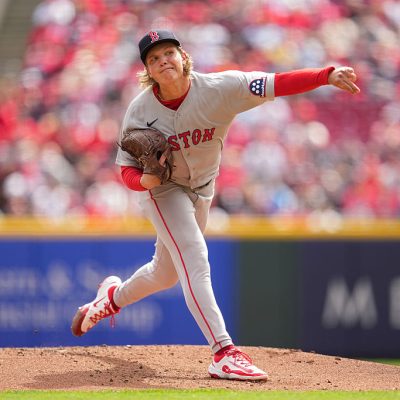
Given that the Red Sox returned most of the members of a bullpen that led the American League in ERA in 2025, it would be reasonable to assume that the Red Sox would be well-positioned to repeat the feat in 2026.
Peel back the curtain, however, and you can see that the total is heavily inflated by the remarkable performances of Garrett Whitlock and Aroldis Chapman, each of whom was among the best relievers in all of baseball.
The bridge to those two is far shakier than it might appear on first glance, particularly regarding their right-handed relievers.
Both Greg Weissert and Zack Kelly have had periods of success in MLB but miss fewer bats and give up more loud contact than you would prefer from a late-inning arm, and while Justin Slaten was the team’s most trusted reliever in 2024, his injury history has prevented him from fully entering the circle of trust.
Despite these warning signs, the only right-handed relievers the Red Sox brought in this winter were Rule 5 pick Ryan Watson and non-roster invitees Tayron Guerrero, Kyle Keller, and Seth Martinez.
The hope was that Watson and Keller, who had an excellent four-year tenure in the NPB, in particular, could provide some much-needed depth, but both were largely impressive during spring training, perhaps playing a role in the signing of veteran right-handed reliever Tommy Kahnle.
A long-rumored target of the Red Sox, the 36-year-old Kahnle saw his strikeout rate and effectiveness plummet in his lone season in Detroit, but he is just two years removed from posting a 2.11 ERA with the Yankees and turned in a pair of strong WBC performances with Team Israel.
Yet because the Red Sox waited so long to sign Kahnle, he stayed behind in Fort Myers while the team traveled to Cincinnati, and his services could have made an impact over the first two weeks of the season.
The main culprit has been Weissert, who gave up a pair of back-breaking three-run homers in losses to the Reds and Padres, but Watson has been largely unimpressive in low-leverage opportunities, and Kelly has struck out just one of the nine batters he has faced thus far.
Added to the troubles was the revelation that Slaten, the club’s most impressive middle reliever thus far, suffered an oblique strain that will knock him out for at least the next two weeks.
While there is hope that Slaten will only miss the minimum 15 days, his absence will both thrust the shaky middle relief corps into higher-leverage opportunities and put more pressure on Whitlock, who has exhibited a concerning velocity drop from his dominant 2025 campaign.
Unlike some of the previous roster issues, this issue could be alleviated once Kahnle and Kutter Crawford, who will make a rehab start on Saturday but will likely be pushed to the bullpen upon their return, are activated, but it’s worth questioning why Craig Breslow didn’t address this obvious hole more aggressively this offseason.
Become a Member of Just Baseball
Subscribe and upgrade to go ad-free!
* Save 25% by subscribing annually.

Written by
Daniel Fox is a contributing writer for Just Baseball. He has previously written for Pitcher List, BoSoxInjection, and in the Cape Cod Baseball League. He is…