
Solving Red Sox Offense Starts With More Masataka Yoshida
After a slow start to the 2026 season, the solution to Boston's offensive woes could be finding more playing time for Masataka Yoshida.
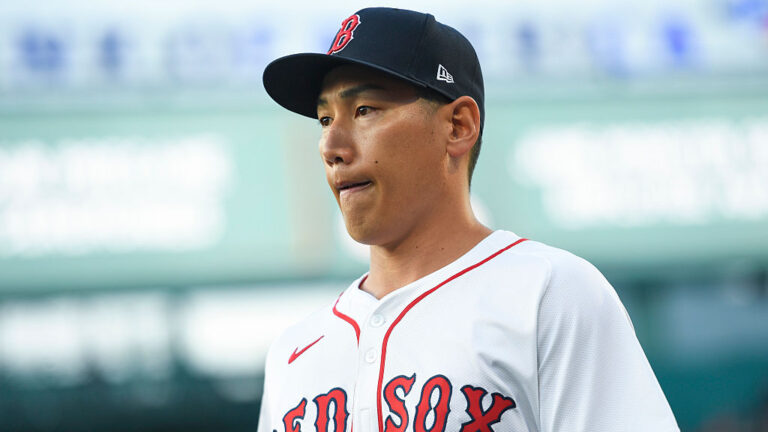
While there are signs of life in Boston’s offense, getting consistency out of it starts with getting more of outfielder Masataka Yoshida.
Since a productive, but up-and-down rookie campaign, the Japanese outfielder has felt like a roster misfit. In 2024, he made one appearance in the outfield, and it took the Boston Red Sox vacating the designated hitter position in extra innings for that to happen.
He then spent half the 2025 season touring New England from the injured list because Boston had a logjam in the outfield and Rafael Devers was locked in at DH.
Even after finishing 2025 strong, carrying that finish into Boston’s Wild Card Series matchup against the New York Yankees, it still seemed borderline impossible for Yoshida to have a role with the Red Sox in 2026.
The Red Sox consistently play coy about the 32-year-old’s status with the team. His role in 2024 initially was presented as an opportunity to optimize the defense; it turned out he was playing through a torn labrum. In 2025, he spent half the year on the shelf despite playing in spring training.
Turns out, however, he was behind on his throwing program.
But manager Alex Cora maintains his faith in Yoshida, mentioning that they’re going to need him. He also maintains that Yoshida is a good hitter, especially when healthy.
Him being a good hitter has always been true, even if last year’s overall numbers reveal something else. In 311 MLB games, he’s slashing .282/.340/.424 with a 110 wRC+ and 99 extra-base hits.
In 24 plate appearances this year, Yoshida has a 173 wRC+, good for the top 30 in baseball with a minimum of 20 plate appearances.
There’s been signs of life for the Red Sox lately, but bringing them fully back hinges on more playing time for Yoshida.
His Approach Is Different This Year
Something Cora preached lately was that the Red Sox are chasing far too frequently this season. While Yoshida may be an extreme opposite, it’s worth noting how patient his approach is in 2026.
Albeit just 24 plate appearances, the outfielder has just a 10.9% chase rate, and his swing rate is just 28.1%. Both dramatic career lows, but, so far, it’s been effective.
In 205 plate appearances last year, Yoshida walked just 10 times. This year, he’s walked eight times already. His whiff rate is negligibly better early on, as well as his called strike plus whiff (CSW) rate. In fairness, some of these takes wouldn’t qualify as “difficult,” but he’s conceding a very fair number of strikes as well.
Forfeiting a strike may not be advantageous all season, but sizing up his pitch early in counts has him sporting a .418 xwOBA, a .272 xBA, and a 69.2% hard-hit rate.
He’s hammering the ball, and to the pull-side. There’s still a lot of ground ball to his game, but the data on him so far is fascinating.
His Profile Solves a Lot of Red Sox Offensive Issues
The Red Sox entered the MLB slate Thursday with a 25.5% strikeout rate and the 27th-ranked wRC+ with runners in scoring position.
Yoshida not only is the toughest bat to strike out in the lineup, but he also a career .276 hitter with a .343 OBP with runners in scoring position. In such situations, the Japanese star carries a strikeout rate of just 11.1%, meaning there’s action when he comes to the plate.
Sure, there’s some nuance to the idea that simply putting the ball in play is always the best outcome. But in certain spots, it’s a requirement.
Last year, Yoshida came up 12 times with a runner at third and less than two outs. While contact doesn’t guarantee that run comes home, a strikeout guarantees it doesn’t.
Yoshida was 12-for-12 bringing that run home. Sure, it’s a very small sample size, a byproduct of playing just 55 regular-season games, but it’s proof of concept his profile has a role with this team.
He’s Less of a Platoon Nightmare Than He’s Treated
Hardly a dominant force against southpaws, but Yoshida has an 84 wRC+ against them in his career. Roman Anthony is the only active Red Sox left-handed hitter with a higher wRC+ against lefties with a minimum of 40 plate appearances.
As a side note, first baseman Triston Casas has a 130 wRC+ against lefties since 2023, but he hasn’t played since last May with a ruptured patellar tendon and rib injury.
Yoshida also has a 119 career wRC+ against right-handers. Again, he’s hardly Barry Bonds, but that’s a solid MLB hitter. Even in a true platoon, playing him more is in the Red Sox best interest.
Ride the Hot Hand
As mentioned, there’s some fascinating returns on Yoshida’s early batted-ball data. While there’s no guarantee it sustains — a 173 wRC+ in general likely won’t — the Red Sox owe it to themselves to see it play out.
Especially at this stage of the season. A 4-8 start was hardly what the Red Sox had in mind, but it’s their reality. Sure, they built the roster with the idea of limiting runs and haven’t done that yet. But the Red Sox also are 20th in team wRC+ and tied for 23rd in runs scored.
Only five players are off to above-average starts. Outside of right fielder Wilyer Abreu and first baseman Willson Contreras, only Yoshida is among that contingent with any real sort of reputation as a legitimate offensive contributor.
Anthony’s wRC+ is just 85, Jarren Duran’s is just 68, and Marcelo Mayer’s is only 40. Trevor Story and Caleb Durbin actually have a -2 and -9 wRC+, respectively, so far this season.
Yoshida’s 173 is third on the roster despite him ranking 10th in total plate appearances. Some of his volume has come through pinch-hitting opportunities, but he’s simply not playing enough for his production to actually be felt.
Optimizing the 2026 Boston Red Sox Offense
The Red Sox are 4-8 following their first series win of the season against the Milwaukee Brewers. Both sides of the ball are showing signs of life, but not enough tangible evidence suggests that’ll be a new normal.
They’re off Thursday before a three-game weekend series against the St. Louis Cardinals. When play resumes for the Red Sox, how should they line up going forward?
| LINEUP VERSUS RHP | LINEUP VERSUS LHP |
| Masataka Yoshida (L) LF | Roman Anthony (L) LF |
| Roman Anthony (L) DH | Willson Contreras 1B |
| Willson Contreras 1B | Andruw Monasterio DH |
| Wilyer Abreu (L) RF | Trevor Story SS |
| Trevor Story SS | Wilyer Abreu (L) RF |
| Jarren Duran (L) CF | Caleb Durbin 3B |
| Caleb Durbin 3B | Carlos Narváez C |
| Marcelo Mayer (L) 2B | Marcelo Mayer (L) 2B |
| Carlos Narváez C | Ceddanne Rafaela CF |
Again, the goal for the Red Sox right now is climbing out of this early-season hole they dug themselves. While Rafaela has a wRC+ of 115 through the first two weeks of the season, he’s relied on for defense and baserunning above his bat.
Against right-handed pitching, Yoshida needs to be in there. Especially early in the season. However, there’s no reason to go from Yoshida to Rafaela late in the game unless Yoshida is in the field. On the flip side, there’s always a benefit to having Anthony’s bat in the lineup.
Late in the game, the Red Sox have free reign to either let Yoshida face a tough lefty reliever, or pinch hit with Rafaela, Monasterio, Connor Wong, or Rafaela. Then replace Yoshida defensively with Rafaela in center and Duran moved to left field.
Against lefties, putting Monasterio in the heart of the order creates a pocket of righties. Not only that, but there’s no need to let one lineup decision facilitate multiple late-game substitutions unless it’s for a pinch-runner.
Point being, the Red Sox need to flip the script quickly, and that starts on the offensive side of the ball. Yoshida can be the key to getting this ball club back to its winning ways.
Become a Member of Just Baseball
Subscribe and upgrade to go ad-free!
* Save 25% by subscribing annually.

Written by