
White Sox Fans Have Reason for Optimism Ahead of 2026
It's been a relatively busy offseason for the White Sox, and the moves made this winter should spark excitement for what lies ahead.
This season will mark a half decade since the Chicago White Sox won their sixth division title in franchise history, but much has happened since 2021. Fans had to sit through a then-miserable 81-81 season in 2022, but little did they know what was ahead.
In 2023, the floor gave out en route to a 61-101 finish. Then the basement gave out in 2024, a season which saw the White Sox set the modern record for losses in a single season, 41-121. In 2025, a 7-23 record through May 1 had fans expecting even worse, but a strong second half helped the team end the year at 60-102.
For those keeping track at home, that’s a record of 162-322 over the last three seasons. But in the two years and some odd months since Chris Getz was named general manager of the team, he’s been slowly building behind the scenes.
The organization isn’t bottom of the barrel in analytics anymore, and while still nowhere near the top, it’s still improving slowly but surely. Getz seems to understand that he shouldn’t be the smartest person in the room, and he has made savvy hires on and off the field to assist the organization.
I understand that the on-field performance has been less than ideal, to put it lightly. But I’d say that the vibes around the White Sox coming into 2026 feel different, in a good way. From fans to personnel to media to players, almost everyone associated with the team seems to have brighter thoughts than in years past.
A Core Is Forming
After last rebuild and the promises that were made, I understand White Sox fans not trusting a prospect ever again. Fool me twice, shame on me. I get it.
But I implore those fans to watch Colson Montgomery hit 21 HRs in 71 games, Grant Taylor blowing 102 mph past Vladimir Guerrero Jr., any Kyle Teel interview, or Shane Smith’s All-Star first half and tell me you aren’t at least a little bit excited. These guys are fun.
Not only are they fun, they had flaws that the organization identified and fixed.
Montgomery went from being on catastrophic bust watch to finishing fifth in American League Rookie of the Year voting in about six months. Smith wasn’t worthy of a 40-man roster spot for the Brewers and went on to have perhaps the best rookie season for a Rule 5 draft pick.
Between those names and others already with the big-league club, you can see what 2026 and beyond might have in store for the White Sox.
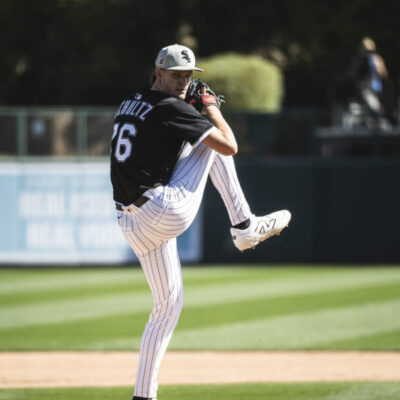
With prospects like Noah Schultz, Hagen Smith, Tanner McDougal, Braden Montgomery, and Sam Antonacci all expected to play in Chicago at some point this year, the youth movement isn’t stopping anytime soon.
Something that failed during the late 2010’s rebuild was the lack of depth in the farm system. Once everyone got called up, the system went from being one of the best in the league to dead last. With young names like Caleb Bonemer, Christian Oppor, Billy Carlson, and Jaden Fauske starting their ascent toward Chicago, that shouldn’t be the case this time around.

On top of all that, the White Sox landed the first overall pick in this July’s draft. Not only will they have their pick of the litter, they also will be able to work with $17,090,000 in bonus pool money, which they can use to spread around the entire draft class.
If you add in the 5% overage every club is allowed, the White Sox will have $17,944,500 to use in July. While the White Sox have been one of the cheaper clubs in the sport in terms of payroll, spending the 5% overage is something they frequently do.
The early signs for the 2026 MLB Draft point to it being one of the better top end classes we’ve seen in a while, which is fantastic for the White Sox. With names like Roch Cholowsky, AJ Gracia, and Drew Burress on the college side, along with Grady Emerson and Jacob Lombard from the high school ranks, White Sox fans should be very pleased with the opportunity to insert one of them into the system.
This year should be about finding out which players are definitive parts of the next core, and making decisions from there. Can Chase Meidroth stave off the eventual arrival of Sam Antonacci? Which of Teel or Quero takes a step forward to be an every day catcher? Is Grant Taylor a closer going forward or can he handle longer outings? Time will tell.
Uncharted Territory

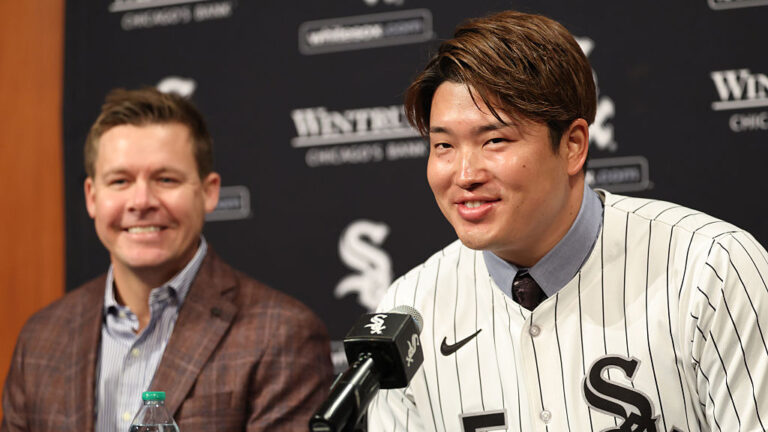
If you notice, there’s one player I didn’t mention in the previous section. Maybe he’s the player you’re most excited to see play for the White Sox this year, and his name is Munetaka Murakami.
Very simply put, the White Sox have ignored the Asian market for quite some time. Outside of signing MLB castoffs who went overseas and produced, like Erick Fedde and newly signed Anthony Kay, the White Sox weren’t involved. Signing Murakami shows willingness to tap into an incredible baseball market, and one that produces elite baseball players.
I’m not suggesting that Murakami will have the same impact that Shohei Ohtani, Yoshinobu Yamamoto and Roki Sasaki had on the Dodgers influence in Japan, but this is a positive step forward. The club should see more eyes on their games from a foreign market, and making White Sox fans of those eyes is possible.
I love the Murakami deal for a few reasons: it shows that you can be involved in the foreign market, he’s got potentially the highest upside of any free agent signed this winter, and it’s a smart gamble to take given the trajectory of the team.
If Murakami doesn’t hit at all and looks totally lost at the plate, it’ll be disappointing. One of the best players in NPB history struggling to adapt overseas wouldn’t be fun to watch. But if that is the case, the contract was only two years at $34 million. They aren’t tied to him long term and can pivot elsewhere.
But man, if everything clicks for Murakami, it looks like one of the best international free agent contracts ever. $17 million for MVP-caliber production doesn’t come around too often. It’s a fantastic roll of the dice for a team that likely won’t be competing for a World Series in 2026.
Murakami can have a soft landing, all the fans will be excited to watch him play, and he won’t have the stress of every game being crucial for playoff positioning.
If Murakami has a monstrous power season, and he wins Rookie of the Year, I have a hard time thinking the White Sox won’t at least approach him with a long-term deal to stay with the team that took a chance on him when no one else was willing.
The organization approached him once he became available in their price range in free agency, and they found a way to make something work. I think it can happen again.
Filling the Holes
When the offseason started, if I told someone the White Sox were going to acquire Murakami, Seranthony Dominguez, Anthony Kay, Sean Newcombe, Austin Hays, Jordan Hicks, and Luisangel Acuna, I don’t think that person would believe me.
While it isn’t an offseason that will vault this team to contending in 2026, I’d say the organization did a good job of addressing the needs of the roster with outside acquisitions.
Bullpen wasn’t good in 2025? Here’s two guys who throw 100+ mph and a lefty who can work bulk innings. Need a solidified first baseman? Take an NPB MVP. Still figuring out right field? We’ll sign a guy who has a 124 wRC+ against LHP on his career and has a great arm.
I’m trying not to let my feelings get in the way of objectivity, but I’m not sure what more anyone could have realistically expected from the White Sox this winter. There are still areas of weakness, no doubt, but the team has gotten better over the offseason.
You can perhaps say another starting pitcher would make it a perfect offseason, but I’m not sure I agree.
Tanner McDougal is on the 40-man roster now, and I doubt even the stingiest of service-time-manipulation organizations will want to keep him in the minor leagues for too long into the season.
He’s coming off his best season of work in MiLB, one that saw him throw 113.1 IP of 3.26 ERA baseball with a 136/49 K/BB ratio. He’s had big-league stuff for a while now, but the command gains in 2025 vaulted him up rankings. I’d be willing to bet he’s throwing off a mound in Chicago by May, assuming health.
Between signing five free agents who will benefit the team in 2026, and making two trades to hopefully benefit the team beyond 2026, I’d say this was a pretty successful winter for Chris Getz and the White Sox front office.
Tying Up Loose Ends
Let’s face it, the 2026 Opening Day roster will completely different from the one to start 2025, which looks different from the 2024 squad. In fact, with the trade that sent Luis Robert Jr. to New York, every member of the 2021 AL Central winning White Sox team is no longer with the organization.
I’ll raise you something even more recent, however. Of the current 40-man roster for the White Sox, only 11 players were managed by Pedro Grifol during his time. If you exclude players on the 60-day IL (Prelander Berroa, Ky Bush, Drew Thorpe), that number falls to just eight. In almost exactly 18 months since Grifol’s flaming end in Chicago, it’s been a complete roster turnover.
The organization is trying to wash the stench of prior failure from their mouth, and it can be tough to do that in a short period of time. But with incremental change, time passes and everything is different. I don’t think everything is different for the White Sox just yet, but it’s sure never felt this way.
Who knows what lies ahead for the 2026 White Sox? Could this team lose more than 100 games for the fourth year in a row? Absolutely. Could this team finish with fewer than 90 losses? Absolutely.
I don’t think you’re going to watch the same old White Sox this year, however. I truly believe a step will be taken this year, one where we all look up in September after a 76-86 season and go, “Man, that was fun.”
The White Sox aren’t out of the woods yet, make no mistake. The trees are becoming farther apart and there’s cracks of sunshine peeking from the canopy, though. If you’ve survived this long as a White Sox fan, just have a bit more patience and keep hiking, it’ll be worth it.

Written by
20-year-old from Chicago, currently at the University of Missouri. Lives and breathes White Sox baseball.