
The Pros and Cons of a Rangers Trade of Corey Seager
Corey Seager is one of the newest names to be added to this offseason's trade rumor mill. We look at the pros and cons of him being moved.
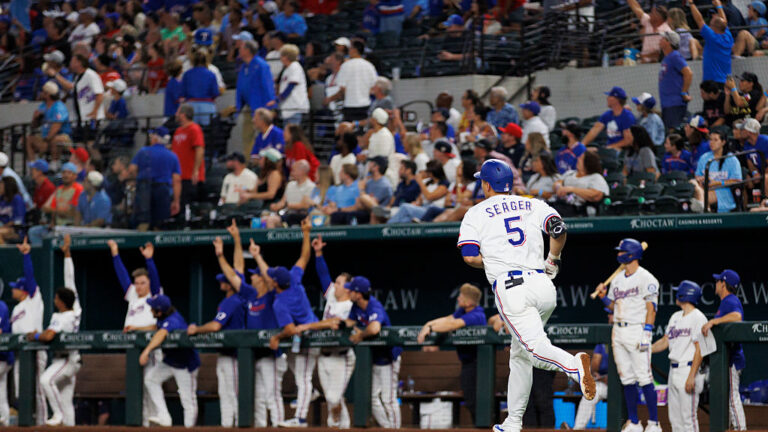
Marcus Semien, Adolis Garcia, Jonah Heim. Now Corey Seager?
The Texas Rangers‘ offseason thus far is one of immense intrigue. On one hand, they acquired outfielder Brandon Nimmo from the New York Mets; not a star, but a perennial three-win player dating back to 2021.
On the other hand, they’re pawning off members of their only World Series team one-by-one. The next installment of such behavior may be their MVP-caliber shortstop.
While the focus of the Winter Meetings swung around from Kyle Schwarber to Edwin Diaz to Ketel Marte, a report came out that the Boston Red Sox called the Rangers on Seager. While nothing’s reported as “close”, it’s not the first time the 31-year-old’s name popped up in rumors this offseason.

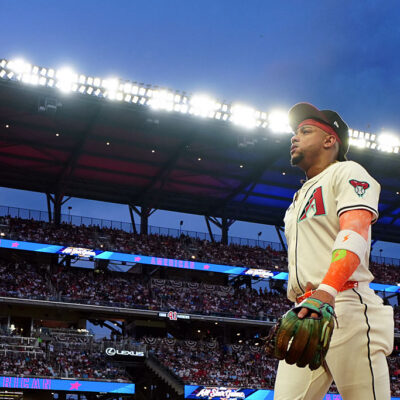
Last year, Seager slashed .271/.373/.487 with 21 home runs, a 138 wRC+, and 4.0 fWAR in 102 games. The 2026 season will be Year 5 of his 10-year, $325 million contract. So far, he’s 12th in fWAR during that span despite being outside the top 100 for games played.
His production remains second to none, but his volume remains a dramatic concern. He handled shortstop beautifully, registering 16 Defensive Runs Saved and four Outs Above Average, so moving him to designated hitter shouldn’t garner much consideration.
He’s still an elite player, so finding a trade partner shouldn’t be an issue. However, the act of trading him sends a peculiar message to the league and its players, so let’s weigh the pros and cons.
Pros
Tearing it Down May Be the Right Move for Texas
Since winning it all, the Rangers have gone downhill as a franchise. Injuries ran amok, but the offense in general fell off a cliff.
In 2023, the Rangers ranked third in baseball in runs scored and second in team wRC+. It took some last-minute heroics to sneak into the postseason before ultimately winning it all, but the offense drove them there. Since, they’re 21st in runs and tied for 22nd in wRC+.
Seager is hardly to blame for the offensive tailspin, but it’s hard to rebuild in a heavily contested division while navigating around a high-priced player. Especially one who is injured as frequently as Seager is.
Given he’s still playing at an elite level and, relative to contracts given out in recent offseasons, on a reasonable contract, the Rangers pretty much hold all the leverage in trade talks. They want controllable starting pitching, it’s theirs. They want a prospect-laden deal, it’s theirs.
Regardless, the division seems to run through Seattle and Houston for the foreseeable future. Obviously, baseball is an unpredictable game, but there’s a fairly sizeable gap between those two teams and the Rangers at this point.
They’ve already cut down three key contributors from 2023, what’s one more?
Seager Isn’t Getting Any Younger
The five-time All-Star turns 32 at the end of April, emblematic of him being closer to the end of his career than the beginning. While he’s still an elite player, that daunting age of 34 looms larger with each passing day.
For the Rangers, do you trust yourself to build a winner around him before he regresses? How sure of that can you be given Seager’s already checkered health history?
Since signing his decade-long contract, he’s only exceeded 125 games in one regular season — 2022. Since then, he’s played 119, 123, and 102, respectively. From a sheer production standpoint, 120 games of Seager are more valuable than that of 95% of the league, but eventually it likely won’t anymore.
Striking while the iron is hot, in a free agent market that’s very top-heavy, while Seager is still considered in his prime, may be in Texas’ best interest. As previously mentioned, they can dictate where, and for what, Seager goes.
No Shortage of Suitors
The Red Sox aren’t the only team coveting middle-of-the-order help this winter. Across baseball, you’ve got teams like the Atlanta Braves, Cincinnati Reds, and Pittsburgh Pirates seeking stars. Even a team like, *cough cough* the Los Angeles Dodgers *cough cough* could benefit from improving its infield.
Given the uncertainty surrounding his development in MLB, and recovering from injury, it wouldn’t come as a shock if the New York Yankees looked to upgrade from Anthony Volpe either. They have George Lombard Jr. (Just Baseball’s No. 1 Yankees prospect) but he’s in Double-A. By the time he’s big-league ready, the organization’s decision regarding Jazz Chisholm Jr. will’ve been made.
There are several routes the Rangers can take in their respective asks, but there’d almost certainly be a bidding war.
Cons
There are Cleaner Ways to Shed Payroll
As teams’ resources grow every year, it seems increasingly easier to develop pitching than hitting. As it stands, the Rangers already have a deep rotation with zero offseason additions.
But at the top of the rotation rests 37-year-old Jacob deGrom. The right-hander made 30 starts for the first time since 2019, posting a 2.97 ERA, a 3.32 SIERA, and a 22.1% strikeout-to-walk rate. He’s still a quality arm that can anchor a strong pitching staff.
He’s owed $75 million the next two seasons, with a club option for $20 million in 2028. While that season counts for $37 million against the tax, it’s hardly an immovable number for a pitcher as capable as deGrom.
Moving him may not be easier than Seager, but that doesn’t make it the wrong move. Like offense, the pitching market is very top heavy this winter. With Dylan Cease already signing in Toronto, there’s not a whole lot of ceiling left for teams.
There wouldn’t be a negotiating period with deGrom, and his remaining contract is a much more comfortable one for teams to swallow. He’ll garner less in terms of a return, but Seager conceivably has more years of elite play ahead of him than the right-hander.
If a primary goal is offloading payroll, trading the guy making $6.5 million more than anybody else makes the most sense.
This is without mentioning that Nathan Eovaldi, also older than Seager, will make $29 million in 2026. Eovaldi posted a 1.73 ERA in 2025 across 22 starts and commands $53 million the next two seasons.
Another moveable contract in the rotation. Just some food for thought.
It Sends a Bad Message to Fans, and the Game Itself
The Rangers flexed their wallets after the 2021 season when they paid Seager and Semien half a billion dollars.
While it’s true that all things run their course, trading them in the same winter raises some red flags. You can’t afford, no pun intended, letting emotions dictate roster construction, but two seasons isn’t a lot of grace for guys who delivered your franchise’s first World Series.
Now, there are tangible reasons trading Semien made sense. The outfield, and lineup, needed help. Semien, though awesome in 2023, was just an ordinary bat his other three seasons in Arlington. You swapped contracts, lowered payroll, and got younger.
Seager is a different animal. Logistically, there’s zero reason outside of injuries a team moves a player of his caliber. Even missing 40-plus games a season since 2023, he’s been well worth his $134 million paid thus far.
Moving him signifies a teardown, at least optically. You either pay him down, which is silly, to maximize physical returns, or nuke the return and offload his salary.
Either way, it renders the Nimmo trade rather useless. What good is acquiring a 32-year-old outfielder making over $20 million per season if you’re planning to rebuild?
The math, as they say, is not math-ing on that logic.

Written by