
Top 100 MLB Prospects for 2026
The 2026 MLB Draft Class joins our updated Top 100, featuring new player cards with scouting grades, future values, projections, and more.
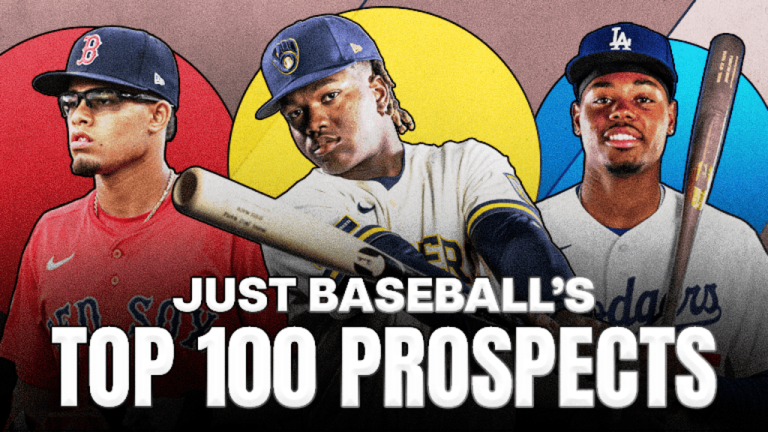
Since the last time we updated the Top 100 back in June, both the 2026 MLB Draft and the trade deadline have come to pass. This has led to a ton of movement in our list, as the new draft class takes their ranks in the top 100, and some of the best prospects in the game were moved in blockbusters at the deadline.
If that wasn’t enough to sink your teeth into, we also are thrilled to introduce a new look to our Top 100, featuring player cards for the very first time.
Each player card features biographical information, along with scouting grades and a short synopsis of the scouting report. If you would like to read the full report, there is a button you can click at the bottom of each player card.
For long-time readers who are used to reviewing the Top 100 through one table, you can still find the full list just below the cards, and you can still navigate the list the same way you have in the past.
As always, our list of Major League Baseball’s top prospects features detailed write-ups on each of the 100 players ranked based on live looks, sourced Minor League data, and countless hours of video. Of course, conversations and feedback with scouts, team officials, and other industry sources are baked into these rankings as well.
If you read this list, you’re already in the weeds thinking about which prospects could be next to break out. But if you’re buying their cards too, you also need to know what’s actually happening in the card market.
We’ve teamed up with Market Movers to help readers take their prospect collecting skills to the next level. Market Movers helps prospect collectors track pricing and sales data on more than 8 million sports and TCG cards, so you can see what cards are actually selling for and how the market is moving.
You can also follow price trends, compare cards, track your collection, set alerts, and see how the market is moving on the players you’re watching. So as prospects move up and down the rankings, Market Movers gives you the data to see whether his cards are moving too.
Just Baseball listeners get two weeks free plus 20% off for life.
Head to marketmoversapp.com/justbaseball to sign up and start making more informed buying and selling decisions.
One thing to note before diving into the rankings is how we created our future value scale.
Previously, the future value grades were based on projected high-end outcomes, with implied volatility being a separator for the players in the same FV tier.
We felt as though that was too ambiguous, so the FV grade is based on a balance of the perceived floor and ceiling of a player to provide a median value.
In order to further separate the players in the same FV tier who may have more upside, there will be a plus sign next to the number (I.E: 50+). That means a player is potentially on the edge of the next tier.
A couple more notes. Rather than evaluating both Raw Power and Game Power, we have scratched the former in favor of Plate Discipline.
Given the present and future grades we have for game power, raw power felt redundant. Players with raw power that far exceeds their game power will have that detailed in their write-up.
We’ve long felt that the hit tool can be a bit misleading without the context of a player’s swing decisions, as a hitter could have a great feel for the barrel that is undermined by a hyper-aggressive approach, or vice-versa. A great breakdown on the 20-80 scale and future value can be read here.
For detailed breakdowns and explanations behind the rankings, as well as interviews with a large portion of the prospects on this list, be sure to tune into our prospect podcast, “The Call Up”.
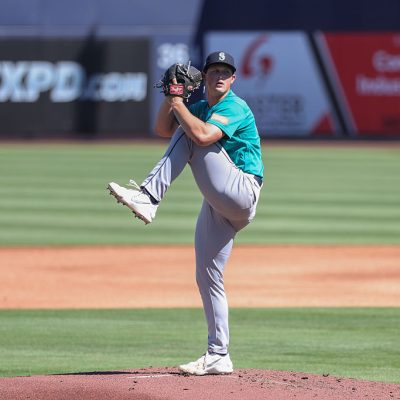
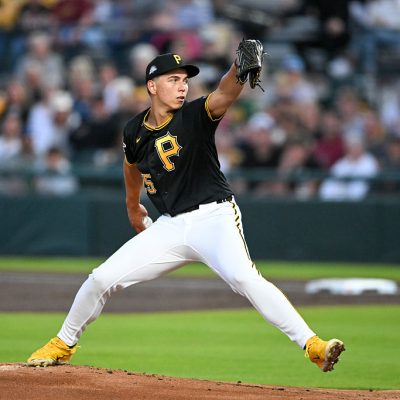
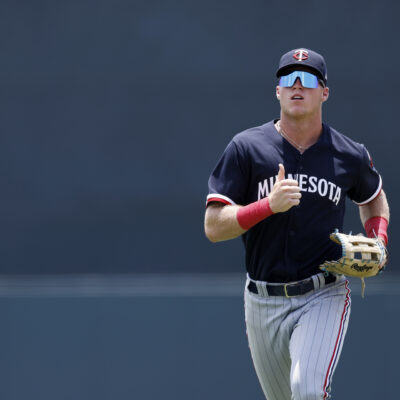
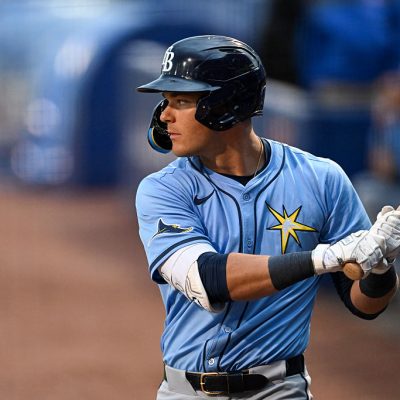

|
Rank
|
Player
|
Team
|
Age
|
Level
|
Position
|
ETA
|
FV
|
|
|---|---|---|---|---|---|---|---|---|
| 1 | Jesus Made | Milwaukee Brewers | 19 | AA | SS | 2027 | 65 | |
| 2 | Franklin Arias | Boston Red Sox | 20 | AAA | SS | 2026 | 60+ | |
| 3 | Leo De Vries | Athletics | 19 | AA | SS | 2027 | 60 | |
| 4 | Ryan Sloan | Seattle Mariners | 20 | AA | RHP | 2027 | 60 | |
| 5 | Seth Hernandez | Pittsburgh Pirates | 20 | A+ | RHP | 2028 | 60 | |
| 6 | Walker Jenkins | Minnesota Twins | 21 | MLB | OF | 2026 | 60 | |
| 7 | Theo Gillen | Tampa Bay Rays | 21 | AA | OF | 2028 | 60 | |
| 8 | Kade Anderson | Seattle Mariners | 22 | MLB | LHP | 2026 | 60 | |
| 9 | Ethan Salas | San Diego Padres | 20 | AAA | C | 2027 | 60 | |
| 10 | Josue De Paula | Los Angeles Dodgers | 21 | AA | OF | 2027 | 60 | |
| 11 | Max Clark | Detroit Tigers | 21 | MLB | OF | 2026 | 55+ | |
| 12 | Eli Willits | Washington Nationals | 18 | A+ | SS | 2028 | 55+ | |
| 13 | George Lombard Jr. | New York Yankees | 21 | MLB | SS | 2026 | 55+ | |
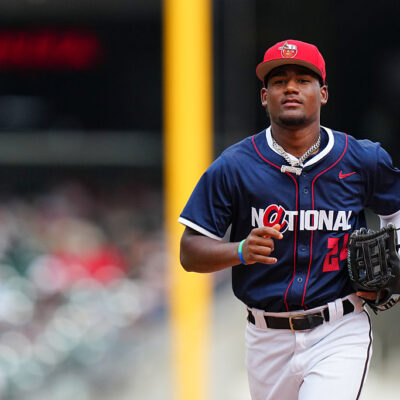
| 14 | Eduardo Quintero | Los Angeles Dodgers | 21 | A+ | OF | 2028 | 55+ | |
| 15 | Rainiel Rodriguez | St. Louis Cardinals | 19 | AA | C | 2028 | 55+ | |
| 16 | Roch Cholowsky | Chicago White Sox | 21 | A+ | SS | 2027 | 55+ | |
| 17 | Grady Emerson | Tampa Bay Rays | 18 | A | SS | 2029 | 55+ | |
| 18 | Sebastian Walcott | Texas Rangers | 20 | AA | SS, 3B | 2027 | 55+ | |
| 19 | Mike Sirota | Los Angeles Dodgers | 23 | AA | OF | 2027 | 55+ | |
| 20 | Josuar Gonzalez | San Francisco Giants | 18 | A | SS | 2029 | 55+ | |
| 21 | Ralphy Velazquez | Cleveland Guardians | 21 | AAA | 1B | 2027 | 55 | |
| 22 | Alfredo Duno | Cincinnati Reds | 20 | AA | C | 2027 | 55 | |
| 23 | Angel Genao | Cleveland Guardians | 22 | MLB | SS | 2026 | 55 | |
| 24 | Josiah Hartshorn | Chicago Cubs | 19 | A+ | OF, 1B | 2028 | 55 | |
| 25 | Arjun Nimmala | Los Angeles Angels | 20 | AA | SS | 2027 | 55 | |
| 26 | Eric Hartman | Atlanta Braves | 20 | AA | OF | 2028 | 55 | |
| 27 | Thomas White | Miami Marlins | 21 | AAA | LHP | 2027 | 55 | |
| 28 | Juneiker Caceres | Cleveland Guardians | 19 | A+ | OF | 2029 | 55 | |
| 29 | Luis Pena | Milwaukee Brewers | 19 | AA | SS, 3B | 2028 | 55 | |
| 30 | Zyhir Hope | Detroit Tigers | 21 | AA | OF | 2027 | 55 | |
| 31 | Josue Briceño | Detroit Tigers | 22 | AAA | C, 1B | 2027 | 55 | |
| 32 | Vahn Lackey | Minnesota Twins | 21 | A+ | C | 2028 | 55 | |
| 33 | Aidan Miller | Philadelphia Phillies | 22 | AAA | SS | 2027 | 50+ | |
| 34 | Aiva Arquette | Miami Marlins | 22 | AA | SS | 2027 | 50+ | |
| 35 | Caleb Bonemer | Chicago White Sox | 20 | AA | SS, 3B | 2027 | 50+ | |
| 36 | Jackson Flora | San Francisco Giants | 21 | CPX | RHP | 2028 | 50+ | |
| 37 | Kaelen Culpepper | Minnesota Twins | 23 | MLB | SS | 2026 | 50+ | |
| 38 | Luis Lara | Milwaukee Brewers | 21 | MLB | OF | 2026 | 50+ | |
| 39 | Angeibel Gomez | Kansas City Royals | 17 | CPX | OF | 2030 | 50+ | |
| 40 | Robby Snelling | Miami Marlins | 22 | MLB | LHP | 2026 | 50+ | |
| 41 | Christian Zazueta | Los Angeles Dodgers | 21 | AA | RHP | 2027 | 50+ | |
| 42 | Gage Wood | Philadelphia Phillies | 22 | AA | RHP | 2027 | 50+ | |
| 43 | Jarlin Susana | Washington Nationals | 22 | A+ | RHP | 2027 | 50+ | |
| 44 | JoJo Parker | Toronto Blue Jays | 20 | A+ | SS | 2028 | 50+ | |
| 45 | Cooper Flemming | Tampa Bay Rays | 20 | A | SS, 3B | 2029 | 50+ | |
| 46 | Braylon Doughty | Cleveland Guardians | 20 | AA | RHP | 2027 | 50+ | |
| 47 | Emmanuel Rodriguez | Minnesota Twins | 23 | AAA | OF | 2026 | 50+ | |
| 48 | Caden Bodine | Tampa Bay Rays | 22 | AAA | C | 2027 | 50+ | |
| 49 | Enddy Azocar | Baltimore Orioles | 19 | A+ | OF | 2028 | 50+ | |
| 50 | Nathan Flewelling | Tampa Bay Rays | 19 | A+ | C | 2029 | 50+ | |
| 51 | River Ryan | Detroit Tigers | 28 | AAA | RHP | 2024 | 50+ | |
| 52 | Cam Cannarella | Miami Marlins | 23 | AAA | OF | 2027 | 50+ | |
| 53 | Eric Booth Jr. | Baltimore Orioles | 18 | A | OF | 2030 | 50+ | |
| 54 | Joseph Dzierwa | Baltimore Orioles | 22 | AA | LHP | 2028 | 50+ | |
| 55 | Kendry Chourio | Kansas City Royals | 18 | A+ | RHP | 2028 | 50+ | |
| 56 | Josh Hammond | Kansas City Royals | 20 | A | SS | 2029 | 50+ | |
| 57 | Franklin Primera | Boston Red Sox | 19 | A | C | 2029 | 50+ | |
| 58 | Kane Kepley | Chicago Cubs | 22 | AA | OF | 2028 | 50 | |
| 59 | Roldy Brito | Colorado Rockies | 19 | A+ | 2B, OF | 2028 | 50 | |
| 60 | Edward Florentino | Pittsburgh Pirates | 19 | A+ | OF | 2028 | 50 | |
| 61 | Seaver King | Washington Nationals | 23 | AAA | SS | 2026 | 50 | |
| 62 | George Klassen | Los Angeles Angels | 24 | AAA | RHP | 2026 | 50 | |
| 63 | Anthony Eyanson | Baltimore Orioles | 21 | AA | RHP | 2027 | 50+ | |
| 64 | Bryce Rainer | Detroit Tigers | 21 | A+ | SS | 2028 | 50 | |
| 65 | Ethan Holliday | Colorado Rockies | 19 | A | SS | 2028 | 50 | |
| 66 | Caden Hunter | Baltimore Orioles | 22 | AA | LHP | 2027 | 50 | |
| 67 | Charles Davalan | Los Angeles Dodgers | 22 | A+ | OF | 2028 | 50 | |
| 68 | Nolan Perry | Toronto Blue Jays | 23 | AA | RHP | 2027 | 50 | |
| 69 | Taitn Gray | Tampa Bay Rays | 19 | A | 1B | 2029 | 50 | |
| 70 | Karson Milbrandt | Miami Marlins | 22 | AAA | RHP | 2026 | 50 | |
| 71 | Jhonny Level | San Francisco Giants | 19 | A+ | SS | 2029 | 50 | |
| 72 | Caden Scarborough | Texas Rangers | 21 | A+ | RHP | 2027 | 50 | |
| 73 | Johnny King | Toronto Blue Jays | 20 | A+ | LHP | 2028 | 50 | |
| 74 | Kevin Alvarez | Houston Astros | 18 | A | OF | 2029 | 50 | |
| 75 | Cam Caminiti | Atlanta Braves | 20 | AA | LHP | 2028 | 50 | |
| 76 | Drew Burress | Athletics | 21 | A | OF | 2028 | 50 | |
| 77 | Ramon Marquez | San Francisco Giants | 21 | A+ | RHP | 2028 | 50 | |
| 78 | Liam Doyle | St. Louis Cardinals | 22 | AA | LHP | 2027 | 50 | |
| 79 | Tyler Bremner | Los Angeles Angels | 22 | AA | RHP | 2027 | 50 | |
| 80 | Dax Kilby | New York Yankees | 19 | A | SS | 2029 | 50 | |
| 81 | Tate Southisene | Atlanta Braves | 19 | AA | SS | 2028 | 50 | |
| 82 | Derek Curiel | Pittsburgh Pirates | 21 | CPX | OF | 2028 | 50 | |
| 83 | Chase Harlan | Los Angeles Dodgers | 20 | A+ | 3B | 2029 | 50 | |
| 84 | Brady Ebel | Milwaukee Brewers | 19 | A+ | SS | 2029 | 50 | |
| 85 | Luis Hernández | San Francisco Giants | 17 | A | SS | 2029 | 50 | |
| 86 | Charlie Condon | Colorado Rockies | 23 | AAA | 1B | 2026 | 50 | |
| 87 | Bo Davidson | San Francisco Giants | 24 | AAA | OF | 2027 | 50 | |
| 88 | Travis Sykora | Washington Nationals | 22 | AA | RHP | 2028 | 50 | |
| 89 | Devin Fitz-Gerald | Washington Nationals | 21 | AA | 2B | 2028 | 50 | |
| 90 | Owen Ayers | Chicago Cubs | 25 | AAA | C | 2027 | 50 | |
| 91 | Michael Arroyo | Seattle Mariners | 21 | AAA | 2B, OF | 2027 | 50 | |
| 92 | Lazaro Montes | Seattle Mariners | 21 | MLB | OF | 2027 | 50 | |
| 93 | Jamie Arnold | Athletics | 22 | AA | LHP | 2027 | 50 | |
| 94 | Jacob Lombard | Miami Marlins | 18 | A | SS | 2029 | 50 | |
| 95 | Jefferson Rojas | New York Mets | 21 | AA | SS, 2B, 3B | 2027 | 50 | |
| 96 | Hayden Alvarez | Los Angeles Angels | 19 | A+ | OF | 2029 | 50 | |
| 97 | Demetrio Crisantes | Arizona Diamondbacks | 22 | AAA | 2B | 2027 | 50 | |
| 98 | Luis De León | Baltimore Orioles | 23 | AAA | LHP | 2027 | 50 | |
| 99 | Tyler Bell | Colorado Rockies | 21 | CPX | SS | 2029 | 50 | |
| 100 | Murf Gray | Pittsburgh Pirates | 22 | AA | 3B | 2027 | 50 | |
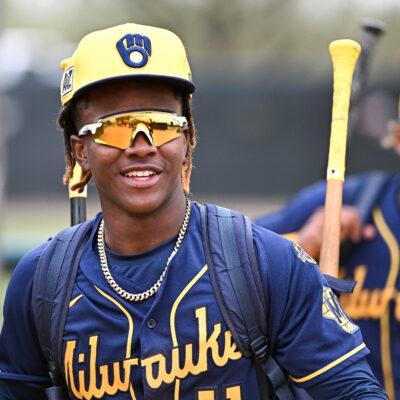
1. Jesus Made – SS – Milwaukee Brewers
Height/Weight: 6’1″, 190 | Bat/Throw: S/R | IFA: $950K – 2024 (MIL) | ETA: 2027
| HIT | PLATE DISC. | GAME POWER | RUN | FIELD | FV |
| 45/60 | 45/55 | 45/60 | 55/55 | 45/60 | 65 |
Made quickly made a name for himself with one of the best DSL showings in recent memory before following that up with a massive 2025 campaign where he climbed three levels, improving as the season progressed, finishing the year at Double-A not long after his 18th birthday. The switch-hitting shortstop could be one of baseball’s next big prospects thanks to his ridiculously quick hands and feel for the barrel paired with elite plate discipline and baseball instincts. His defensive progress only pushes his ceiling higher.
Offense
Starting slightly open and his feet a tad more than shoulder-width apart, Made sinks into his backside in tandem with a rhythmic barrel tip as he pulls his hands down towards his belt; the move is a little more pronounced from the left side. He will likely need to clean up such a loud move as it could be difficult to time and also puts him into a slot that is generally harder to launch from and limits his ability to elevate the ball as much as he should.
The fact that he is able to not only do plenty of damage from his launch position and consistently make contact is a testament to his freakish hands and athleticism in the box. He boasts a good feel to hit from both sides of the plate, but the left-handed bat-to-ball is particularly impressive. It’s rare bat speed from both sides of the plate, popping exit velocities north of 110 MPH from each side.
His 90th percentile exit velocity of 105 MPH is well above his peers, especially as an 18/19 year-old at Double-A. As he cleans up his operation in the box to be less dependent on raw talent and more conducive to repeating his moves and creating leverage, there should be plus game power in the tank. With his quickness, barrel accuracy and plate discipline, the elusive plus hit and power combination could be attainable for Made.
Defense/Speed
Made has good defensive tools boasting a plus arm and quick feet, with his glove maybe being the most improved aspect of his game in 2026. Similar to how he operates in the box, it was mostly natural athleticism over fundamentals for Made, but his reads off of the bat and actions have improved which paired with his natural abilities gives him plus defensive potential.
He has a knack for the acrobatic play and is comfortable charging in and throwing on the run. An aggressive base stealer, Made will grab bags at volume but could stand to be more efficient.
Outlook
Made did everything you wanted to see to follow up an all-time DSL performance by settling into Low-A before dominating High-A and earning a Double-A cameo in a season where he was 17 years old at the start. Made has been productive as the youngest player at Double-A, with his defensive leap truly giving him five tool potential. His plus hit and power upside has him looking like a potential star who could debut as a teenager. There’s a lot of similarities to Ketel Marte, but Made can stick at short.
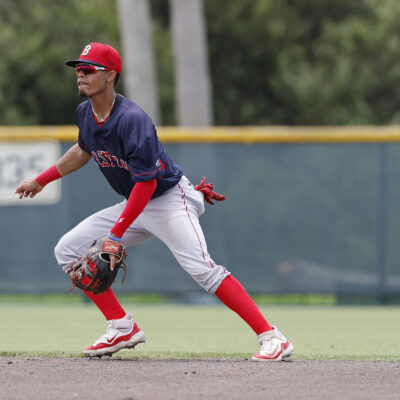
2. Franklin Arias – SS – Boston Red Sox
Height/Weight: 5’11″, 170 | Bat/Throw: R/R | IFA: $525,000, 2023 (BOS) | ETA: 2026
| HIT | Plate Disc. | GAME POWER | RUN | FIELD | FV |
| 55/60 | 50/50 | 50/55 | 50/50 | 55/60 | 60+ |
Signed as a glove-first shortstop in 2023 with great bat to ball skills, Arias has moved quickly through the Minor Leagues, looking like a high-floor infielder. Added strength and an improved swing path ahead of the 2026 season has now pushed his ceiling to that of an All Star, eclipsing his career high in homers (9) in his first 34 games of the season.
Hitting
Arias showcases impressive balance and lower half control in the box, gathering into his back side with a slow, hovering leg kick. There’s a chance sharper secondaries at more challenging levels could pull him onto his front side more often, but his strong ability to recognize spin and repeat his moves has helped him fly up to Double-A as a teenager.
He boasts a great feel for the barrel, spoiling tough pitches and posting plus contact rates within the zone. Previously having the tendency to put the ball on the ground at a high clip, Arias improved his swing path and added strength, helping him cut his ground ball rate by roughly 10% from his career average while upping his exit velocities dramatically.
Through his first 40 games of the 2026 season, Arias upped his average exit velocity by 5 MPH and Hard Hit rate by 20% compared to 2025. Pair the leap in exit velocities with the drastically improved batted ball angles and Arias now projects for at least average game power.
Having flashed the ability in the past, Arias has found much more consistency with his ability to air pull as well, which could make him an extra base hit machine in Fenway Park. Plus contact skills in tandem with what could be 20-ish home run power gives Arias both a solid offensive floor and exciting ceiling.
Defense/Speed
Though he is just an average runner, Arias gets the most out of his speed thanks to his solid first step and impressive instincts. Good hands and footwork help Arias attack the baseball on the dirt with confidence and is capable of getting the ball out quick. He puts himself in position to make more difficult plays look routine with the ability to make the difficult plays thanks to his above average arm. He has far improved with some inconsistencies that he had ranging to his backhand, which has shored him up to project as a plus defender at the position. Arias is unlikely to be more than an opportunistic base stealer.
Outlook
Between the contact skills and defense at shortstop, Arias already looked the part of a high-probability big leaguer. Now providing what looks like at least average game power, Arias has All Star upside with a great chance of landing as an above average regular at shortstop. With his dominance through Double-A in the first half of his age 20 campaign, Arias could debut prior to his 21st birthday and looks to be the future for the Red Sox at shortstop.
3. Leo De Vries – SS – Athletics
Height/Weight: 6’1″, 190 | Bat/Throw: S/R | IFA: $4.2M – 2023 (SDP) | ETA: 2027
| HIT | PLATE DISC. | GAME POWER | RUN | FIELD | FV |
| 45/55 | 50/60 | 45/55 | 55/55 | 40/50 | 60 |
De Vries is a switch-hitting shortstop with an extremely advanced hit and power combo. The Athletics did not slow his timeline down after acquiring him as the headliner in the Mason Miller trade, promoting De Vries to Double-A shortly after where he continued to thrive. He should climb through the Minor Leagues relatively quickly with the potential to be a star.
Hitting
Utilizing slightly different setups from each side, De Vries starts more open from the left side with his feet about shoulder-width apart and his bat resting on his shoulder. He pushes his hands upwards in tandem with a toe tap. He has quieted his hand movement more over time with his upper and lower half much more in sync. He’s extremely advanced for a teenage hitter, already using his lower half well, along with a swing path that generates consistent lift.
From the right side, his hands start higher with a small stride. He does not quite utilize his lower half as effectively from the right side as the left, which hampers his raw power some. De Vries has become slightly more aggressive as he has aggressively climbed levels, which is entirely understandable as the youngest prospect at each stop. He still has a good feel for the strike zone–especially from the left side.
With more room to fill out as he matures, De Vries should easily tap into above average power given his advanced feel to elevate. The feel for the barrel translates into the ability to spoil tough pitches and battle as well. There’s potential for at least above average hit and power with the plate discipline to complement.
Defense/Speed
Like many young, projectable shortstops, there’s a chance De Vries could fill out and lose a step, preceding a move to third base. That said, he has the components to be able to stick at the position with good instincts. He is comfortable throwing on the run and from different angles, but lacks desired carry on his throws, which can run to his arm side or sink.
He can get too nonchalant at times, fielding balls off to the side or with stagnant feet which inflates the error totals. As he hones in on the fundamentals, the case for him to stick at shortstop should be stronger. An above average runner, De Vries should be a decent stolen base threat an asset on the base paths.
Outlook
One of the youngest players in full season ball for the 2024 season, De Vries needed a few months to get his feet wet before really hitting his stride. It was a similar story for De Vries in 2025, even with a block buster trade and Double-A promotion in between, posting to an OPS well over .800 in his final 50 contests. He has turned in a solid 2026, but has not quite lit the world on fire to force a late season call up.
The bat is understandably ahead of the glove, but De Vries has flashed what it takes to stick at shortstop, assuming he can continue to refine the more fundamental components in the field in his age 19 season. Should De Vries slide over to third, there is more than enough offensive production to accommodate the move.
For a player of his age, De Vries has the foundation to be a star, but his present skill set already gives him a great chance of at least being a quality big leaguer or a long time.
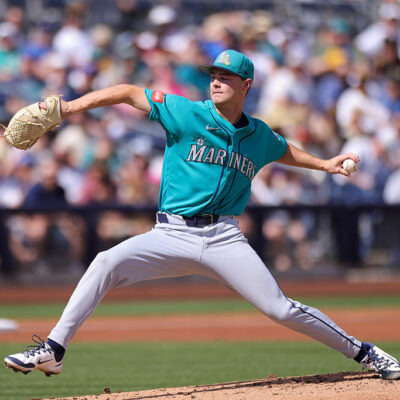
4. Ryan Sloan – RHP – Seattle Mariners
Height/Weight: 6’4″, 220 | Bat/Throw: R/R | 2nd Round (55), 2024 (SEA) | ETA: 2027
| FASTBALL | Sweeper | Splitter | Cutter | COMMAND | FV |
| 60/60 | 60/70 | 50/60 | 45/50 | 50/60 | 60 |
Sloan was a first round consideration for several teams, but it was the Mariners who were able to reel in the prep right-hander with a $3 million bonus (29th pick value) in the second round. The arrow pointed upwards for Sloan as the draft approached, touching the upper 90s with a pair of intriguing secondaries.
Arsenal
Sloan is a big, powerful right hander with a strong lower half, helping him produce mid 90s velocity without major effort. He works down on the mound well, throwing from a high three-quarters release with slightly above average extension and a 5.6 foot release height. This creates a unique angle for hitters from his 6-foot-4 frame.
It can be difficult for Sloan to maintain vert on his fastball from that angle, causing the heater to flatten out some at times, but averaging 95.5 MPH in his age 19 season while touching 99 MPH with relatively light effort makes it easy to dream on the fastball. He also added a sinker heading into the 2026 season which has insulated his four seamer some while helping him pick up ground balls, especially against righties.
Sloan has a good feel for his trio of secondaries, with the sweeper and splitter standing out. His mid 80s sweeper already looks the part of a plus pitch, with sharp bite that dominates right-handed hitters, but features enough teeth to bury beneath the hands of lefties.
His preferred weapon to neutralize left-handed hitters is an upper 80s splitter that he already has a decent feel for. For it to play closer to the plus territory it flashes, Sloan will likely need to find more velocity and shape separation. He will also mix in a cutter that has become increasingly consistent and effective and he has compiled more innings.
Outlook
Sloan is the ideal template for an organization that has had plenty of success developing arms. He’s just shy of Logan Gilbert’s body with a unique release and an advanced feel to spin it. The Mariners rave about Sloan’s ability to adjust on the fly, with the addition of his sinker cited as something that came more easily to him than most.
The floor and ceiling are both so high for Sloan given the quality of his stuff already and the ability to fill up the strike zone. The delivery is smooth and easy and the more he throws, the more consistent his shapes and overall command become. Already finding success at Double-A, shortly after his 20th birthday, Sloan is moving through the Minor Leagues far quicker than most prep right-handers and appears to have a great chance of at least landing as a middle-rotation arm. If he continues on his trajectory, there’s frontline upside.
5. Seth Hernandez – RHP – Pittsburgh Pirates
Height/Weight: 6’4″, 200 | Bat/Throw: R/R | 1st Round (6), 2025 (PIT) | ETA: 2028
| Fastball | Changeup | Curveball | slider | Command | FV |
| 60/65 | 60/70 | 50/55 | 50/55 | 40/55 | 60 |
In recent memory, few prep starting pitchers have garnered more praise than Seth Hernandez. Possessing a heater that touched triple-digits along with arguably the best changeup in the draft, Hernandez was a slam dunk for the Pirates when he fell to them at sixth overall.
He’s arguably been better than advertised with the fastball shape impressing as well as the breaking balls looking vastly improved compared to when he was an amateur. With how well the Pirates have developed arms, Hernandez looks like he could be the next ace-level prospect to come out of this system.
Arsenal
On the bump, Hernandez’s mechanics are as clean and repeatable as they come. He lifts his leg to gather in a manner that allows him to coil into his back hip – almost like you’d see from a hitter in their stride – and this move has allowed him to reach 102 MPH with his heater
Aside from already touching 102 MPH, Hernandez’s fastball is special. The pitch has touched 18+ IVB with over seven feet of extension, which both work together to create a difficult look for opposing hitters. Even though he’s made just two professional outings, his control will be something to monitor, as he only threw 42.9% of heaters in the zone during his 2026 debut in Low-A.
His changeup had a legitimate argument as being the best in the Pirates’ system the moment they drafted him last year, and that statement still stands. It sits in the low-mid 80s with a good amount of arm-side movement, which has allowed it to tunnel incredibly well off his electric heater. The 13 MPH of velocity separation from the more then seven feet of extension that Hernandez averages seems to pull hitters onto their front side quite easily.
Hernandez’s breaking balls look much sharper in the early going of his pro career than they had as an amateur. His gyro slider will sit in the upper 80s, but can eclipse 90 MPH with late bite that can fool hitters trying to sit heater. It’s a natural throw for him, showcasing a good feel to command it to the glove side.
His 79-91 MPH curveball has more teeth to it as well, flashing two plane break and diving under barrels. It’s an excellent third offering for Hernandez to left-handed hitters, but he will mix it in to righties as well.
Outlook
We’re still incredibly early in Hernandez’s professional career, but he’s already flashed the stuff needed to be the future best pitching prospect in the minor leagues. The main question will be his command, but in the early going of his professional career, the right-hander has been filling up the zone.
His stuff gives him the ability to get swings and misses outside of the strike zone with a fastball that can always get him back into counts if he falls behind, but if his command reaches the above average territory that his athleticism and feel to pitch imply, the sky is the limit.
Hernandez’s leaps with his breaking balls heading into his pro debut give him a potentially lights-out four-pitch mix that should only become more refined with reps. He’s an arm that could move quickly despite being a prep draft pick. If he reaches his full potential, Hernandez possesses the ability to be an ace-caliber arm later in his career.
An oblique injury unfortunately cut his first pro season short at 74 innings, but Hernandez should be full go for his follow up campaign.
6. Walker Jenkins – OF – Minnesota Twins
Height/Weight: 6’3″, 215 | Bat/Throw: L/R | 1st Round (5), 2023 (MIN) | ETA: 2026
| HIT | Plate Disc. | GAME POWER | RUN | FIELD | FV |
| 55/60 | 55/60 | 45/55 | 55/55 | 45/55 | 60 |
On the field, the skill set is high-floor, but injuries have been a consistent theme and Jenkins still needs to show more power to project as an All Star. His blend of bat-to-ball, approach and athleticism for his size allowed him to reach Triple-A in just 160 pro games since being drafted in 2023. Jenkins added more raw power in 2026, helping push the ceiling higher on what was already a rock-solid foundation.
Offense
A relaxed setup with simple pre-swing moves, Jenkins is consistently on time with his sweet left-handed swing and requires little effort to hit the ball hard. His athleticism in the box is evident through his ability repeat his moves consistently.
Jenkins has filled out nicely, which has translated in a significant uptick in quality of contact in his age 21 season. Both his average exit velocity and 90th percentile exit velocity jumped by more than three MPH, unsurprisingly resulting in a career-high 11 homers through his first 67 games of the season at Triple-A.
Rarely missing fastballs, Jenkins has OPS’d north of 1.000 against heaters as a pro. He posts competitive contact rates against secondaries, but has the tendency to get onto his front foot a little prematurely, impacting the quality of contact some. His added strength has given him a wider margin for error with more damage being done on the B swings.
Pair the bat to ball with his patience in the box and Jenkins has the ingredients to be a consistently high OBP threat who is capable of launching at least 20-25 homers with his added power.
Defense/Speed
A good runner who has looked comfortable in center field, Jenkins covers enough ground and has a good enough feel feel for the position to stick up the middle, though his long injury history could push him to a corner. Should he move to a corner, his range and above average arm would likely make him at least an above average defender. When healthy, Jenkins has been a steady stolen base threat and asset on the base paths.
Outlook
An advanced swing for a prep bat that has translated into professional success at each stop, the missing piece was Jenkins’ power which he has added plenty of in 2026. Now slugging without expensing his superb bat to ball and approach, Jenkins has a case as the most well-rounded hitter in the Minor Leagues.
It’s a matter of staying healthy for the Twins top prospect who has battled injuries in every season as a pro, but on the field, he looks like a budding star.
7. Theo Gillen – OF – Tampa Bay Rays
Height/Weight: 6’3″, 200 | Bat/Throw: L/R | 1st Round (18), 2024 (TB) | ETA: 2028
| HIT | PLATE DISC. | GAME POWER | RUN | FIELD | FV |
| 35/45 | 55/65 | 45/60 | 60/60 | 40/55 | 60 |
Advanced for a prep bat, Gillen slid just beyond the middle of the first round due to a rough injury history and an anticipated change from the infield dirt to the outfield as a pro. Gillen had surgery for a torn labrum in 2022 and dealt with knee and wrist issues after that with a delayed start to the 2025 season due to a calf issue.
Gillen made up for lost time, posting a 151 wRC+ in 73 Low-A games in 2025 before taking High-A by storm in 2026 where his plus raw power has really started to translate along with more comfort in centerfield.
Hitting
Already with a smooth left-handed swing and patient approach, there’s plus power to dream on in Gillen’s 6-foot-3 frame as he matures physically and learns to utilize his lower half more effectively, something he took a huge step towards achieving heading into 2026. Through his first 40 games, Gillen nearly doubled his 2025 home run total with nine while his average exit velocity climbed by 3 MPH to 90 MPH.
Already with a handful of exit velocities north of 110 in that span, Gillen could still grow into more power as he matures and continues to be further removed from his injury history. Extremely patient in the box, Gillen has run a chase rate south of 20% as a pro. His tendency to get into deep counts and longer levers should result in a fair amount of strikeouts, but he has the bat to ball skills and spin recognition to be able to keep the whiff in check.
Defense/Speed
The Rays moved Gillen to centerfield where his plus wheels have started to shine through more as he gains comfort with his reads and routes. Gillen has started to look the part out there, working towards balls over his head much more comfortably, kicking into that last gear to close in on balls in the gap and just showing a better overall awareness for where he is on the field. There’s a chance Gillen can provide above average defense in centerfield if he continues on this trajectory.
Both an effective and efficient base stealer, Gillen gets to his top speed quickly, grabbing 36 bags on 39 tries in 2025. He should be a constant threat on the base paths.
Outlook
Health and defense were the two biggest variables for Gillen heading into his pro debut and while he missed some time in 2025 with a minor issue, he still turned in an impressive and 73 game sample where the defense steadily improved. 2026 has been even better both from a health and performance perspective, continuing to make strides in centerfield while converting his plus raw power into more actionable game power. Gillen has the tools to be a star, headlined by an elusive combination plus power, speed and plate discipline.
8. Kade Anderson – LHP – Seattle Mariners
Height/Weight: 6’2″, 185 | Bat/Throw: L/L | 1st Round (3), 2025 (SEA) | ETA: 2026
| FASTBALL | SLIDER | CURVEBALL | CHANGEUP | COMMAND | FV |
| 55/55 | 60/60 | 55/55 | 50/55 | 50/55 | 60 |
Anderson was a highly touted prep arm in the 2023 class, though he withdrew his name from the draft after undergoing Tommy John surgery in 2022. He put together a solid freshman season in 2024 before breaking out as the best arm in the country as a draft-eligible sophomore.
Arsenal
Everything about Anderson’s game screams high-floor, but there’s plenty to dream on too. He commands four quality offerings with confidence, starting with a 92-95 MPH fastball with good carry and some cut. Anderson’s frame is projectable wit a quick arm, providing optimism for more velo.
Anderson picked up plus whiff rates within the zone on the fastball, along with plenty of weak contact. Interestingly, Anderson’s fastball command can waver more than his trio of secondaries, but he still maintained a strike rate around 64% with the pitch.
Both of his breaking balls look like potentially plus pitches with good shape and velocity separation. Our Tyler Jennings referred to the slider as a “baby sweeper” with good teeth that makes it effective to hitters from both sides of the plate in the mid 80s.
His curveball has impressive tilt in the upper-70s, mixing it in evenly to hitters of each side of the plate. The depth and late bite helped him pick up plenty of contact on the ground while keeping righties in particular in check.
His changeup doesn’t jump off of the page shape wise, but averages 10 MPH in velocity separation and is extremely difficult for hitters to pick up out of the hand, especially off of his hoppy fastball. Opponents hit below .200 against the offering in 2025.
Outlook
While he does not require much development, Anderson and the Mariners are a match made in heaven. He’s likely to fly through the Minor Leagues quickly with a high probability of at least landing as a back end starter. If the anticipated uptick follows in pro ball and or his fastball execution improves, Anderson could reach closer to his No. 2 ceiling.
Film: Louisiana State/Tennessee – April 14, 2024, LSU/South Carolina
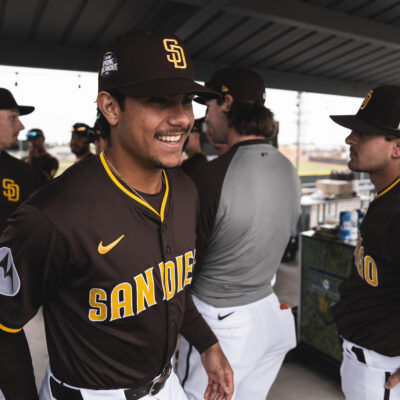
9. Ethan Salas – C – San Diego Padres
Height/Weight: 6’2″, 190 | Bat/Throw: L/R | IFA: $5.8M, 2021 (SD) | ETA: 2027
| HIT | Plate Disc. | GAME POWER | RUN | FIELD | FV |
| 50/60 | 50/55 | 40/50 | 50/50 | 60/70 | 60 |
A wunderkind of a catching prospect, Salas signed for $5.8 million as the top prospect in the 2023 IFA class and was immediately thrusted into big league spring training action, followed by a Low-A assignment prior to his 17th birthday and a High-A assignment before he turned 18. Salas got both healthy and stronger heading into 2026 while refining his swing mechanics, resulting in a major Double-A breakout in his age 19/20 season. Between his elite defense and offensive breakout, he now looks the part of one of the best prospects in the sport.
Offense
Salas made some adjustments in the box heading into 2026, starting more open and stacked on his back side, while utilizing a toe tap that seems to have helped him keep his weight back. Paired improved mechanics with a young hitter getting healthy and much stronger and you get a major offensive breakout.
Through his first 40 games of the 2026 season, Salas has improved his contact rate by 10% compared to 2024. His 90th percentile exit velocity jumped by 5 MPH as well. After never having posted an air exit velocity north of 108 MPH entering 2026, Salas posted six batted balls that fit the criteria in his first 40 games, including two 112 MPH doubles.
He already has a good feel for the zone and recognizes spin well, though his chase rate did climb by five percent to 25% at High-A. The jump was mostly predicated on a spike in chase against fastballs, not breaking balls, pointing towards a young hitter who is perhaps a little overzealous rather than challenged to recognize spin.
With Salas already showcasing a good feel to elevate, the added raw power makes above average power potential a reasonable outlook. The bat to ball looks to be above average as well, giving Salas a balanced blend of both hit and power.
Defense/Speed
It’s hard to remember a more advanced teenage catching prospect when it comes to receiving than Salas, reeling in the ball smoothly with elite hands. He moves well behind the dish making strides as a blocker in his first pro season.
The Padres brass has raved about the maturity of Salas and the way he handles bullpens since he arrived at the complex which should translate into strong game calling. Already with a well above average arm, Salas has a plus arm and his improved transfer resulted in a 28% caught stealing rate in 2024. He is still adjusting to Double-A some, with the caught stealing rate taking a bit of a hit through his first few months at the level, but the blocking, receiving and feel for the position continue to stand out as Salas projects as a special defender.
An average runner, Salas has a great feel for the game on the base paths as well, where he provides some value.
Outlook
After a phenomenal start to his pro career at Low-A, Salas struggled with unprecedentedly aggressive assignments and injury. Healthy, stronger and with his feet under him a bit more in at a Double-A level where he was still only one of two teenagers on a roster on Opening Day, Salas is realizing his offensive potential. Salas’s elite defensive ability is what maintained his cache as one of the better young catcher prospects in the sport, even with the injuries and struggles. Now looking like an above average bat with flashes of more, Salas is flat out the best overall catcher prospect in the sport.
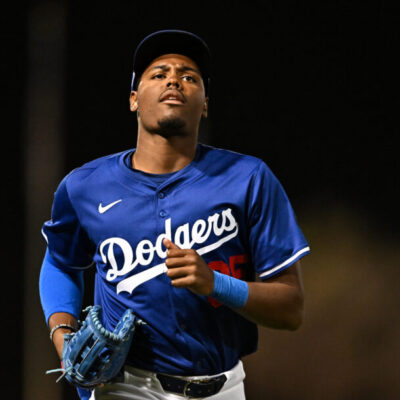
10. Josue De Paula – OF – Los Angeles Dodgers
Height/Weight: 6’3″, 175 | Bat/Throw: L/R | IFA: $1.5M, 2021 (LAD) | ETA: 2027
| HIT | Plate Disc. | GAME POWER | RUN | FIELD | FV |
| 55/60 | 50/55 | 50/60 | 45/45 | 40/45 | 60 |
De Paula quickly emerged as one of the top prospects in baseball thanks to his advanced nature in the box for his age. It’s a bat-first profile, but De Paula’s blend of hit, power and patience could make him a force with the bat alone.
Offense
De Paula has a simple set up and a slow, controlled load. He has no problem turning around velocity, where his operation is rhythmic with a smooth swing. De Paula previously had struggles maintaining his posture against secondaries, particularly right-handed secondaries. He adjusted his setup and load slightly, with his hands starting lower and the bat flatter pulling them back into his slot as he loads.
It seems like the adjustment gave De Paula a counter-move to help him coil over his back side and stay back. As a result, De Paula has upped his contact rate by nearly 10% in 2026 while improving his OPS against non-fastballs by roughly 250 points.
De Paula also added strength, increasing his average exit velocity by more than a tick and Hard Hit rate by 10%. The added power to pair with what now looks like plus contact skills have helped De Paula produce the highest wRC+ in the Texas League.
His approach has improved as well, still showcasing impressive pitch selection and recognition skills while being more aggressive within the zone after previously bordering on passive. There’s an elusive combination of plus hit and power with De Paula with the approach to further solidify what is one of the safest offensive profiles in the Minor Leagues.
Defense/Speed
A fringe-average runner, De Paula has improved his reads and routes in the outfield to be able to get by out there. His arm is average. He’s an instinctual base runner who provides value on the base paths with his ability to pick spots to go. De Paula swiped 32 bags on 40 tries in 2025 and has continued to be effective in Double-A, grabbing 29 on 38 tries.
Outlook
De Paula torched Double-A pitching in a season where he was 20 years old at the start. He has answered most every question that surrounded him, whether it be his ability to handle breaking balls or getting by in the outfield. With his mechanical improvements preceding standout contact rates and quality of contact, De Paula looks like one of the best combinations of floor and ceiling in the Minor Leagues.
The fact that he is passable in a corner with some sneaky value on the base paths helps, but at the end of the day, it is all about the bat for De Paula who could hit his way to several All Star appearances.
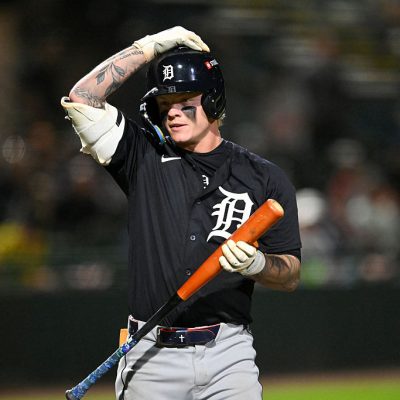
11. Max Clark – OF – Detroit Tigers
Height/Weight: 6’1″, 195 | Bat/Throw: L/L | 1st Round (3), 2023 (DET) | ETA: 2026
| HIT | Plate Disc. | GAME POWER | RUN | FIELD | FV |
| 55/60 | 60/60 | 40/50 | 60/60 | 55/60 | 55+ |
A superb athlete who gets the most out of his frame, Clark can motor, has a rocket for an arm and makes plenty of contact. He made a leap in the bat-to-ball and swing decision departments heading into 2025 that has yielded impressive results, showcasing more of the same at Triple-A in 2026, earning an August call up to the big leagues.
Offense
Previously starting with a wide, crouched stance and his hands low, Clark narrowed his stance some heading into the 2025 season and raised his hands. He worked hard on his path to handle secondary offerings with more success, which has been evident by a 20% increase in contact rates against non-fastballs along with a drop in chase.
Clark continued to make plenty of contact in Triple-A, with the power really picking up has he settled into the level. His twitch, wiry strength and athleticism help him produce above average bat speed. Even if the swing is somewhat more geared for line drives, he hits the ball hard to all fields with the ability to flash some pop pull side.
Clark is compact and quick to the ball, helping him see the ball longer and make good swing decisions. His barrel enters the zone early and seems to stay for a long time, helping him make plenty of contact. Between his quickness to the ball, simple moves and feel for the barrel, it’s easy to see a plus hit tool for Clark. How much power he gets into will be the question as it pertains to his ceiling, but Clark has posted exit velocities north of 111 MPH and has showcased some feel to pull the ball in the air.
Even if the game power is fringy, Clark’s strong bat to ball, approach and ability to hang in left on left give him a high offensive floor.
Defense/Speed
A plus runner with a strong arm, Clark has the tools to be a plus defender in centerfield. Running up to 94 MPH on the mound in high school, Clark easily boasts a plus arm. He gets to his top speed quickly and has steadily improved his routes. Clark is an extremely efficient base stealer, picking his spots well.
Outlook
Clark is a workaholic who has really bought into his approach in 2025 and the results were plenty evident with leaps in the contact and swing decision departments. His mechanical adjustments helped him hit the ball consistently harder. With progress in centerfield as well, Clark entered 2026 knocking on the door of a big league debut, where he projects as an everyday centerfielder who could push his ceiling higher if can can tap into his average power potential.
12. Eli Willits – SS – Washington Nationals
Height/Weight: 6’1″, 180 | Bat/Throw: S/R | 1st round (1), 2025 (WSN) | ETA: 2028
| HIT | Plate Disc | GAME POWER | RUN | FIELD | FV |
| 45/55 | 50/60 | 35/50 | 60/60 | 50/60 | 55+ |
One of the younger players in the 2025 draft, the switch-hitting Willits made his pro debut at 17 years old and is 18 years old for the entirety of his first full season where he mashed his way through Low-A with continued success at High-A. Already slugging more than expected while looking as advertised in the contact and defense department Willits already looks like one of the most well-rounded shortstops in the Minor Leagues with more to dream on.
Hitting
A switch-hitter with a simple operation from both sides of the plate, Willits features little wasted movement leading into a quick and compact stroke. The repeatable moves and consistent timing help Willits see the ball well, boasting an advanced approach.
He showed up for his age 18 season stronger, turning gap to gap pop into legit game power, launching 13 homers through his first 100 games between Low-A and High-A in 2026. The production has been comparable from both sides of the plate, with a bit more pop as a lefty while boasting a great feel for the barrel and strike zone from both sides.
There’s still room more more strength for Willits, which paired with his feel to back spin the baseball, should give him at least average power potential to push the ceiling a bit higher on his extremely sound offensive profile.
Defense/Speed
A smooth defender with great instincts and an above average arm, Willits really stood out with the glove from the jump professionally. He can throw from different angles, showing comfort to his backhand thanks to his arm strength, along with the adjustability to throw across his body or on the run going glove side or crashing in. His instincts are ahead of his years making the game look much slower than it should for an 18-year-old infielder. His plus speed should be an asset on the base paths as well.
Outlook
The son of former big leaguer Reggie Willits, it’s clear Eli grew up around the game in the way that he goes about his business and his overall feel between the lines at such a young age. Willits’ value comes from the sum of his parts, but you’d be hard-pressed to poke a hole in his game, especially with the added power. It’s a Geraldo Perdomo type of profile, but Willits is getting into more power sooner.
13. George Lombard Jr. – SS – New York Yankees
Height/Weight: 6’3″, 190 | Bat/Throw: R/R | 1st Round, (26) 2023 (NYY) | ETA: 2026
| HIT | Plate Disc. | GAME POWER | RUN | FIELD | FV |
| 40/45 | 60/70 | 45/55 | 55/55 | 55/60 | 55+ |
The son of former big leaguer and second round pick George Lombard, the Yankees were intrigued by Lombard Jr.’s well-rounded game at shortstop along with plenty of physical projection. Combine the projectable frame and bloodlines with the fact that he was one of the youngest players in his class and it’s easy to see why the Yankees were eager enough to shell out $3.3M ($300K over slot) to sign him. Early returns have been validating has he showed up to camp in 2026 stronger with a better swing and the results have followed.
Offense
Starting upright with his feet a tad more than shoulder width apart, Lombard’s pre-swing moves are rather simple with a minimal leg kick in tandem with a rhythmic hand load. His swing path was somewhat steep in his first pro season, minimizing his window for contact and resulting in more ground balls, but he made some adjustments that improved both his swing path and coordination of his upper and lower half.
He already flashes good bat speed and a solid feel for the barrel as well as athleticism in the box that should help him develop into an average hitter. Where Lombard is particularly impressive is his pitch recognition and feel for the strike zone. He rarely expands the zone and leverages his advantage counts successfully, which in large part encouraged the Yankees to aggressively push him to Double-A within the first few months of the 2025 season.
With his path cleaned up and added strength, Lombard has a chance to tap into at least average power and above average hit. His plate discipline really shores up his offensive outlook.
Defense/Speed
An above average runner, Lombard moves his feet well at shortstop and boasts a plus arm. He is comfortable making throws on the run from different angles and off balance. He has the tendency to sit back on balls from time to time (common for young infielders with big arms), but it’s easy to envision Lombard sticking at the position with above average defense, or even plus.
Outlook
Already with some impressive polish for one of the youngest players in the 2023 class, Lombard looks to have the ingredients of a well-rounded everyday shortstop if the bat can continue to come along. The Yankees have understandably pushed him aggressively given the superb makeup and advanced nature of his game. How much power Lombard can tap into will help elevate his ceiling, but with average or better tools across the board, he seems like a high probability regular at short with plenty more to dream on.
14. Eduardo Quintero – OF – Los Angeles Dodgers
Height/Weight: 6’0”, 175 | Bat/Throw: R/R | IFA: $297,500 – 2023 (LAD) | ETA: 2028
| HIT | Plate Disc. | GAME POWER | RUN | FIELD | FV |
| 40/50 | 55/60 | 45/55 | 60/60 | 50/55 | 55+ |
A well-rounded ballplayer with a chance to stick in centerfield, Quintero tore up the DSL and Arizona Complex League, reaching Low-A prior to his 19th birthday in 2024. He followed that by mashing his way to High-A in the back half of 2025 where he continued to rake.
Hitting
Starting upright with his hands high, Quintero gathers with a hovering leg kick, showcasing good athleticism and patience in the box. His upper and lower half can get out of sync, impacting his ability to tap into power consistently. He flashed average pop in his age 18 season, posting exit velocities as high as 109 MPH, but his average exit velocity of 84 MPH and elevated ground ball rate were likely a result of being out of sync.
Quintero emerged in 2025 with much more patterned swing mechanics and a path more conducive to lifting the ball. He cut his ground ball rate in 2025 while his average exit velocity jumped to 88 MPH. His sub 20% chase rate helped him walk at a 16% clip between Low-A and High-A, which paired with his slightly above average contact rates, should help him keep the strikeout rate in check.
Since the hit tool is likely closer to average than plus, it was important to see Quintero tap into more power and he did just that in 2025, launching 19 homers in 113 games. There’s room for strength within his frame, giving him the potential to push higher in the power deparment given his knack for pulling the ball in the air.
Defense/Speed
A plus runner, Quintero already looks the part in centerfield, getting good jumps with the closing speed to cover plenty of ground. With an above average arm as well, he has the ingredients to be an above average defender or better up the middle as he refines his routes a bit more. Quintero is an aggressive base runner, swiping 47 bags on 60 tries in 113 games in 2025.
Outlook
Quintero’s above average offensive skill set and potential for above average defense or better in centerfield give him a great chance of landing as a big league regular but his uptick in game power and impressive approach really elevated the perceived ceiling in 2025. Another riser in the Dodgers system, Quintero seems to get better each time you see him.
15. Rainiel Rodriguez – C – St. Louis Cardinals
Height/Weight: 5’11″, 225 | Bat/Throw: R/R | IFA: $300,000, 2024 (STL) | ETA: 2028
| HIT | Plate Disc. | GAME POWER | RUN | FIELD | FV |
| 45/55 | 50/60 | 50/60 | 30/30 | 35/45 | 55+ |
Rodriguez hit the ground running by mashing in the DSL to start his pro career in 2024 followed by major power surge between the Complex League and Low-A the next season launching 20 homers in just 80 games.
Hitting
Starting crouched and stacked towards his back side with the bat rested just above his shoulder, Rodriguez utilizes a simple operation. His repeatable moves with a path geared to elevate allowed for him to consistently catch the ball out front and do damage to the pull side.
His desire crush stuff in the air to left can cause him to pull off stuff breaking away from him on the outer half, but he rarely missed a hanging breaking ball and hammered fastballs on the inner half. Rodriguez generates above average bat speed with what looks like an easy stroke, boasting an average exit velocity of 89.5 MPH in his age 18 season with a max of 113.4 MPH.
Rodriguez’s ability to recognize spin and overall feel for the zone is advanced for his age, leveraging his hitter’s counts well and boasting a chase rate of roughly 18% against secondaries. While it’s not necessarily a projectable frame, Rodriguez should convert some of his mass into strength as he matures, which paired with the angles he creates, could give him the potential for plus or better game power.
Rodriguez offers an advanced blend of hit, power and approach that make him a fascinating bat with plenty to dream on.
Defense/Speed
Not the nimblest of movers, Rodriguez has work to do in the blocking and receiving department. His plus arm helps his case, throwing out 31% of attempted base stealers in 2025. Still with plenty of time to develop, Rodriguez should get plenty of runway to prove that he can stick behind the dish.
Outlook
While the ability to stick at catcher would significantly elevate his profile, Rodriguez’s bat alone was impressive enough in first season stateside to solidify him as one of the more intriguing teenage prospects in the game. There’s enough power potential for 30+ homers with the bat to ball and approach to allow him to get there or beyond if he can continue on his track.
16. Roch Cholowsky – SS – Chicago White Sox
Height/Weight: 6’2″, 200 | Bat/Throw: R/R | 1st Round (1) – 2026 (CWS) | ETA: 2027
| HIT | Plate Disc. | GAME POWER | RUN | FIELD | FV |
| 40/50 | 45/55 | 45/60 | 50/50 | 55/65 | 55+ |
The expected No. 1 pick heading into the 2026 season, Cholowsky took care of business in his draft year, hearing his name called first thanks to his track record of hitting throughout his career at UCLA, superb defensive abilities at shortstop and makeup.
Hitting
Starting open with his front foot up on his toe and the bat rested just above his shoulder, Cholowsky utilizes a big gather that brings his front knee all the way to his back knee as he pumps his hands down below his back shoulder and pushed back behind it. It’s a noisy operation that could result in some timing inconsistencies against more challenging stuff, especially harder stuff inside with his arm barred out.
Even with the bigger moves, Cholowsky did nothing but hit at UCLA, balancing good contact rates with plus exit velocities and good batted ball angles, giving him a strong foundation. An easier and likely more immediate change for Cholowsky will be his two strike approach, where he squats much deeper into his legs and goes no stride.
The two strike approach allowed Cholowsky to avoid punch outs, but virtually eliminated his slug. With already good contact skills and plus power potential that would be best for Cholowsky not to compromise–even when down to his last strike–scrapping it should only help his overall power output.
He has a good feel for the zone, but can have the tendency to expand on sliders away some. There’s still some room for more strength for Cholowsky, who already easily projects for above average power, making it easier to envision plus output down the line.
There’s risk for fringier hit at the highest level if Cholowsky does not clean up his moves in the box, but in hearing what the early conversations have been between the talented hitter and the White Sox brass since being drafted, Cholowsky is willing and open to making some tweaks in the box.
With his power potential and feel for the zone, anything close to an average hit tool will be enough for Cholowsky to likely be an above average big league bat, but of course, more contact would only push the offensive ceiling higher.
Defense/Speed
Even though he’s not the fastest straight line runner, Cholowsky is an agile defender at shortstop with a quick first stop, great range and polished actions. He already has a great internal clock and feel for the position with a plus arm as well. Cholowsky projects as a plus defender at shortstop and could even be better than that. Cholowksy should still at least provide some value on the base paths with his baseball instincts and should be able to snag more bags as a pro.
Outlook
Cholowsky’s defensive prowess paired with his power potential and track record of hitting make it easy to envision an above average regular at shortstop. With refined mechanics in the box, Cholowsky’s hit tool could trend towards the above average territory, which would push him closer to his All Star upside, but even if the hit tool is fringy, he has the ingredients to rack up WAR as a reliable shortstop who runs into at least 20-25 homers per year.
17. Grady Emerson – SS – Tampa Bay Rays
Height/Weight: 6’2″, 180 | Bat/Throw: L/R | 1st Round (2), 2026 (TB) | ETA: 2029
| HIT | Plate Disc. | GAME POWER | RUN | FIELD | FV |
| 40/60 | 45/55 | 35/50 | 55/55 | 40/55 | 55+ |
An extremely well-rounded player, the sum of Emerson’s parts gives him a higher floor than most prep shortstops, but there’s still plenty to dream on too.
Hitting
Already a polished and smooth operation in the box, Emerson has a good feel for his body and the barrel with a swing that lives in the zone for a long time. He projects as hit-over-power at this point, but in large part due to how advanced he is in the box. Emerson has a projectable frame and should grow into at least average power, but above average pop could very well be attainable as he matures.
Like most any prep hitter, Emerson can drift a bit onto his front side prematurely against sharper spin at this stage, but has also flashed the ability to put good swings on all pitch types. Emerson has a good feel for the zone overall which paired with his ability to maneuver the barrel should make him a difficult hitter to punch out.
Emerson has all of the ingredients to handle the lower levels well out of the gate with plenty to time to push his power ceiling higher. Even on the way, his ability to hit the ball hard to all fields should make him a doubles machine.
Defense/Speed
Emerson is not the most explosive mover, but he’s an above average athlete with a plus arm that should keep him at shortstop. His good hands, instincts and internal clock help Emerson’s case to potentially develop into an above average defender at short. An above average runner, Emerson should provide value on the base paths.
Outlook
It’s easy to buy into Emerson’s game given how difficult it is to find an obvious deficiency. Well-rounded and polished with projection is an archetype front offices dream for when targeting amateur talent, especially out of the prep ranks. Emerson’s ceiling will largely be dependent on how much power he grows into as well as whether his defensive outlook at shortstop holds true, but the Rays farmhand immediately became one of the most intriguing infield prospects in the sport the second the ink dried.
18. Sebastian Walcott – SS,3B – Texas Rangers
Height/Weight: 6’4″, 200 | Bat/Throw: R/R | IFA: $3.2M – 2023 (TEX) | ETA: 2027
| HIT | PLATE DISC. | GAME POWER | RUN | FIELD | FV |
| 40/45 | 40/50 | 55/70 | 55/55 | 35/50 | 55+ |
A big-framed teenager who already produces some of the highest exit velocities in the Minor Leagues, it is just a matter of putting it all of the extremely exciting ingredients together for Walcott to reach his star ceiling. The Rangers have aggressively pushed the talented infielder, playing him at the Double-A level for the entirety of his age 19 season. Unfortunately, Walcott’s follow up campaign will have to wait until 2027 as he will miss the entirety of the 2026 season with elbow surgery.
Hitting
Walcott starts upright with his hands rested on his shoulder with a hovering leg kick that he has toned down and a quiet hand load. He generates plus bat speed and exciting power with long levers that he already controls relatively well. Already flashing double-plus power, Walcott has popped exit velocities as high as 116 MPH as an 18-year-old with a strong 90th percentile exit velocity of 107 MPH in his age 19 season at Double-A.
His flatter path has hampered the game power some, with an average launch angle of just four degrees on hard hit balls. His path also makes it difficult to produce consistently against secondary offerings, producing more ground balls and pop ups than desired as he can be shallow through the zone.
Even with some things to clean up swing wise, Walcott still turned in an above average offensive season as one of the youngest players at Double-A. There’s plenty of meat still on the bone power wise between the launch angles and the gap between his average exit velocity (88 MPH) and 90th percentile exit velocity (107 MPH). His top end exit velocities at his age imply what should be a much higher hard hit rate than 40% (his 2025 figure) as he learns to find the barrel more consistently.
It will likely always be power-over-hit for Walcott, which is just fine considering the fact that he easily has 30+ home run upside and has already posted solid overall numbers at levels where he was several years younger than the average player. Further refinement to his approach and cleaning up his bat path to raise his quality of contact floor will surely help buoy his offensive profile as he heads into his age 20 season.
Defense/Speed
An above average runner, Walcott is a candidate to slow down a bit as he thickens and his actions/footwork at shortstop are a bit shaky. He tends to field balls off to the glove side and relies on his natural athleticism to make plays, booting too many routine grounders. He’ll flash decent range and his easy plus arm would play well at third base, where he could develop into an average defender as he hammers down the fundamentals further. Walcott swiped 32 bags on 42 tries in 2025.
Outlook
Despite swing and miss issues in the early going of his pro career, Walcott has continued to handled very aggressive assignments well. He cut his strikeout rate to a career-low 19.6% as a 19-year-old at Double-A an incredibly impressive feat for a hitter of his archetype. While the double plus raw power did not completely convert into game power in 2025, Walcott’s step forward approach and contact skills wise was encouraging. The detour in his age 20 season from being able to follow up on those gains is frustrating, but it helps that Walcott was ahead of schedule in terms of his development track.
With improved spray angles, Walcott could easily grow into 30+ home run power, especially with his improved ability to control his at bats. Assuming Walcott moves to third base, he could provide at least average defense there with the offensive upside to be one of the more productive hitters at the position.
19. Mike Sirota – OF – Los Angeles Dodgers
Height/Weight: 6’2″, 190 | Bat/Throw: R/R | 3rd Round (87), 2024 (CIN) | ETA: 2027
| HIT | Plate Disc. | GAME POWER | RUN | FIELD | FV |
| 40/45 | 60/70 | 50/60 | 60/60 | 45/50 | 55+ |
Few prospects have seen their stock endure more turbulence than Sirota. Viewed as a potential top 10 pick heading into the 2024 collegiate season, he really struggled through the first half, falling to the Reds in the third round before being traded to the Dodgers along with a compensation pick for Gavin Lux.
Sirota burst onto the scene as one of the best hitters in the Minor Leagues through the first several months of the 2025 season, posting significantly higher exit velocities with wood than he did with metal the year prior. After an injuries cut his season short, Sirota followed things up with more dominance at both High-A and Double-A, including a 72 game on base streak.
Hitting
Starting with his feet a bit wider than shoulder-width and his back foot pigeon-toed inwards, Sirota starts with the bat flat on his shoulder before pulling his hands down in tandem with a moderate stride. He’s jittery in the box, but it seems to be in an effort to stay loose, repeating his moves well in large part to him starting his load early with good lower half balance. The more upright setup was a large shift from his crouched stance he featured at Northeastern, where he struggled to keep his weight back and had the tendency to pull off of the baseball.
The changes have yielded significantly improved results, seeing his 90th percentile exit velocity leap from 103.5 MPH with metal to 107 MPH between High-A and Double-A. There’s still some swing and miss, with a hit tool that will likely be fringy at best, but he hedges that concern with an extremely selective approach and strong ability to recognize spin.
Now flashing easy plus power and comfort driving the ball to all fields, Sirota could slug more than enough if he skews closer to the three true outcome outlook offensively, though he has made steady progress bat to ball wise.
Defense/Speed
A plus runner, Sirota is somewhat of a mixed bag in the outfield. Sometimes he will get good jumps with a strong beat on the ball while others he will float and look more lost. Depending on when you watch, he looks anywhere from a guy who could be an above average centerfielder to a fine defender in a corner. His above average arm would play well in a corner if he slides over, but there’s still hope that Sirota can find more consistency with his reads and routes to be a solid centerfielder or well above average defender in a corner.
Outlook
Sirota’s outlook has shifted as he has tapped into what could be plus power and showcased elite plate discipline, taking some pressure off of a hit tool that has progressed nicely as well. Sirota hits the ball hard consistently with the ability to leave the yard foul pole to foul pole. His ability to dismantle velocity while rarely expanding against secondaries has helped him keep the strikeout rate consistently at 22% at each stop with the raw exit velocities pointing towards more game power being in the tank.
It’s probably most likely that Sirota slides over to a corner, where he could be an above average defender, but if he can stick in center, the ceiling of course becomes sky high. Regardless, Sirota looks like a potential middle-of-the-order threat with his plus power potential and elite on base skills.
20. Josuar Gonzalez – SS – San Francisco Giants
Height/Weight: 6’0″, 170 | Bat/Throw: S/R | IFA: $3M – 2025 (SF) | ETA: 2029
| HIT | Plate Disc. | GAME POWER | RUN | FIELD | FV |
| 35/55 | 45/55 | 30/50 | 60/60 | 45/60 | 55 |
A quick-twitch, switch-hitting shortstop who is expected to stick, Gonzalez was one of the top players in the 2025 IFA cycle and has the upside of an above-average regular at the position. Gonzalez has was banged up at the start of his transition stateside, but made up for lost time by crushing through the Arizona Complex League and not slowing down in his Low-A debut
Hitting
Starting slightly wide and open with his hands rested just above his shoulder, Gonzalez gathers into his backside in rhythm with a hand load that he has really quieted down from the left side, preceding a compact stroke. Not only is Gonzalez’s operation from the left side more simple, but he generates more bat speed and impact as well. While he has still been productive from the right side, there’s just a bit more to iron out.
Like most young hitters, he’s still learning how to control his weight shift, fighting the tendency to teeter back forward prematurely, but his quick hands and athleticism still allow him to make plenty of contact and his plus bat speed is a clear asset.
As he learns to use the ground more effectively, Gonzalez will likely be able to tap into more power. He has a good feel for the zone, with an ability to recognize spin that improves seemingly every time you check in.
Already popping exit velocities north of 111 MPH at 18 years old. In his age-18 season, Gonzalez is just scraping the surface of his power potential given his flatter swing and tendency to put the ball on the ground a bit more than desired. Between the raw power and feel to hit from both sides for his age, Gonzalez has big offensive upside.
Defense/Speed
An easy plus runner, Gonzalez’s quickness is plenty evident both on the base paths and in the field. His glove could be his best asset, with quick feet, smooth actions and soft hands. Gonzalez’s plus arm only helps his case, with comfort throwing off platform and from different angles. He’s a lock to stick at short and should be a plus defender.
Outlook
Gonzalez is a rare combination of both a high floor prospect and high ceiling. His plus glove and bat to ball skills from both sides of the plate give him a foundation you don’t often find with an 18-year-old, but his well above average exit velocities with room for more is tantalizing, especially if Gonzalez can learn to elevate the ball more. It’s five tool upside with Gonzalez who is the crown jewel of the Giants system.
21. Ralphy Velazquez – 1B – Cleveland Guardians
| HIT | Plate Disc. | GAME POWER | RUN | FIELD | FV |
| 45/50 | 50/55 | 55/65 | 30/30 | 40/45 | 55 |
A big left-handed slugger, Velazquez shook off a rough second half in 2024 with a very impressive 2025 that saw him sprint through the finish line by OPSing nearly 1.000 in the second half, which included a Double-A promotion. Velazquez has continued to eviscerate Triple-A pitching in 2026, putting him on the door step of a call up at just 21 years old. He looks like a potential middle-of-the-order masher for the Guardians.
Hitting
Starting crouched with a wide base and the bat rested on his shoulder, Velazquez features a simple load, coiling inwards as he pulls his hands backwards to his slot. The stretch and his powerful lower half help him create plenty of torque, already boasting plus power to the pull side.
Being so rotational can sometimes take Velazquez off of pitches on the outer third, but it appears to be more of a matter of an aggressive intention to pull something hard in the air rather than an inability to stay on such pitches. That said, he looked far more adjustable in 2025 and has continued to develop into a well-rounded hitter.
That was plenty evident in 2026 as well as Velazquez adjusted to the polished arms in Triple-A by still doing what he does best: hammer velocity, but while also staying on softer stuff longer with consistently higher quality at bats. He also consistently produces solid at bats left on left, sacrificing some power, but upping his contact rate with steady numbers across multiple seasons.
Between the raw power and angles, it’s easy to dream on 30+ home run potential for Velazquez with the contact skills to get into it. Approach-wise, he has only improved, further insulating an already rock-solid power profile.
Defense/Speed
After initially drafting him as a catcher, the Guardians opted to move Velazquez to first base and allow him to focus on his development with the bat. He moves his feet well enough for his size and should grow into an average defender at the position. Velazquez has also seen some action in left as he gets closer to the big leagues, where he can make the routine plays and has enough arm.
Outlook
Velazquez entered the 2025 season with only Low-A success under his belt and finished the year by looking like one of the most well-rounded power-hitters in the Minor Leagues. The leap in Velazquez’s quality of contact, paired with a dwindling strikeout rate, drummed up plenty of excitement for Velazquez heading into a 2026 season where he did not disappoint.
He ripped through Double-A in his first 36 games of the season and has been one of the best hitters in Triple-A despite being just 21 years old. Velazquez looks worthy of a late season call up, but if not, he should be in the Guardians Opening Day lineup in 2027. He looks like a consistent 30+ homer threat who can anchor the middle of an order.
22. Alfredo Duno – C – Cincinnati Reds
Height/Weight: 6’3″, 250 | Bat/Throw: R/R | IFA: $3.1M, 2023 (CIN) | ETA: 2027
| HIT | Plate Disc. | GAME POWER | RUN | FIELD | FV |
| 35/40 | 60/65 | 55/70 | 50/50 | 40/50 | 55 |
A power-hitting catcher with hit tool concerns, Duno has flashed exciting tools both offensively and defensively, but has dealt with injuries in his first two pro seasons. A crazy athlete for his size, Duno has made up for lost time in 2025, impressing on both sides of the ball at Low-A. He picked up right where he left of in 2026, this time dismantling High-A pitching.
Hitting
A big-bodied right-handed hitter, Duno starts slightly stacked towards his back side with the bat waggling above his back shoulder before gathering with a sizable leg kick that results in him gaining plenty of ground. Often times, Duno had the tendency to gain too much ground, pushing forward onto his front side with the barrel dragging behind him.
He has cut down on the drift forward in 2025, holding his back side better, which has resulted in improved contact rates and more pull side damage. He looks even more in control of his weight and lower half in 2026, consistently punishing balls pull side, with gaudier exit velocities and a better contact rate.
Duno is powerful, registering exit velocities as high as 115 mph with a 90th percentile exit velocity of 109 mph in 2026. His approach stands out as well, recognizing spin well and running a chase rate below 20% as a pro, allowing him to walk at strong clip at each stop.
Between Duno’s 70 grade raw power and consistent ability to pull the ball in the air, he offers the potential to launch more than 30 homers annually with the on base skills to hedge whiff concern.
Defense/Speed
Duno moves well for a player of his build with a plus arm behind the dish. He DH’d in his pro debut due to an arm issue, but has since showed off the arm strength, throwing out roughly 25% of attempted base stealers as a pro. When it comes to receiving, he is still raw in terms of technique, but appears to have the skill set to be solid in that regard with the same to be said in the blocking department. He has the tools to be an average catcher. Duno can get down the line quickly for his size, sometimes posting above average run times.
Outlook
The potential for 30+ homers while sticking behind the dish gives Duno sky-high upside and he has taken a huge step in the direction of attaining that upside in 2026 by adding more power and improving his bat to ball while maintaining his stellar approach. Duno earns high marks for his makeup and the way he goes about his business as well, only helping his case at catcher and in providing value with the intangibles the position requires. Duno looks like the future for the Reds at the catching position.
23. Angel Genao – SS – Cleveland Guardians
Height/Weight: 5’10″, 170 | Bat/Throw: S/R | IFA: $1.1M – 2021 (CLE) | ETA: 2026
| HIT | PLATE DISC. | GAME POWER | RUN | FIELD | FV |
| 55/60 | 50/55 | 40/45 | 55/55 | 45/55 | 55 |
The prize of the Guradians’ 2021 IFA class, Genao immediately stood out with his polish at the plate and ability to pick it on the left side of the infield. After playing through injury in 2025, Genao returned in 2026 healthy and stronger with improved game power to follow. He mashed through Double-A and Triple-A on his way to an MLB debut shortly after his 22nd birthday.
Offense
A switch hitter, Genao starts slightly more crouched and open from the left side of the plate with his hands higher. He gets into a sizable leg kick from both sides with a big hand load, but has a good feel for his body and repeats his moves pretty well. As he faces more challenging pitching, he may benefit from toning down the operation, but the contact rates have been consistently strong through the lower levels.
Power is unlikely to be a huge part of his game, but Genao has tapped into well above average raw power at the upper levels, with an average exit velocity of roughly 90 MPH at Double-A and Triple-A and a Hard Hit rate of nearly 50% prior to his debut. Genao has improved his plate discipline plenty as he has gained more experience at the upper levels, upping his walk rate to by far the highest of his career prior to his call up.The problem is his flat swing, that has consistently resulted in elevated ground ball rates.
His strong exit velocities should help him sneak a higher number of ground balls through the infield, but to reach his ceiling, he will need elevate the ball more consistently.
Defense/Speed
Comfortable actions, a rocket for an arm and solid instincts give Genao a good chance at sticking on the left side of the infield. His range is closer to average for shortstop, with the Guardians playing Genao at the hot corner and second base as well. The sum of his parts should still result in at least an average defender at short with him likely being a net positive at the position. Genao is not a high volume base stealer, but he is an efficient one.
Outlook
A healthy 2026 has helped Genao tap into more power, but he is still leaving a lot on the table with his batted ball angles. That said, he eclipsed his career high in homers in 84 games with improved defense at shortstop in particular, helping round out his profile. Borderline plus bat to ball skills from both sides of the plate with solid exit velocities and defensive value all over the infield, Genao looks like an above average regular, even if the game power stalls at 40 grade.
Genao will still be just 22 years old until May of 2027 and has plenty of time to build on the slight power uptick he made in 2026.
24. Josiah Hartshorn – OF,1B – Chicago Cubs
Height/Weight: 6’0″, 220 | Bat/Throw: S/L | 6th Round (165), 2025 (CHC) | ETA: 2028
| HIT | PLATE DISC. | GAME POWER | RUN | FIELD | FV |
| 40/50 | 50/60 | 40/55 | 50/50 | 40/50 | 55 |
A 6th round pick in the 2025 draft, the Cubs forked over early second round money to sign him away from Texas A&M and the investment immediately appears to be paying dividends with Hartshorn taking the lower levels by storm to begin his professional career.
Hitting
Featuring a simple and similar operation from both sides of the plate, Hartshorn starts in his legs before gathering into his back side with a toe tap. His hands are pre-set to where his launch position is, with more tension being created as he coils over his back leg. The lack of variables in Hartshorn’s swing allow him to be consistently on time and see the ball well.
He has run above average contact rates and very low chase rates at the lower levels from both sides of the plate. Even with the toe tap, Hartshorn can stride out a little far, pulling his weight onto his front side against higher quality spin, which could become more of a challenge at the upper levels. A physical frame, Hartshorn is already pretty filled out, but he already gets into above average raw power exit velocities wise with good spray angles.
While he has a good feel to air pull, Hartshorn also drives the ball in the air with carry to all fields, making it easy to envision above average game power. The hit tool will likely settle closer to average against more challenging competition, but Hartshorn’s advanced ability to recognize spin and feel for the zone hedges some anticipated hurdles with secondaries, as does his simple operation. There’s the potential for average hit and above average power from both sides that is well-seasoned by plus plate discipline.
Defense/Speed
Standing at a sturdy 6-foot, 220 pounds, Hartshorn moves well, with average or slightly better run times. The Cubs have given Hartshorn reps in right field, centerfield and first base. He projects best in right field where his above average arm will fit nicely, but the versatility to be able to plug in at first base only helps his case. Hartshorn should be quick enough to swipe a handful of bags per year.
Outlook
A switch hitter with Hartshorn’s advanced abilities in the box is not easy to find, especially as a teenager. He offers both a solid floor and an exciting ceiling with his skill set. Hartshorn has the power to accommodate a corner profile with the feel to hit and approach to make him a consistent offensive threat. The next hurdle will be proving he can handle upper level spin and closing the quality of contact gap against those offerings, but Hartshorn is far ahead of his peers in the box at 19 years old.
25. Arjun Nimmala – SS – Los Angeles Angels
Height/Weight: 6’0″, 185 | Bat/Throw: R/R | 1st Round (20), 2023 (TOR) | ETA: 2027
| HIT | Plate Disc. | GAME POWER | RUN | FIELD | FV |
| 40/45 | 50/55 | 45/55 | 50/50 | 45/55 | 50+ |
One of the youngest players in the class, his present bat speed and projectable frame have evaluators dreaming of what could be. A slow start to his pro career that included a Development List stint slowed the momentum some, but he returned looking much more polished at the plate while tapping into his intriguing power potential more consistently.
Nimmala carried that momentum into 2025 before hitting a wall in the second half despite playing the entire season at the High-A level. The shortstop returned in 2026, hitting the ball much harder at High-A and Double-A, putting him right back on track as one of the more intriguing shortstop prospects in the game. Nimmala headlined a package for Jose Soriano at the 2026 Trade Deadline, immediately becoming the Angels best prospect.
Hitting
A quick stroke grooved for lift, Nimmala really began to lean into his ability to pull the ball in the air in his first full pro season. The loft in his swing resulted in some challenges with swing and miss, something he improved upon after a brief stint on the Development List to refine some of his swing mechanics.
His subtle changes aided his ability to turn on velocity which spilled into his ability to recognize spin as he looked less rushed in the box.
Nimmala extended those improvements into the 2025 season where he made a seamless transition to High-A thanks to his significant improvements against secondaries and enhanced adjustability in the box, spoiling tough pitches with a tangible increase in the O-Contact department.
Things went awry for Nimmala in the second half of the season though as he tended to roll over on breaking balls too frequently while finding himself in-between timing wise.
His hands could get stuck behind him, something he has improved in 2026 by managing his counter rotation as well as a more vertical bat angle. Also looking more physical, Nimmala’s batted ball quality has leapt, with an EV90 that is up four ticks to 108 MPH and a Hard Hit rate up 10%.
The hit tool will likely be fringy, but he has continued to make strides in that department while showcasing improved plate discipline to help his case. Now with plus raw power in the tank thanks to his easy plus bat speed, Nimmala has the ingredients to be an above-average offensive contributor.
Defense/Speed
An average runner with good footwork and range at shortstop, Nimmala has the arm strength to stick at the position with the actions to be a good defender there. Nothing jumps off of the page, but he consistently puts himself in good positions to make plays with fluid actions and a plus arm. He is likely to stick at the position. Nimmala is more of an opportunistic base stealer, likely to just hover around 10-15 bags per year if that.
Outlook
Nimmala’s improvements each season contact, approach and defense wise have helped raise his floor, but it’s the quality of contact leap in 2026 that has pushed his ceiling higher.
Nimmala is still working to translate the plus raw power into more consistent game pop, though punishing the ball the way that he is in his age-20 season with continued improvements in the quality of at-bats has been enough to continue to push the talented shortstop’s stock higher. Nimmala has the goods to be an above-average big league shortstop.
26. Eric Hartman – OF – Atlanta Braves
Height/Weight: 6’1″, 185 | Bat/Throw: L/L | 20th Round (611), 2024 (ATL) | ETA: 2028
| HIT | Plate Disc. | GAME POWER | RUN | FIELD | FV |
| 40/45 | 40/50 | 45/60 | 70/70 | 35/50 | 55 |
A blazing runner who made as significant of a power leap as any prospect in Minor League Baseball heading into 2026, Hartman was a diamond in the rough find by the Braves in the 20th round out of the Canada prep ranks in 2024. Now getting more runway in centerfield as well, Hartman has a sky-high ceiling.
Hitting
After previously featuring more of a slash and dash operation in the box, Hartman improved his mechanics to more effectively engage his back side while loading his hands into a far more powerful position. The improved mechanics paired with added strength helped Hartman tap into what is now plus raw power.
The shift in batted ball data is eye-popping. Within his first 40 games of 2026, Hartman exceeded his 2025 max exit velocity of 108.5 MPH eight times, with a new max of 113.5 MPH. Harman’s 90th percentile exit velocity jumped by more than four MPH. The improved mechanics also helped Hartman slash his ground ball rate.
Unsurprisingly, the sum of those aforementioned parts is a power breakout in his what is largely his age 19 season at a new level. The swing can be a little bit rigid as he is very geared for pull, leaving him susceptible to swinging over softer stuff down. Hartman also has a good feel for laying down bunts and will steal hits that way as well given his blazing speed.
The hit tool likely lands closer to fringy, but Hartman’s newfound plus raw power and batted ball angles geared for him to be able to get into it makes it reasonable to dream on 30 homer upside. The important variable will be his swing decisions, especially given his intent at the plate. Hartman has a solid feel for the strike zone, but is still learning how to be a bit more selective against spin.
Defense/Speed
An absolute burner of a runner, Hartman was simply too fast to be splitting time between left field and second base, which the Braves acknowledged by shifting his focus entirely to the outfield and predominantly in centerfield in 2026. Hartman is still getting acclimated to the different reads in centerfield with some inconsistent jumps, but the closing speed is elite, which paired with a plus arm, should give him the chance to stick in center with more reps. That said, it’s still very much a work in progress. At worst, he’ll land as an above average corner outfielder whose speed can allow him to plug in at center.
He already has a good feel for where he’s at on the field and flashes the standout athleticism to complete highlight reel plays. Truly one of the fastest runners in the Minor Leagues, Hartman swiped 48 bags on 54 tries in 2025 and has continued his high volume, high efficiency efforts on the base paths in 2026.
Outlook
Hartman’s ridiculous leap in his second pro season not only has him set as the top prospect in the Braves system, but also as one of the higher ceiling outfield prospects in the Minor Leagues. There’s checkpoints Hartman still needs to hit, but based on the skill set, there’s 30/30 upside with a chance to stick up the middle. Suffices to say, if Hartman continues on that trajectory, he will become one of the best outfield prospects in baseball.
If he doesn’t get there, it’s likely a result of too much swing and miss against secondaries and maybe the reads in centerfield not improving as expected. Even in that scenario, Hartman would have the fall back of a toolsy, but volatile corner outfield option.
27. Thomas White – LHP – Miami Marlins
Height/Weight: 6’5, 210 | Bat/Throw: L/L | 1st Round-A (35), 2023 (MIA) | ETA: 2027
| FASTBALL | SLIDER | Curveball | CHANGEUP | COMMAND | FV |
| 60/65 | 50/55 | 60/60 | 60/60 | 35/45 | 55 |
The top southpaw in the 2023 class, White already has an impressive feel for a strong four pitch mix. Despite some command challenges, White has flown through the Minor Leagues thanks to his big whiff stuff, reaching Triple-A by the end of his age 20 season.
Arsenal
Towering at a lanky 6-foot-5, White produces high quality stuff without a ton of effort and held his velocity throughout the season. His long arm action can be difficult to time up for him, affecting his command but his arm path also plays into the deception he creates, hiding the ball behind him before working down on the mound. The result is a fastball that can spring onto hitters more quickly than others at the same velocity despite just average extension.
His fastball sits in the mid 90s, touching 100 mph with late life. While that is already plenty of velocity, his projectable frame and relatively low-effort delivery make him a candidate to see an uptick into the upper 90s. Regardless, it is comfortably a plus heater.
Both White’s curveball and changeup are already above average with the latter looking like a plus pitch in the early stages of his pro career. The sweeping curveball sits in the low 80s with two plane break and roughly 14 inches of horizontal break. It is a big whiff pitch left on left but he has the tendency to leave it up at times, especially to righties. That said, it is still a great third option to opposite-handed hitters, especially when he buries it towards their back leg.
White’s preferred weapon to righties is his mid 80s changeup, which mirrors his fastball well thanks to his ability to maintain his arm speed and unique arm action. Averaging nearly 15 inches of vertical separation and 13 mph of velocity separation from his fastball with a similar movement profile to Ryan Weathers’ change.
Outlook
Already flashing three plus offerings and a quality fourth from the left side, White has frontline stuff. A strikeout rate of 40% between Double-A and Triple-A in his age 20 season only backs up the stuff, but he will certainly need to cut down on his 13.6% walk rate. With only a .174/.299/.225 slash line allowed in 2025 with just two home runs, it’s clear that the only person that can beat White in the upper minors is himself. There’s shades of Blake Snell here and, if White can manage even fringy command, he could still reach towards the front of a big league rotation.
White is sidelined for the remainder of the 2026 season after suffering a shoulder injury this spring, but is expected to make a full recovery heading into Spring Training in 2027.
28. Juneiker Caceres – OF – Cleveland Guardians
Height/Weight: 5’10″, 170 | Bat/Throw: L/L | IFA: $300,000, 2024 (CLE) | ETA: 2029
| HIT | Plate Disc. | GAME POWER | RUN | FIELD | FV |
| 45/60 | 45/55 | 35/50 | 45/45 | 35/45 | 55 |
A left-handed hitter with the potential for above-average hit and power, Caceras was one of the best hitters in the DSL in 2024 before showcasing more of the same in the ACL in 2025, earning a promotion to Low-A prior to his 18th birthday. Caceres picked up where he left off at Low-A in 2026, being pushed to High-A days before his 19th birthday. He possesses standout bat speed for his age and good hand-eye; it’s just a matter of converting it at the higher levels and progressing defensively.
Hitting
Previously featuring a somewhat noisy operation, Caceres has simplified his moves in the box, resulting in continued bat to ball success, but more slug as well in 2026. Previously with the tendency to step in the bucket with hands that could get wrapped behind him, Caceres now maintains his direction much more consistently which has allowed him to cover stuff on the outer half more effectively and breaking stuff in general.
Even with some of the inefficiencies, Caceres was incredibly productive from the jump and has only continued to get better. Since debuting at Low-A, he has run a contact rate of roughly 85% to pair with above average exit velocities. His approach has steadily improved with pitch recognition skills that should only make him harder to punch out. Because the hit is so good, Caceres is likely to be a hit-over-power profile, but he has the upside for average game power as well.
Defense/Speed
The bat is ahead of the glove or Caceres, who will almost surely land in an outfield corner where it is still an uphill battle to be an average defender given his shaky reads and lack of feel for the position. He is an average runner with at least an average arm.
Outlook
Caceres is one of the most pure hitters at the lower levels which is a big reason why the Guardians have pushed him so aggressively. He walked more than he struck out in a 52 game sample as an 18-year-old in Low-A, while upping his slugging percentage by more than 100 points prior to his promotion to High-A.
He will really need to hit given his lack of value beyond the bat, but Caceres has the potential to offer plus hit and at least average pop, seasoned by good plate discipline that could may him a mainstay at the top of a lineup.
29. Luis Pena – SS,3B – Milwaukee Brewers
Height/Weight: 5’11″, 185 | Bat/Throw: R/R | IFA: $800K, 2024 (MIL) | ETA: 2028
| HIT | Plate Disc. | GAME POWER | RUN | FIELD | FV |
| 45/55 | 35/45 | 30/50 | 65/65 | 40/50 | 55 |
An advanced offensive skillset with plus-plus wheels, Peña has the potential to be a dynamic middle infielder. He feasted on DSL competition in 2024 then hit the weight room hard heading into 2025 adding plenty of functional strength which helped encourage the Brewers to have him skip the Arizona Complex League in tandem with Jesus Made and Peña did not miss a beat in Low-A before meeting his match at High-A to wind down the season.
Peña bounced back with a strong showing at High-A in his age 19 season, earning a promotion to Double-A in August. The exit velocities still far exceed the power output, but the ingredients are there.
Hitting
Starting upright with his feet a little for than shoulder-width apart, Peña utilizes a medium-sized gather with his front leg as he pulls his hands back. He patterned his moves to be much more cohesive and fluid heading into the 2025 season, helping him engage his more powerful lower half more effectively, aiding an uptick in bat speed and overall impact.
His exit velocities leapt from fringy in the DSL to elite for his age in Low-A in a matter of a single offseason. Even with just two homers through 51 High-A games in 2026, Peña still posted a 90th percentile exit velocity of 105 MPH. The challenge for Peña is that his average launch angle on hard hit balls is roughly three degrees.
Peña tends to be overly aggressive, especially on breaking balls, something that held him back once he reached the High-A level towards the end of his age 18 season and could give him some trouble in his first look at Double-A.
While there is a stark discrepancy between Peña’s plus raw power and below average game power, his above average bat to ball skills and the fact that he is just 19 years old, encourages patience on what could be a really exciting offensive profile.
Defense/Speed
Peña is extremely quick on the base paths, comfortably turning in plus run times, but his lateral movement at shortstop leaves a bit to be desired. The arm is plus, which could accommodate a move to third base. A consistent stolen base threat, Peña swiped 114 bags on 132 tries through his first 200 games.
Outlook
Though he’s still somewhat far off, Peña has handled aggressive assignments well, reaching Double-A in his age 19 season, even with some health scares interrupting his season. Peña’s ability to elevate the ball will need to improve for him to reach his potential, but with well above average bat-to-ball to pair with plus exit velocities and speed, it’s easy to get exited about what Peña could be offensively.
Lost reps in 2026 didn’t help, but Peña is still well ahead of schedule as one of the younger players at Double-A to wind down the season. Even if Peña puts the ball on the ground at an above average clip, his strong exit velocities and speed should result in consistently high BABIP live we have seen through his pro career thus far.
Peña likely slides over to third where there will be more pressure on him to slug, but he has time to convert the raw power into game power and is in the right organization to develop that skill.
30. Zyhir Hope – OF – Detroit Tigers
Height/Weight: 5’11″, 210 | Bat/Throw: L/L | 11th round (326), 2023 (CHC) | ETA: 2027
| HIT | Plate Disc | GAME POWER | RUN | FIELD | FV |
| 35/45 | 45/55 | 50/60 | 60/60 | 40/50 | 55 |
Now part of two major trades, Hope was initially acquired by the Dodgers shortly after his pro debut as part of the return for Michael Busch, but after growing into one of the better outfield prospects in the game, he headlined a package for Tarik Skubal at the 2026 Trade Deadline. Hope offers an exciting power/speed combination.
Offense
Starting with his feet just wider than shoulder width with his hands relaxed just below his shoulder, Hope gets into his back side with a gathering leg kick as he coils. Hope has quieted the counter-rotation some, which has made it easier for him to deliver the barrel consistently on time and cover the top of the zone.
Hope is an explosive athlete with tons of torque and bat speed. He improved his contact rates against all pitch types while making the adjustment to Double-A in 2026. His standout power has been on display as well, running a 90th percentile exit velocity north of 107 MPH on his way to doubling his 2025 home run total in less games.
Hope also drastically improved in left on left matchups, which bodes well for his everyday outlook, upping his OPS by nearly 200 points against southpaws in 2026. Of course, it will always be power-over-hit for Hope who offers comfortably plus potential in that regard, but the strides with the hit tool really help his case in being able to get into that power.
Defense/Speed
A plus runner, Hope’s closing speed has helped him overcome slow reads and shaky routes in the early stages of his pro career. He has the ability to develop into at least an average defender in a corner where his plus arm would complement well. Hope has improved his base stealing ability, swiping 27 bags on 33 tries in 2025 and 22 bags on 26 tries in 2026.
Outlook
There’s potential for a coveted combination of plus power and speed that could make Hope a dynamic outfielder with All Star upside, but he will need to prove that he can hit enough to tap into those tools, something he took a big step towards doing in 2026. His defensive development becoming an intriguing variable from a WAR perspective. Hope looks like a solid power bat in a corner who can flirt with 30 homers and surprise you with his wheels. He could be up with the Tigers as soon as the back half of the 2027 season.
31. Josue Briceño – C,1B – Detroit Tigers
Height/Weight: 6’4″, 200 | Bat/Throw: L/R | IFA: $800K, 2022 (DET) | ETA: 2027
| HIT | Plate Disc. | GAME POWER | RUN | FIELD | FV |
| 40/45 | 45/55 | 50/60 | 30/30 | 30/40 | 55 |
He may not stick behind the dish, but it’s Briceño’s immense offensive upside that makes him an intriguing prospect. He showcased just that by torching the Arizona Fall League after a knee injury limited him to just 40 Low-A games in 2024 and has kept the impressive slug rolling into 2025 between High-A and Double-A where he launched a career-best 20 homers in 100 games. Wrist surgery delayed the start of Briceño’s 2026 season, returning to action in July.
Offense
Starting upright and open with his bat rested on his shoulder, Briceño gathers into his back side with a big leg kick that is slow and controlled as he pulls his hands into his slot. Already standing at 6-foot-4, 200 pounds, Briceño repeats his moves well for such a young, big framed hitter, posting solidly average contact rates as a pro.
The exit velocities are also comfortably plus for Briceño, which has started to translate into consistent game power as he has improved his swing path. There was a clear shift upon returning form his knee injury, as he started to drive the ball in the air more consistently at the end of the regular season and carried that momentum into the Arizona Fall League where he paced all players with 10 home runs in just 25 games, including several tape measure shots to the pull side. He also put on quite a show in batting practice, demolishing home runs to all fields.
It was more of the same in 2025, amplifying Briceño’s power outlook to the plus territory. Even with the added loft, Briceño has a knack for covering heaters at the top, sometimes tomahawking balls by his shoulders that leave the yard.
Though his feel to hit is better than most young sluggers his size, Briceño’s longer levers will likely result in a bit more whiff as he climbs levels, but his ability to recognize spin and above average feel for the zone help hedge strikeout concerns. It’s ultimately all about the game power for Briceño anyways and he now looks like he can launch 30 homers if it all works out.
Defense/Speed
At the edge of outgrowing the position, Briceño’s receiving and blocking are below average, though he has made some progress as a pro. His arm is average but his catch and throw can be a bit choppy. There’s a good chance Briceño ultimately moves to first base.
Outlook
It’s hard to argue against the batted ball data of Briceño and he has shown flashes of what can be an exciting offensive player. A move to first base surely puts more pressure on the bat, but with game power that could push beyond plus territory, he should be able to handle it. With what looks like at least a fringy hit tool and above average plate discipline and the ability to still cover tough pitches many big power hitters cant, Briceño has the offensive ingredients to be an above average big league power bat and if he can catch once or twice per week that only helps his case.
32. Vahn Lackey – C – Minnesota Twins
Height/Weight: 6’2″, 215 | Bat/Throw: R/R | 1st Round (3), 2026 (MIN) | ETA: 2028
| HIT | Plate Disc. | GAME POWER | RUN | FIELD | FV |
| 35/50 | 45/55 | 35/55 | 55/55 | 45/60 | 55 |
After an underwhelming freshman season, Lackey broke out as a sophomore where he took over the full time catching duties for Georgie Tech, flashing his exciting defensive skills with a natural feel to hit. Lackey showed up his junior season stronger while aiming to do more damage in the box, resulting in 20 homers in 61 games in what was one of the best seasons from a college catcher in recent memory.
Hitting
An operation that is very much predicated on natural hitting ability, Lackey’s operation is somewhat noisy, with a big gather that brings his front kneed all the way to his back knee, paired with a lot of hand movement. He was able to time things up well against collegiate pitching, posting superb contact rates against fastballs while flashing comfortably above average power to the pull side.
Against higher quality stuff, there is some concern that the variables in Lackey’s swing could result in timing issues and challenges against spin and even top end velocity. The big gather can also create a bit of a teetering effect where his weight can get a bit heavy onto his front side on secondaries, flattening the swing some.
As a result, Lackey’s contact rate against breaking balls sat right around 70% while struggling to elevate velocity, with an average launch angle of -2 degrees on pitches 93 MPH and above. Lackey was still incredibly productive regardless, but it’s worth noting that he will see both more spin and higher average velocity as a pro.
Lackey’s great hand-eye and good overall feel for the barrel, makes it difficult to project the hit tool as there is an argument that his natural hitting ability could translate into well above average contact skills with improved mechanics. There’s also above average power to dream on if Lackey can find more loft–which also very much correlates to his mechanics–boasting a 90th percentile exit velocity of 108 MPH with metal in his draft year with a max of 112 MPH.
There’s more variance with Lackey’s offensive profile than most high-level collegiate performers, but even with the mechanical inefficiencies, he should be able to compete with his hand-eye, approach and solid bat speed. There’s a world where Lackey could provide above average hit and power if everything comes together, there’s just some hurdles to clear.
Defense/Speed
A superb athlete behind the dish, Lackey showcases great lateral mobility, facilitating his blocking ability and footwork. Lackey’s quick transfer to pair with a plus arm makes him a standout run-stopper, capable of throwing from different angles when needed as well. He has the ingredients to be an elite defensive backstop. An above average runner, Lackey provides value on the base paths as well.
Outlook
Lackey’s defensive ability helps solidify his floor as a high probability big league catcher. The offensive ingredients only help his case when dreaming on the upside, which if he reaches his offensive ceiling is one of the best catchers in the game.
There’s maybe a bit more responsibility placed on Twins player development than most collegiate No. 3 overall picks require given the adjustments Lackey likely needs to make in the box, but even his 30th percentile outcome is that of a useful MLB catcher.
Maybe the hit tool stalls and the power develops, or possibly the other way around, but Lackey has multiple avenues to providing above average offensive value with the dream that mechanical improvements push both the hit and power north of average, to reach closer to his ceiling.
At this stage, it appears more likely that Lackey lands close to average in the hit and power department, which paired with his glove and value with his legs should still make him a well above average regular at catcher.
33. Aidan Miller – SS – Philadelphia Phillies
Height/Weight: 6’1″, 210 | Bat/Throw: R/R | 1st Round (17), 2023 (PHI) | ETA: 2027
| HIT | PLATE DISC | GAME POWER | RUN | FIELD | FV |
| 50/55 | 60/70 | 45/55 | 60/60 | 50/60 | 50+ |
Plus raw power and good on base skills make Miller an exciting offensive piece; his positive swing adjustments only add to the intrigue. With major improvements on the defensive side of things to pair, Miller looks like one of the best shortstop prospects in baseball. As of June, a concerning back injury has delayed the start to Miller’s 2026 campaign, before undergoing a procedure that has kept him out of games all year.
Offense
Previously featuring a significant barrel tip/hitch that he could overcome thanks to his plus bat speed, Miller made things easier on himself heading into his first full pro season, starting his hands up higher and quieting his pre-swing moves. He also found a better feel for his base, narrowing his stance with more of his weight stacked towards his back side.
Simpler moves and a stronger base have helped Miller make more consistent contact and produce impressive impact. As he has tapped into plus exit velocities, Miller’s more efficient bat path has made it easier for him to do damage to the pull side in particular — something he struggled with as an amateur and in his first stint as a pro.
Miller’s plus bat speed and enhanced path really stands out in his ability to turn around velocity, running a zone contact rate north of 90% against fastballs 94+ MPH in 2025. He has the tendency to pull off of secondaries at times, but hedges with superb plate discipline, running a chase rate of roughly 17% against non-fastballs.
The overall feel for the zone is a major asset for Miller, walking at a 16% clip at the upper levels in 2025 while leveraging his ability to pull the ball in the air well in the way that he leverages his advantage counts and recognizes spin early.
He will still likely need to improve in his ability to stay on secondaries a little bit longer swing path wise to reach his ceiling, but Miller offers an exciting blend of hit, power and patience that give him both a high floor and plenty to dream on.
Defense/Speed
Miller has come along impressively at shortstop to the point that he not only projects to stick at the position, but could be comfortably above average there. His footwork is an asset, especially moving to his left where he is smooth and under control as he’ll go into a slide or spinning throw to steal a hit up the middle.
He is not quite as comfortable working to his back hand yet, but has flashed the ability to make difficult plays in the hole thanks to his strong arm and ability to get the ball out quickly. A plus runner, Miller swiped 59 bags on 74 tries in 2025, maintaining his high volume in his Triple-A cup of coffee as well.
Outlook
It’s easy to like Aidan Miller’s offensive profile. He is a young hitter with standout bat speed, an advanced approach and has already demonstrated the ability to make positive swing adjustments. Tack on the increased likelihood of sticking at shortstop and you have one of the better infield prospects in the game.
Miller has the goods to be an on base machine who can clear 20 homers annually with as many as 30 in his best seasons if it all comes together. Miller at least looks above average at shortstop, but if he slides to second base or third base due to the presence of Trea Turner, he would likely provide plus defensive value.
All that said, Miller will need to prove that he can get through a concerning back issue that popped up at the end of the 2025 season and has wiped out his 2026 season.
34. Aiva Arquette – SS – Miami Marlins
Height/Weight: 6’5″, 220 | Bat/Throw: R/R | 1st Round, (7) 2025 (MIA) | ETA: 2027
| HIT | Plate Disc. | GAME POWER | RUN | FIELD | FV |
| 40/50 | 40/50 | 50/60 | 50/50 | 40/50 | 50+ |
Long levered with underrated athleticism and intriguing power potential, Arquette looks the part of an above average regular, even if he slides over to third base.
Hitting
Starting with his feet a little more than shoulder-width apart and his hands just in front of his back shoulder, Arquette looks very relaxed in his setup before getting into a decent-sized leg kick. While his hands are a little noisy, he hasn’t had much trouble timing up the barrel movement with his leg kick, looking controlled and rarely rushed.
Arquette’s long levers make it easy for him to generate good bat speed, producing plus exit velocities while hitting the ball at optimal angles. His average launch angle on batted balls 95+ MPH was nearly 20 degrees in 2025, giving him the potential for plus game power at the highest level.
Despite his longer frame and loft in his swing, Arquette has a decent feel for the barrel producing solid contact rates in his draft year, providing optimism for an average hit tool. He recognized spin well as an amateur, with but it will be important to monitor if his moving parts can lead to some timing issues against higher quality stuff in pro ball.
It will likely be power-over-hit for Arquette, but his plus power potential will give him a good chance to be an above average bat, even if the hit tool is fringy. If the hit tool and plate discipline progress to average, there’s enough there to be a middle-of-the-order masher.
Defense/Speed
A good athlete for his size, the Marlins are going to give Arquette every opportunity to stick at shortstop where his range is sneaky with pretty good hands and a plus arm. It can take some time to get the ball out and he can struggle to throw from different arm angles. If Arquette moves to third base, he would easily project as an above average defender.
While he only stole seven bags on eight tries in 2025, Arquette is at least an average runner underway, sometimes turning in above average run times up the line.
Outlook
The Marlins were thrilled to land the top college bat in the 2025 class with the seventh overall selection, instantly becoming the organization’s top infield prospect. Of course, the profile is more appealing if Arquette can play an average shortstop, but even if Arquette moves to third base, his power upside and glove would give him above average regular upside.
35. Caleb Bonemer – SS,3B – Chicago White Sox
Height/Weight: 6’1″, 195 | Bat/Throw: R/R | 2nd Round (43), 2024 (CWS) | ETA: 2027
| HIT | Plate Discipline | GAME POWER | RUN | FIELD | FV |
| 35/45 | 45/55 | 50/60 | 55/55 | 40/50 | 50+ |
After a decorated high school career, Bonemer produced inconsistent results on the summer circuit, causing him to fall into late first-round consideration. The White Sox were thrilled to sign him away from a UVA commitment with first-round money ($3 million) in the second round of the 2024 draft, betting on his exciting offensive upside, which has proved to be a good call.
Bonemer had just about as strong a showing in his professional season as possible, dominating Single-A and finishing the year in High-A before his 20th birthday. He has remained productive in 2026, slugging big time while making the leap to Double-A.
Offense
Starting upright with a slight favor towards his back side weight-wise, Bonemer utilizes a very simple operation in the box with minimal hand movement and a short stride. He can get a little stiff in the box with a rigid swing that is not just geared for pull, but pretty much solely designed for it.
The pro is, Bonemer maximizes his above average raw power already, rarely missing a fastball or hanger that is left over the heart of the zone or middle-in. He’s so adept to pulling the ball that if he can stay on a ball long enough on the outer half, he will often be able to yank it over the left field wall as well.
The con is, Bonemer has set himself up to see a lot of spin working away from him and the result has been far more whiff in 2026. In an effort to get the barrel out and catch the ball in a position where he can pull it in the air, Bonemer is often caught cheating, where a well-executed slider will get him out on his front foot waving at it.
Hitters will typically see more breaking balls from Low-A to High-A, though there is likely a game plan to attack him with spin away, resulting in a 10% uptick in breaking balls seen by Bonemer in 2026. His extremely selective approach is still evident against fastballs (20% chase), but his chase rate has climbed a bit against breaking balls while the quality of contact remains a notch lower.
Bonemer destroys fastballs and still has a good feel for the strike zone, which paired with his ability to consistently do damage on pitches in his wheelhouse, gives him a solid foundation. Bonemer looks the part of a hitter that could easily launch 25+ homers (maybe closer to 30 in the right ballpark) with good on base skills, but with a contact rate that is down 10% in 2026 and an obvious plan of attack, Bonemer will need to shore things up in the box to attain that ceiling against pitching at the highest level.
Defense/Speed
Bonemer has the arm and actions to stick on the left side of the infield, though he looks more the part of a third baseman, which is where the White Sox have started to shift his reps towards anyways. He’s an average runner who has provided some value on the base paths.
Outlook
The advanced ability to pull the ball in the air bodes well for Bonemer’s power potential, however the challenge to do anything but pull the ball could also be something that limits him and is exploitable at the higher levels.
Still just 20 years old for the entirety of the 2026 season, Bonemer has plenty of time to iron things out and at the end of the day, his strengths in the box are something that most hitters are consistently pursuing. With the way the ball is flying in the Minor Leagues in 2026, Bonemer has really feasted, launching 33 homers through his first 115 games given his elite ability to air pull. Bonemer and projects as an above average regular at the hot corner if he can solve his issues against spin and open up the field a little bit.
36. Jackson Flora – RHP – San Francisco Giants
Height/Weight: 6’5″, 205 | Bat/Throw: R/R | 1st round (5), 2026 (SFG) | ETA: 2028
| FASTBALL | Sweeper | Changeup | Cutter | COMMAND | FV |
| 60/60 | 55/60 | 45/55 | 50/50 | 40/50 | 50+ |
Comfortably the top pitcher in the 2026 class, Flora took a huge step forward in an impressive sophomore season before utterly dominating in his draft year to the tune of a 1.06 ERA in 102 innings for the UC Santa Barbara Gauchos. Flora offers loud stuff with the ability to harnass it.
Arsenal
A four pitch mix, Flora’s lively fastball leads the way, averaging 96 MPH, flirting with triple digits with some carrying life that plays up given how well he works down the mound for a 6-foot-5 righty. Working off of the fastball is a plus sweeper that mostly sits in the low 80s. There’s some variance in shape with some sweepers featuring more ride while others have more tilt, looking more like a sweeping curveball. The pitch averages roughly 15 inches of horizontal with sharp, late bite.
Flora added a kick change in his draft year which really elevated his arsenal. His feel for it is still a work in progress, with the variance in shape added to the challenge to land it consistently, but it flashes plus and became his most trusted secondary against lefties. The hard, late arm side diving action it features can make it an effective offering to mix in right on right as well to bury under the hands of hitters.
He will also feature a cutter in the upper 80s, giving him an affective fourth look for hitters of both handedness and working off of his heater well.
Outlook
Flora’s fastball, slider combination paired with his athleticism and build on the mound give him a strong foundation with the development of his changeup and cutter making it easy to envision a middle-rotation arm as he continues to progress. Aside from one uncharacteristic six walk outing in his final season, Flora filled up the zone at a respectable clip, which paired with his stuff and pedigree, should help him move through the minor leagues quickly.
37. Kaelen Culpepper – SS – Minnesota Twins
Height/Weight: 6’0″, 185 | Bat/Throw: R/R | 1st Round (21) – 2024 (MIN) | ETA: 2026
| HIT | Plate Disc. | GAME POWER | RUN | FIELD | FV |
| 50/55 | 35/45 | 50/50 | 55/55 | 50/50 | 50+ |
Culpepper is a high floor infield prospect thanks to his strong feel to hit and improvements defensively. He answered two big questions in his first full pro season by tapping into more game power and looking the part defensively at shortstop. A strong 74 games in Triple-A to start his 2026 season earned Culpepper a big league call up where he looks the part of the Twins future at the six.
Hitting
Starting slightly open and his hands relaxed just above his back shoulder, Culpepper gets himself back even with a moderate stride and small hand load. Culpepper’s simple operation allows him repeat his mechanics and timing, resulting in well above average contact rates, especially within the zone. His swing had generally been more geared for line drives than consistent lift, but he demonstrated huge improvements in his ability to pull the ball in the air at a solid clip, resulting in 20 homers in 113 games despite average exit velocities.
Culpepper continued his success in his first taste of Triple-A in 2026, maintaining his uptick in slug with some improvement in the plate discipline department. Culpepper can still struggle to lay off of secondaries, running a chase rate of 35% on non-fastballs prior to his big league call up, but he has also still been productive against off-speed.
Nothing jumps off of the page with Culpepper, but the feel to hit has translated into pro ball with improved ability to air pull that can combine to give him a productive offensive profile if the swing decisions continue to improve some.
Defense/Speed
Culpepper proved capable of sticking at shortstop in his first pro season, continuing to make gains with his footwork and actions. He has showcased the athleticism necessary to make difficult plays paired with more than enough arm strength. Culpepper is so comfortable throwing on the run that he will sometimes do it when he doesn’t need to, rather than setting his feet and working towards his target when he can.
He would project as an above average defender at both third base or second base if he were to move off of shortstop, however he looks the part of an average big league shortstop defensively as he cleans up the little things. An above average runner, Culpepper should be a threat for around 15 bags annually.
Outlook
There may not be a clear plus tool, but it’s difficult to find a deficiency in Culpepper’s game. His 2025 season was indicative of the sum of his parts value he provides, launching 20 homers, swiping 25 bags, along with above average contact rates and steady defense at shortstop.
It was more of the same for Culpepper in his 74 Triple-A games prior to his call up and early returns at the highest level have him continuing to look the part. Culpepper is a high probability big league regular who earns high marks for the way he approaches the game and his competitiveness.
38. Luis Lara – OF – Milwaukee Brewers
Height/Weight: 5’8″, 170 | Bat/Throw: S/R | IFA: $1.1M, 2022 (MIL) | ETA: 2026
| HIT | Plate Disc. | GAME POWER | RUN | FIELD | FV |
| 55/60 | 55/55 | 30/35 | 60/60 | 60/70 | 50+ |
A standout glove with good bat-to-ball skills from both sides of the plate, Lara offers a high-floor skill set that will almost assuredly see him fill a big league role. If he can maintain his strong bat-to-ball and find enough gaps, there’s potential for an everyday centerfielder.
Hitting
Deploying different setups from each side of the plate, Lara starts upright and slightly open from the left side with his hands rested just above the numbers before pulling his hands up and back in tandem with a gathering toe tap.
From the right side, Lara is more crouched with his hands higher and a more straight-forward stride.
Lara is more balanced from the left side, utilizing his lower half more effectively with an enhanced ability to handle secondaries. The average exit velocity from Lara was a tick harder from the left side as well in 2025, though the EV90s were identical.
Consistently posting above-average contact rates with good swing decisions, Lara will really make a pitcher work and is tough to strike out, exemplified by his 16% strikeout rate and 14% walk rate in a very difficult Double-A Southern League in 2025, in what was his age 20 season.
The main question becomes whether Lara can translate his ability to put bat on ball into sustainable production. His 5-foot-7, 170-pound frame makes it difficult to squeeze out more than 30 grade power, but he has done a good job of raising his quality of contact floor, adding strength to his lower half, which translated into an average exit velocity of 88 MPH in 2025.
To be an everyday bat at the highest level, Lara will likely need to sustain his strong contact rates and swing decisions as his margin for error is thin. With his added strength, Lara has flashed enough impact to work the gaps, and his switch-hitting profile only helps his case.
Defense/Speed
A plus runner with elite instincts and a plus arm, there’s no question about Lara’s defensive value.
An easy plus defender, those within the Brewers organization will tell you they expect him to win Gold Gloves at the highest level. Lara has improved his ability to leverage his wheels, turning in his most efficient year as a base stealer in 2025, swiping 44 bags on 51 tries.
Outlook
Lara’s glove, contact skills as a switch hitter and speed give him a very high likelihood of at least landing as a fourth outfielder. He has been aggressively pushed by the Brewers, skipping the Complex League in 2023 while consistently being at least three years younger than the competition at each stop.
Even if things stall out offensively, 1.5-2 WAR is very feasible for Lara, following the path of a Kyle Isbel or Victor Scott II. With the ability to avoid left-on-left matchups and the fact that Lara is far ahead of where the aforementioned two were entering their age-21 seasons, Lara offers some more upside.
39. Angeibel Gomez – OF – Kansas City Royals
Height/Weight: 6’2″, 175 | Bat/Throw: R/R | IFA: $2.9M, 2026 (KC) | ETA: 2030
| HIT | Plate Disc. | GAME POWER | RUN | FIELD | FV |
| 30/50 | 35/55 | 35/60 | 60/60 | 35/55 | 50+ |
Signed for nearly $3 million out of Venezuela, Gomez immediately turned heads in the DSL with the advanced nature of his game and loud tools. Already posting exit velocities north of 110 MPH with plus speed to pair, Gomez has unsurprisingly dominated the DSL, making him the most anticipated transition stateside in 2027.
Hitting
A simple operation, Gomez starts slightly stacked on his back side, utilizing a short stride forward in tandem with a slight pull backwards with his hands. Despite minimal pre-swing movement, Gomez is able to generate standout bat speed, flashing exit velocities as high as 112 MPH with a Hard Hit rate of nearly 50% in the DSL.
The simple operation has helped Gomez consistently be on time with a contact rate above 80% and good swing decisions. The swing path is already in a great spot for a 17-year-old hitter, living in the zone for a long time with the ability to drive the ball in the air consistently and air pull.
As is the case with even the best of DSL bats, it will be important to see how Gomez’s abilities translate stateside, but it becomes easier to buy into the impressive data when the swing mechanics are in such a good place. Pair that with a projectable frame at 6-foot-2, 175 pounds and it is easy to dream on plus power.
Defense/Speed
It’s difficult to get a clear idea on Gomez’s defense at this stage, but he is a plus runner with a plus who has earned high marks for his feel for the position relative to his experience. Gomez easily has the tools to stick up the middle, but if he slows down he could have plus defensive upside in a corner.
Outlook
At time of being written, Gomez is the only DSL prospect in the top 100, a testament to his sky-high ceiling. Typically prospects this far off are too difficult to project with more than a very moderate level of confidence and while there is still a lot of time for things to go any which way, the relative polish, huge present tools and room for more make Gomez one of the highest upside prospects in the game. His transition stateside in 2027 will come with a similar level of anticipation to the now No. 1 overall prospect in the game, Jesus Made.
40. Robby Snelling – LHP – Miami Marlins
Height/Weight: 6’3″, 210 | Bat/Throw: R/L | 1st Round (39), 2022 (SDP) | ETA: 2026
| FASTBALL | Curveball | CHANGEUP | Slider | COMMAND | FV |
| 60/60 | 60/60 | 50/55 | 50/50 | 55/60 | 50+ |
A top linebacker recruit in high school, Snelling is one of the more athletic pitchers you’ll find. After dominating to a 1.82 ERA across 103.2 IP. His stuff backed up a bit in 2024 and with that his command at points, resulting in a frustrating sophomore year before being traded to the Marlins as the headliner in the Tanner Scott/Bryan Hoeing return.
Snelling worked hard in the offseason heading into 2025 to regain his stuff and optimize his mechanics, emerging with a vastly improved fastball and better overall stuff, finishing the year by pitching to a 1.27 ERA in 63 2/3 innings at Triple-A. Snelling returned in 2026 with more of the same dominance, earning a call up to the big leagues, but unfortunately went down with a torn UCL in his first start. He’s expected to return mid way through the 2027 season.
Check out our interview with Robby Snelling!
Arsenal
A good feel for three pitches, Snelling features a fastball, curveball and changeup. Starting with his fastball, Snelling sat more 92-94 MPH in 2023, then saw his velocity drop a tick in 2024 before making some mechanical tweaks heading into 2025 that have allowed him to tick up to 94-96 MPH with improved carry, which he sustained through his seven Double-A starts as well.
He dominated upper minor league hitters to the tune of a batting average around .160, a strike rate north of 70% and a swinging strike rate of 15%, making it the best performing fastball in the Marlins organization.
In addition to his improved quality of fastball, Snelling’s mechanical tweaks helped him get his command back to where it typically has been, throwing strikes at an above average clip. He has leaned back into his sweeping curveball that had been effective for him early in his career, finding success with it in the upper minors both from a command and whiff perspective.
Snelling’s third offering is a changeup that is at least average and has benefitted from his improved fastball velocity and shape. He is not as consistent with it as his fastball and curveball, but it is a strong third pitch, averaging more than 13 inches of vertical separation and another six inches of horizontal.
Snelling added a gyro slider heading into 2025 which is a decent taste-breaking offering, especially left on left.
Outlook
After taking the Minor Leagues by storm in 2023, Snelling hit a wall in 2024 and was traded to the Marlins as part of the Tanner Scott/Bryan Hoeing return. As he detailed on The Call Up, Snelling worked hard in the offseason to optimize his mechanics and delivery, emerging in 2025 with the loudest stuff of his career and regained command.
Once viewed as a liability, Snelling’s fastball was one of the most effective in the entire minor leagues while maintaining his plus command. Teammates and people within the organization rave about the way that Snelling carries himself and competes. He is one of the highest floor arms in the minor leagues but has now pushed his ceiling to that of a strong No. 3 starter.
Snelling was set to be a key rotation piece for the Marlins in 2026 before undergoing internal brace surgery. He is expected to return mid way through the 2027 season.
41. Christian Zazueta – RHP – Los Angeles Dodgers
Height/Weight: 6’3″, 170 | Bat/Throw: R/R | IFA: $110,000, 2022 (NYY) | ETA: 2027
| FASTBALL | Changeup | Sweeper | Cutter | COMMAND | FV |
| 60/65 | 50/60 | 45/50 | 45/50 | 50/60 | 50+ |
Acquired from the Yankees in exchange for Caleb Ferguson before the 2024 season the Dodgers identified Zazueta after he repeated at the DSL in what was viewed at the time as a likely forgettable swap. Zazueta evolved into a different pitcher in the Dodgers org, seeing his fastball jump three ticks since the 2024 season with some of the best command in the Minor Leagues.
Arsenal
A four pitch mix headlined by his unique fastball and changeup, Zazueta now sits in the mid 90s, with his heater, touching 99 MPH that features plus carry from a 5.3 foot release height and flat approach angle. His above average extension also helps the fastball get on hitters quickly.
The lively fastball sets up his changeup well, which averages 19 inches of arm side with 8-10 MPH of velocity separation and 10 inches of vertical separation. His great feel for the pitch helps it play up as well, tunneling off of the fastball effectively while landing it for a strike roughly 70% of the time.
Zazueta adjusted his slider heading into 2026 to be more of a true sweeper, which has made it a much more effective weapon to keep righties in check. He will also go to an upper 80s cutter that is useful bridge pitch that he will mix in evenly to hitters of both handedness.
Outlook
Zazueta’s fastball, changeup combo paired with above average command and improved supplemental offerings makes it easy to envision him landing as at least a back end starter. He’s athletic and moves well on the mound. There could be room for more velocity for Zazueta, who has steadily seen his fastball increase in that department over the last three seasons while reaching the upper 90s more frequently as his 2026 campaign progressed. That could push his ceiling to that of a high-end No. 3 option.
42. Gage Wood – RHP – Philadelphia Phillies
Height/Weight: 6’1″, 215 | Bat/Throw: R/R | 1st Round (26), 2025 (PHI) | ETA: 2027
| FASTBALL | Slider | Curveball | Splitter | COMMAND | FV |
| 60/70 | 50/60 | 50/55 | 35/45 | 40/50 | 50+ |
Wood transitioned from the Arkansas bullpen to the rotation in 2025 and following a detour due to a minor shoulder issue, he sprinted through the finish line, capped off by a 19 strikeout no-hitter in the College World Series. Wood’s elite fastball gives him the floor of a big league relief arm, but if he can refine his secondaries, there’s intriguing upside as a starter.
Arsenal
Technically a four pitch mix, Wood threw his fastball 63% of the time in his draft year, which is understandable given how dominant it is. He racked up a strike rate north of 70% while opponents mustered just a 65% Z-contact rate against it with a chase rate north of 30%.
The fastball has continued to be dominant through High-A and Double-A, averaging 96 MPH with the riding life that really plays up from his extremely flat vertical approach angle, causing hitters to consistently swing under it and expand at the top. He will still use it close to 60% of the time.
Wood has significantly upped his slider usage as a pro, favoring it over his curveball that he had featured most frequently. The former has improved plenty, flashing plus at 85-87 MPH with slurvy action. The late bite paired with the way that it tunnels off of the fastball have made it an effective chase pitch for righties.
Wood will go to low 80s two plane curveball more against left-handed hitters that will dive under barrels. While it’s sharp for how big the break is, the inconsistent shape can yield inconsistent results at times which paired with the depth can make it difficult to consistently land for a strike.
He also mixed in a nascent splitter in the upper 80s which could in theory work well off of his hoppy fastball if he can harness it at all.
Outlook
There’s some reliever risk that comes with a pitcher like Wood, but his ability to dominate the zone with the fastball, proved slider and knack for generating ground balls hedge some of that concern. Wood’s slider development has been extremely encouraging, and with a 70 grade heater that can dominate hitters of both handedness, the presence of two distinct breaking balls to pair has taken some of the pressure off of the development of his splitter.
Wood will still need to find more consistency with his curveball and developing the changeup to a point where hitters at least have to think about it will significantly aid his ability to keep lefties in check. The challenge to consistently command his curveball has resulted in far more free passes and advantage counts to left-handed hitters. Wood offers middle-rotation upside with the fallback of an All Star caliber relief arm.
43. Jarlin Susana – RHP – Washington Nationals
Height/Weight: 6’6″, 235 | Bat/Throw: R/R | IFA: $1.7M 2022, (SDP) | ETA: 2027
| FASTBALL | SLIDER | Changeup | COMMAND | FV |
| 70/70 | 60/60 | 40/50 | 35/45 | 50+ |
Acquired by the Nationals in the Juan Soto haul, Susana turned heads at the complex with electrifying stuff, headlined by a triple digits fastball that he struggle to reign in. Susana took a huge step forward in the command department in 2024, but injuries set him back in 2025 including a UCL sprain and later lat surgery. He got a late start to the 2026 season, but returned as advertised stuff wise. It will be a matter of health and throwing strikes for the flame throwing Susana.
Arsenal
Easily some of the best raw stuff in the Minor Leagues, Susana offers two distinct fastballs: a four seamer that averages 100 mph and a two seamer at 99 mph. He can run the four seamer up to 103 mph, exploding through the zone and dominating at the top third. His two seamer averages 15 inches of horizontal run and is mostly utilized to blow up righties inside or catch them looking at the back door.
His slurvy slider at 89-91 mph has consistently left hitters baffled, with hard break that dives beneath the barrels of hitters from both sides of the plate. He has tweaked the shape some, adding more depth to it. His command of the pitch had come along prior to injury, but he is still trying to find the same consistency with it. The action of both his two seamer and slider result in plenty of ground balls, helping him keep his pitch count down.
Rounding out his arsenal is a power changeup that he will mix in a couple times per start in the low 90s. It has a chance to be a solid fourth offering if he finds more comfort and feel for it.
Outlook
Susana has exclusively worked out of the stretch for most of his pro career, however something clicked for him mid-way through his age 19 season, repeating his release point much more consistently with a delivery that does not appear high effort for the output that the 6-foot-6 power pitcher is generating. He’s still trying to find the same rhythm since returning from lat surgery, but most importantly, the stuff has immediately returned to prior form.
While two distinct fastballs at 100 mph and a wipeout slider gives Susana the floor of a high leverage arm, his shocking strides in the command department and ability to generate ground balls now have him tracking like a high-upside starter, albeit, still with plenty of volatility.
44. JoJo Parker – SS – Toronto Blue Jays
Height/Weight: 6’2″, 190 | Bat/Throw: L/R | 1st round (8), 2025 (TOR) | ETA: 2028
| HIT | Plate Disc | GAME POWER | RUN | FIELD | FV |
| 40/55 | 45/60 | 35/50 | 50/50 | 40/50 | 50+ |
Parker was arguably the best pure prep bat in the 2025 class and has backed it up in his pro debut, blending his advanced feel to hit with flashes of decent pop and a good approach.
Hitting
Parker employs a narrow and open stance, coiling over his back leg as he brings himself back closed, then striding forward. He gains a lot of ground from his upright starting point, which can cause him to get a little heavy on his front side against secondaries, but he holds the back side well on fastballs.
As a result, Parker has hammered heaters in his pro debut, but has battled some inconsistencies against secondaries, which is to be expected in a high school draftee’s first dose of pro stuff. Parker has flashed plenty of whip, with good bat speed and exit velocities that have exceeded 110 MPH.
Parker has the ability to hit the ball hard to all fields and has found more loft in his swing as he has continued to improve his ability to stay in his back side. He has a great feel for the strike zone, running a chase rate around 20% and recognizing spin well.
It’s a sound offensive profile that makes it easy to envision above-average upside in the box given the combination of skills.
Defense/Speed
Defensively, Parker has the tools, instincts, and arm strength to give himself a shot to stick at shortstop, but his footwork and range could result in a slide over to third base or second base. Parker is closer to an average runner, turning in above-average run times down the line on occasion.
Outlook
One of the best pure hitters in the 2025 prep class, Parker has a well-rounded profile with the potential for above-average hit and power. His pro debut has provided plenty of flashes to validate that upside.
Even if he moves off of shortstop, the offensive upside is there to be an above-average regular. If Parker can manage his bigger pre-swing move with the same level of comfort against more challenging professional pitching, a plus hit tool could be in the cards. Should Parker stick at shortstop, his game would be enviably well-rounded.
45. Cooper Flemming – SS,3B – Tampa Bay Rays
Height/Weight: 6’3″, 190 | Bat/Throw: L/R | 2nd Round (53), 2025 (TB) | ETA: 2029
| HIT | PLATE DISC. | GAME POWER | RUN | FIELD | FV |
| 45/55 | 40/50 | 35/50 | 50/50 | 40/50 | 50+ |
Projectable with an advance and well-rounded game, Flemming provides an enticing blend of polish and upside. He made a smooth transition into pro ball in his age 19 season, immediately standing out offensively with his quality at bats and burgeoning power.
Hitting
A simple operation at the plate, Flemming features minimal pre-swing movement, with a small stride and quiet hand load before unleashing a smooth swing from the left side with some natural loft. Flemming’s barrel seems to stay in the zone for a long time, helping him post comfortably above average contact rates with the ability to drive the ball to all fields.
The top end exit velocities aren’t quite there yet for Flemming, but his knack for finding the barrel and solid bat speed provide a strong quality of contact floor, with an average exit velocity of 89 MPH through his first 50 pro games despite a 90th percentile exit velocity of just 101 MPH. Standing at 6-foot-3, 190 pounds, Flemming will likely add more strength, which should help push him closer to average game power.
He can get a bit aggressive in the box, but that is common for young hitters who have an easier time covering different pitch types and locations. He doesn’t seem to have much issue recognizing spin and should develop more patience as he gains more experience.
There’s a strong blend of above average hit and average power to project with Flemming, though he has plenty of time and the frame to potentially push that ceiling higher.
Defense/Speed
Sure-handed with an above average arm, Flemming has played all over the infield in his first pro season with several strong shortstop options also at the lower levels in the Rays organization. Flemming has the ingredients to be an average defender at shortstop, but his footwork looks best at third base where he could be an above average defender. He also looks the part at second base. An average runner, Flemming is a bit of a hesitant base stealer at this stage.
Outlook
Flemming was one of the more intriguing prospects taken outside of the top 30 picks thanks to his well-rounded game paired with projection. The Rays offered half a million over-slot to sign him away from Vanderbilt in the 2025 class. The investment has immediately been validated with Flemming looking more polished than his older peers at Low-A while already flashing a little bit of pop which is expected to continue to come later. If Flemming slides to third there will be a little more pressure to tap into the aforementioned power potential, but if the contact skills hold and the defense continues to progress as expected, the sum of his parts should be enough to project as an above average regular at third base.
46. Braylon Doughty – RHP – Cleveland Guardians
Height/Weight: 6’1″, 195 | Bat/Throw: R/R | 1st Round, CB-A (36), 2024 (CLE) | ETA: 2027
| Fastball | Curveball | Slider | Changeup | Command | FV |
| 45/55 | 60/60 | 50/60 | 45/50 | 50/60 | 50+ |
An athletic right-hander with a great feel to spin it, Doughty is an intriguing balance of polish and upside for a prep arm.
Arsenal
Doughty flexes his athleticism and balance on the mound by varying his leg kick to throw hitters off, sometimes holding it at the top or hesitating, other times working quicker to home while filling up the zone at a solid clip. Out of the stretch, Doughty works extremely quick to home and holds runners on well.
A three-pitch mix, Doughty’s fastball will sit 92-94 mph, but has pushed to the mid-90s in shorter spurts. The shape is somewhat standard at this point, but Doughty generates high spin rates, providing optimism that he can create more ride as he shores up his spin efficiency.
His best pitch is his 80-82 mph curveball with two-plane break, hovering around 2,900-3,100 rpm. It already has the looks of a plus pitch with a good feel to locate it east and west. Doughty will also throw a slider in the mid-to-upper 80s, also flashing plus, but it can blend with his curveball. The fourth offering for Doughty is a changeup in the mid-80s that flashes average but has been inconsistent for him, given his limited use of it.
Outlook
Doughty’s athleticism and feel to pitch make him the ideal template for an organization like the Guardians to build on and develop. Having flashed velocities as high as 97 mph, there’s optimism for an uptick with Doughty in addition to improved spin efficiency that could have the fastball looking above average.
With his pair of quality breaking balls and a changeup that has a chance to develop into a viable offering, Doughty has the pieces to provide a quality four pitch mix that is maximized by what could be plus command. Even if Doughty’s stuff stalls, he has the pitch mix and command to land as a serviceable back end starter.
47. Emmanuel Rodriguez – OF – Minnesota Twins
Height/Weight: 5’11″, 205 | Bat/Throw: L/L | IFA: $2.5M, 2019 (MIN) | ETA: 2025
| HIT | Plate Disc. | GAME POWER | RUN | FIELD | FV |
| 35/35 | 70/70 | 55/65 | 55/55 | 50/55 | 50+ |
One of the most exciting power bats in the lower minors, Rodriguez has monster offensive upside. Injuries have slowed Rodriguez’s development a bit, but he has been fantastic when on the field and appeared to be putting the final pieces together at the upper levels in 2024 before suffering a thumb injury that limited him to 47 games. 2025 was more of the same for Rodriguez, playing just 52 games as he dealt with more injuries. Rodriguez was performing in Triple-A to start the 2026 season before thumb surgery took him out for several months again.
Offense
Lightning quick bat speed and an explosive lower half helped Rodriguez put up elite exit velocities as a teenager and he has continued to grow into more juice as he has matured and gotten healthy. Since making his pro debut in 2021, Rodriguez has played just 339 games, across every Minor League level, but in that span he has amassed a 152 wRC+ with 59 home runs and a .423 OBP.
His minuscule chase rate has steadily been a calling card, which paired with his standout bat speed has made him one of the more extreme three-true outcome hitters you can find. From 2024 to 2026 (156 games at time of being written), Rodriguez has run a 90th percentile exit velocity of 110 MPH, a figure that would put him among some of the best in the big leagues as well.
He has a natural feel to pull the ball in the air to pair that gives him sky high power upside, but his whiff and willingness to get into deep counts will also likely keep the batting average in the low .200s, placing importance on his ability to consistently draw walks at a high clip as he has his entire pro career.
Defense/Speed
An above average runner, Rodriguez covers enough ground to play a viable center field. His reads have continued to improve and despite his big frame, Rodriguez has maintained more agility and quickness than many scouts imagined when he was at the lower levels. If the moves to a corner (a possibility given his health concerns) he could be a well above average defender with his plus arm. He had become a steady stolen base threat before injuries forced him to pull back the reins in that department, but he is still a net positive on the bases.
Outlook
Rodriguez has enough power to clear 30 home runs easily with the athleticism to stick in center field. Pair all of that with one of the most selective approaches in the minor leagues and steady improvements to his overall offensive game and the Twins could have an All Star slugger on their hands. It will be an extreme three true outcome profile, but maybe as exciting of an example as you can find in the Minor Leagues. It’s all about health for Rodriguez.
48. Caden Bodine – C – Tampa Bay Rays
Height/Weight: 5’10″, 200 | Bat/Throw: S/R | 1st Round (30), 2025 (BAL) | ETA: 2027
| HIT | Plate Disc. | GAME POWER | RUN | FIELD | FV |
| 60/70 | 40/45 | 35/40 | 40/40 | 50/60 | 50+ |
A switch-hitting catcher with elite bat-to-ball and receiving skills, Bodine is a high probability big league backstop who has gotten into more power than expected as a pro. Bodine was acquired by the Rays as part of the Shane Baz return.
Hitting
From the left side, Bodine starts upright with his feet roughly shoulder-width apart and the bat resting on his shoulder. He gathers into his back side with a rhythmic leg kick while pulling the knob of the bat towards the catcher. His hand load creates a decent-sized barrel tip as he gets to his slot, which could make it difficult to get back on plane for higher velocity stuff, though it was far from an issue as an amateur.
He is even more narrow with his setup from the right side, with the barrel flatter as he loads his hands. Bodine produced some of the best contact rates in the country, rarely missing within the zone and spoiling pitches consistently just outside of it. Like many hitters with elite contact skills, Bodine can tend to expand the zone too frequently, but has been more selective since reaching the upper levels. The bat to ball is comparable from both sides, but he does a better job of elevating from the left side.
Entering pro ball, the power was well below-average, but Bodine has added some bat speed, which paired with his ability to air pull from the left side in particular, has improved his power outlook to a guy capable of hitting 10-15 homers per year with a knack for finding the gaps.
Bodine is arguably the best contact hitter in the Minor Leagues, which paired with improved impact, makes it easy to buy into high-floor offensive profile. The swing decisions and right-handed production will need to improve a bit to reach his offensive ceiling, but he has an easier path than most to becoming a league-average bat.
Defense/Speed
Bodine’s calling card behind the dish is his superb ability to receive and steal strikes. His arm is fringy, but he gets the ball out quickly, resulting in average pop times. His arm strength will likely need to improve to limit the running game consistently at the highest level, but his instincts and quick transfer hedge enough. Bodine earns high marks for his intangibles as a catcher and projects as an above-average defender.
Outlook
The contact and defense give Bodine a nice floor, with the uptick in power really helping his case to be a regular behind the dish. It’s a similar profile to Rays catcher Liam Hicks, who also added some unexpected power, though Bodine is doing it earlier in his career with a better defensive foundation at catcher. Bodine safely profiles as a primary catcher at the highest level.
49. Enddy Azocar – OF – Baltimore Orioles
Height/Weight: 6’2″, 175 | Bat/Throw: R/R | IFA: $40,000, 2024 (BOS) | ETA: 2028
| HIT | Plate Disc. | GAME POWER | RUN | FIELD | FV |
| 35/45 | 35/45 | 40/60 | 55/55 | 40/55 | 50+ |
Initially signed for $40,000 in 2024, Azocar struggled at Low-A in 2025 before breaking out in his age 19 season this year, climbing his way to High-A where he continued to rake despite being three years younger than the competition. The Sox cashed in on Azocar’s breakout by including him as a key piece in the Adley Rutschman deal.
Azocar’s age-to-level success paired with an exciting power/speed combo makes him an easy prospect to dream on.
Hitting
Azocar’s operation is simple, with little hand movement and a moderate stride, repeating his moves and timing consistently. As a result, he doesn’t get beat very often inside of the zone, but it’s not the most adjustable swing, which can result in more whiff off of the edges. Azocar punishes velocity, with a contact rate of 80% against fastballs 93+ MPH with strong slug.
Azocar brought his hands up higher at the end of the 2025 season, which helped him clean up his hand load and with that his swing path. Since then, he has cut down on the ground ball’s significantly, helping his plus raw power translate into more game pop. His standout bat speed has resulted in a 90th percentile exit velocity just above 107 MPH with a max of 113 MPH.
Where Azocar’s plate discipline lands will be imperative to his profile as his below average contact rates outside of the zone could be further exploited with more chase. He has leaned towards the aggressive side swing decisions wise, but that’s to be expected from a productive 19-year-old at High-A.
The hit tool may end up average at best, but with plus power to dream on and a big leap towards getting into that power in games in his age 19 season, it’s easy to get excited about Azocar’s offensive upside, especially if the swing decisions trend in the right direction.
Defense/Speed
A good runner, Azocar covers plenty of ground in centerfield with a good feel for the position already. Like many young outfielders, there’s some room to improve jumps wise from a consistency standpoint, but he often has a really good beat on balls, tracking them down with generally clean paths that point towards him having a chance to stick at the position. His above average arm plays well in all three spots.
Outlook
Plus power with a chance to stick in centerfield gives Azocar dynamic upside. While there’s potentially some swing and miss that could creep in at the upper levels, Azocar’s plus raw power and ability to hammer velocity bodes well for him with at least solid contact rates within the zone. The plate discipline wrinkle will be important to help stabilize what could be a volatile offensive profile, but with 30 homer pop and value with the glove, Azocar’s skill set gives him a good shot to land as an above average big league outfielder with room for more.
50. Nathan Flewelling – C – Tampa Bay Rays
Height/Weight: 6’0″, 205 | Bat/Throw: L/R | 3rd Round (94), 2024 (TB) | ETA: 2029
| HIT | PLATE DISC. | GAME POWER | RUN | FIELD | FV |
| 35/45 | 50/55 | 45/55 | 40/40 | 45/55 | 50+ |
Young for the 2024 class, Flewelling is advanced for a teenage catcher, turning in an impressive first pro season at 18 years old at Low-A and High-A before following it up with a fantastic start to his 2026 season as well. He has the tools to be an above average defender behind the dish as well.
Hitting
Flewelling has already cleaned up his mechanics from his first pro season. He previously started with his hands low by his sternum, quickly pulling them to his launch position which can result in him looking rushed at times, leaking out with his front side to compensate, but now starts with his hands higher, helping him minimize his pre-swing movement with a load that is much more in sync with his lower half as well.
Flewelling flashes above-average power and an efficient bat path. His 90th percentile exit velocity of 105 MPH was well above average for a teenage bat in 2025 and he has held that figure in 2026. Flewelling’s approach is ahead of his years, running a chase rate below 20% in his pro debut, helping him walk nearly 100 times in 470 plate appearances, but in his follow up season, there’s been a clear plan to be less passive, upping his zone-swing rate by nearly 10%, which has come with a bit more chase.
It’s been a worthy exchange as Flewelling launched 10 homers through his first 40 games of 2026 while still walking at a 14% clip. Given the lofty nature of his swing, there’s likely going to be a fair amount of whiff in Flewelling’s game at the highest level, but he hedges the fringy hit tool with what could be plus plate discipline and above average power from the left side.
Defense/Speed
Flewelling has the ingredients to be at least an average catcher already receiving well with a plus arm. He threw out 27% of attempted base stealers in 2025 while seeing more action than any 18-year-old catcher prospect this decade, according to Baseball America. Flewelling already earns high marks for how he goes about his business and handles his pitchers.
Outlook
An advanced skill set for a teenager, Flewelling offers both a high probability of landing as a big league back stop, but also intriguing upside as a left-handed hitter with above average power and defense behind the dish. Typically, prep catchers are a slow burn, but Flewelling is on track to reach Double-A before his 20th birthday. The Alberta, Canada native is on track to become one of the better catcher prospects in baseball by the end of his age 19 season, with a chance to keep moving relatively quickly, assuming he can continue keep the whiff in check when he reaches the upper levels.
51. River Ryan – RHP – Detroit Tigers
Height/Weight: 6’2″, 205 | Bat/Throw: R/R | 11th Round (340), 2021 (SD) | ETA: 2024
| FASTBALL | SLIDER | CURVEBALL | CUTTER | CHANGEUP | COMMAND | FV |
| 60/60 | 60/65 | 50/55 | 55/55 | 45/50 | 50/50 | 50+ |
A former two-way player at Division II UNC-Pembroke, Ryan stood out as an infielder, hitting .308 while serving as the team’s closer. It was Ryan’s electric stuff that really turned the heads of Padres officials (and Dodgers) on the backfields, shifting his focus to the mound and impressing with his feel for an impressive assortment of pitches. He missed the first half of 2024 with a shoulder issue before Tommy John surgery cut his standout MLB debut short.
Ryan returned in 2026 with the stuff right back as advertised, if anything with louder stuff, looking like a high floor rotation piece with middle-rotation upside. He was shipped to Detroit with Zyhir Hope and Brady Smith as part of the Tarik Skubal return.
Arsenal
You can tell Ryan was a collegiate infielder with the way he operates on the mound. His delivery is loose, athletic and repeatable with plus arm arm speed. The right-hander will mix in five offerings with his four seam fastball leading the way at 40% usage. The high spin four seamer has averaged nearly 98 MPH since returning from elbow surgery, generating good whiff within the zone, with a two seamer that he will mix in two ticks below.
Ryan’s slider is his best pitch, now sitting right around 90 MPH with late gyro break. The pitch dives beneath barrels making it effective to both righties and lefties while picking up plenty of ground balls. He will throw a harder bridge-cutter in the low 90s that is an above average offering as well.
The second breaking ball for Ryan is a curveball in the low 80s that he effectively separates from his slider with around 13 inches of vertical break and 11 inches of horizontal break. He will mix it in around 10% of the time overall, predominantly to lefties, with his lowest strike rate among any of his offerings.
Rounding out the arsenal is an upper 80s changeup that has looked far improved since returning from injury. It gives him another look for lefties other than his curveball, with Ryan steadily gaining more confidence in the pitch.
Outlook
Ryan’s late switch to the mound and Tommy John surgery, paired with the Dodgers pitching depth have all caused him to become the eldest top 100 prospect ever (27 years old), but there’s no denying that Ryan is a big league caliber arm with middle-rotation stuff. There’s understandably some health concerns, but his athleticism on the mound, deep pitch mix and improved command give him a great chance of at least landing as a back end starter who is big league ready
52. Cam Cannarella – OF – Miami Marlins
Height/Weight: 6’1″, 205 | Bat/Throw: L/R | 1st Round (Comp-A), (43), 2025 (MIA) | ETA: 2027
| HIT | Plate Disc. | GAME POWER | RUN | FIELD | FV |
| 45/50 | 55/65 | 35/45 | 60/60 | 45/60 | 50+ |
Lauded for his contact skills and defense in his three years at Clemson, added power seemed to be the final piece to push Cannarella into the early portion of the first round, but labrum surgery in the offseason leading into his draft year seemed to sap his power. Cannarella slipped to the Marlins in the compensation portion of the first round, and in his first pro season, he looks like a potential steal, showcasing added impact while climbing three levels.
Hitting
Starting open and upright with his bat rested on his shoulder, Cannarella’s pre-swing moves are a bit noisy. He utilizes a big gathering leg kick into his back side along with a bit of a hand pump. As he strides back out forward, he pulls his hands far back behind him, barring out his lead arm.
The counter-move helps him keep his weight back and he still does a good job of turning the barrel from that position. That said, it does result in some barrel lag, creating more of an inside-out swing with Cannarella mostly shooting stuff the other way, even when the pitch is located on the inner third.
Regardless, Cannarella seems capable of working the middle and opposite side of the field consistently with line drives and will still surprise with a pull side shot here and there when he is able to catch the ball further out front. It will be interesting to see if Cannarella will be more challenged to make things work against big league arms, but his improved raw power and plus plate discipline help his case.
Cannarella will not flash elite top-end exit velocities, but his quality of contact floor for a player with a max exit velocity south of 110 MPH is impressive and a testament to his ability to find the barrel. Cannarella’s average exit velocity sitting north of 91 MPH is well above where most hitters sit who do not exceed 110 MPH, as is his Hard Hit rate of around 50%. His average exit velocity on batted balls north of 15 degrees leaps to 95 MPH.
It’s somewhat of an unorthodox spray profile and there is some concern that his swing path could create some challenges against sharper secondaries, but his ability to consistently hit the ball hard paired with a great feel for the zone and pitch recognition skills, really chip away at a need to air pull as much as other hitters.
If the profile holds, Cannarella has the goods to be a steady on base threat who piles up extra base hits via the gaps, but can sneak in 10-15 homers.
Defense/Speed
A plus runner who earned high marks for his defensive prowess as an amateur, Cannarella can cover plenty of ground with a knack for finishing highlight reel plays. His reliance on that closing speed and finishing ability has resulted in reads and routes that still have some room for improvement as a pro.
The delayed jumps or indirect first couple strides have become fewer and further between as Cannarella has racked up more innings in the outfield while his below average arm has started to look a bit stronger the further removed he has been from the shoulder injury. With continued progress with his jumps and routes, Cannarella still has the plus defensive potential many anticipated as an amateur.
Outlook
Cannarella’s ability to control his at bats paired with his defensive upside and speed make him a relatively high-floor piece and his sneaky quality of contact only helps his case. There is some question as to whether his slightly unorthodox moves could present some challenges against big league secondaries, but the track record contact wise is strong and aided by strong plate discipline. Cannarella has the pieces to be an everyday centerfielder.
53. Eric Booth Jr. – OF – Baltimore Orioles
Height/Weight: 6’0″, 205 | Bat/Throw: L/L | 1st Round (7), 2026 (BAL) | ETA: 2030
| HIT | Plate Disc. | GAME POWER | RUN | FIELD | FV |
| 30/55 | 45/55 | 25/50 | 70/70 | 40/55 | 50+ |
Possibly the most explosive athlete in the 2026 class, Booth is physical at 6-foot, 205 pounds at 18 years old, but turns in elite run times with twitchy bat speed from the left side. There’s plenty of room for refinement, but Booth has a sky high ceiling.
Hitting
Starting upright and open with his hands out in front of his body, Booth gathers into his back side as he pulls his hands down and towards him. Booth’s bat speed stands out, but it’s a flatter, more slash-and-dash swing path that results in plenty of ground balls and some challenges to turn around harder stuff in on his hands.
Though he’s prone to putting the ball on the ground, Booth’s ability to hit the ball hard allows plenty to sneak through the infield while his elite wheels convert many that don’t into hits as well. There’s average power to dream on with Booth as he learns to use the ground more effectively through his swing and finds more loft in his path.
Booth has a great feel for the strike zone and is plenty patient which paired with his quality feel to hit makes him a tough hitter to punch out. Booth has the ingredients to be a table-setter who gets on base at a high clip, but if he can convert his above average raw power into more game pop, there’s dynamic offensive upside.
Defense/Speed
An easy 70 runner, Booth has game-changing wheels. He still needs to develop his reads in the outfield to become the above average defender he is capable of developing into, but the closing speed and ability to get to his top speed quickly gives him a much larger margin for error than the average centerfielder. The arm is fringy at this stage. The wheels should make Booth a menace on the base paths.
Outlook
An elite athlete who controls his at bats well and boasts plus bat speed, Booth is an exciting ball of clay for the Orioles to work with. If he can improve his swing path to find more loft, Booth has star upside, but even as a more slash-and-dash oriented bat who draws free passes, he has a direct path to becoming a table-setting above average regular.
54. Joseph Dzierwa – LHP – Baltimore Orioles
Height/Weight: 6’8″, 205 | Bat/Throw: L/L | 2nd Round, (58) 2025 (BAL) | ETA: 2028
| FASTBALL | Changeup | Cutter | Curveball | COMMAND | FV |
| 50/55 | 50/60 | 50/55 | 45/45 | 55/60 | 50+ |
A second round selection by the Orioles in the 2025 draft, Dzierwa sat mostly 91-93 MPH for Michigan State, but from a unique angle with plenty of projection within his 6-foot-8 frame.
Dzierwa dropped his release point a bit, flowing down the mound more athletically while adding some strength. The result has been louder stuff, which translated into Dzierwa dominating High-A to start his pro career, earning a promotion to Double-A after just 40 2/3 innings.
Arsenal
Previously sitting 90-92 MPH, Dzierwa ticked up after his first pro offseason, now hovering around 92-95 MPH with, run and ride that play up from a deceptive release. Exclusively working out of the stretch, he comes set with his back facing the hitter, hiding the ball well through his delivery.
That helps his best pitch–the changeup–play up with hitters really struggling to pick it up. Dzierwa gets 10 MPH of separation velocity-wise and 10 inches of vertical separation from the fastball, garnering plenty of swings over the cambio. Ironically, Dzierwa’s success in his through his first 10 pro starts has come without the consistent feel for his changeup he showcased as an amateur, relying on an improved cutter and newfound sweeping curveball.
The increase in velocity has also helped Dzierwa more effectively utilize a the aforementioned cutter in the mid 80s, tunneling off of his fastball well, generating plus whiff figures while pounding the zone with it. Given the 18 inches of horizontal action Dzierwa’s fastball averages, the glove side action plays up on the cutter to both tie up righties and dart away from lefties, more frequently and effectively using it against the latter.
He will mix in the sweeping curveball in the upper 70s against hitters of both handedness. The horizontal break plays up from his release point while featuring enough depth to bury towards the back leg of righties when he executes it well. It’s likely more of an early strike-stealing or taste breaking pitch, but is an effective weapon to erase hitter’s counts while the sit on presumably a different offering.
Outlook
Dzierwa left his first Spring Training with as much helium as any prospect in the Orioles organization, showcasing an uptick in stuff and a sharpened arsenal to pair with his plus command. The improvements immediately translated into his pro debut, dominating his way through High-A in 40 2/3 innings to the tune of 69 strikeouts and 11 walks before being promoted to Double-A.
Dzierwa is a high floor arm with a great chance of landing in the back of a rotation, but his 6-foot-8 frame with already improved stuff in his first pro season provides more to dream on.
55. Kendry Chourio – RHP – Kansas City Royals
Height/Weight: 6’0″, 160 | Bat/Throw: R/R | IFA: $247,500, 2025 (KC) | ETA: 2028
| FASTBALL | Curveball | Changeup | COMMAND | FV |
| 50/60 | 50/55 | 55/60 | 50/60 | 50+ |
Somewhat of a low key signing in the Royals 2025 IFA class, Chourio has immediately impressed with his advanced stuff and pitchability, encouraging the Royals to send him straight to the Arizona Complex League rather than the DSL, where he dominated, earning a Low-A promotion before his 18th birthday.
Arsenal
A three pitch mix, Chourio’s fastball already sits 95-97 MPH and he consistently pounds the zone with it. The shape leaves a bit to be desired at this stage, but the sheer velocity Chourio is already capable of sitting at and his command of the pitch is enough for him to dominate lower level hitters. For it to perform like a plus fastball at the highest level, Chourio may need to gain another tick or find a way to generate a bit more ride. Both seem entirely possible given how young he is and his quality feel to pitch.
Chourio’s best pitch is his upper 80s changeup with late arm side fade. He already has a pretty good feel for it, giving the pitch a good chance to land as a plus offering. The 79-81 curveball rounds out the arsenal, with two plane break, flirting with 3,000 RPM, giving him an above average third piece.
Outlook
Chourio is as advanced of a teenage arm as you are going to find and the results back it up. He’d likely benefit from adding a fourth offering, whether that be a sinker to insulate the four seamer a bit, a slider, or both. But the starting template of three above average or better offerings and a great ability to command them gives Chourio a foundation few young arms have.
56. Josh Hammond – SS – Kansas City Royals
Height/Weight: 6’1″, 210 | Bat/Throw: R/R | 1st Round (28), 2025 (KC) | ETA: 2029
| HIT | PLATE DISC. | GAME POWER | RUN | FIELD | FV |
| 35/45 | 35/45 | 40/60 | 50/50 | 40/55 | 50+ |
A standout two-way prospect out of high school, Hammond could run it up to 99 MPH on the bump, but was selected 28th overall by the Royals for his upside at shortstop, where he has a chance to both stick at the position and provide above average power.
Hitting
Starting upright and slightly open, with his feet only shoulder-width apart, Hammond uses a hovering leg kick that will bring his knee just below his belt before a long stride forwards. It can be a bit challenging for Hammond to control consistently, as he tends to step in the bucket with his landing spot which can result in him leaking open prematurely with a heavy front foot.
When he is under control, Hammond showcases comfortably above average bat speed with the ability to drive the ball with authority to all fields. There’s room for even more power for Hammond as he learns to use the ground more effectively and hold his back side, there could be plus power to dream on.
Hammond is somewhat aggressive in the box, something that should improve as he finds more consistency with his swing mechanics. It will likely be a power-over-hit profile, but Hammond has plus power potential with what looks like a good enough feel for the barrel to get into it.
Defense/Speed
A twitchy athlete with an elite arm, Hammond has split time at both shortstop and third base, but has the ingredients to stick at the former with quick feet to pair with the aforementioned arm. He can get a little gummed up with his transfer at times, which can cause the ball to come out a bit late and hurt his throwing accuracy. There’s also a tendency to sit back on balls as he learns to play the ball more aggressively.
Hammond will be a bit of a project at shortstop given the fact that he spent most of his amateur career split between the infield and the mound, but he does have the tools to stick if it all comes together. If Hammond slides over to third base, he would likely profile as an above average defender. Hammond is a slightly above average runner who may slow a tad, but should be a net-positive on the base paths.
Outlook
Hammond is a bit of a project given how much of his amateur career was spent on the mound, though a worthy one at that with plus power to dream on and a chance to provide value with the glove on the left side of the infield. He will need to clean up his mechanics in the box and simply needs more reps in the infield, but the fact that he has jumped out to such a great start to his pro career as a 19-year-old at Low-A only adds to the excitement and validates his natural ability.
57. Franklin Primera – C – Boston Red Sox
Height/Weight: 6’0″, 185 | Bat/Throw: R/R | IFA: $10,000, 2024 (BOS) | ETA: 2029
| HIT | Plate Disc. | GAME POWER | RUN | FIELD | FV |
| 35/55 | 35/50 | 30/45 | 40/40 | 40/55 | 50+ |
An incredible find by the Red Sox in the 2024 IFA cycle, Primera signed for just $10,000 out of Venezuela, immediately looking more polished than his peers. Primera followed up a strong pro debut in the DSL with a breakout 2026 season where he torched through the Florida Complex League and did not slow down at Low-A.
Hitting
Starting slightly stacked towards his back side with his front foot turned inwards, Primera utilizes a hovering leg kick that he starts early and controls well. His feel for his body and the barrel is far ahead of most teenage bats, allowing him to hammer both velocity and breaking balls at the lower levels.
Primera’s feel to hit is evident in his spray as well. He has little issue pulling the ball in the air, but also has a knack for driving the ball in the air to all fields. As a result, Primera slugged more than his exit velocities would imply in his first full pro season. There’s more room for strength in Primera’s frame, which paired with his angles, should give him a chance to provide average game power to pair with an above average feel to hit.
Defense/Speed
Primera earns high marks for his defense as an athletic mover behind the dish and great receiver for his age. He blocks the ball well to pair with an above average arm. Primera has a good chance to provide above average defense behind the dish with an even higher ceiling.
Outlook
Primera’s defensive tools paired with his contact skills give him a high floor with a strong likelihood of landing at least as a back up catcher. You don’t have to squint much to picture a primary catcher at the highest level with multiple avenues to getting there. If Primera reaches his defensive ceiling, it may not even matter how much he hits.
If the glove stalls some, Primera could still hit his way into being a primary catcher by growing into more power to pair with his great bat to ball. Of course, if Primera pieces it all together, the Red Sox could have a special young catcher on their hands. Even on the lower end outcomes, Primera seems likely to fill a big league role behind the dish.
58. Kane Kepley – OF – Chicago Cubs
Height/Weight: 5’8″, 180 | Bat/Throw: L/L | 2nd Round (56), 2025 (CHC) | ETA: 2028
| HIT | Plate Disc. | GAME POWER | RUN | FIELD | FV |
| 50/65 | 55/65 | 35/40 | 70/70 | 50/60 | 50 |
A compact speedster with great contact skills, Kepley is a high floor piece with some sneaky pop.
Hitting
Standing at 5-foot-8, 180 pounds, Kepley leverages his small strike zone well with an extremely selective approach and great contact skills. His in-zone contact has hovered around 90% as a pro, which paired with a chase rate right around 15%, resulting in more walks than strikeouts.
Kepley is strong and gets the most out of his frame offensively with an explosive lower half. After hitting just three homers in his draft year, Kepley left the yard nine times through his first 100 games of the 2026 season, with the underlying batted ball data to back it up, averaging 88 MPH in the exit velocity department with a Hard Hit rate of 40%.
The sneaky raw pop paired with his ability to air pull gives Kepley the potential to hit 10-14 homers per year. Kepley handles left on left matchups well, helping his case as an old school prototypical leadoff hitter, but with some new school flare given the sneaky slug.
Defense/Speed
A double plus runner who already has a great feel for centerfield, Kepley is a sure thing to stick with a good chance to be plus. His already solid jumps paired with elite closing speed gives him a chance to run down balls few Minor Leaguers can. An absolute menace on the base paths, Kepley swiped 69 bags on 78 tries through his first 130 pro games.
Outlook
Kepley’s skill set gives him the floor of a fourth outfielder, but the tools and instincts have him looking more like that of an above average regular in centerfield. Relative to most contact, speed archetypes, Kepley has an extremely patient approach and solid quality of contact, giving him a little bit more margin for error. It’s an offensive profile that could be similar to Sam Antonacci but with more defensive utility. Kepley fits the bill of the ideal leadoff hitter who can stick in center.
59. Roldy Brito – 2B,OF – Colorado Rockies
Height/Weight: 6’2″, 190 | Bat/Throw: S/R | IFA: $420,000, 2024 (COL) | ETA: 2029
| HIT | Plate Disc. | GAME POWER | RUN | FIELD | FV |
| 35/50 | 30/45 | 35/50 | 70/70 | 40/55 | 50 |
A switch-hitter who can fly, Brito has impressed with his feel to hit, winning the batting title in the Arizona Complex League with a .368 batting average. He kept things rolling in his 2026 campaign, reaching High-A in his age 19 season (he was still 18 on Opening Day). The defensive home is still a question, but standout athleticism hedges concern.
Hitting
A switch hitter with a similar setup and operation from both sides of the plate, Brito mostly utilizes a small stride for timing, but will also go to a toe tap here and there, presumably when he is feeling more rushed in the box. He is a better hitter from the left side, in large part due to his superior ability to recognize spin and steadier base.
Brito has showcased well above average raw power for his age, popping exit velocities as high as 113 MPH with a 90th percentile exit velocity north of 104 MPH. It’s a swing more geared for line drives to all fields than pull side pop, as Brito appears to be focused on spraying the ball around the yard and even laying down plenty of bunts to pick up hits, but the bat speed is clearly plus.
He will need to cut down on the chase from both sides of the plate, posting a chase rate just shy of 40% in 2026. Even if the swing is a bit flatter, Brito’s above average raw power, speed and ability to bunt should help him produce a high batting average on balls in play with the approach being the most important variable in landing as a table-setting type of piece.
Defense/Speed
A double-plus runner, Brito has seen action both at second base and centerfield as a pro, looking most comfortable at second base with strong actions, good hands and an above average arm. Brito is still ironing out his reads in centerfield, but his closing speed compensates and will only be more of an asset as the jumps improve. Brito is a high-volume stolen base threat who has improved his efficiency as he has gained more reps.
Outlook
Brito has dynamic upside as a switch hitter with above average raw power, defensive versatility and game changing speed. It’s a game reminiscent of Tommy Edman, but with louder raw tools and more offensive volatility. Brito has the pieces to be an above average regular who can hit at the top of the lineup with a highly attainable fallback of being a useful utility piece given his defensive versatility, speed and bunting ability.
60. Edward Florentino – OF – Pittsburgh Pirates
Height/Weight: 6’2″, 175 | Bat/Throw: L/R | IFA: $395,000 – 2024 (PIT) | ETA: 2028
| HIT | Plate Disc. | GAME POWER | RUN | FIELD | FV |
| 35/45 | 50/60 | 45/60 | 50/45 | 35/50 | 50 |
An exciting blend of hit and power, Florentino has been the biggest breakout prospect in the Pirates system in 2025, mashing his way off of the complex and not missing a beat in Low-A in his age 18 season. More whiff crept into Florentino’s game as he reached High-A as a 19-year-old, but he has continued to slug.
Hitting
Starting with his feet a little more than shoulder-width apart and his hands far back in his stance with the barrel wagging, Florentino gets into his back side with a medium-sized leg kick as he pulls his hands back further. He has long legs and gains a fair amount of ground with his stride, but holds his back side well. Already using the ground so well while creating good separation/tension allows Florentino to tap into well above average raw power with a path that easily generates lift.
The tendency to sell out for that lift has resulted in more whiff at High-A, lacking required adjustability hit sharper breaking stuff while also being challenged to cover the top. He hedges that concern with advanced swing decision and plate discipline, consistently running a chase rate below 20% as a pro.
Even with the hit tool backing up some, Florentino has at least looked more competitive against left-handed pitching, a unique quirk given how much he struggled against them in his first pro season. Already running above average exit velocities, Florentino clearly has room for more strength in his frame, giving him plus power potential.
With the trend of Florentino’s hit tool, that plus power will be important for his profile as he likely skews towards a three-true outcome hitter, but potentially a very productive one at that.
Defense/Speed
An average runner, Florentino is still getting run in centerfield, but projects best in a corner. He tracks the ball well with an above average arm that should make him a quality defender in right.
Outlook
Young for each level he has played at, High-A presented the first pro challenge for Florentino who had some turbulent stretches through 2026, but has continued to slug and get on base. There’s still time to close the gaps in the zone he has, but given his long levers and swing path, Florentino is likely to land as more of a fringy hit tool. Even if the hit tool is shy of average, his plus power potential and superb swing decisions make him an appealing three true outcome bat who could anchor the middle of an order with the ability to play a decent corner.
61. Seaver King – SS – Washington Nationals
Height/Weight: 6’0”, 195 | Bat/Throw: R/R | 1st Round (10), 2024 (WSN) | ETA: 2026
| HIT | Plate Disc. | GAME POWER | RUN | FIELD | FV |
| 45/50 | 50/50 | 45/55 | 60/60 | 40/50 | 50 |
A first round target thanks to his loud tools and production at Wake Forest after transferring from Division II Wingate, King struggled to get acclimated in his first pro season before making improvements across the board in 2026 where his athleticism has really started to shine through.
Hitting
King struggled with both an aggressive approach and flat swing in his first pro season, resulting in plenty of groundouts and forfeited at bats. King abandoned a toe tap, starting a bit more stacked on his back side, with a hovering leg kick instead that has allowed him to utilize his lower half more effectively and create a bit more loft in his swing.
The plus bat speed has always been there for King and it translates into consistently hard hit balls, boasting plus raw exit velocities. He still could stand to improve with his ability to pull the ball more consistently, which is limiting his power output some, but the slash in King’s ground ball rate in 2026 allowed him to exceed 2025’s home run total in a third of the games.
There’s above average power potential with improved angles, but King’s ability to hit the ball hard consistently with more of a line drive angle than ground ball should bode well for his BABIP. King’s vastly improved patience at the plate and spin recognition also help his case in the box.
Defense/Speed
A plus runner with an above average arm, King is a standout athlete with the ingredients to stick at shortstop with further refinement. He moved all over the diamond during his collegiate career, but has almost exclusively seen reps at shortstop as a pro. His above average arm and twitch stand out, but he could still stand to improve on the finer things, along with overall consistency at shortstop. There’s a chance he could slide over to third base where he has the pieces to be an above average defender. He was an effective and efficient base stealer in 2025, but has struggled to match in 2026.
Outlook
King boasts loud tools across the board that he is still working to tap into more consistently, but his improvements heading into 2026 have significantly raised his floor and have him knocking on the door of a big league call up already. With continued improvements in the batted ball angle department, there’s above average power to dream on. King’s development on the left side of the infield will be important for his overall outlook with King likely looking the part of a solid regular who boasts the tools that imply more.
62. George Klassen – RHP – Los Angeles Angels
Height/Weight: 6’3″, 230 | Bat/Throw: R/R | 6th Round (193), 2023 (PHI) | ETA: 2026
| FASTBALL | SLIDER | Curveball | COMMAND | FV |
| 60/60 | 70/70 | 50/60 | 35/40 | 50 |
After a undergoing Tommy John surgery as a freshman at Minnesota and struggling to throw strikes afterward, Klassen saw things click in pro ball, quickly looking like a steal by the Phillies in the sixth round. Klassen was packaged as the headliner, along with Samuel Aldegheri, in the Angels return for Carlos Estevez.
Arsenal
The stuff is loud for Klassen boasting a fastball that averaged 97 MPH in 2024 along with a pair of nasty breaking balls. His fastball can flirt with the dead zone, but Klassen generates whiffs off of sheer velocity and deception, turning inwards and hiding the ball as he strides forward before uncorking somewhat of a sling shot delivery.
His breaking balls really play up from this slot, with a 90 MPH gyro slider that hovers around zero inches of vertical and horizontal break, darting sharply below bats. It was one of the best performing breaking balls in the minor leagues in 2024, holding opponents to an OPS below .400. Klassen’s power curveball at 85-87 MPH with slurvy two-plane action. He will utilize it more against left-handed hitters who OPS’d below .500 against it in 2024.
Outlook
Klassen still is below average in the command department and the maximum effort in his delivery lends concern that it may be difficult for him to consistently throw strikes as a starter. His sheer quality of stuff and pair of breaking balls that are effective to lefties and righties could continue to help him fend off the reliever risk, but he will need to take another step forward in the command department in 2025 to stick as a starter and push closer to his middle-rotation upside. If he moves to the bullpen, Klassen could be a wipeout high leverage arm.
63. Anthony Eyanson – RHP – Baltimore Orioles
Height/Weight: 6’2″, 210 | Bat/Throw: R/R | 3rd Round (87), 2022 (BOS) | ETA: 2027
| FASTBALL | Slider | Curveball | Changeup | COMMAND | FV |
| 55/55 | 60/65 | 55/55 | 30/40 | 55/55 | 50+ |
Eyanson was a strike thrower at LSU who worked hard to increase his velocity and improve his arsenal after being drafted, setting him up for immediate success in his pro debut. Eyanson mowed through High-A and Double-A competition before being sent to Baltimore as part of the Adley Rutschman haul.
Arsenal
Featuring an over-the-top delivery, Eyanson tends to cut his pitches, leaning into his supination bias with success with an arsenal that works well vertically. His cut-ride fastball has jumped a tick on average from his draft year, now sitting mostly 93-95 MPH, touching 97. The cut-ride action helps him stay above barrels at the top of the zone while the variance in shape (sometimes more cut, sometimes more ride) seems to create a wide ranging spray results for hitters.
Eyanson’s gyro slider tunnels extremely effectively off of the heater as the release is nearly impossible for hitters to differentiate, staying on a nearly identical plane to his fastball before biting downwards late. As a result, Eyanson both picks up plenty of whiff on the pitch against hitters of both handedness as well as ground balls.
Working through the same vertical shoot, Eyanson’s curveball looks the part of a solid third offering, featuring a plenty of depth at 78-81 MPH. Averaging 34 inches of vertical separation from his fastball with minimal horizontal movement, the curveball gives Eyanson another platoon-neutral breaking ball, taking the pressure off of his nascent changeup.
Outlook
Between Eyanson’s track record of throwing strikes and his improved stuff, the right-hander looks like a high-probability rotation piece who should move through the Minor Leagues quickly. Though everything works mostly glove side for Eyanson, he has done a great job of keeping both lefties and righties in check.
Finding a distinct cutter that could bridge between the slider and fastball could be an effective equalizer while giving him a fourth velocity band given how inconsistent his changeup is with his supination bias. As he stands now, Eyanson looks the part of a high-probability No. 4 starter who likely won’t spend too much time in the Minor Leagues relative to his peers.
64. Bryce Rainer – SS – Detroit Tigers
Height/Weight: 6’3″, 195 | Bat/Throw: L/R | 1st Round (11), 2024 (DET) | ETA: 2028
| HIT | PLATE DISC. | GAME POWER | RUN | FIELD | FV |
| 35/45 | 45/55 | 45/65 | 50/50 | 45/55 | 50 |
A left-handed hitting shortstop with plus power potential and the tools to stick at the six, Rainer stood out as the top prep player in the 2024 class. A shoulder injury unfortunately cut his 2025 campaign short, but he is set to return healthy in 2026.
Offense
Rainer made some swing adjustments that helped elevate him in his senior spring. He now starts with his hands higher and uses the ground much more effectively. There’s natural loft in his left-handed swing with plenty of violence, already producing exit velocities as high as 114 MPH in Low-A. Between his present raw power, ability to elevate and room for more strength, it is easy to dream on plus power with Rainer.
Even with his improvements in the box, Rainer is still looking up at an average hit tool. He can be long to the ball, wrapping the bat far behind his head as he loads, which can cause the barrel to lag behind his body. Rainer has a good feel for the strike zone and has recognized spin well as an amateur. The solid plate discipline helps, but Rainer will need to make some strides in the bat to ball department to tap into his plus power potential.
Defense/Speed
A legitimate two-way prospect, Rainer could run it up to the mid 90s on the mound, but notified teams that he would prefer to hit. After playing all over the diamond for the USA National Team, Rainer focused his attention on the shortstop position where he impressed. The game has looked a little quick for him at shortstop in the early going of his pro career, with footwork that is a tad behind, but his double plus arm plays great on the left side of the infield. An average runner, Rainer is a savvy baserunner who will pick his spots to go.
Outlook
Left-handed hitting shortstops with plus power potential and a shot at the position do not grow on trees, especially in a Tigers system that lacks bats that can stick on the left side of the infield. He will need to make some strides in the contact department and refine his defensive mechanics to attain his ceiling, but the ingredients are there for Rainer to be an everyday shortstop and borderline All Star.
65. Ethan Holliday – SS – Colorado Rockies
Height/Weight: 6’4″, 210 | Bat/Throw: L/R | 1st round (4) , 2025 (COL) | ETA: 2028
| HIT | Plate Disc | GAME POWER | RUN | FIELD | FV |
| 30/45 | 50/60 | 50/65 | 45/45 | 35/50 | 50 |
The younger brother of 2022 first overall pick Jackson, Ethan is already more physical and displaying louder tools than Jackson did at this stage, albeit with more swing and miss concern. The positive trend hit tool wise as the draft got closer only further solidified him as the top prep player in the 2025 class. After a rough 18 game pro debut shortly after the draft, Holliday looked farm improved in what was supposed to be he first full pro season before a foot fracture cut it short at just 33 games.
Hitting
After struggling with some swing and miss in the summer circuit, Holliday made some adjustments to his setup and pre-swing moves that yielded much better results. He raised his hands higher while ditching the leg kick for a toe tap that helped him ride his back hip longer.
Holliday previously had the tendency to see his weight leak forward prematurely, which would cause some bat drag, missing under higher quality fastballs. After making his tweaks, Holliday not only handled velocity better, but he was more comfortably staying back on spin as well. After some concern about his 60% contact rate in his 20 game pro debut at Low-A in 2025, Holliday looked much improved in 2026, posting a 72% contact rate while showcasing his huge power potential with 9 homers in 33 games, including a 111 MPH tape measure shot.
There will likely always be swing and miss concern with Holliday, but it is truly double plus raw power potential with at least progress in the hit tool department on display before the foot issue cut his season short.
Defense/Speed
Given how big Holliday’s frame already is, he is not necessarily the fleetest of foot, but has improved his footwork enough on the dirt to give himself some runway to prove that he can stick at shortstop. His easy plus arm only helps his case as well, though he ultimately seems mostly likely to slide over to the hot corner, especially as he presumably adds more mass.
Outlook
Built more like his father than his brother, there’s no shortage of big league bloodlines in the Holliday family. Gunnar Henderson would serve as the lofty blue print and ceiling if everything goes perfectly, but that type of hit tool gain is rare. The most likely scenario is a solid defensive third baseman who offsets some swing and miss with power and patience, skewing towards the three true outcomes. Holliday appeared to be taking a big step in that direction in 2026 before a stress fracture put an end to his campaign. He’ll return healthy for the start of 2027 with a chance to pick up where he left off.
66. Caden Hunter – LHP – Baltimore Orioles
Height/Weight: 6’2″, 205 | Bat/Throw: L/L | 6th Round (184), 2025 (BAL) | ETA: 2027
| Fastball | Slider | Changeup | Curveball | Command | FV |
| 60/65 | 50/55 | 55/60 | 40/45 | 35/45 | 50 |
One of the biggest breakout arms in the 2026 season, Hunter mowed his way from Low-A to Double-A in his first pro season, racking up strikeouts in droves, but with an elevated walk rate as well.
Arsenal
A four pitch mix headlined by a lively fastball, Hunter’s arsenal has helped him has overwhelmed both lefties and righties in his first pro season, The fastball sits in the mid 90s with plus carry, averaging 19 inches of induced vertical break from a slightly below average release height and above average extension. Hunter picks up tons of zone whiff and chase at the top as the heater clearly gets on hitters more quickly than expected and he does a good job of pounding the zone with the pitch.
Hunter’s changeup parachutes off of his fastball, averaging 13 inches of vertical separation with 10 MPH off of it. The pitch has helped him keep righties in check, striking them out north of 30% of the time through his first 20 starts.
Left on left matchups are understandably difficult with the cross-fire delivery Hunter features and a lively fastball to set the tone. His slider is his go-to secondary offering left on left. Given his pronation bias, the pitch features more of a gyro shape and is not as consistent command wise, but works off of his fastball well with still just enough glove side action to vary his looks enough.
He will mix it in to righties as well, where it is an effective way to get off of the fastball/changeup cadence as well. Hunter will also mix in a taste-breaking curveball, but his command of it lags behind even his slider.
Outlook
Another example of the Orioles identifying an under-the-radar arm outside of the top few rounds, Hunter immediately looks like one of the steals of the 2025 draft, with stuff that could play in the middle of a rotation with some further refinement. Hunter’s fastball gives him an excellent foundation while the changeup, slider and built-in deception help create consistency from a platoon splits perspective.
Hunter will need to cut down on the free passes some, but the underlying zone and strike numbers paint a rosier picture than the surface level walk rate in his first pro season, helping his case of sticking as a starter.
67. Charles Davalan – OF – Los Angeles Dodgers
Height/Weight: 5’9″, 190 | Bat/Throw: L/R | CB-A (41), 2025 (LAD) | ETA: 2028
| HIT | PLATE DISC. | GAME POWER | RUN | FIELD | FV |
| 55/60 | 55/65 | 40/45 | 55/55 | 40/50 | 50 |
Davalan’s superb bat to ball skills were his calling card at Arkansas, but he has continued to showcase frame-defying pop and elite swing decisions as a pro.
Hitting
Starting upright, Davalan sinks into his base with his hands close to his head before pulling his hands backwards in tandem with a toe tap. It seems like there’s a lot of moving parts, but it’s a rhythm and dance that Davalan clearly has no problem repeating, with an excellent feel for how he moves in the box and the barrel.
His zone-contact rate sat at 90% through his first 250 pro plate appearances (210 of which at High-A). He does a great job of spoiling tough pitches as well, but rarely chases at all as well, making him a candidate to post some of the best strikeout to walk rates at each stop.
Davalan’s impressive hit tool is further validated by his superb ability to handle left on left matchups, posting nearly identical numbers across the board with even better contact rates. Davalan of course projects more as a hit-over-power bat, but he packs more of a punch than his 5-foot-9, 190 pound frame would suggest.
He sports average exit velocities while consistently driving the ball in the air and a natural feel to air pull. The plus bat to ball and air pull combo has generated great results for hitters at the big league level, even with lighter exit velocities (See: Isaac Paredes).
Davalan’s contact skills and approach already made him a high-probability big league bat, but with what looks like fringe-average pop to pair, the outfielder has the ingredients of an above average big league bat.
Defense/Speed
An above average runner, Davalan has split time between left field and centerfield since being drafted. He projects best in left field, where his fringy arm can be masked a bit more, though his reads and routes in centerfield are solid, giving him a chance to be average up the middle. Even so, he would likely slide over to left in deference of a better defender, but Davalan looks capable of getting by in centerfield with more reps. He has good instincts on the base paths and should be able to grab 15-20 bags annually.
Outlook
Davalan’s offensive skill set gives him a high floor, reminiscent of Brendan Donovan. The interesting wrinkle will be the defensive side of things, where if Davalan can provide above average defense in left field, and/or average defense in center, the path to 3+ WAR becomes very attainable. Because of the feel to maximize his power output and overall approach, there’s a chance Davalan can still get there in his stronger seasons even as a neutral defender, especially with his ability to handle left on left matchups as well. Davalan has the ingredients to move through the Minor Leagues quickly.
68. Nolan Perry – RHP – Toronto Blue Jays
Height/Weight: 6’2″, 195 | Bat/Throw: R/R | 12th Round (368), 2022 (TOR) | ETA: 2027
| FASTBALL | SLIDER | Curveball | Splitter | COMMAND | FV |
| 55/55 | 55/55 | 60/60 | 40/50 | 40/50 | 50 |
A 12th round pick in 2022, Perry struggled through his first two pro seasons, but flashed quality stuff. Elbow surgery following the 2024 season kept Perry out in 2025 before returning to action in 2026 where his stuff has taken a huge leap, along with his command.
Arsenal
Perry boasts a quality four pitch mix, with a natural ability to spin the baseball. His high spin heater sits 93-95 MPH with good carry from a slightly below average release point. His two-plane curveball stands out as his best swing and miss offering at 78-81 MPH with sharp bite for how much movement it features, dominating lower-level hitters of both handedness.
The slider looks the part of an above average offering as well with some variance in shape and velocity as well, sometimes looking more cutterish in the upper 80s and others sitting closer to the mid 80s with gyro action. Perry’s fourth pitch is a mid 80s splitter that flashes above average but is quite inconsistent from a shape and command perspective.
Outlook
The uptick in stuff and improved command have altered Perry’s outlook to an arm that boasts middle-rotation stuff, with an importance place on being able to handle a starter’s workload and maintaining the command gains at the upper levels. The baseline of an above average heater and a pair of quality breaking balls makes it easy to envision a back-end outcome even if the command lands in the fringy department. If Perry responds well to what will be the largest workload of his professional career by a wide margin, he should see his stock continue to soar.
69. Taitn Gray – 1B – Tampa Bay Rays
Height/Weight: 6’4″, 220 | Bat/Throw: S/R | 3rd Round (86), 2025 (TB) | ETA: 2029
| HIT | Plate Disc. | GAME POWER | RUN | FIELD | FV |
| 35/50 | 45/55 | 40/60 | 50/50 | 40/50 | 50 |
An under-the-radar prospect out of Iowa, Gray was snagged by the Rays in the third round of the 2025 class with the Rays intrigued by his switch-hitting power potential. A catcher and outfielder as an amateur, the Rays moved Gray over to first base with the focus immediately being on reaching his high offensive ceiling.
Hitting
Still just 18 years old the the majority of the 2026 season, Gray is already physical in the box, standing at 6-foot-4, 220 pounds. He starts upright, with his feet shoulder-width apart from both sides of the plate and the bat rested flat just above his back shoulder. Gray will get into a big leg kick from both sides of the plate as he pulls the nob of the bat down and back slightly.
Even with the big gather, Gray’s upper body and lower half work in sync well from both sides, consistently putting himself in position to get his A swing off. Gray has already produced eye-popping exit velocities for his age, sporting a 90th percentile exit velocity of 107.5 MPH through his first 50 pro games with a max of 113 MPH.
He hits the ball hard from both sides of the plate, along with already solid contact rates for a hitter of his archetype. More whiff could creep into his game against more challenging competition, but there’s clearly a solid feel for the barrel with a patient approach to complement. There’s easily plus power to dream on with Gray, along with good enough foundational skills to tap into it consistently and get on base.
Defense/Speed
Formerly an outfielder and catcher as an amateur, Gray moved over to first base after being drafted, where he is agile for his size. He turns in average run times, though he may slow down with age. Gray should develop into at least an average defender at first base.
Outlook
Switch hitters with plus power don’t come around too frequently, especially with the ability to keep the strikeout rate in check immediately as one of the younger players at his level. There’s some early reminders of Ralphy Velazquez of the Guardians, which would be a great path for Gray to head down. There’s 30+ home run upside with good on base skills to dream on from both sides of the plate.
70. Karson Milbrandt – RHP – Miami Marlins
Height/Weight: 6’2″, 225 | Bat/Throw: R/R | 3rd Round (85), 2022 (MIA) | ETA: 2026
| FASTBALL | Slider | Curveball | Sweeper | Changeup | COMMAND | FV |
| 60/60 | 65/65 | 50/50 | 50/55 | 40/40 | 40/45 | 50 |
Milbrandt is the best pitching example in the Marlins org of a prospect who pre-dated the front office and now took a leap under the new player development infrastructure. The fastball ticked up in 2025, as did the quality of secondaries. He made another leap in 2026, seeing his stuff jump another tick while making huge strides with his command.
Arsenal
Not only did Milbrandt see his fastball go from 94 MPH on average to nearly 96 MPH, but he also added an upper-80s slider that immediately became his most effective and consistent offering.
The fastball will occasionally touch 98 MPH with ride that will play up from a horizontal release. The unique look Milbrandt creates with the heater and improved velocity has made it dominant within the zone while being an excellent chase pitch at the top.
His hard bullet slider tunnels of the fastball well with short, late drop that garnered both whiffs within the zone and chase below it. Milbrandt’s feel for the slider is as consistent as any of his offerings, landing it for a strike at a high clip while varying the velocity from as low as 85 MPH to as high as 90 MPH.
Milbrandt’s sweeper has overtaken his curveball as his third most reliable offering, though the two pitches can blend together. The sweeper tends to be closer to the mid 80s while the curveball is a tick or two below, but both flash above average.
He found a bit more depth with the curveball as he has worked to separate it further from a sweeper that already has a little bit more vertical break than most. His low three-quarters release could play a part in the curveball being more inconsistent shape wise and bleeding into the sweeper. That said, the vertical break the sweeper features helps it perform more platoon-neutral in addition to a gyro slider that performs well against hitters of both-handedness.
Outlook
Milbrandt’s improved stuff resulted in a breakout 2025 season, which he followed up with a strong Arizona Fall League showing. With a middle-rotation starter’s arsenal, the key variable for Milbrandt heading into 2026 was command and particularly fastball command.
After having the tendency to spray his heater in 2025, Milbrandt has been able to fill up the zone with it in 2026. Given the velocity and shape of the pitch, Milbrandt’s improved ability to locate it has helped him both get ahead more frequently and set up his exciting breaking balls.
Even with a zone percentage that is up nearly 10% on his fastball in 2026, Milbrandt has upped the chase rate against the pitch by almost 10% as well, putting into perspective how much more effectively he his setting up hitters and executing it.
Good execution of a great fastball only helps the rest of his secondaries more while chipping away at the overall walk rate. Improving from below average command to even just fringe-average will be enough for Milbrandt to stick as a starter and reach close to his middle-rotation upside, which he appears to be well on his way to doing.
71. Jhonny Level – SS – San Francisco Giants
Height/Weight: 5’8″, 185 | Bat/Throw: S/R | IFA: $997,500 – 2023 (SF) | ETA: 2029
| HIT | Plate Disc. | GAME POWER | RUN | FIELD | FV |
| 40/55 | 35/45 | 40/50 | 50/50 | 40/55 | 50 |
A switch-hitter with good bat speed and intriguing tools, Level has produced at each stop at the lower levels thus far with the defensive ingredients to back things up.
Hitting
A switch-hitter with a good feel to hit from both sides of the plate, Level utilizes different-looking operations from each side. From the left side, Level starts more crouched and open with the bat hanging behind his back shoulder. He gets into a big, rhythmic leg kick as he pulls the nob of the bat down to get his hands into his slot.
Despite the big move, Level controls his lower half well with his upper and lower half working in sync, but it may be more challenging against higher-level competition.
From the right side, Level is more upright, and his hands do not travel as far, but he does still utilize a sizable leg kick. It’s probably not a coincidence that Level has been more productive as a pro from the right side as the mechanics seem far easier to repeat with less variables.
If Level is able to more similarly replicate his right-handed operation from the left side, there could be room for even more consistent production.
His bat speed stands out, especially from the right side, where he has posted above-average exit velocities for his age. He hits the ball harder from the right side, but for right-handed throwers who are switch-hitters, that is not uncommon through the teenage years especially.
Level improved his swing path heading into 2026, helping him hit the ball in the air with authority more consistently without impeding his quality bat-to-ball skills. He can cover pitches in all different locations, with his ability to maneuver the barrel being an asset that will help him as he climbs levels.
There’s a chance for plus hit and average power from both sides of the plate with Level with futher refinement with an offensive skill set that gives him a relatively high floor.
Defense/Speed
A slightly above average runner, Level’s footwork has improved at shortstop, which paired with his hands, actions and arm strength, give him a good chance to stick at the position. The improved first step has translated in his ability to swipe bags as well, looking more efficient in that department as he has gained more reps. Level’s throwing accuracy can be a bit inconsistent at times, but he has the ingredients to be a big league shortstop.
Outlook
It’s still early in the development of Level, but he has hit at every stop and seems to get better each time you check in. Level’s solid tools, well-rounded skill set and advanced feel for the game make him a relatively high-floor prospect with upside of an above-average regular at shortstop. Given his switch-hitting ability and strong arm, he can fall back on a utility role if things stall out a bit.
72. Caden Scarborough – RHP – Texas Rangers
Height/Weight: 6’5″, 185 | Bat/Throw: R/R | 6th Round (171), 2023 (TEX) | ETA: 2027
| FASTBALL | Sweeper | Changeup | COMMAND | FV |
| 55/60 | 60/60 | 40/50 | 45/55 | 50 |
A multi-sport athlete in high school, Scarborough flew under the radar before the Rangers snagged him in the sixth round in 2023, signing him for early fifth-round money. He looked very raw in his first pro season, which was also disrupted by a lat strain, before bursting onto the scene in 2025 at Low-A and High-A.
Arsenal
Mostly a two-pitch mix for Scarborough at this point, the right-hander dominated lower-level hitters with his fastball and sweeper. The fastball sits 93-95 MPH, touching 97 with carry that will play up from his 5.1 foot release height and roughly 25 degree arm angle.
He also commands the fastball well, boasting a strike rate of nearly 70% in 2025 while working well to all four quadrants. He naturally creates plenty of arm-side run as well from his low slot, making it a decent ground ball pitch when he locates it at the lower half.
Scarborough’s best pitch is his sweeper in the low 80s. It averages more than 16 inches of horizontal action, which only plays up from his slot. Despite the big shape, Scarborough commands it well, generating good in-zone whiff and chase figures.
Rounding things out is a splitter that is a work in progress, but has flashed. He started to mix it in a bit more as the season progressed, with the chance to be a decent third offering.
Outlook
Scarborough’s athleticism and deception, paired with his impressive command of a good fastball and slider tandem gives him a strong foundation. The splitter coming along will surely help diversify his arsenal, but given his feel to pitch, a cutter or shorter slider shouldn’t be too big of a hurdle for him to add to the equation.
The Rangers are understandably very excited about Scarborough’s upside, and after a great first full pro season, he has a chance to truly break out in 2026.
73. Johnny King – LHP – Toronto Blue Jays
Height/Weight: 6’3″, 210 | Bat/Throw: L/L | 3rd round (95), 2024 (TOR) | ETA: 2028
| FASTBALL | Curveball | Changeup | COMMAND | FV |
| 60/65 | 55/60 | 45/55 | 40/50 | 50 |
One of the youngest players in the 2024 class, the Jays snagged King in the third round of the draft, giving him late second round money in order to bet on his huge upside. The caliber of King’s stuff is uncommon from the left side; it’s just a matter of honing in the command.
Arsenal
King’s arsenal is highlighted by his four seam fastball in the mid 90s that features already plus carry that plays up from a more horizontal release than average, making it an easy plus pitch. King has generated a whiff rate of nearly 35% on the pitch against both lefties and righties between Low-A and High-A.
The go-to secondary pitch for King is a plus curveball in the low 80s. He’s tightened the breaking ball up some and is throwing it a couple ticks harder in 2026 than he did in 2025, which has helped him locate it more consistently.
Ad – content continues below
Rounding out the arsenal is an 86-88 MPH changeup that has really progressed in his second season. It features 15 inches of vertical separation from his fastball and King has been able to find the zone with it more consistently, now looking like what could be an above average pitch.
Outlook
King has a three-pitch mix that gives him the ceiling of a high-end middle-rotation arm. His plus heater from the left side gives him a strong foundation, and the development of the changeup has really helped his case as well. King will need to continue to make progress in the strike throwing department, taking a step in the right direction in his second pro season by cutting his walk rate by 4% from Low-A to High-A, but still hovering around 13%.
A good athlete on the mound while standing at 6-foot-3, 210 pounds, King could have room for more velocity as he matures, which will only push his ceiling higher. There’s inherent reliever risk with a prep lefty like King, but he also provides plenty of reason to believe he can wind up in the middle of a quality rotation as well.
74. Kevin Alvarez – OF – Houston Astros
Height/Weight: 6’3″, 185 | Bat/Throw: L/L | IFA: $2M, 2025 (HOU) | ETA: 2029
| HIT | Plate Disc. | GAME POWER | RUN | FIELD | FV |
| 35/55 | 35/45 | 35/55 | 55/55 | 35/50 | 50 |
Signed for $2 million to headline the Astros IFA class in 2025, Alvarez’s polish stood out in the Dominican Summer League enough for the Astros to send him straight to Low-A to start the 2026 season. There’s plenty of projection to look ahead to, but the well-rounded nature of Alvarez’s game already stands out.
Hitting
Starting open, Alvarez gets into a slow and controlled leg kick with quiet hands. It’s a compact swing geared for lift, generating good rotational power, though with that can come him flying open prematurely on secondaries at times. Alvarez gets on plane early and already has no problem with top-end velocity, making it easy to envision an above average hit tool as he learns to recognize and stay on secondaries more consistently.
Sporting an average exit velocity of 88 MPH and 90th percentile exit velocity of 103 MPH as an 18-year-old at Low-A, Alvarez’s foundation is solid with plenty of room for more strength in his 6-foot-3, 185 pound frame. There’s potential for a blend of above average hit and power.
Defense/Speed
An above average runner, Alvarez currently moves pretty well in centerfield, but his reads and routes are understandably a work in progress as he made the leap from the DSL to Low-A. Alvarez can take a few inefficient steps off of the jump, but once he has a beat on it, he is more direct to the spot and has showcased the ability to unlock another gear to close in on the ball.
There’s a chance he could slow some as he fills out, which could push him into a corner, though he may give way to a superior defender up the middle anyways. He’d project as an above average defender out there where his plus arm would play well.
Outlook
Alvarez is a well-rounded player who has already shown solid present tools as an 18-year-old at Low-A with room for more. Even if Alvarez cannot stick in centerfield, he has the offensive upside to accommodate a move to a corner. Plus power can’t be ruled out, but Alvarez projects as an intriguing blend of above average hit and power with a solid glove in a corner. He has the ingredients to move through the Minor Leagues more quickly than his peers, earning high marks for his makeup while heading into his age 19 season with Low-A success under his belt.
75. Cam Caminiti – LHP – Atlanta Braves
Height/Weight: 6’3″, 200 | Bat/Throw: L/L | 1st Round (24), 2024 (ATL) | ETA: 2028
| FASTBALL | SLIDER | Changeup | Cutter | COMMAND | FV |
| 50/55 | 50/60 | 45/55 | 40/50 | 40/55 | 50 |
The nephew of former MVP Ken Caminiti, Cam reclassified into the 2024 class, making him one of the youngest players in the draft. Despite a delayed start due to forearm tendinitis, Caminiti turned in an impressive first pro season. He endured some turbulence at the start of the 2026 season at High-A before hitting his stride and earning a promotion to Double-A shortly before his 20th birthday.
Arsenal
A four pitch mix, Caminiti’s fastball leads the way, already sitting 93-95 MPH with room for more velocity in his repeatable delivery. While the characteristics on the fastball are somewhat standard, it plays up a bit from his slight cross-fire delivery. With his physicality and athleticism, it would not be surprising to see Caminiti sit in the mid 90s as he develops.
After lagging behind at points, Caminiti’s slider has come along nicely, flashing above average at around 80-82 mph. He’s still working to tighten it up some, but it has the potential to be at least an above average offering. His upper 80s changeup flashes as a solid third offering that has improved in 2026 with more velocity separation and fade.
His improved feel for it has helped him up the usage with positive results, but there’s still room to improve in terms of consistency. Caminiti added an 88-91 MPH cutter as well which is an effective bridge pitch and fourth offering.
Outlook
Caminiti’s athleticism and easy mechanics give him the potential for above average command with an uptick in stuff possibly in the tank. The improved changeup feel and added cutter helped round out an arsenal that has continued to come together nicely for a prep southpaw in his age 19 season. If the command can continue to come along, Caminiti at least looks like a solid back end arm, but with room to grow in the stuff department, there is middle rotation upside for the projectable lefty.
76. Drew Burress – OF – Athletics
Height/Weight: 5’9″, 185 | Bat/Throw: R/R | 1st Round (8), 2026 (ATH) | ETA: 2028
| HIT | Plate Disc. | GAME POWER | RUN | FIELD | FV |
| 30/45 | 45/55 | 40/55 | 55/55 | 40/55 | 50 |
Burress raked for three years at Georgia Tech, posting an OPS north of 1.100 each season on his way to 60 homers in 179 games. He’s compact, but explosive with a swing geared for lift. His development in center takes some pressure off of the stick, though the offensive profile is still dependent on whether Burress can continue to out-slug what his frame may imply.
Hitting
Burress starts upright and open with the barrel down behind his back akin to Eugenio Suarez. He pulls his hands down to get his barrel slotted in tandem with a big leg kick, but the two pieces work in sync. The move really gets Burress’ lower half involved, which paired with his lofty swing designed for pull-side damage, has helped him impact the baseball far more than his frame would suggest.
He produced gaudy exit velocities with metal, reaching north of 115 MPH with an average above 93 MPH. Some struggles on the Cape served as a caution for some evaluators on how the raw power may translate with wood. In his effort to get into his pull side pop, Burress can leave the ball prematurely with his front side and even step in the bucket as he strides, taking him off of same-handed breaking stuff.
Burress has always crushed velocity and has a good feel for the strike zone, but an adjustment period against pro spin would not be surprising as he can lack the adjustability required to spoil well-located secondaries as well.
Though it’s uncharacteristic for a hitter who looks like he does, Burress is likely a power-over-hit bat who can provide well above average game pop, assuming the collegiate exit velocities comparably translate in pro ball. Patience and leveraging his smaller strike zone will be key given the holes his swing will likely present and his obvious intent for pull side damage in the box. That said, his ability to hit velocity, above average power potential and quality plate discipline give him the ingredients to be an above average big league bat.
Defense/Speed
A twitchy athlete with above average wheels, Burress developed nicely in centerfield through his years at Georgia Tech, now looking like a player who can stick at the position. There’s always the chance he slides to right in favor of a superior defender, but Burress looks capable up the middle with his improved reads and routes. Should he slide over to right field, his above average arm and range would fit well.
Outlook
Burress’s track record of producing at Georgia Tech and improved defense made him a slam-dunk top 10 pick. Though he walked more than he struck out in college, it’s likely that more whiff will creep into Burress’s game in what could land as a fringy hit tool. If Burress is able to get into the comfortably above average power he demonstrated as an amateur, his ability to draw free passes and at least play an average center or above average corner should give him a path to being an above average regular.
77. Ramon Marquez – RHP – San Francisco Giants
Height/Weight: 6’3″, 170 | Bat/Throw: R/R | IFA: $10,000, 2025 (PHI) | ETA: 2028
| FASTBALL | Changeup | Slider | COMMAND | FV |
| 50/55 | 70/70 | 50/55 | 45/55 | 50 |
After turning in a solid pro debut in 2025, Marquez has broken out in a big way, seeing his fastball jump a tick and a half to complement one of the best changeups in the Minor Leagues. Marquez decimated Low and High-A bats before being traded by the Phillies with Marty Gair for Luis Arraez and Caleb Killian.
Arsenal
Marquez utilizes a three pitch mix, headlined by one of the best changeups in the Minor Leagues. The low 80s changeup features roughly 12 MPH of separation from his fastball with high spin and an identical looking release that has allowed it to pick up a comical 65% whiff rate through his first 13 appearances of the 2026 season.
Now sitting in the mid 90s with his fastball, Marquez’s heater both is playing more effectively within the zone and working in tandem with his changeup more effectively. The shape leaves a bit to be desired, so the uptick in velocity certainly helps the heater look like at least an average offering. His above average command of the pitch helps his case as well.
Given the way Marquez stays behind the baseball from a three-quarters release which can create more arm side run than vert. If he could find a way to distinguish more of a four seamer and sinker combination, it would certainly help his case rather than what often looks like a high spin two seam/four seam hybrid.
Marquez does not really have anything that breaks glove-side but his gyro slider is the closest thing. The pitch has benefitted from his uptick this season, sitting in the upper 80s, topping at 91 MPH. It has helped Marquez keep righties in check much more effectively and looks like an above average third pitch.
Outlook
It’s just a three pitch mix at this stage, but one that already looks like it could play in the back of a rotation with Marquez’s 70 grade changeup leading the way. Finding a way to throw more of a true sinker and four seamer would help his case, but Marquez’s uptick in velocity paired with both the fastball and slider has really helped complement his leading weapon.
Workload will be important to monitor with Marquez as there’s some effort to his delivery and he is in his second pro season with the ingredients to climb through the Minor Leagues quickly. Marquez throws plenty of strikes and looks like a high-probability back end starter with middle-rotation upside.
78. Liam Doyle – LHP – St. Louis Cardinals
Height/Weight: 6’2″, 220 | Bat/Throw: L/L | 1st Round (5), 2025 (STL) | ETA: 2027
| Fastball | Slider | Splitter | Curveball | Command | FV |
| 65/70 | 50/55 | 50/60 | 40/45 | 35/45 | 50 |
A year after impressing in a starting role for Coastal Carolina, Doyle transferred to Ole Miss where he struck out 35% of batters, but with an ERA just under 6.00. He transferred again to Tennessee for his draft year where his heater ticked up to become the best in college baseball, resulting in a 43% strikeout rate and 3.20 ERA.
Doyle has battled some command issues in his first full pro season as he works to sort out his secondaries, but when he is on, the stuff has been as advertised.
Arsenal
It’s all about the fastball with Doyle, averaging 96 MPH with good carry and late life. It has generated big in zone whiff numbers in his first pro season, but those have also come with some damage when behind in the count and or if he leaves it over the heart. His reliance on the fastball and tendency of pitching behind in the count has resulted in the surface numbers against the pitch being a bit worse and more overall damage against him and the hot ball in 2026 doesn’t make things easier.
Doyle’s most reliable secondary as a pro has been his slider at 85-87 MPH, but his splitter has the chance to be his best secondary offering. Doyle has used the slider effectively against both lefties and righties with the pitch looking like an above average offering.
The splitter, tunnels well of of his fastball with 13 inches of vertical separation. His feel for it is inconsistent, which has limited the effectiveness of the offering, but it has flashed plus when it is there.. He will also mix in a curveball in the low 80s that can blend some with the slider but can be useful left on left.
Outlook
Doyle’s high-effort delivery and heavy fastball reliance provides some reliever risk, but even if things were to trend in that direction, he has closer-caliber stuff from the left side. His improved command and overall stuff in his draft year really helped his case to potentially be an impactful starter, leading to him being taken with the fifth overall pick, but his strike throwing ability has backed up some as Doyle has been challenged by Double-A competition.
With a 70 grade fastball, Doyle could still turn lineups over with just average secondaries and the progress of his slider is encouraging. Doyle has continued to make tweaks to his arsenal as he tries to find consistency with his secondaries, but he has the stuff to be able to maneuver with a heavier two-pitch reliance than most other starters, the key will be the command and ability to hold his stuff late into ball games. It could go either way, but whether Doyle is a reliever or a starter, he will be a useful big league arm.
79. Tyler Bremner – RHP – Los Angeles Angels
Height/Weight: 6’3″, 190 | Bat/Throw: R/R | 1st Round (2), 2025 (LAA) | ETA: 2027
| FASTBALL | Changeup | Slider | COMMAND | FV |
| 60/60 | 65/70 | 40/50 | 50/55 | 50 |
Bremner offered one of the highest floors in the draft with an above-average fastball and the best changeup of the class. A strike thrower, Bremner fits the bill of the potentially fast-moving arm that the Angels like to target, but for him to consistently succeed in the big leagues, he’ll likely need to find a reliable third pitch.
Arsenal
Bremner utilized a three-pitch mix at UC Santa Barbara, dominated by his fastball and changeup. The 95-97 MPH fastball has looked the part of a plus pitch since joining the Angels org, with good run and ride from a flat approach angle.
The quality heater sets up Bremner’s wipeout pitch, a 70 grade changeup that averages 10 MPH in velocity separation and 18 inches of total movement separation. It is both a gaudy swing and miss pitch and a weak contact-inducer that is effective against hitters of both-handedness. He maintains his arm speed and release point well, making it difficult for hitters from each side of the plate to pick up.
The upper 80s slider lags far behind the fastball and changeup for Bremner, with inconsistent, often cutterish shape. He has mentioned that it is intended to be a gyro slider, but his pronation bias likely causes the pitch to stay up more than desired. There’s enough glove-side separation from his arm-side moving offerings to be an effective third pitch if he can find more consistency with it from both a shape and command perspective.
Outlook
Bremner’s fastball and changeup, paired with a track record of avoiding free passes should make him a candidate to climb through the Minor Leagues quickly, beyond the fact that he is in an Angels organization that already has the propensity to do so.
For Bremner to reach his middle-rotation upside, he will need to find more consistency with his breaking ball. The effectiveness of his changeup against hitters of both handedness helps, but he will need to find a way to get his slider to break more consistently vertically for it to be a reliable third pitch. A likely easier and more attainable addition to his arsenal given his pronation bias would be a sinker.
With the combination of a plus heater and double-plus changeup, even just an average third offering could put Bremner on track to be a middle-rotation option. Add in a sinker and a four pitch mix could push that ceiling even higher. If the third offering stalls out, Bremner’s fastball/changeup combo should be enough for him to still be a quality big league starter.
80. Dax Kilby – SS – New York Yankees
Height/Weight: 6’2″, 190 | Bat/Throw: L/L | 1st round (39), 2025 (NYY) | ETA: 2029
| HIT | Plate Disc | GAME POWER | RUN | FIELD | FV |
| 40/55 | 45/60 | 40/50 | 55/55 | 35/50 | 50 |
Kilby’s 18-game pro debut was impressive enough to quickly shift the perspective on him to a player who should have been considered in the top 10 selections of the 2025 draft. There’s an exciting combo of hit and power from the left side that could make Kilby an exciting piece. A hamstring issue wiped out the majority of his 2026 season, but once he returned, Kilby picked up right where he left off at the end of 2025.
Hitting
A simple operation with minimal pre-swing movement, Kilby repeats his moves well with a quick stroke that gets on plane early. As a result, he has a natural ability to catch barrels and what looks like a high quality of contact floor.
He controls the strike zone well with comfort spraying the ball all over the yard. Assuming he continues to fill out some, there should be more power in the tank for Kilby to tap into, but the strong contact skills and approach, paired with already solid exit velocities, give him a presently solid foundation.
Defense/Speed
An above-average runner, Kilby is a standout athlete in terms of explosiveness, but is still learning to convert that into quick feet and range at shortstop. His arm strength is presently fringy, which presents another hurdle in sticking at shortstop as well.
A move to second base could be in the cards, but for now, he will get plenty of looks at short. With his above-average wheels, he should be a solid stolen base threat.
Outlook
Kilby’s pro debut was brief, but his strong showing in a few weeks of games, paired with the impression he made on the Yankees during the team’s instructional camp, quickly contributed to a growing amount of buzz around the teenage infielder. His follow up campaign in 2026 was highly anticipated, but with the recurrent hamstring injuries, we are forced to piece together two small samples of Kilby. When on the field, he has looked steady and projectable as advertised.
Even if he moves off of short, the blend of hit, power and patience from the left side of the plate could make him a top-of-the-order bat in a first-division lineup. The same qualities also give him a solid floor, even if the tools do not progress as envisioned.
81. Tate Southisene – SS – Atlanta Braves
Height/Weight: 5’11″, 185 | Bat/Throw: R/R | 1st Round (22), 2025 (ATL) | ETA: 2028
| HIT | Plate Disc. | GAME POWER | RUN | FIELD | FV |
| 35/45 | 45/55 | 35/55 | 60/60 | 35/50 | 50 |
Southisene proved why he was a first round selection by the Braves, mashing his way to Double-A before running into a wrist issue at the end of July. His wheels stand out, but there’s some power in the tank as well.
Hitting
Starting with his hands up by his ear and feet a little more than shoulder-width apart, Southisene brings his front foot back with a toe tap before getting into a long stride. His front knee doesn’t get high, but he gains plenty of ground, which can cause him to push onto his front side a little prematurely against secondaries.
Southisene is still productive against secondaries given his athletic and adjustable lower half and solid swing path, though the slight push forward does impact the quality of contact some, contributing to more ground balls. Southisene hammers fastballs to the tune of a 92 MPH average exit velocity and Hard Hit rate just shy of 60% in 2026, but there’s even more meat on the bone there from a slugging percentage standpoint as his heavier front side restricts his ability to air pull velo.
Shortening his stride will likely help him control his body better, but Southisene’s athleticism is an asset to him in the box and should give him more margin for error than the average hitter. He has a good feel for the strike zone and recognizes spin well for a 19-year-old who has been pushed somewhat aggressively.
He has a knack for hitting hard line drives to both gaps while flashing above average power to the pull side that should only become more consistent as he cleans up his lower half. The hit tool may end up average at best, but there’s above average power in the tank with a good approach.
Defense/Speed
An easy plus runner, Southisene played both shortstop and centerfield as an amateur, but the Braves have shifted his focus to the dirt since signing. He saw more reps at shortstop as his first full season progressed, where he is still raw, but has the tools to justify more runway given his athleticism and above average arm. The speed and arm could play will in the outfield if Southisene hits a snag defensively, though early returns look like he is worthy of more runway at short. Southisene is a potent base stealer, racking up 45 bags on 55 tries in his first 90 games of the 2026 season.
Outlook
Southisene’s athleticism and power potential to make him an above average regular at the highest level, even with his defensive home still somewhat in question. Sticking at shortstop will certainly help his case, but if he moves off of the position, there could be some second base and outfield versatility that would make him valuable.
It will likely be a power-over-hit profile, but with above average power potential and plus speed to pair, Southisene has a path to being an above average regular,.
82. Derek Curiel – OF – Pittsburgh Pirates
Height/Weight: 6’2″, 190 | Bat/Throw: L/L | 1st Round (5), 2026 (PIT) | ETA: 2028
| HIT | Plate Disc. | GAME POWER | RUN | FIELD | FV |
| 50/60 | 45/60 | 30/35 | 55/55 | 45/55 | 50 |
One of the best contact hitters in the class, Curiel who looks like he’ll stick in centerfield, Curiel offers a high floor and should move through the Minor Leagues quickly.
Hitting
Starting with his hands out in front of his chest and a somewhat wide stance, Curiel utilizes a medium-sized leg kick, pulling his hands back as he strides out. He can be a little tardy with getting his hands slotted which can cause him to be tardy at times, which paired with a flatter swing path results in a higher ground ball rate.
That said, Curiel’s hands work really well and even when he catches a pitch deep he has a feel to flick it the other way through the 5/6 hole. Curiel is tough to beat within the zone and does a great job of spoiling tough pitches on the edges. Pair the bat to ball skills with a solid approach and an impressive ability to recognize spin and Curiel should be a tough hitter to punch out who can draw plenty of walks.
There’s some room for more strength, but Curiel looks more the part of a hitter who adds 8-10 homers, spraying the ball around the yard while piling up quality at bats.
Defense/Speed
An above average runner, Curiel looks the part in centerfield, boasting a great feel for the position and natural actions. Even without top-of-the-scale speed, Curiel covers plenty of ground in the outfield with his efficient routes and smooth strides. With an arm that is at least average to pair, Curiel looks like a potentially above average centerfielder.
Outlook
Great contact and on base skills paired with the ability to stick in centerfield give Curiel a solid foundation and a high chance to fill a big league role. There’s always the chance that Curiel adds more power, but it seems like that would likely come by undermining his identity in the box as a handsy hitting, tough at bat. How much he hits will likely determine whether he’s a bottom-of-the-order centerfielder or a guy who can be more of a table-setter.
83. Chase Harlan – 3B – Los Angeles Dodgers
Height/Weight: 6’3″, 205 | Bat/Throw: R/R | 3rd Round (98), 2024 (LAD) | ETA: 2029
| HIT | Plate Disc. | GAME POWER | RUN | FIELD | FV |
| 35/45 | 45/55 | 45/65 | 40/40 | 35/45 | 50 |
A third round pick in 2024, the Dodgers identified Harlan as a key target, shelling out more than double the slot value to sign him away from a Clemson commitment. He did not have the easiest transition into pro ball, undergoing hip surgery prior to his pro debut, but Harlan quickly made up for lost time, performing well as an 18-year-old in the Arizona Complex League before holding his own at Low-A to close out the season.
Harlan really kicked things into gear in his 2026 season, proving he was too good for Low-A after 57 games, earning a High-A promotion prior to his 20th birthday.
Hitting
Starting upright with his feet a little more than shoulder-width apart and the bat rested on his back shoulder, Harlan really gathers into his back side with a big leg kick, but doesn’t gain a ton of ground, allowing him to maintain his posture and hold his back side more easily.
It’s double plus raw power for Harlan, who boasts a 90th percentile exit velocity of 109 MPH in 2026, exceeding 114.5 MPH on five different occasions through his first 80 games. There’s some whiff concern, but Harlan has done a good job of fending that off by posting good contact rates against heaters and rarely chasing spin.
Harlan’s controlled lower half helps him pull the ball in the air at a strong clip as well, but he is so strong that he can inside-out balls that carry over the wall back side, making it easy to dream on 30+ homers. Relative to most young hitters with Harlan’s power capabilities, he has a solid ability to control his at bats.
Defense/Speed
A big body at third, Harlan moves a little stiffly, though he still showcases average range at third with sneaky athleticism. His easy plus arm helps his case at the hot corner as well where he has a chance to be an average defender. It’s possible Harlan slows down more as he continues to mature, which could result in a move to first, but for now, he looks to have a chance to stick at the hot corner.
Outlook
Harlan offers as much power potential as any prospect in a loaded Dodgers system, speaking to the present pop and room for more he possesses. Most players of his archetype are going to come with some whiff concern, but Harlan hedges with his ability to hammer velocity and lay off of spin. If he can remain agile enough to stick at third base, that will help his overall outlook, though the 30+ home run power potential with encouraging signs of being able to get into it is the draw.
84. Brady Ebel – SS – Milwaukee Brewers
Height/Weight: 6’3″, 195 | Bat/Throw: L/R | 1st Round (32), 2025 (MIL) | ETA: 2029
| HIT | Plate Disc. | GAME POWER | RUN | FIELD | FV |
| 35/50 | 45/60 | 35/50 | 50/50 | 40/55 | 50 |
A Comp A selection in the 2025 draft, Ebel earns rave reviews for his makeup and approach to the game as a teenager who makes it easy to see that he grew up around the game. His father Dino is the Dodgers third base coach and has worked in pro ball for 30 years. Ebel has a sweet swing from the left side with impressive baseball instincts that allowed for him to reach High-A shortly after his 19th birthday.
Hitting
Starting upright with his feet a little more than shoulder-width apart and his hands rested just in front of his back shoulder, Ebel slowly sinks into his back side as he pulls his back elbow up before a small stride forward. Ebel puts himself in position to handle velocity well with good rhythm preceding a quick left-handed stroke, but he has the tendency to push out of his back hip prematurely on secondaries.
It’s understandable for an 18-year-old in full season ball as he is both learning how to control his lower half and getting more comfortable recognizing non-fastballs in general. Ebel seems to recognize fairly well, evidenced by his low chase rate against secondaries, with the challenge really seeming to be controlling his forward move.
The Brewers have done a great job with their hitters, particularly in how they interact with the ground, making it easy to envision Ebel improving upon this as he gains more reps, strength and instruction. His average exit velocity already sat north of 88 MPH vs fastballs in his age 18 season, and as he closes the gap in quality of contact against spin and continues to mature physically, Ebel should be able to provide average pop.
Even if the hit and power land closer to average, the offensive profile should be well-seasoned with plus plate discipline, but there’s always room for more with a projectable young player with Ebel’s work ethic.
Defense/Speed
Already advanced actions and instincts at shortstop for his age, Ebel looks the part at the position with a plus arm to pair. He can get a little stabby to the forehand at times, but the hands are good overall and the internal clock is there to give him a shot to stick, even if the range is closer to average. If Ebel outgrows shortstop given his projectable frame, he would profile as a well above average third baseman. An average runner, Ebel’s feel for the game shines on the base paths as well, where he picks his spots to run efficiently and effectively.
Outlook
It’s easy to tell that Ebel grew up around the game with his advanced instincts in just about every facet, but he also offers some intriguing projection with room for more strength in his 6-foot-3, 195 pound frame along with some small tweaks in the box that could precede both more impact and consistency. Even if Ebel slides over to third base, his defensive value there paired with what would presumably be at least average hit and power would give him the outlook of a solid regular.
85. Luis Hernández – SS – San Francisco Giants
Height/Weight: 5’10″, 170 | Bat/Throw: R/R | IFA: $5M, 2026 (SFG) | ETA: 2029
| HIT | Plate Disc. | GAME POWER | RUN | FIELD | FV |
| 40/60 | 40/50 | 35/50 | 45/45 | 35/45 | 50 |
A polished teenage prospect who already flashes more pop than his frame would suggest, Hernández skipped the DSL, making his affiliated debut state side where he immediately impressed.
Hitting
At just 17 years old, Hernández already has such a good feel for his swing and approach in the box. It’s a simple operation, but he uses the ground well to produce frame-defying impact and consistently good angles. Hernandez uses a toe-tap as he coils into his back side, which he holds well, aiding the consistency of his timing and batted ball angles.
Despite shorter levers, Hernández has a knack for generating back spin to all fields, also aiding his power output as the ball just seems to carry off of his bat. Those same levers allow Hernández to be quick and efficient to the ball, rarely getting beat in the zone and handling velocity well. His feel for the zone only adds to the difficulty in striking him out.
How much more Hernández may grow and/or fill out can push his power ceiling higher, but even as things stand now, there seems to be a feasible path to average game pop accentuated by a plus hit tool.
Defense/Speed
Hernández’s best tool on the defensive side of things is his plus arm, which paired with his solid hands, give him a solid chance to stick on the left side of the infield even if that means sliding over from shortstop. Roughly an average runner, there’s some concern that Hernández may ultimately not feature the range necessary to stick at shortstop, but his instincts, fundamentals and arm strength will earn him some runway where he can work to improve his first step and overall footwork.
Outlook
The clear top target in the 2026 IFA class, Hernández has quickly looked as advertised since joining the Giants organization. He has the ingredients to be one of the next quick-rising teenage prospects both from a Minor League level standpoint and prospect rankings. Compared to most teenage prospects, Hernández boasts a high floor, but that does not come at the expense of an exciting ceiling.
86. Charlie Condon – 1B – Colorado Rockies
Height/Weight: 6’6″, 215 | Bat/Throw: R/R | 1st Round (3), 2024 (COL) | ETA: 2026
| HIT | PLATE DISC. | GAME POWER | RUN | FIELD | FV |
| 40/45 | 50/55 | 60/70 | 40/40 | 40/50 | 50 |
Condon put up one of the best collegiate seasons of all time as a redshirt sophomore, winning the Golden Spikes Award while breaking the Georgia program record in just two seasons.
His blend of hit and power could match what the Rockies were hoping to get from Kris Bryant when they signed him to a $182 million deal. Condon was slow out of the gate and also battled a wrist issue that delayed is 2025 start, but Condon returned to action in May, looking more like the standout bat he was in college at High-A and maintained solid production at Double-A.
Offense
Starting with his hands rested just in front of his shoulder and a slight bend in his knees, Condon sinks further into his base as he loads with an early toe tap that leads into a stride. The toe tap helps Condon get his weight back and breaks up what would be a big move for a hitter with levers as long as his, making it easier to control.
Condon likes to catch the ball out front, handling velocity well, even at the top of the zone, with a contact rate of 82% and an OPS north of .900 against fastballs. His desire to catch balls out front and go pull side can cause him to lose direction and while he is able to get on plane for fastballs, he has the tendency to leave the zone too quickly on secondary stuff. That said, he rarely misses hangers and put up video game numbers against fastballs.
Despite improvements overall against secondary stuff, Condon’s contact rate drops from 82% against fastballs to just 62% against secondaries. His ability to pull velocity in the air elevates bodes well for his game power, but there’s some concern that his path is geared towards that and not much else.
6-foot-6 with a relatively slender frame, Condon has the upside to push beyond the plus power territory. He has a good feel for the strike zone for a player who has to deal with such a large zone. Continued refinement of his swing decisions would help hedge the pull-dependency concern as there are plenty of examples of hitters with far less power (I.E. Isaac Paredes) whose unrelenting approach allows them to be pull-dependent sluggers.
Condon is too good against fastballs and hanging breaking balls not to find some level of success, but to attain his lofty ceiling, he might need to make a slight adjustment path wise or reach towards the plus territory in the plate discipline department.
Defense/Speed
The Rockies have seemingly moved Condon to first base full time where he is athletic enough to develop into become an average defender. He’s not a very good runner, but not a clog either.
Outlook
Condon bounced back from his small sample struggles, overcoming a preseason wrist injury to finish with Double-A success under his belt in 2025. There may be some deficiencies swing wise that could ultimately hold him back from reaching his ceiling, but Condon’s ability to crush fastballs and hangers with an approach that continues to improve give him a good shot at developing into a quality power bat.
There could not have been a much better landing spot for him than the Rockies as his blend of big power and decent hit is easy to dream on in a cavernous Coors Field that is a mile above sea level and suppresses secondary movement. Even though he lacks some desired adjustability with his swing, Condon has flashed good enough bat to ball to get into his plus raw power enough to launch 30+ homers if it all works out.
87. Bo Davidson – OF – San Francisco Giants
Height/Weight: 6’2″, 215 | Bat/Throw: L/R | UDFA: $50,000 – 2023 (SF) | ETA: 2027
| HIT | Plate Disc. | GAME POWER | RUN | FIELD | FV |
| 40/45 | 45/50 | 50/60 | 55/55 | 45/50 | 50 |
A unique story, Davidson played at two different junior colleges with a year off in between before the Giants identified him in the Coastal Plains League. Davidson offers an intriguing combination of above-average power and speed, breaking out in 2024 between the complex and Low-A, capped by a solid AFL showing.
After a slow start to his 2026 season at Double-A, Davidson launched 13 homers in 35 games before earning a promotion to Triple-A where he did not slow down. Davidson is knocking on the door of a big league debut.
Hitting
Starting slightly stacked towards his back side, Davidson raised his hands higher in his setup, now sitting above his back shoulder. Just before he gets into his load, Davidson will pre-set his hands by tipping the barrel towards first base with his back elbow hiking up, likely a cue to feel coiled. There’s more cohesion to Davidson’s swing now, with his lower half and torso working more in tandem, aiding his timing while looking more under control against spin.
While Davidson has improved against spin, he still struggles to stay back at points. That may be why he starts stacked towards the back side, but he may need to find a move that helps him stay there longer. Davidson increased both his 90th percentile exit velocity by nearly a tick (106 MPH) and average exit velocity by a tick and a half (91.5 MPH).
There was somewhat of a wide range in quality of contact in the past due to challenges to stay back on secondaries; Davidson has improved in that regard, raising his quality of contact floor with a 20% increase in hard hit rate against breaking balls.
Even with the hit tool gains, it will be a power-over-hit profile, but there’s enough power to push towards 30 homers if it all works out.
Defense/Speed
As he has gained more reps up the middle, Davidson’s above speed has translated into decent range and the athleticism to make highlight reel plays. His reads tend to be inconsistent with instincts that can be lacking from an everyday centerfielder, but he at least looks capable of providing passable defense up the middle if needed. He projects best in a corner, where his above average arm should play well.
Outlook
A late-bloomer, Davidson has steadily improved in almost every facet of his game since making his pro debut in 2023. There’s platoon risk as he has struggled some in left-on-left matchups, though he may improve in that regard with more reps given his unique track.
The potential for at least above average power and speed with some defensive value in the outfield put Davidson on track to be a solid regular in the outfield assuming he can keep the whiff in check. Given the way Davidson has steadily chipped away at the hit tool concerns, the outfielder has a chance to crack the Giants Opening Day roster in 2027.
88. Travis Sykora – RHP – Washington Nationals
Height/Weight: 6’6″, 230 | Bat/Throw: R/R | 3rd Round (71), 2023 (WSN) | ETA: 2028
| Fastball | Slider | Changeup | Command | FV |
| 55/60 | 60/60 | 45/55 | 35/50 | 50 |
A powerful prep arm who overpowered hitters on the summer circuit, the Nationals shelled out borderline-first round money to sign Sykora away from the University of Texas in 2023, and it’s paying dividends to open his pro career. The start of Sykora’s 2025 season was delayed due to hip surgery followed by Tommy John surgery just 30 innings into his return.
Arsenal
Standing at 6-foot-6 with a three pitch mix that generates plenty of whiff, Sykora really turned heads as an amateur with a fastball that can get into the upper 90s but sits 94-96 MPH. While characteristics are more generic, the pitch performs well off of the sheer velocity from his unique short arm release, setting up his secondaries well. He still has room to improve in regards to his command of the heater, tending to throw too many non-competitive fastballs well above the zone.
His slider is his go-to out pitch at 83-85 MPH with gyro break, tunneling off of his fastball well with the downward action from his tough release. The pitch picks up plenty of swing and miss (25% whiff rate) and when hitters are fortunate enough to get to it, it’s typically weak contact on the ground. He commands the pitch more consistently than his fastball at this point, landing it for a strike nearly 70% of the time.
Rounding out the arsenal for Sykora is a splitter in the mid 80s that flashes above average. He maintains his arm speed well while killing spin to around 1,200 RPM, helping it drop late. With a more consistent feel for the pitch, it could play closer to plus, racking up gaudy whiff numbers when it is around the zone. He has started to find a better feel for the pitch as the season has progressed.
Outlook
For a prep arm with such exciting stuff, Sykora has a pretty good feel to pitch and will even do little things like speeding up his delivery or slowing it down to throw off hitter’s timing. He throws enough strikes to maintain a reasonable walk rate, but he tends to mix in too many non-competitive pitches at this stage, particularly with his fastball. Sykora enjoyed quite an impressive season for a 6-foot-6 prep arm who was still 19 years old at season’s start, already flashing middle rotation upside. As he climbs levels, location and execution will become more important, but three at least above average offerings and a unique delivery makes Sykora the most exciting Nationals pitching prospect not named Jarlin Susana.
89. Devin Fitz-Gerald – 2B – Washington Nationals
Height/Weight: 5’10″, 180 | Bat/Throw: S/R | 5th Round (165), 2024 (TEX) | ETA: 2028
| HIT | PLATE DISC. | GAME POWER | RUN | FIELD | FV |
| 45/55 | 50/55 | 40/50 | 50/50 | 40/50 | 50 |
A fifth round pick in 2024 out of South Florida power house Marjory Stoneman Douglas (where his father Todd is the head coach), the Rangers gave Fitz-Gerald third round money to forego his NC State commitment and he immediately looked like a day one bat. An injury cut Fitz-Gerald’s season to just 41 games before being included in the MacKenzie Gore return.
As solid as last year was, Fitz-Gerald has blown it out of the water as a member of the Nationals organization, making the leap straight to High-A despite having only played 10 games above the Complex, where he has torched Sally League pitching to the point of doubling his previous season’s home run total in his 41 first games at the level.
Hitting
A switch hitter with a smooth, but slightly different operation from each side, Fitz-Gerald has a natural rhythm in the box that seemingly has him on time more frequently than most. From the left side, he starts in his legs, using an early toe tap into a medium stride that is reminiscent of Kevin McGonigle’s operation.
He puts himself in position to see the ball early and hammer velocity, already with a good feel to control both his body and the barrel. From the right side, Fitz-Gerald utilizes a bigger leg kick that he starts early as well. Without the check point that the toe tap provides from the left side and the larger nature of his leg kick, Fitz-Gerald can struggle to hold his weight back as consistently at times as a righty.
There is a pretty sizable quality of contact gap favoring Fitz-Gerald’s left side, which is not uncommon for young switch hitters given how many more at bats they will typically see from the left side through the early stages of their career. Fitz-Gerald will need to close the gap to reach his offensive ceiling, but his solid feel for the barrel and approach makes it reasonable to forecast improvements from the right side.
While the raw power is fringe-average, his knack for pulling the ball in the air and back spinning the ball in general makes him a candidate to out-slug his underlying exit velocities. The power is likely to hover closer to average, though he has the makings to pile up plenty of doubles. Fitz-Gerald’s quality feel for the strike zone should help him walk at a solid clip and contribute to him simply being a tough guy to punch out.
Defense/Speed
With average range and a fringy arm, Fitz-Gerald profiles best at second base where he projects as at least an average defender. An average runner, Fitz-Gerald’s instincts standout on the base paths, making him a threat for 15-20 bags annually.
Outlook
A large part of Fitz-Gerald’s appeal is his polish and high floor relative to the higher ceilings of his top 100 prospect peers. Fitz-Gerald looks like a high probability big league bat with a quality blend of above average hit and average power. He will likely squeeze out more value with his instincts and feel for the game, projecting as an above average regular at second base.
90. Owen Ayers – C – Chicago Cubs
Height/Weight: 6’1″, 205 | Bat/Throw: S/R | 19th Round (572), 2024 (CHC) | ETA: 2027
| HIT | Plate Disc. | GAME POWER | RUN | FIELD | FV |
| 35/40 | 45/55 | 50/55 | 50/50 | 50/55 | 50 |
A 19th round pick out of Marshall in 2024, Ayers has been one of the biggest breakout prospects in Minor League baseball. He turned in a decent first pro season as a 24-year-old at Low-A, but it was his Arizona Fall League stint afterwards where he turned in an an OPS over 1.000 that really turned heads.
Ayers parlayed his finish to 2025 into video game numbers at High-A and Double-A, earning a promotion to Triple-A for the second half. All of the sudden, he could be the future at the catcher position for the Cubs.
Hitting
A switch-hitter, Ayers is a much better hitter from the left side. He starts upright from both sides but his bat rests more vertically from the left side with a more significant leg kick. Even with the bigger move, Ayers swing decisions are better from the left side with identical contact rates. The quality of contact is much better from the left side, running an average exit velocity a couple ticks higher with better air pull.
Regardless, Ayers is likely to be a fringy hitter, as he hammers velocity and hangers, but does see his contact rate plummet against secondaries. The power is comfortably above average with a good feel for the strike zone to help hedge some of the whiff concern. While he is an older player, it is Ayers’ first taste of upper-level baseball providing some optimism that he can improve against secondaries with more at bats. Regardless, there’s enough juice to be a steady contributor as a power-over-hit bat.
Defense/Speed
A good athlete, Ayers runs well for a catcher which is reflected in his ability to move behind the dish too. His best tool is his elite arm, aiding his well above average pop time. He’s a good receiver and has improved in his blocking as well. He should has the pieces to be an above average defender at catcher.
Outlook
Ayers is not your typical 25-year-old prospect given his mid-major background with 2026 also being his first taste of upper-level baseball. His immediate dominance in Double-A and steady numbers in Triple-A are extremely encouraging for the late-bloomer with reason to believe that there is more room to improve than other mid 20s Minor Leaguers.
The combination of above average power and defense as a switch-hitting catcher is extremely intriguing, even if there’s a bit of a production gap between the left and right side. Given his upper-level production in his first look, athleticism and raw tools, it seems like Ayers has a good chance to at least land as a second division regular at catcher with some small improvements away from at least being an average primary catcher
91. Michael Arroyo – 2B,OF – Seattle Mariners
Height/Weight: 5’8″, 170 | Bat/Throw: R/R | IFA: $1.375M, 2022 (SEA) | ETA: 2027
| HIT | PLATE DISC. | GAME POWER | RUN | FIELD | FV |
| 55/55 | 50/50 | 45/50 | 50/50 | 40/45 | 50 |
Arroyo has hit at every stop, boasting a blend of good bat to ball skills and more pop than his frame would suggest. As he has pushed closer to a big league debut, the Mariners have given Arroyo reps in the outfield in addition to the infield. He’s unlikely to provide much value anywhere defensively, but the ability to hold his own at two different spots at least helps his bat-driven profile.
Offense
Starting with his feet about shoulder-width apart and his hands just above his shoulder, Arroyo’s utilizes a medium-sized gather along with a barrel tip to get into his launch position. He has shorter levers and great hand-eye, aiding his ability to get to pitches in different locations. Arroyo has the tendency to close himself off with his stride along with a barrel tip, which can make it more difficult to turn around harder stuff inside but his short levers, quick stroke and barrel accuracy helps mitigate that issue.
Arroyo’s contact rates have become stronger as he has climbed to the upper levels without compromising his feel to elevate the ball consistently. With solid exit velocities to pair with his batted ball angles, Arroyo projects for at least average power despite his smaller frame. The improved contact skills against the most challenging pitching he has seen only helps solidify what is a well-rounded offensive profile.
Defense/Speed
Not the most agile of defenders, Arroyo’s range is limited at second base but his previously stiffer actions have improved as has his ability to read hops. He has a comfortably above average arm for the position. The Mariners have also given Arroyo reps in left field where he looks passable where his arm at least plays well. Arroyo is an average runner who will just steal bases opportunistically.
Outlook
It’s a bat-first profile, but Arroyo’s ability to get by at both second base and left field helps his case. He leverages his tight strike zone well with the ability to spoil that makes him a tough hitter to strike out and frustrating at bat for pitchers. If everything works out for Arroyo, he has the power potential to launch 18-22 homers per season with solid on base skills and manageable defense at second base and left. His ability to hammer left-handed pitching gives him the fallback of a short-platoon bat.
92. Lazaro Montes – OF – Seattle Mariners
Height/Weight: 6’4″, 250 | Bat/Throw: L/R | IFA: $2.5M – 2022 (SEA) | ETA: 2027
| HIT | Plate Disc. | GAME POWER | RUN | FIELD | FV |
| 30/30 | 50/55 | 60/70 | 30/30 | 35/40 | 50 |
An imposing figure with as much raw power as you’re going to see from a teenage hitter, Montes has 40 home run upside, but swing and miss concerns and limited defense put plenty of pressure on him to reach close to that power plateau.
Offense
A gargantuan human, Montes towers at 6-foot-4, 250 pounds, easily producing elite exit velocities as a teenager. Starting with a wide stance, Montes utilizes a big leg kick and barrel tip that when paired with his long levers can result in plenty of whiff. He also offers some of the best raw power in the Minor Leagues with a 90th percentile exit velocity north of 109 MPH with a max north of 118 MPH.
His contact rate has hovered around 60% at the upper levels which is about the barrier to entry at the MLB level, meaning Montes has almost no margin for error. His swing decisions have improved which helps his case and he is still just 21 years old, giving him time to even marginally improve bat to ball wise. When it’s top of the scale raw power, every little bit matters in the contact department.
There’s real risk Montes won’t hit enough, but his 40 homer upside makes him worth the roll of the dice.
Defense/Speed
Montes has worked hard on his agility and reads in the outfield, which in turn has at least placed him on a path to being passable in a corner. His arm has pushed north of average territory and he has drastically improved his ability to attack balls and make throws.
Outlook
If it all were to come together, Montes has the power to be a Kyle Schwarber-adjacent slugger, but Schwarber’s contact rates hover roughly 10% higher against MLB pitching. With Montes likely to only whiff more at the highest level, there will need to be some progress made in the bat to ball department, which is difficult for a player of his archetype. A Matt Wallner type of outcome seems more likely, but the pipe dream of the power ceiling, age and track record of at least consistently getting into his power at each stop makes him worth the gamble.
93. Jamie Arnold – LHP – Athletics
Height/Weight: 6’1″, 200 | Bat/Throw: L/L | 1st Round (11), 2025 (ATH) | ETA: 2027
| Fastball | Slider | Splitter | Cutter | Command | FV |
| 50/55 | 60/60 | 40/55 | 40/45 | 35/45 | 50 |
Viewed as the top arm in the class heading into the 2025 season, Arnold posted identical numbers from a run-prevention standpoint, but the command backed up some. As a result he “slipped” to the Athletics at pick No. 11 who were thrilled to add a high-upside arm to the fold. Arnold was sent straight to a hitter-friendly Texas League to start his pro career where he settled in as the season progressed, especially in the strike-throwing department.
Arsenal
Technically a five pitch mix, Arnold’s usage is dominated by a pair of fastballs and his slider. Arnold’s fastballs sit 92-94 MPH, topping at 97 from a very low three-quarters slot. He gets above average extension, which helps the velocity play up, but the inconsistent shape and command can result in more damage against his fastballs than desired.
His mid 80s slider is his best pitch, with horizontal action that plays up from his slot. It’s a natural throw for Arnold, landing it for a strike nearly 70% of the time. His ability to locate it to his arm side made it effective to both lefties and righties with strong and chase numbers.
Arnold’s third pitch is a splitter that flashes above average but is far too inconsistent to be relied upon, with a strike rate below 50% at Double-A. It seams like a difficult pitch to find for Arnold from his slot, with the tendency to lose it arm side most of the time he would throw it. That said, the shape is impressive, making it an offering worth being patient with. He will also mix in a cutter which is a fine bridge pitch in the upper 80s.
Outlook
Arnold entered pro ball with some questions around his command and a reliable third offering. As his first pro season progressed, Arnold’s command improved, especially with his fastball. His unique arm angle and solid stuff make for a good blend of swing and miss and ground balls. With the command progressing, the big key for Arnold will be finding some consistency with his changeup, which could push him towards his middle-rotation upside.
94. Jacob Lombard – SS – Miami Marlins
Height/Weight: 6’3″, 195 | Bat/Throw: R/R | 1st Round (14), 2026 (MIA) | ETA: 2029
| HIT | Plate Disc. | GAME POWER | RUN | FIELD | FV |
| 30/45 | 40/55 | 35/55 | 65/65 | 35/55 | 50 |
The brother of Yankees shortstop George Lombard Jr., Jacob is a toolsy athlete who surprisingly slipped to the Marlins at 14, presumably due to whiff concern. The Marlins were thrilled to snag the Miami native, who offers huge upside if he can hit enough.
Hitting
A very similar setup to his brother George, Jacob starts with his hands extended out in front of his back shoulder before pulling them back in tandem with a moderate leg kick. Lombard’s swing is geared for lift, which can come with swing and miss at the top.
It’s a hit-over-power profile and Lombard is already physical with room for more strength. Pair the raw power projection with a swing that should accommodate plenty of batted balls in the air and it’s easy to envision above average power potential for Lombard. He is also patient in the box with a good feel for the zone that helps hedge some of the whiff concern.
Defense/Speed
An easy plus runner, Lombard both gets down the line quickly and moves his feet well at shortstop. He has the range and plus arm to stick, but has the tendency to sit back on balls that can cause him to catch bad hops on his heels. Lombard has the tools to stick at shortstop with more refinement and reps. His plus or better wheels will surely be an asset on the base paths.
Outlook
Lombard is one of the more high variance prospects from the 2026 class given his whiff concern, but his power and speed combination gives him a high ceiling with his defenisve upside only helping his case. If Lombard can even land in the fringe-average territory with the hit tool, he will likely be an above average everyday shortstop.
95. Jefferson Rojas – SS,2B,3B – New York Mets
Height/Weight: 5’10″, 190 | Bat/Throw: R/R | IFA: $1M – 2021 (CHC) | ETA: 2027
| HIT | Plate Disc. | GAME POWER | RUN | FIELD | FV |
| 40/55 | 40/50 | 35/50 | 50/50 | 40/50 | 50 |
A natural hitter, Rojas has succeeded as one of the younger players at each of his stops. The Cubs moved Rojas at the 2026 deadline in exchange for both Clay Holmes and Tyrone Taylor. Rojas offers a solid blend of hit and developing power.
Offense
Starting upright and slightly open with his hands in front of his back shoulder, Rojas uses a medium-sized gather with a hand load that can be a little noisey.
When everything is in sync, Rojas boasts an above average feel for the barrel, running a contact rate of nearly 90% against fastballs, but the combination of what can be a heavy front side against off speed and late hand movement results in some challenges against secondaries. If Rojas can maintain his posture against spin in particular, there’s bot more hit and power in the tank as his contact rate is 15% lower against spin with an average exit velocity nearly 5 MPH below.
Even with the ball flying more across the minor leagues, Rojas’s power uptick is backed beneath the hood in his second taste of Double-A, seeing his 90th percentile exit velocity jump to 105.5 MPH while elevating the ball more consistently on his way to a career-high in homers.
Rojas could be a bit more selective in the box, but has a decent feel for the strike zone overall. Rojas seems likely to offer at least average hit and power, but has the potential to push closer to above average in either territory with improvements against spin and/or some added strength.
Defense/Speed
A slightly above average runner, Rojas’s footwork as shaky at shortstop which can restrict his range, especially to his backhand. His arm is his best asset in the infield, helping his case on the left side of the infield, with comfort throwing on the run. He will likely give way to a superior shortstop, but Rojas looks like he could get by at the position while potentially offering above average defense at third base. Rojas has seen plenty of action at second base as well. Rojas has steadily become a more effective base stealer with more experience.
Outlook
A nice piece for the Mets to add at the ’26 Trade Deadline, it took two rental big leaguers to pry Rojas away from the Cubs in Holmes and Taylor. Rojas offers a well-rounded game with at least average hit and power along with infield utility, even if he is not a primary shortstop. Rojas won’t turn 22 years old until after Opening Day 2027, giving him more room to make gains in either or both the hit tool and power departments which could push his ceiling higher.
Rojas likely won’t be the defender he is at shortstop, but a game similar to what we’ve seen from 2026 Ezequiel Duran is a solid reference point to look forward to if Rojas continues to progress.
96. Hayden Alvarez – OF – Los Angeles Angels
Height/Weight: 6’2″, 190 | Bat/Throw: R/R | IFA: $685,000 – 2024 (LAA) | ETA: 2028
| HIT | Plate Disc. | GAME POWER | RUN | FIELD | FV |
| 35/50 | 45/55 | 35/50 | 55/55 | 40/50 | 50 |
A contact-oriented bat, Alvarez signed for $685,000 in the 2024 IFA class before turning in a mediocre pro debut in the DSL. His age-18 season was much more impressive, mashing his way off the complex with a strong finish at Low-A. Alvarez picked up where he left off at Low-A in 2026, but added more power without compromising his speed.
Hitting
Starting with a wide stance, slightly open, and stacked towards his back side with his hands just in front of his back shoulder, Alvarez loads early, hovering with his front foot with minimal hand movement. The simple pre-swing moves give him a repeatable operation and putting him in position to handle velocity well.
Alvarez has great pitch recognition skills, showcasing a polished approach doing a good job of laying off of spin. Alvarez added some strength to his projectable frame while adding some loft to what was previously a flatter swing which resulted in more power in 2026. There’s still room for more pop with Alvarez as he continues to mature, but his above average feel to hit and good approach help his case as well for what could be a well-rounded offensive profile.
Defense/Speed
An above-average runner, Alvarez has the long strides to potentially cover enough ground in center, though his reads are not great with routes that can take him off track. The Angels have continued to give Alvarez a steady diet of reps up the middle where he has shown signs of improvement. If he slides to a corner, Alvarez’s above average range and arm would profile well.
Alvarez is an aggressive base stealer, taking advantage of Low-A batteries, though he could be more efficient. He should be an asset on the base paths regardless.
Outlook
Standing at 6-foot-3, 190 pounds with relative polish in the box, good speed and room for more projection, Alvarez offers what could be a really well-rounded game. If he slides to a corner, there will be more pressure for him to slug, but his big step in that direction in 2026 paired with likely more strength on the way make average power attainable. If he can continue to develop in centerfield, Alvarez’s ceiling of course pushes higher, but he looks the part of a quality big league outfielder regardless.
97. Demetrio Crisantes – 2B – Arizona Diamondbacks
Height/Weight: 6’0″, 180 | Bat/Throw: R/R | 7th Round (198), 2022 (ARI) | ETA: 2027
| HIT | Plate Disc. | GAME POWER | RUN | FIELD | FV |
| 50/55 | 45/55 | 35/45 | 50/50 | 45/50 | 50 |
A 7th round pick who signed for fifth round money out of high school, Crisantes is a well-rounded ballplayer with a polished offensive game that he put on display in a breakout 2024 season between the Arizona Complex League and Low-A. Shoulder surgery wiped out his follow-up campaign before a hamstring issue delayed his start to 2026. Once back on the field, Crisantes picked up where he left off, mashing in Double-A Reno before being promoted to Triple-A in his age 21 season.
Offense
Starting slightly stacked on his back side with his hands relaxed in front of his shoulder, Crisantes features a simple operation with little movement. A short, quick stroke, Crisantes is efficient to the ball, but still does a good job of hitting the ball in the air, giving him the potential to provide plenty of doubles and around 10-15 home runs.
Crisantes could find a little more whippiness in his swing with more of a counter-move with his hands during his load as they are so stagnant that he does not create much tension or hip-shoulder separation. He was very patient in the early going of his pro career, but missing so many reps while still climbing to the upper levels has caused the approach to back up some. It’s understandable given the fact that Crisantes had only played 101 games above rookie ball before being promoted to Double-A given his injury detours.
Ultimately, Crisantes’s plate discipline will be important to season his offensive profile, but there’s reason for optimism that he should grow into above average in that territory.
Defense/Speed
An average runner, Crisantes offers average range at second base with the hands and instincts to be a solid defender there. He picks his spots well to run on the base paths through his first two pro seasons, but mostly shut down stolen bases for the 2026 season after a hamstring issue delayed his start to the year.
Outlook
Crisantes lacks the tools that most other 50 future value prospects possess, but he is a high floor hitter with a feel for the game that only helps his case. His hot start to his pro career as an under-the-radar prep draft pick had the arrow pointed directly upwards but shoulder surgery wiping out the majority of his follow up campaign in 2025 and a hamstring issue delaying his return to action in 2026 slowed things down some.
Even with the detours, Crisantes reached Triple-A less than 200 games into his pro career. Even in a hitter-friendly PCL, it’s understandable that Crisantes would have a bit of an adjustment period one step away from the big leagues given how many reps he has lost out on. Crisantes looks like a solid everyday second baseman with a well-rounded game.
98. Luis De León – LHP – Baltimore Orioles
Height/Weight: 6’3″, 175 | Bat/Throw: L/L | IFA: $30,000, 2021 (BAL) | ETA: 2027
| FASTBALL | SLIDER | Changeup | Splitter | COMMAND | FV |
| 55/60 | 60/60 | 50/55 | 45/55 | 30/40 | 50 |
A very upright thrower, De Leon still creates a unique angle with an arsenal that features a ton of horizontal movement at a high velocity from the left side. Command is a question though.
Arsenal
An intriguing five-pitch mix from the left side that features both a changeup and a splitter, De Leon has the stuff to rack up whiffs in droves when he is harnessing it. The four seamer and sinker both sit at 94-96 MPH with some variance in shape due to his inconsistent release, but the sinker still averages plenty of arm side movement at 17 inches. The four seamer is more of a dead zone pitch shape wise, but in contrast to how much arm side his sinker and changeup get, it’s an effective pitch to mix in, especially at the upper third of the zone.
There is also a fair degree of variance in De Leon’s mid-80s slider shape, which is his best offering. The glove-side action plays up from his release point, sometimes looking more like a bullet while others with a bit more horizontal break. Even with the somewhat wide distribution of pitch shapes, De Leon lands his slider for a strike as consistently as any pitch in his arsenal.
The copycat changeup flashes what could be a third-plus offering for De Leon, averaging roughly 18 inches of horizontal and 9 MPH of separation from his fastball. Given that both pitches are heavy to the arm side, velo separation and execution will be important for the pitch to play to its potential, something De Leon has struggled with, sporting a strike rate around 50% with the pitch in 2026.
De Leon will also mix in a splitter, which looks like a strong fourth offering if he can find a more consistent feel for it as well. The shape is distinct from the changeup and two ticks slower, sitting closer to the Y-axis with more vertical separation from the fastball.
Outlook
De Leon boasts middle-rotation stuff, exemplified by his 28.5% strikeout rate as a pro, holding strong at each stop. Command is the most significant variable for De Leon, as his variance in release point affects both his ability to locate and pitch shape, both of which go hand-in-hand.
With two variations of changeups and a slider that plays well against opposite-handed hitters, De Leon should not struggle with platoon splits, but lefties in particular often look lost against him. Being more athletic with his lower half in his delivery could help De Leon find more consistency with his arm timing and delivery.
If the command can just reach 40 grade territory, De Leon could land as a volatile middle-rotation arm who, but there’s a chance he winds up in the bullpen where his stuff would surely play at leverage.
99. Tyler Bell – SS – Colorado Rockies
Height/Weight: 6’1″, 210 | Bat/Throw: S/R | 1st Round (10), 2026 (COL) | ETA: 2029
| HIT | Plate Disc. | GAME POWER | RUN | FIELD | FV |
| 35/50 | 45/60 | 35/50 | 55/55 | 40/55 | 50 |
Arguably the brightest talent to reach campus from the 2024 draft, Bell opted not to sign with the Rays and made an immediate impact at Kentucky. Bell played through a left labrum tear in his draft eligible sophomore season and was still productive, but needed to undergo surgery following the draft.
Hitting
Bell is a switch-hitter who hammers fastballs with a swing that is geared for lift from both sides. He can tend to pull off and or swing over breaking stuff given his swing path, but hedges that concern by rarely chasing. The exit velocities were still solid as Bell played through a torn left labrum, which could affect both swings in different ways.
Bell could teeter on the passive side, sometimes taking good pitches to hit early, but was one of the best two strike hitters in the country. He would shorten up some with two strikes boasting a contact rate north of 80% which is roughly 10% higher than his contact rate in all other counts. His improved contact abilities when down to his last strike did not come at the expense of his power, slugging .590 in those spots.
There’s likely something to be pieced together there as Bell’s success when hunkered down may point towards both being too passive but also getting too big when he does pull the trigger in early counts. It’s a tough offensive profile to properly assess, with the power easier to project than the hit, but he has a chance to be average in both categories with the power ceiling being a bit higher. Bell’s great feel for the strike zone and patience on secondaries helps bolster his profile.
Defense/Speed
An above average runner and fluid athlete, Bell moves his feet well at shortstop, boasting solid range and enough arm strength for the position. He seems likely to stick at short where he could even grow into above average defense.
Outlook
It will be important to see how Bell bounces back from his shoulder surgery, especially as a switch hitter who could have each swing affected a bit differently. His track record, likelihood of sticking at shortstop and at least average power as a switch-hitter gives him a strong foundation while progress with the hit tool and more strength on the other side of surgery could push his ceiling a bit higher. Bell projects as an average regular at shortstop.
100. Murf Gray – 3B – Pittsburgh Pirates
Height/Weight: 6’3″, 230 | Bat/Throw: R/R | Comp-B (73), 2025 (PIT) | ETA: 2028
| HIT | Plate Disc. | GAME POWER | RUN | FIELD | FV |
| 35/45 | 40/50 | 45/60 | 40/40 | 40/45 | 50 |
Drafted out of Fresno State in the Comp B round of the 2025 draft, Gray received a conservative assignment to Low-A for his first pro season, quickly mashing his way up to Double-A within 71 games. It’s a bat first profile, but Gray has enough power to propel his profile while showcasing the ability to get into it.
Hitting
A physical right-handed hitter standing at 6-foot-3, 230 pounds, Gray does not get cheated in the box, getting his A swing off consistently, seeking pull side damage with his plus bat speed. Gray has converted his plus raw power (EV90 of 106.5 MPH) into game power immediately as a pro thanks to his ability to hit the ball hard in the air consistently, with less than 35% of his batted balls being on the ground.
His average launch angle of 18 degrees on batted balls 95 MPH and above only make it easier to buy into Gray maximizing his raw power, even if the hit tool is fringy. With the loft and violence to Gray’s swing, he’s likely to battle some swing and miss, placing importance on the development of his swing decisions. Gray has a good feel for the zone but can struggle to lay off of spin at times, something that has improved as he has compiled more at bats.
Defense/Speed
Gray is not the fleetest of foot given his big, filled out frame, but he reads hops well with decent hands and an easy plus arm that should make him fringe-average at the position. He’s a below average runner but not a clogger.
Outlook
For Gray to reach his above average regular upside at third base, he will need to get into his plus power, something he has shown the ability to do with consistency in his first pro season while climbing three levels. It’s 30 homer upside given the raw power and batted ball angles with Gray already filing Double-A success under his belt as he prepares for his sophomore season. Gray will likely punch out at a relatively high clip, but has a chance to slug his way into becoming the Pirates future at third base, expediting his timeline significantly with his 2026 campaign.
Become a Member of Just Baseball
Subscribe and upgrade to go ad-free!
* Save 25% by subscribing annually.

Written by
Aram Leighton is the Co-Founder and Executive Editor for Just Baseball. A Syracuse University grad, Aram is one of the hosts of the Just Baseball Show…