
Top Angels Prospects Who Could Contribute in 2026
The Angels fast track prospects unlike any other organization in MLB, so who could break onto the scene for them in 2026?
 | |
| | 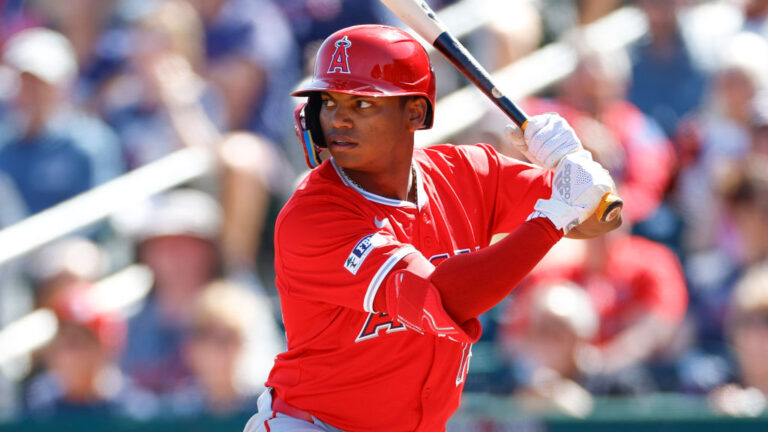
Perry Minasian and his staff employ one of baseball’s more fascinating player development strategies. By emphasizing present value over future value, Anaheim has quickly constructed an intriguing young core at the MLB level at the expense of building a sturdy farm system.
This has been apparent in the MLB Draft, where the Los Angeles Angels have selected and fast-tracked polished college players with their last six first-round picks.
Reid Detmers, Sam Bachman, Zach Neto, Nolan Schanuel, and Christian Moore all look to lead the franchise toward its first playoff berth since 2014, with Tyler Bremner likely not far behind them.
Even so, the Angels are a ways away from building a sturdy contending roster, which means many key spots in the MLB lineup will still be up for grabs throughout the season. Let’s break down the biggest names who could make an impact for the Halos this year.
Tyler Bremner
From Barry Zito to Dillon Tate, Shane Bieber, and Michael McGreevy, the UC Santa Barbara Gauchos have an underrated history of developing talented, high-upside arms. The baton now passes down to Tyler Bremner, who was the second-overall pick in the 2025 MLB Draft.
Given the Angels’ strategy of pushing their top draft picks as quickly as possible, it made sense to select a more polished arm who can still induce whiffs, as he’s more likely to have quicker success early on in his professional career.
Even if Kade Anderson, Liam Doyle, and Seth Hernandez have higher upside, Bremner looks poised to debut first.
Bremner pitched at least 55 frames in each of his three seasons in college, and while he never quite eclipsed the 100 IP mark, his clean mechanics and pinpoint command suggest he will eventually handle starter bulk as a professional.
In 2025, he threw 77.1 IP, striking out 35.8% of hitters while surrendering walks at just a 6.1% and allowing just five round-trippers all year.
His arsenal primarily features an above-average heater, which sits 95-96 MPH. It plays slightly slower than that given his below-average 5.7 feet of extension.
The fastball also generates 19 inches of IVB from a 5.9-foot vertical release point, and with an outlier -3.7 VAA in the top-third of the zone, it should miss plenty of bats. Overall, it ranked in the 95th percentile in swinging strike percentage in Division 1 last year.
Bremner’s signature offering is his plus-plus changeup. It gets 11 MPH and 11 inches of vertical offset from the fastball, ranking in the 93rd percentile in swinging strike rate. The pitch is projected to be his main out-pitch as a professional.
A tertiary pitch in Bremner’s bag is a gyro slider that sits in the mid-high 80s. With just a 13.2% chase rate last year, it’s definitely a work in progress, but it represents a nice bridge offering between the heater and the changeup if he can eventually miss bats with it.
Bremner doesn’t have many holes in his game, with the only question surrounding the viability of his slider.
Still, his command and bat-missing ability with the fastball and changeup are so advanced that he can handle being pushed through the minor leagues, and looks poised to join the Angels’ rotation sometime in 2026.
His current 50th-percentile outcome is a mid-rotation starter throughout his first six years of team control (2.0 WAR average per season). With added velocity and polishing of the slider, Bremner could end up towards the top of a contender’s rotation.
Nelson Rada
Anaheim’s first rounders aren’t the only ones who have been aggressively pushed through the minors; Venezuelan import Nelson Rada has flown through the Halos’ system with his athleticism, advanced approach, and bat-to-ball skills.
Since signing with the club in January of 2022, Rada has singled, doubled, and walked his way to Triple-A as a 19-year-old, holding his own with a 119 wRC+ in 201 plate appearances in 2025.
At the plate, Nelson is a bat-over-pop type of hitter, running an 87.5% zone-contact rate at Salt Lake City last year. The mark ranked in the 84th percentile at Triple-A.
He pairs plus contact skills with an eagle eye at the plate. With a chase rate of just 18.7% and a zone swing percentage of 70.6%, Rada displayed what was arguably the most advanced approach of any teenage baseball player on the planet.
This combination should translate seamlessly at the big-league level and must do all of the heavy lifting in his offensive profile since his in-game power is virtually non-existent.
Rada has hit just six home runs in over 1,800 plate appearances in affiliated games. He recorded an EV90 of 98.3 MPH at Triple-A, which would rank 35/36th amongst all MLB center fielders with at least 300 PAs in 2025, ahead of only Chandler Simpson.
With a max EV of 106.3 MPH, it would be too generous to say he has fringy raw juice and is instead comfortably a full standard deviation below the mean.
More positively, Rada shines on the basepaths and in center field. He’s a superb athlete who should stick at the eight, with great reads and reactions to supplement his ability to cover plenty of real estate.
Nelson also swiped 54 bases between Double-A and Triple-A last year, which should translate seamlessly to the next level.
Given his compact 5’9 frame, Rada may never grow into any tangible power. Even so, he’s a low-risk prospect who should slap-hit and walk his way to a league-average slash line, with his baserunning and defense giving him a higher floor.
His current 50th-percentile outcome is a below-average starter on a contending team throughout his first six years of team control (1.5-2 WAR average per season).
George Klassen
A key part of the Carlos Estevez trade, Klassen was a sixth-round pick back in 2023 from the University of Minnesota. He’s always had big-time stuff, but it wasn’t until he made his pro debut that he began putting it all together.
Klassen pitched a majority of 2025 at Double-A, where he punched out 27.4% of hitters while walking an even 10.0% through 102.2 IP. He did enough to receive a cup of coffee at Triple-A, where he’ll likely spend the majority of the season.

His fastball may not stand out from a movement perspective at just 14 inches of IVB from a 5.65 vertical release point, but he easily makes up for it by sitting 97-98 MPH.
George’s signature secondary is his true-bullet gyro slider, which produces 0 inches of vertical and horizontal movement while thrown in the low-mid 90s. It’s arguably one of the best bullet sliders on the planet, given these characteristics, and will be his strikeout pitch as a major leaguer.
A solid tertiary is his changeup, which sits in the high-80s and generates 10 inches of vertical offset and 10 MPH of velocity offset from the heater.
Between these three offerings, Klassen does a great job of covering multiple eye levels, but he doesn’t possess the ability to shift gears and cover multiple velocity ranges, especially without anything in the low-mid 80s.
He’ll occasionally throw in a mid-80s slurvey curveball. While its velocity and movement profile give him something to work with glove-side, it doesn’t generate enough drop or sweep to call him a supinator.
His heater and gyro will do a lot of the heavy lifting, but the elite velocity on the curveball gives the offering promise.
Klassen’s biggest swing factor will be his ability to throw strikes consistently. If he can curtail his walk rate under 10%, he has a chance to be a top-end rotation starter on a contender.
Even if he did so at Double-A last year, it was accomplished as a 23-year-old; he’ll be tested at Triple-A in 2026, where he’ll match up against talent closer to his age and ability.
As presently constructed, despite questions surrounding his command, Klassen’s arsenal and ability to pitch over 100 IP make it difficult to project his 50th-percentile outcome as anything less than a mid-rotation starter on a contender throughout his first six years of team control (2.0 WAR average per season).
Ryan Johnson
The Angels took their aggressive promotion strategy to a new extreme with Ryan Johnson, the 74th-overall selection in the 2024 MLB Draft out of Dallas Baptist University.
The former Patriot did not pitch that same fall, instead receiving an invite to spring training and earning a spot on the big-league roster as a reliever.
Johnson became just the 24th player since 1965 to go directly to the major leagues without first having minor-league experience. However, this assignment proved to be overzealous and short-lived, as he threw just 14.2 frames and had a 7.36 ERA during this time.
He was sent down to High-A in May, where he spent the rest of the season. Ryan shoved at the level in 57.1 IP, with a 1.88 ERA, 29.7 K%, and a 4.6 BB%. This earned him another invite to spring camp in 2026, where he pitched well enough to get another shot with the Angels to start 2026.

More of a east-to west guy than a high-rising four-seam type, Johnson employs a sinker as one of his fastballs, sitting 94-95 MPH and generating 12 inches of arm-side run from a 5.96 foot vertical release point.
It doesn’t excel in missing bats, but as a supinator, it does a great job of setting up his sweeper for elite horizontal tunneling.
His other fastball is a cutter, which sits in the low-90s and generates two inches of glove-side movement and nine inches of rise. It tunnels well off of the sinker, serving as a nice mid-point between that and his sweeper.
Johnson’s primary strikeout pitch is his sweeper, which sits in the high-70s and generates 11 inches of glove-side movement.
He doesn’t throw it as hard as you’d like, and would be much more effective if it sat in the low-80s. Still, it’s a quality offering and could induce more whiffs as he matures physically and adds velocity.
He’ll also throw a splitter that has a near-identical movement profile to the sinker, but he slams the brakes by throwing it in the mid-80s and generating a nine-tick velocity offset from the sinker.
Overall, Johnson does an excellent job of changing speeds and creating a wide-perimeter pitch plot with his arsenal, and even with the slower sweeper, he has all the ingredients to be an effective starter.
What caliber of starter will entirely depend on how well he adjusts to the unique challenge he was given; he doesn’t have the luxury of developing in the minors and was immediately thrown into the fire in Anaheim, where he’ll likely begin 2026 in their rotation.
His current 50th-percentile outcome is a back-end rotation starter on a contending team throughout his first six years of team control (1.5-2 WAR average per season).
Denzer Guzman
The international amateur signee from January of 2021 is yet another Angels prospect who was pushed through the minor leagues, albeit in a different fashion.
Guzman hasn’t quite excelled at any particular level (aside from his 126 wRC+ as a 21-year-old at Double-A in 2025), but has always held his own while always being one of the younger guys at each level he’s played at. Overall, he posted 119 wRC+ between Double-A and Triple-A with 17 home runs and a 11.5 BB%.
Offensively, his bat-to-ball ability is fringy but is passable given his feel for the barrel. He may never be a great pure hitter, as shown by his 81.2% zone contact rate at Triple-A last year, but he makes up for it with a great feel for the barrel with a 42.9% sweet-spot percentage and 20.9% pull-air rate.
Guzman also shows great zone awareness and makes the most of his hacks, with his 70.4% zone-swing rate ranking in the 68th percentile at Triple-A, while his 25.2% chase rate was in the 71st percentile. He won’t get cheated at the dish.
Guzman’s power is also impressive. His max EV in Statcast tracked games is 111.6 MPH this spring, suggesting he could be an above-average power hitter, even if it hasn’t quite shown in game yet.
Still, one can project on his offensive output, given that he can hit fly balls and line drives between eight and 32 vertical degrees, and his raw power, even if he has a poor feel for horizontally putting lumber on leather. At peak maturity, he has the makings of a 20+ homer threat if his development goes according to plan.
Denzer’s current 50th-percentile outcome is a below-average starter on a contending team throughout his first six years of team control (1.5-2 WAR average per season).
Other Names to Consider
Sam Aldegheri
The Italian was one of a handful of native-born players to represent his country in the 2026 World Baseball Classic.
He spent the majority of 2025 in Double-A, throwing 128.1 IP with a 3.72 ERA and a respectable 19.9 K%. Aldegheri caught a glimpse of MLB action last year, throwing 13.2 frames, and looks poised to begin at Triple-A in 2026.
Aldegheri’s changeup is his primary weapon, and generates 13 inches of horizontal offset and an 11 MPH velocity offset from the fastball. His gyro slider will also miss bats and serves as a midpoint on his pitch plot.
Overall, he’ll need to improve his command in the high-minors but profiles as a 6th starter type who could also add flexibility as a long reliever.
Samy Natera Jr.
A former starter in the New Mexico State Aggie rotation, Natera has always possessed swing-and-miss stuff but has never quite been able to locate his arsenal.
He was moved to the bullpen full-time in 2024 and threw 57 frames in 2025 between Double-A and Triple-A. While he punched out 34.3% of hitters, he also walked 16.9% of them. Sammy will likely begin 2026 at Salt Lake City, where he’ll have a strong chance to join the Angels’ bullpen this year.
Natera Jr.’s calling card is his gyro slider, which sits in the mid-80s and generates a whiff rate north of 40% when it’s on.
The lefty will likely remain a bullpen piece for his career, and looks to be a middle reliever as presently constructed. If he improves his strike throwing, he could be thrown into a high-leverage situation.
Joel Hurtado
Hurtado was a later international signee from the Dominican Republic in June of 2022. He was also older for his group, making his pro debut at 21 years old that same year.
Hurtado spent much of 2025 in Double-A with a cup of coffee at Triple-A, throwing 91.2 innings overall. He won’t wow you with swings-and-misses at just a 15.5 K%, but is a command guru with a 7.3 BB% and just six homers allowed all year.
Joel is a sinkerballer who will throw the pitch in the mid-90s and generate 13 inches of arm-side run. He’ll also include a mid-80s gyro slider with a near true-bullet shape.
A fair estimation of his future outlook is a sixth starter on a contender, but likely won’t miss enough bats to serve in a high-leverage role if he falters. A worst-case scenario will be as a long reliever.
Outlook
The Angels, under Perry Minasian, may never field a competitive farm system, provided that they continue pushing their top draft picks to the big leagues. This being said, that could be exactly what they’re shooting for.
While they haven’t benefited from the same level of lottery luck as some clubs, the names that they have pushed are solid MLB contributors, with potentially more additions who can become cornerstone players.
Emerging names from the lower minors have started to give the system a bit more structure with a solid group of foundational prospects, even if true impact prospects will be quickly funneled to Anaheim.
Player development will be the key variable. If even a couple of these young prospects take meaningful steps forward, the system could climb out of the bottom tier and into a more respectable middle ground while still hastily promoting their top draft selections.
As it stands, the Angels’ system projects closer towards the bottom of the league, but with slightly more upward mobility than in recent years due to the increased number of mid-tier prospects. Continued investment in development and smarter talent acquisition will determine how quickly that trajectory changes.
While a full return to contention may still be a ways off, 2026 could offer more intrigue at both the upper levels of the minors and at the MLB level, as the next wave of prospects starts to push toward Anaheim.
Become a Member of Just Baseball
Subscribe and upgrade to go ad-free!
* Save 25% by subscribing annually.
Written by
Adam Akbani is a writer and analyst from St. Louis, MO. He attended Washington University in St. Louis, double majoring in Economics & Strategy and Political…