
What’s Working so Well for Shota Imanaga This Year?
While his start on Sunday might not have gone perfectly, Shota Imanaga's red-hot start to the new year is impossible to ignore.
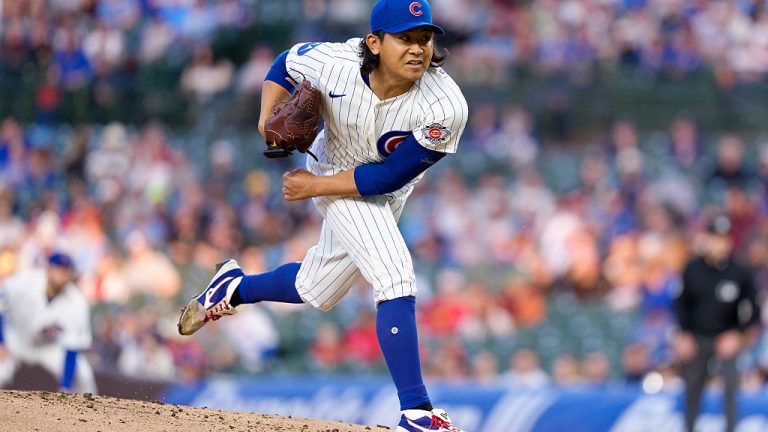
If 2024 was a Cinderella campaign for Chicago Cubs left-hander Shota Imanaga, 2025 was midnight.
On the surface, it wasn’t a bad season for the Japanese star. He posted a 3.73 ERA, pounded the strike zone, and actually improved at limiting baserunners. That said, his FIP ballooned from 3.72 his rookie season to 4.86. His strikeout rate dipped from 25.1% to 20.6. He also gave up four more home runs despite pitching nearly 30 more innings.
He showed such drastic signs of regression that the Cubs declined his club option for 2026, and instead tendered him the qualifying offer.
Imanaga accepted, therefore giving himself 2026 to reset his market ahead of his age-33 offseason.
In a league-leading six starts, he’s been brilliant, even if his most recent outing wasn’t perfect. He’s logged 34.1 innings, posted a 3.15 ERA (2.84 FIP), and his strikeout rate is neighboring 30 percent. His walk rate is up slightly, but the separation between strikeouts and free passes is at a career-best 21.8 percent.
Before his start on Sunday where he allowed five runs in as many innings, Imanaga’s numbers were incredible dating back to his first outing of the year. He got touched up in his season debut, but then he allowed just three earned runs in his next 24 innings. That’s good for a 1.13 ERA to go with 25 strikeouts and just four walks.
There have been two less-than-perfect starts, but it’s impossible to deny that Imanaga doesn’t just look good, he looks great this year. The question is: what’s fueling this bounce back campaign for the veteran southpaw?
Velocity Is Up Across the Board
Imanaga is hardly lighting the radar gun up, but the 1.2 mph uptick on his fastball is hardly insignificant.
He’s someone who relies heavily on command but having that extra velocity can bail you out when you have a bad miss within the zone. In 2024, he averaged 91.7 on the four seam and opponents hit .230 against it with a .471 slug. He did a solid job limiting hits, but they were fairly damaging. In 2025, the velocity slipped to 90.8 on average; opponents hit just .227 against it but crushed it overall to the tune of a .567 slug.
Twenty-four of the 31 homers he allowed last year came on the four seam. Thirty-three of the 52 extra-base hits he allowed came against it as well.
This year, they’re hitting .188 against his heater with a .396 slug. While still a decent amount of damage relative to the hits he’s allowing, you can live with the five extra-base hits when he’s doing such a great job keeping hitters off base.
His velocity is up across the board, though. His splitter is up half a mile, his sweeper is up 1.3 mph, sinker up 2.2, and curveball up just over two miles. The results have followed as well, as he’s holding opponents under .200 on four of the five pitches (sinker’s at .222).
Continued Simplified Arsenal
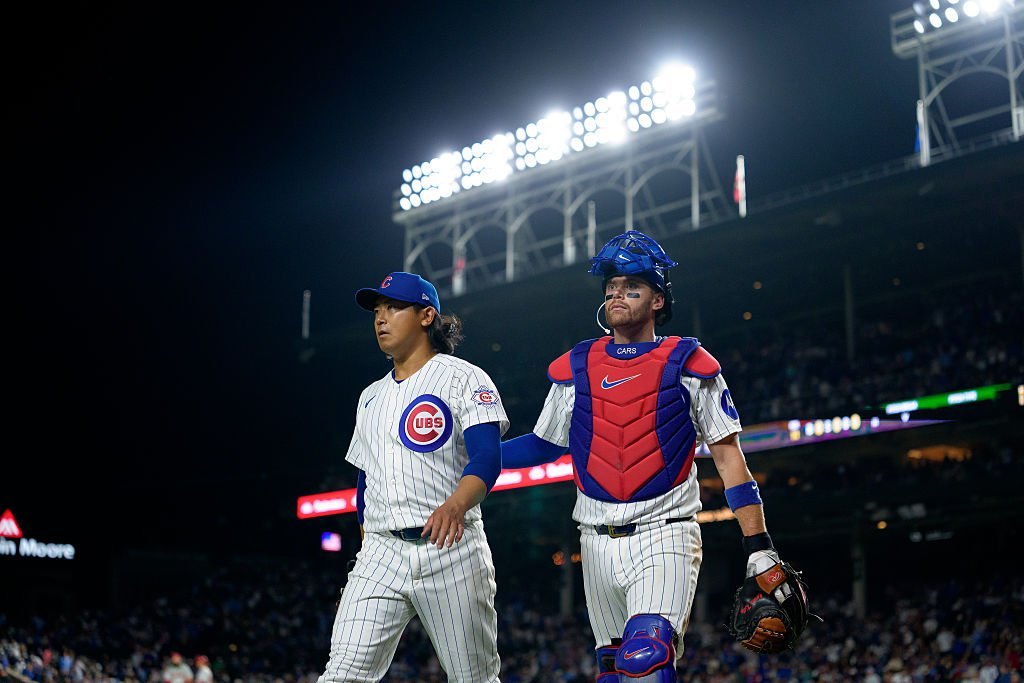
It’s still early, but Imanaga has only flashed five offerings in 2026. In his rookie season, he had eight different pitches register on Statcast. Last year, that went down to six. So far, he’s at just five; ratcheting up the usage of his sinker while still relying heavily on his four seam and splitter.
Only 11 plate appearances have ended with a sinker, but opponents are 0-for-8 against it.
Again, it’s early. There’s a chance the usage doesn’t hold up over — hopefully — 30-plus starts. But he’s already one sinker short of his total uses last season. So evidently, there’s a conscious effort to use it more.
He’s never going to be a groundball pitcher. He’s very much a strikeout- and flyball-archetype. Which makes sense, over 90% of his pitches are his four seam, splitter, and sweeper. None of those three are exactly major groundball-getting pitches.
His sweeper and splitter are elite whiff-getters historically; he’s getting them even more frequently to start this year. His fastball only gets whiffs on 16.8% of swings, but the uptick in sinker usage forces hitters to respect it. Even a slight hesitation on the four seam can be the difference between a barrel and a lazy fly ball.
He doesn’t throw hard, so he’s susceptible to damage on heaters in the heart of the plate. Any way he can stay around the zone with a fastball and dodge the barrel is an added bonus.
He’s Spinning it, or not, at a Career-Best Level
So far, Imanaga has career-highs in spin rate on his four seam, sinker (by nearly 700 rpms), and sweeper.
However, he’s got the lowest rpms on his splitter in MLB at just 1,077. But in active spin rate, he’s 13th among 60 qualified arms at 92.7 percent.
For a pitch like a splitter, the key is making it look like a fastball before the bottoms falls off the table. Limiting spin on the pitch, with 91.7% pure backspin, creates a perfect storm for that offering to dance.
That splitter has always been nasty for Imanaga. Even last year, where he saw massive decreases in strikeouts and overall success, the splitter was a legitimate out pitch. This year, and it’s still too early to know if it’ll hold, it’s holding hitters to a 8-for-48 start with 17 strikeouts and a 43% whiff rate.
Coming out of Japan, Imanaga was lauded as an elite command and finesse pitcher. We saw that in Year 1, then saw the other side of spectrum in 2025. In what’s a big year for the left-hander, he’s looking even better than his All-Star rookie self to open the 2026 season.
Become a Member of Just Baseball
Subscribe and upgrade to go ad-free!
* Save 25% by subscribing annually.

Written by