
The Case To Split the Rookie of the Year Award by Position Players and Pitchers
The AL Rookie of the Year battle between Kevin McGonigle and Parker Messick suggests it's time to rethink this award.
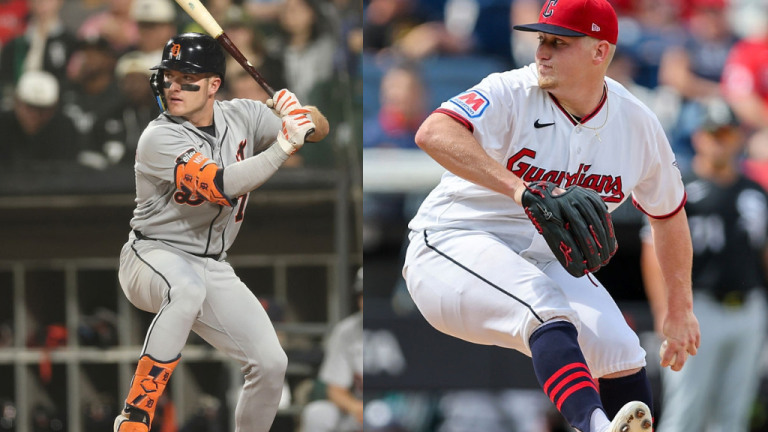
Tonight, the Baseball Writers Association of America will reveal the 2026 Rookies of the Year in the American and National Leagues. This tradition, in which the top newcomers on each circuit are given this recognition, dates back to 1949.
Coming out of the American League this year, Tigers shortstop Kevin McGonigle and Guardians left-hander Parker Messick are both up for the award. The 21-year-old McGonigle polished off an excellent rookie season, slashing .278/.376/.430/.806. The season came complete with a 126 OPS+ and 7.1 bWAR, the third highest among all position players. For that season, he is certain to earn some down-ballot votes for MVP.
Messick, on the other hand, finished his age-25 season with a 2.56 ERA in 186.1 innings pitched. His 6.3 bWAR ranked fifth among all pitchers, and his 161 ERA+ ranked sixth among qualified starters.
McGonigle became the 10th player in baseball history to post 7.0+ bWAR in their rookie season. Messick became the 12th rookie pitcher, and the fifth since 1935, to post more than 6.0 bWAR and an ERA+ over 160.
Barring an unlikely tie, one of them will not win Rookie of the Year. This poses the question: Why make the two of them compete? Instead of separating the awards by league, what if instead they were split between position players and pitchers?
For the last several years, the writers have become more consistent in defining who is eligible for these awards. There’s technically nothing stopping pitchers from winning the MVP Award, but it’s been more than a decade since the last time a pitcher (excluding Shohei Ohtani) was even given the chance.
Clayton Kershaw was named the NL MVP in 2014. Since then, no pitcher has finished in the top three for the award. It’s the longest drought without a pitcher finishing top-three for league MVP in the award’s history.
Writers have also become more restrictive about considering relief pitchers for the Cy Young Award. Since 2007, only Emmanuel Clase in 2024 was awarded a top-three spot in the Cy Young voting as a reliever. Starting this year, the writers are voting on a separate Reliever of the Year Award, all but confirming that the Cy Young Award is reserved for the league’s best starters.
The Rookie of the Year Award is the only award left that forces voters to pit players with such different roles against one another. Splitting the award for position players and pitchers, rather than by league, could prevent the difficulty that comes with comparing the accomplishments of the two.
In 2024, the best two rookies in baseball both came from the National League. Paul Skenes and Jackson Merrill were the only rookies to post an fWAR that crossed above 4.0. Unfortunately for Merrill, it was Skenes taking it home and leaving him in the dust, while Luis Gil took home his trophy in a relatively underwhelming AL rookie class.
This NL ROY competition created endless discourse online between Pirates and Padres fans as to who was the more deserving candidate. In fairness, both had a great case. Merrill excelled defensively at a position he had never played before while posting a 126 OPS+, enough to earn him ninth place in NL MVP voting.
On the other hand, Skenes started for the NL in the All-Star game two months after making his major league debut and posted the lowest ERA for a rookie starting pitcher since 1973 Steve Rogers (min. 130 IP).
In this scenario, both could’ve had their well-deserved Rookie of the Year.
The flip side of this argument occurs when an otherwise great combo of award recipients would clash with one another. One year earlier, in 2023, Gunnar Henderson and Corbin Carroll turned in outstanding seasons, each earning unanimous Rookie of the Year Awards and top-eight finishes in MVP voting. Similar things can be said about Yordan Alvarez and Pete Alonso in 2019, and Aaron Judge and Cody Bellinger in 2017.
As luck would have it in all of those cases, the players each came from different leagues and didn’t have to face one another in award voting. Under this scenario, they would.

Regardless, comparing stats for pitchers and position players is a rare area in baseball where there isn’t really a consensus protocol to use. The writers have made it clear in recent years that many of these awards are reserved for certain players: the MVP for position players, the Cy Young for starters.
Separating the Rookie of the Year Award into one for pitchers and one for position players would all but abolish the idea that the two would have to compete against one another.
Even if it takes the award away from deserving position players, it would stop a scenario where such an award is stripped from one of Kevin McGonigle or Parker Messick, two players with historic rookie seasons, without a clear statistical reason to choose one or the other, aside from WAR, which measures two entirely different types of stats between the two.
Become a Member of Just Baseball
Subscribe and upgrade to go ad-free!
* Save 25% by subscribing annually.

Written by
Daniel Curren is a writer with Just Baseball. He loves sabermetrics, baseball history, and the Hall of Fame.