
Ryan Pepiot Is One Tweak Away From Frontline Starter Status
For teams exploring pitching upgrades, Pepiot is a trade candidate with a high ceiling hiding in plain sight.
 | |
| | 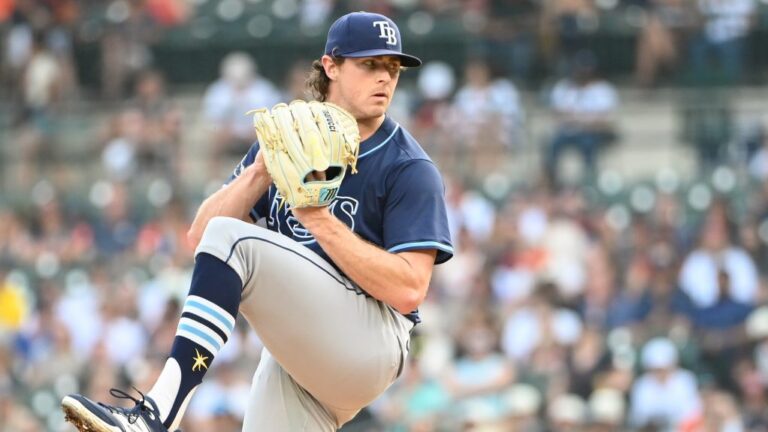
As the trade market begins to take shape, Ryan Pepiot is a name that may be more prominent in front office discussions than in public discourse. While he hasn’t yet been labeled a frontline starter, the underlying pitch data suggests a profile that is closer to that tier than surface-level results might indicate.
Pepiot combines an elite fastball foundation with strong extension, giving him a primary pitch capable of dictating at-bats and anchoring a rotation.
What makes Pepiot especially intriguing is that his path to another level does not require reinvention. The ingredients are already in place: a dominant heater, a changeup that plays off it effectively, and a third-pitch decision that could unlock additional upside with relatively minor adjustment.
With three years of team control remaining and an age profile that still allows for development, Pepiot sits at the intersection of present value and future projection.
For teams exploring pitching upgrades, Pepiot represents the type of arm whose ceiling may be hiding in plain sight.
Ryan Pepiot’s Pitch Mix (2025)
| Pitch Type | Pitch+ | Usage |
|---|---|---|
| FF | 147.83 | 45% |
| CU | 114.37 | 3% |
| CH | 98.98 | 25% |
| SL | 98.07 | 17% |
| FC | 97.07 | 7% |
| SI | 91.82 | 2% |
Pitch+ is a unified pitch quality model designed by Just Baseball’s Shaan Donohue to evaluate how pitch shape and location contribute to swing-and-miss ability, contact-quality suppression, and overall run prevention. The model integrates modern ball-tracking inputs with outcome-based location modeling to provide a single, normalized rating of pitch effectiveness.
Why Ryan Pepiot Could Be a Frontline Starter
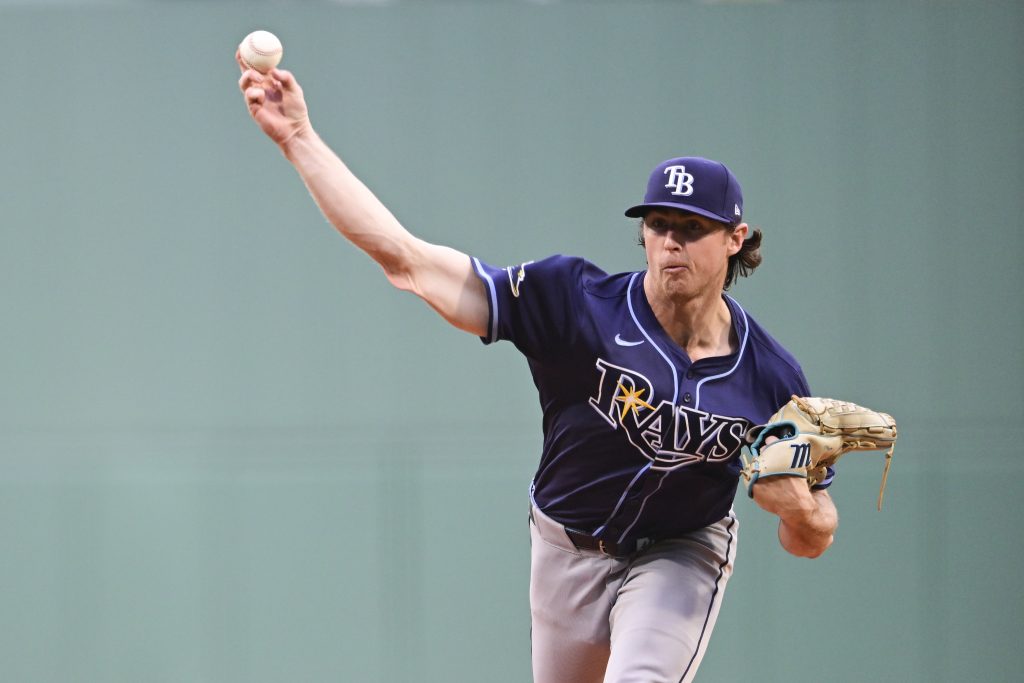
Ryan Pepiot’s case as a potential frontline arm begins with a fastball that grades as a true outlier. By Pitch+, his four-seam fastball sits firmly in elite territory, functioning as a legitimate arsenal anchor rather than simply a solid primary offering. Thanks to his extension, the pitch gets on hitters faster than expected, shrinking reaction windows and allowing it to play above its raw velocity.
That fastball foundation elevates Pepiot’s changeup, which has been one of his most effective pitches from both a bat-missing and contact-management standpoint.
In 2025, hitters produced just a .259 xwOBA against the changeup, despite the pitch lacking elite standalone movement characteristics. Its effectiveness stems from how well it tunnels off the fastball, maintaining a similar release window and early trajectory before diverging late.
The changeup also misses bats at an above-average clip, generating a 30.1% whiff rate in 2025, which pairs well with Pepiot’s ability to attack hitters up in the zone with his fastball.
Together, the fastball–changeup combination gives Pepiot a foundation that resembles that of established frontline starters: a dominant primary pitch supported by a secondary that plays up because hitters are forced to respect the heater.
Where the Arsenal Needs Tweaks
The remaining gap between Pepiot’s current profile and a more consistent frontline outcome lies in how his third pitch is deployed.
In 2025, Pepiot leaned heavily on his slider as his go-to tertiary offering, but the results were problematic. Opposing hitters slugged .539 against the pitch, with an even more concerning .547 xSLG, indicating that the damage allowed was not simply the result of poor luck.
Despite solid raw velocity, the slider struggled to consistently miss bats, posting just a 23.5% whiff rate, well below what teams typically want from a primary breaking ball in that usage band. The combination of elevated damage and suppressed swing-and-miss limited the pitch’s effectiveness as a reliable complement to Pepiot’s fastball–changeup pairing.
Meanwhile, Pepiot’s curveball — used only 3.3% of the time — quietly graded out as an elite offering by Pitch+.
When hitters did make contact, the curveball allowed just a .351 xSLG, and it generated a 32.0% whiff rate, the highest of any pitch in his arsenal. The pitch’s vertical shape introduces eye-level separation that pairs naturally with Pepiot’s fastball and extension-driven approach.
This does not suggest Pepiot should abandon the slider altogether. Rather, the opportunity lies in rebalancing usage.
Allowing the curveball to absorb a portion of the slider’s current workload could improve his overall arsenal efficiency, reduce exposure to the pitch that has been hit hardest, and give hitters a more difficult visual puzzle to solve across at-bats.
Overall Outlook and Trade Value
Pepiot enters his age-29 season with three years of team control remaining, placing him squarely in a window where performance upside and contractual value intersect.
With an elite fastball foundation, a proven secondary in his changeup, and a clear path to improving his third pitch usage, the profile increasingly resembles pitchers like Joe Ryan — arms built around dominant heaters that play up due to extension and shape rather than overwhelming velocity.
From an organizational standpoint, Pepiot offers immediate rotation value while remaining malleable enough for a pitching development group to extract additional upside through relatively minor adjustments. That blend of present contribution and future projection is difficult to acquire without paying a premium.
For teams exploring trade opportunities with the Rays, Pepiot stands out as a pitcher whose surface-level results may undersell the quality of his underlying traits. With modest arsenal optimization, the gap between what he has been and what he could be is smaller than it appears — making him a compelling target for any club seeking controllable rotation upside.
Written by