
Predicting the BBWAA Hall of Fame Class of 2031
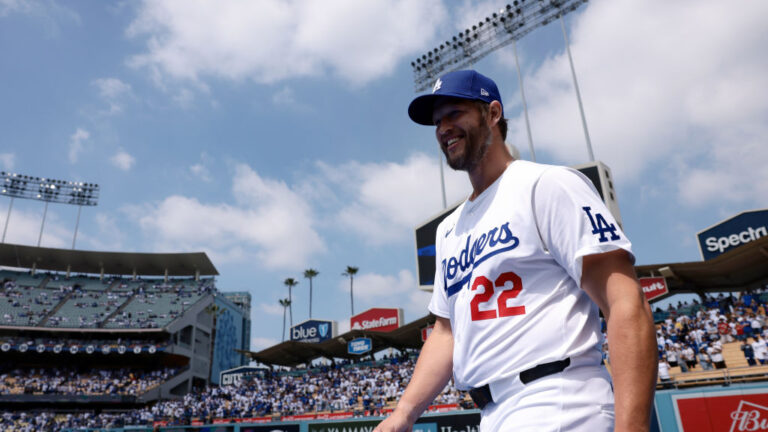
Clayton Kershaw will headline what could be a class of several World Series-winning left-handed aces in 2031.
 | |
| | 
The National Baseball Hall of Fame will gain three new members this summer. Jeff Kent was chosen by the Contemporary Baseball Era committee at the Winter Meetings, while center fielders Carlos Beltrán and Andruw Jones finally crossed the 75% threshold on the BBWAA ballot last month.
With the Class of 2026 decided, Just Baseball is looking ahead to future years. This is the last entry in a series projecting who could earn induction in the next five cycles of BBWAA Hall of Fame voting.
These next five years will feature some no-doubt candidates, including a couple of players who should get in unanimously, but just as fascinating are the players with on-the-fence cases who will surely spark lively debate.
Full Series
Predicting the 2031 BBWAA HoF Class
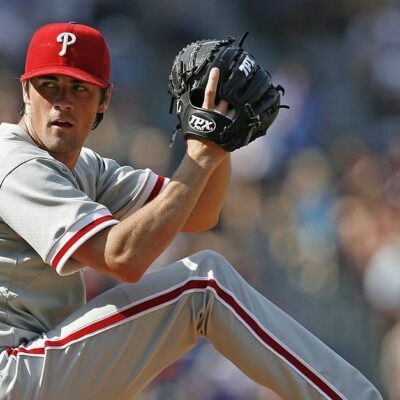
Holdover Electees: Cole Hamels, Jon Lester, Madison Bumgarner
The fifth and final entry in this series is where things begin to get pretty fuzzy. It’s hard enough to predict one year of Hall of Fame voting, but projecting how voters will think over the course of the next five years is a nearly impossible task. Yet, here we are.
Let me explain my thought process here, which admittedly requires a fair bit of conjecture. Cole Hamels’ debut on the 2026 ballot with a surprising 23.8%, while a fair cry from the necessary 75% threshold, actually bodes pretty well for his future induction.
Over the last 15 election cycles, every player who has debuted with at least 20% of the vote has been elected by the BBWAA, with the exception of those linked to PEDs, Curt Schilling and Omar Vizquel (who will presumably fall off the ballot in 2027).
This includes six players who debuted with less support than Hamels and were elected within their 10 years of eligibility:
| Player | First Year Vote Share | Year Elected |
|---|---|---|
| Mike Mussina | 2014: 20.3% | 2019 (6th) |
| Larry Walker | 2011: 20.3% | 2020 (10th) |
| Todd Helton | 2019: 16.5% | 2024 (6th) |
| Billy Wagner | 2016: 10.5% | 2025 (10th) |
| Scott Rolen | 2018: 10.2% | 2023 (6th) |
| Andruw Jones | 2016: 7.3% | 2026 (9th) |
Hamels’ case should be further bolstered by the eventual election of Félix Hernández, over whom he has an eight-point advantage in bWAR and a six-point advantage in ERA+, not to mention the bonus of postseason success.
With all this being considered, a 2031 induction, in what would be his sixth year of eligibility, feels like a fair projection.
Once it becomes clear that Hamels is rolling toward Cooperstown, the attention will turn to Jon Lester. As pointed out in the 2027 section, what Lester may have lacked in efficiency, he made up for by being the staff ace for a pair of World Series champions.
It’s also not as if Lester wasn’t an excellent regular season pitcher: His 117 ERA+ is tied with Gaylord Perry and ahead of CC Sabathia (116), Steve Carlton (115), and Phil Niekro (115), while his 2,488 strikeouts rank 41st all-time.
The biggest shot in the dark is Madison Bumgarner, who would have one of the shallowest regular season resumes of any Hall of Famer. Yet if we were to use the often overstated “you can’t tell the story of baseball without him” rationale, there may be no starting pitcher from the last 50 years who had a bigger postseason impact and created more memorable moments.
Is it likely that three borderline candidates get inducted in the same cycle? Probably not. In terms of coolness, however, it would be pretty awesome to see three lefties who combined for seven World Series titles go into the Hall of Fame together, especially considering who will be joining them in his first year of eligibility.
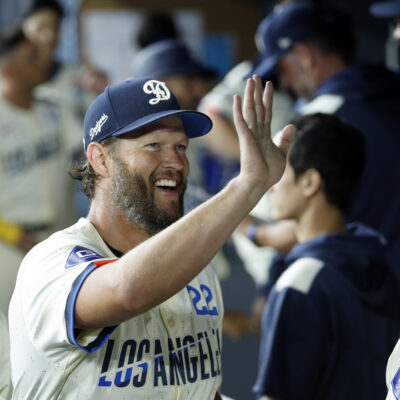
First-Ballot Electee: Clayton Kershaw
Clayton Kershaw will suit up one more time for Team USA in the World Baseball Classic, but his MLB retirement after 2025 will leave him eligible for certain election in 2031.
While his postseason career was a mixed bag, there is no questioning his place as one of the best regular season pitchers of all time.
His S-JAWS, which adjusts for the massive workloads of pitchers in the 19th and early 20th century, is the 20th highest total of all time, headlined by three straight bWAR leads from 2012-2014.
In terms of pure run prevention, there is an argument that Kershaw was the most efficient starter pitcher of the last 100 years. His 2.53 ERA is the lowest of any live-ball era starting pitcher, while his 154 ERA+ is tied with Pedro Martinez for the second-highest of any pitcher with over 1,000 innings pitched, trailing only the incomparable Mariano Rivera (205).
Though injuries prevented Kershaw from being as dominant in his second decade as he was in his first, he was still effective when healthy, pitching to a 2.67 ERA and hitting both the 200-win and 3,000-strikeout milestones.
With his postseason demons exorcised with three World Series rings in the last five years, there is no fathomable argument not to check off Kershaw’s name, meaning that he could follow Rivera as the second unanimous pitcher entry into the Hall of Fame.
First-Years Above 5%: None
If not for Kershaw, this might have gone down as one of the weakest first-year classes in recent memory.
The unofficially retired Yu Darvish is the only player who could enter this ballot with over 25.0 career bWAR, but a late start and injury-plagued finish to his career will prevent him from being a serious candidate.
Things could change drastically if current free agents Max Scherzer or Justin Verlander call it quits, but as of right now, this class is all about Kershaw.
Falling Off: Alex Rodriguez, Jimmy Rollins
Like so many other PED-connected candidates, Alex Rodriguez has seen his vote share plateau after a respectable debut. This is understandable: If you are not going to vote for a player like Rodriguez on the first ballot, you are extremely unlikely to ever change your mind.
Considering that he has climbed from just 34% to 40% in his five years on the ballot, Rodriguez seems destined to languish below the 50% mark for his last five years of eligibility.
As for Jimmy Rollins, he might get a boost with the induction of double-play partner, Chase Utley, but aside from Rollins’ superior longevity and base-stealing abilities, they really weren’t the same caliber of player:
| Player | G | H | HR | RBI | SB (CS) | AVG/OBP/SLG | OPS+ | bWAR/Peak WAR JAWS |
|---|---|---|---|---|---|---|---|---|
| Chase Utley | 1937 | 1885 | 259 | 1025 | 154 (22) | .275/.358/.465 | 117 | 64.6/49.3/56.9 |
| Jimmy Rollins | 2275 | 2455 | 231 | 936 | 470 (105) | .264/.324/.418 | 95 | 47.9/32.7/40.3 |
One point in Rollins’ favor is his 2007 MVP award, but even that comes with a caveat.
His 6.1 bWAR ranked just seventh in the NL that season, trailing Albert Pujols, David Wright, Utley, Chipper Jones, Jake Peavy, and Troy Tulowitzki, making it pretty unlikely that he would have won the award today.
Rollins was able to hit the 25% mark in 2026, a respectable 7% increase, but he will need to significantly accelerate his gains over his last five years to have a real shot of getting elected via the BBWAA.
Written by
Daniel Fox is a contributing writer for Just Baseball. He has previously written for Pitcher List, BoSoxInjection, and in the Cape Cod Baseball League. He is…