
Pirates Find Their Closer, Acquire Luke Weaver From the Mets
The Pirates fortified their bullpen by flipping a young shortstop prospect into one of the best relievers on the trade market.
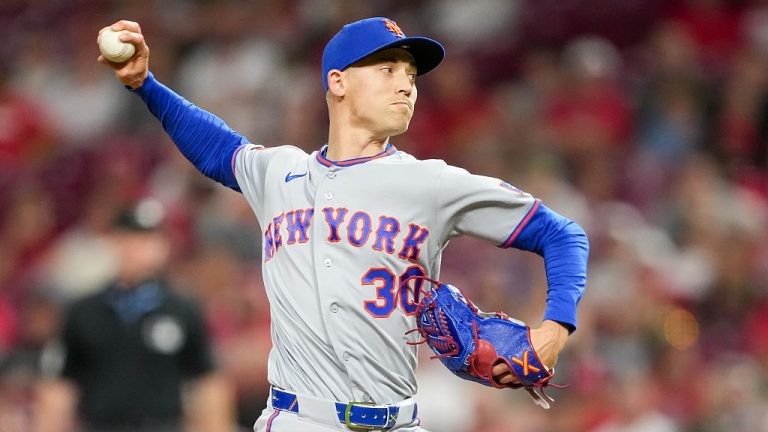
After an incredibly quiet morning for the Pittsburgh Pirates, the club struck with its first move on deadline day, and it was an impactful one. The Pirates acquired RHP Luke Weaver from the New York Mets.
Weaver is currently in the midst of arguably the best season of his career, pitching to a 1.84 ERA across 44 relief innings for the Mets. While he hasn’t served as their closer this season, he’s excelled in high-leverage situations as a setup man and brings previous experience in the closer role.
On top of that, Weaver is already under contract through the 2027 season, with one year remaining on his two-year, $22 million deal.
After previously taking a quantity-over-quality approach earlier at this deadline, the Mets receive a singular, solid prospect in this deal: shortstop Sammy Stafura. A former second-round pick by the Reds in 2023, Stafura has really begun to come into his own this season at High-A with the Pirates, making him an intriguing addition for New York.
Let’s dive a little deeper, examine this deal from both sides, and see if this trade makes sense for each club.
The Pirates Get Their Closer
From the Pirates’ perspective, this deal is a true slam dunk. Acquiring Weaver addresses the main issue that’s plagued the team all season: not just the bullpen as a whole, but specifically its inability to close out games and succeed in high-leverage situations.
They’ve gone almost exclusively with a closer-by-committee approach to this point, and it’s a strategy that simply hasn’t worked in their favor. The Pirates have blown 19 saves, a mark tied with three other teams for the sixth most in baseball.
That doesn’t even account for the numerous non-save situations the Pirates’ bullpen has blown this season, many of which have resulted in some of the most crushing losses in franchise history.
As a group, the Pirates’ bullpen has posted a 4.34 ERA, which ranks as the ninth-worst mark in baseball. Their left-on-base rate sits below 70%, placing them among the bottom seven bullpens in the league. The same can be said for their WHIP, which also ranks seventh worst, and they sit in the bottom half of baseball in multiple other categories as well.
As previously mentioned, Weaver should immediately help shore up many of these issues as soon as he touches the PNC Park mound. He’s one of just 12 qualified relievers in baseball with an ERA under 1.90, placing him in truly elite company. Beyond that, he’s posted a left-on-base rate of nearly 83%, kept walks to a minimum, and been elite at limiting hard contact while generating plenty of whiffs and chase outside the strike zone.
Going one step further, Weaver has been especially dominant in high-leverage situations, which is where he’ll spend most of his time pitching in Pittsburgh. Opponents have slashed just .163/.288/.279 against him in those situations, as he’s surrendered only seven hits. Most notably, Weaver has allowed just one home run in high-leverage situations this season.
As for the return, the Pirates dealt away infield prospect Sammy Stafura, the headliner in last summer’s Ke’Bryan Hayes trade — a deal that’s worked out heavily in their favor. After slugging 19 home runs and posting a 142 wRC+ in a hitter-friendly High-A environment, the Pirates capitalized by using their organizational depth to address a major-league need.
In other words, the Pirates turned Ke’Bryan Hayes into the best closer on the market not named Mason Miller.
As if that wasn’t enough, the Mets are covering $2 million of Weaver’s salary this season and another $6 million next season, giving the Pirates even more financial flexibility to make moves elsewhere.
The Pirates’ side of this deal is very strong. They were able to deal from a position of depth with Sammy Stafura without significantly impacting their farm system, while also helping lock down their bullpen. Those bullpen struggles have arguably been the difference between the Pirates being firmly in the playoff race and where they currently stand.
The Mets’ Side of the Return
From the Mets’ perspective, this deal certainly has its pros and cons. It seemed as though Weaver was going to be the hottest bullpen commodity on the market outside of Mason Miller, meaning his price tag would be quite high. The Mets were able to turn Weaver into infielder Sammy Stafura, who certainly has tools to like if he can put everything together.
As previously mentioned, the Pirates acquired Stafura from the Reds in the Ke’Bryan Hayes trade last summer, and he’s been a polarizing prospect ever since. He struggled to finish the season in High-A last year, but he’s been one of the hottest hitters in the minor leagues during his return to the level.
In 47 High-A games, the 21-year-old has slashed .301/.365/.656 with 19 home runs, a 142 wRC+, and 16 stolen bases. While those numbers are impressive on their own, they take another massive step forward when you narrow the sample to his performance since July 1.
During that stretch, Stafura has slashed .353/.380/.894 with 18 extra-base hits and an astounding 194 wRC+. Most notably, his strikeout rate has come down, and he’s looking more and more like a complete hitter as the season has gone on. He was identified by the Mets as someone they wanted in this deal, and they landed their guy.
On the flip side, Stafura comes with a few notable drawbacks. His hit tool is on the weaker side compared to the higher-end prospects in the Pirates’ system. He’s run a contact rate around 70% in the lower levels, which doesn’t exactly send positive signals as he moves up the ladder. That could be viewed as a somewhat underwhelming return for arguably the top reliever on the market.
Those concerns are evident in his plate discipline as well, as Stafura has posted a 29.4% strikeout rate across his 47 High-A games this season. There are definite swing-and-miss concerns, but the Mets seem to be betting on the tools in the profile.
One final note regarding his offense: the Pirates’ High-A ballpark in Greensboro is widely regarded as a launch pad because of its hitter-friendly tendencies. In other words, offensive numbers from Pirates hitters at High-A should be viewed with a little more scrutiny.
For the Mets, covering $8 million of Weaver’s remaining salary over the next two seasons is a tough pill to swallow, especially considering he was arguably the best reliever left on the market. However, if they like what they see in Stafura enough, he could generate plenty of helium in prospect rankings in the near future.
Become a Member of Just Baseball
Subscribe and upgrade to go ad-free!
* Save 25% by subscribing annually.

Written by
Jay Staph, a huge baseball fan and stat nerd, founded and ran his own baseball writing website, BSBWrites, at just 16-years-old. With focal points around prospects,…